
Article-At-A-Glance
- A neighborhood contact list is one of the simplest and most powerful emergency preparedness tools you can build — and most people don’t have one.
- The five most important pieces of information to collect from each neighbor include full name, address, cell and landline numbers, email, medical needs, and pets.
- Organizing contacts by street or block makes the list usable for anyone, even under stress.
- A phone tree system can spread critical information across an entire neighborhood in minutes — but only if it’s set up before an emergency strikes.
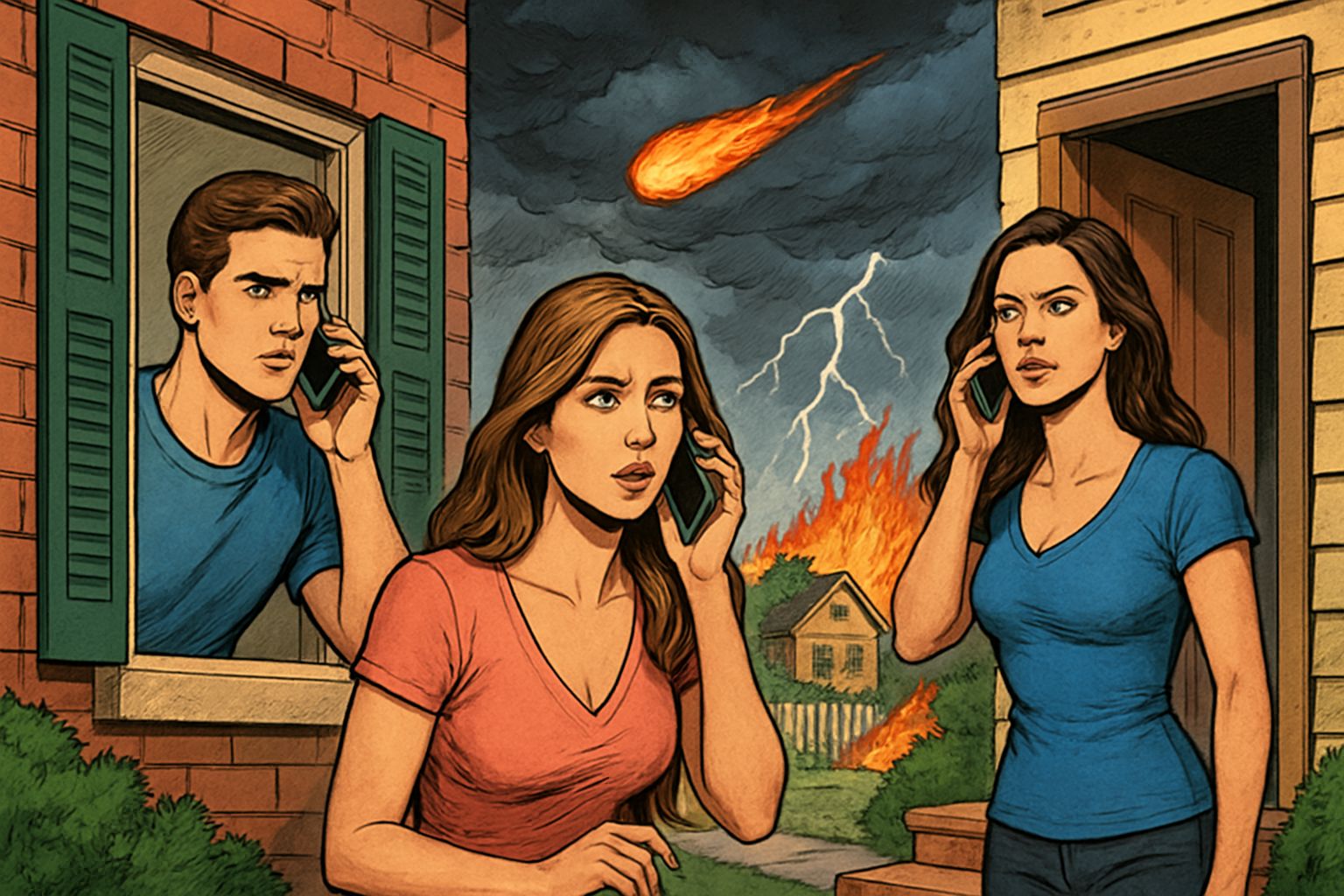
Don’t let this be you when the power goes out, a storm rolls in, or something goes wrong down the street. Most neighborhoods go quiet — not because people don’t care, but because they simply don’t know who to call.
That gap is dangerous, and it’s completely preventable. A neighborhood contact list solves this problem before it starts.
Most Neighborhoods Are One Emergency Away From Chaos
Think about the last time something unexpected happened on your block — a gas leak, a severe storm, a medical emergency. How quickly did accurate information travel? Who coordinated a response? For most neighborhoods, the honest answer is: nobody did, and information moved slowly through rumors and guesswork.
Emergencies don’t wait for preparation. A house fire spreads in minutes. A flash flood warning gives you very little time. In those moments, scrambling to find a neighbor’s phone number or figuring out who can check on the elderly couple two doors down is time you simply don’t have. A pre-built neighborhood contact list eliminates that scramble entirely.
The good news is that building one isn’t complicated. It takes a few hours of planning, some honest conversations with your neighbors, and a system that anyone on the block can actually use under pressure.
What to Put on Your Neighborhood Contact List
The goal of this list isn’t to collect every possible detail about every household — it’s to capture the information that actually matters when something goes wrong. Keep it focused, clear, and practical.
1. Full Name and Home Address
This seems obvious, but many people know their neighbors by face and not by name. Including both the full name and the exact street address — not just “the blue house on the corner” — ensures that emergency responders, volunteers, or anyone relaying information can identify and locate the right household without confusion.
2. Phone Numbers (Cell and Landline)
Always collect both if available. Cell networks can become overloaded or lose signal during large-scale emergencies, while landlines sometimes remain operational. Having a backup number for each household could be the difference between reaching someone and not reaching them at all during a critical moment.
3. Email Address
Email is particularly useful for non-urgent neighborhood communication — sharing updates, sending a revised contact list, or distributing preparedness information before an emergency occurs. It also gives you another channel when phone lines are tied up.
Sample Neighborhood Contact Entry:
Field
Example
Full Name
Jenny and James Johnson
Home Address
123 First Street
Cell Phone
(312) 555-1234
Landline
(312) 555-4321
jjohnson@email.com
Medical Needs
James uses a wheelchair
Pets
One dog (Bella), one cat (Wasabi)
4. Special Needs or Medical Conditions to Be Aware Of
This is the section most people forget — and it’s one of the most important. Knowing that a neighbor relies on a powered medical device, has mobility limitations, or lives alone and may need assistance during an evacuation allows your block to respond with real awareness. You’re not collecting private medical records — just enough to know who may need extra help getting out safely.
During Hurricane Katrina, one of the most documented failures of community response was the inability to quickly identify and assist residents with disabilities or mobility limitations. A simple notation on a neighborhood list can prevent that failure on a local level.
5. Pets and Their Names
Pets are a major reason people hesitate to evacuate — or return to dangerous situations. Knowing that the household at the end of the block has two dogs and a cat lets neighbors assist with evacuation, feeding, or temporary shelter coordination. It’s a small detail that carries significant weight in a crisis.
How to Organize Your Contact List So Anyone Can Use It
A contact list buried in a spreadsheet that only one person can access defeats the entire purpose. The way you organize and distribute the list matters just as much as the information on it.
Design it for the worst-case user — someone who is stressed, in a hurry, and possibly unfamiliar with the neighborhood. That means large, readable text, clear categories, and zero unnecessary clutter.
Group Contacts by Street or Block
Rather than listing contacts alphabetically by last name, organize them geographically. Group everyone on the same street or block together. This way, if an emergency affects one specific area, neighbors and responders can immediately pull up the right section without scanning the entire list.
Separate Emergency Services From Neighbor Contacts
Your neighborhood contact list should have a clearly marked section at the top — or on a separate page entirely — dedicated to emergency services. This includes your local fire department’s non-emergency line, the nearest hospital, the local police precinct, utility emergency lines for gas and electric, and the Red Cross disaster line at 1-800-RED-CROSS. These numbers are different from neighbor contacts and need to be reachable instantly without scrolling through a list of names.
Keeping these two categories visually separated — through bold headers, colored sections, or a physical divider on a printed sheet — means anyone picking up the list for the first time can navigate it without instruction. A babysitter, a house guest, or a child home alone should be able to find the right number within seconds. For more tips on preparedness, check out how to introduce preparedness culture at home.
Set Up a Phone Tree Before You Need One
A phone tree is one of the most underused tools in neighborhood preparedness. It’s a simple communication chain where one person contacts two or three people, each of those people contact two or three more, and within minutes an entire neighborhood has received a critical message — without a single person having to call everyone themselves. To enhance your emergency readiness, consider training for the unexpected and ensuring everyone is familiar with the phone tree system.
How a Phone Tree Works
The structure is straightforward. One designated block captain or coordinator receives critical information first — whether that’s a tornado warning, a gas leak, or a neighborhood-wide evacuation order. That person immediately calls or texts two to three pre-assigned neighbors. Each of those neighbors then contacts their own two to three assigned contacts, and the chain continues until every household has been reached.
The key to making a phone tree work is that assignments are made before the emergency, not during it. Everyone on the block should already know who they’re responsible for contacting. That clarity eliminates hesitation when stress is high and time is short.
How Many People Each Person Should Contact
Two to three contacts per person is the sweet spot. Fewer than two makes the chain too long and slow. More than three increases the chances that someone gets overwhelmed or fails to complete their calls. If your neighborhood has 30 households and each person contacts three others, the entire block can be notified in just two rounds of calls. For more on how to prepare for unexpected events, check out our guide on building emergency readiness.
What Message to Send During an Emergency
Keep it short, specific, and actionable. A good emergency message answers three questions: What is happening? Where is it happening? What should people do right now? For example: “There is a gas leak reported on the 400 block of Maple Street. Evacuate your home immediately and move to Riverside Park. Do not use your car if the leak is on your street.” Pre-written message templates stored with your contact list take the guesswork out of communication when panic is highest.
How to Store Your Contact List Safely
A contact list only works if it survives the emergency. Storing your neighborhood contact list in a single location — especially a digital-only format that depends on power or internet — creates a single point of failure. Redundancy is the key principle here.
Think about what happens during a power outage, a flood, or a situation where you have to leave your home with sixty seconds of notice. Your storage plan needs to account for all of those scenarios simultaneously.
Keep a Printed Copy in Your Go Bag
A laminated printed copy stored in your emergency go bag is one of the most reliable backups you can have. Lamination protects it from water damage, and a physical copy requires no battery, no signal, and no password. Update it whenever the digital version changes and replace it immediately if it gets damaged.
Consider posting a second printed copy inside a kitchen cabinet door or on the inside of a closet — somewhere accessible to everyone in the household but out of plain sight. First responders who enter your home during an emergency can also use it to coordinate if needed.
Save a Digital Backup on Your Phone
Store your neighborhood contact list as a PDF in your phone’s local storage — not just in the cloud. Cloud-based storage requires an internet connection, which may not be available during a large-scale emergency. A locally saved PDF on your phone is accessible even in airplane mode.
You can also share the digital version through a free, password-protected Google Drive folder with your block captain and two or three other trusted neighbors. That way, multiple people have access to the most current version at any time, and no single person is the only keeper of the list.
How to Get Neighbors to Join and Share Their Information
Conversation Starter Script for Approaching Neighbors:
“Hi [neighbor’s name], I’m putting together a simple contact list for our block so we can reach each other quickly in case of an emergency — things like storms, power outages, or anything unexpected. It only takes a minute. Would you be willing to share your name and a phone number? Everything stays within the neighborhood and won’t be shared anywhere else.”
Most neighbors are receptive when the ask is simple, low-pressure, and framed around mutual benefit. People are far more likely to say yes when they understand the purpose is community safety — not data collection or organized meetings they’re expected to attend regularly.
The best time to approach neighbors is during a calm, routine moment — not right after an emergency has just occurred when emotions are high. A Saturday morning, a community garage sale, or even a casual wave from the driveway can open the door. Walk up, introduce yourself if needed, and keep the conversation under two minutes. For more tips on preparedness, check out this guide on preparedness progress review.
If face-to-face outreach feels like too big a barrier, a simple paper flyer left in mailboxes works well. Include a QR code that links to a Google Form where neighbors can submit their contact details voluntarily. This removes the social pressure of an in-person conversation and still gets you the information you need. For additional tips on maintaining communication, consider strategies for staying connected when cell towers go down.
Privacy concerns are the most common reason neighbors hesitate. Be upfront that the list is used only within the immediate block, is never posted publicly, and is only shared with other participating households. Offering to show them exactly where the list will be stored and who will have access goes a long way toward building trust and increasing participation.
Keep the List Current or It Becomes Useless
A neighborhood contact list from two years ago is almost as dangerous as having no list at all. People move, change phone numbers, have new medical needs, get new pets, and change email addresses with surprising regularity. An outdated list creates false confidence — you think you’re prepared, but the numbers you’re dialing go nowhere.
Set a recurring reminder twice a year — January and July work well — to send a quick message to all participating neighbors asking them to confirm or update their information. Pair each update with a brief review of your phone tree assignments so everyone stays clear on their role. And whenever a new family moves onto the block, make welcoming them into the contact list part of how your neighborhood introduces itself. To enhance your community’s preparedness, consider learning how to build emergency readiness together.
Review the List Twice a Year
Set a calendar reminder every January and every July to send a quick message to all participating neighbors — a simple text or email asking them to confirm their details are still current. This twice-yearly rhythm is easy to maintain and catches the majority of changes before they create gaps in your preparedness network.
Pair each review with a check of your phone tree assignments as well. People move, relationships shift, and someone who was happy to be a block coordinator last year may no longer be available in that role. Keeping both the contact details and the organizational structure current ensures the entire system works as intended when you actually need it.
Welcome New Neighbors and Add Them Right Away
Every new household that moves onto your block is an opportunity to strengthen your network — and a gap in your list until they’re added. Make it a habit to introduce yourself within the first week of a new neighbor arriving, welcome them to the block, and mention the contact list naturally as part of the conversation. Most new residents are genuinely grateful to learn their neighborhood is organized and connected. Adding them immediately, while the introduction is fresh, means the list stays complete without requiring a separate follow-up effort.
A Prepared Neighborhood Is a Safer Neighborhood
Every name added to your neighborhood contact list is a connection that didn’t exist before — a resource, a helping hand, and a faster path to safety when seconds matter. The work of building this list happens quietly, in ordinary moments, long before any emergency arrives. That’s exactly when it should happen. Communities that know each other respond better, recover faster, and look out for the people who need it most. Start with your immediate neighbors, build outward block by block, and treat the list not as a one-time project but as a living part of how your neighborhood functions. For additional community preparedness resources, explore how to stay connected when cell towers go down.
Frequently Asked Questions
Below are the most common questions people have when starting a neighborhood contact list for the first time.
What is the most important information to include on a neighborhood emergency contact list?
The most important information to include on a neighborhood emergency contact list is each household’s full name, home address, cell phone number, and a backup landline if available. Beyond basic contact details, noting any medical conditions, mobility limitations, or powered medical equipment needs helps neighbors prioritize who requires assistance during an evacuation or crisis. Pet information — including the number and type of animals — is equally important, as pets are a leading reason people delay or refuse to evacuate. Those five categories cover the most critical ground for any neighborhood emergency scenario. For additional tips, consider how to build emergency readiness.
How do I get my neighbors to agree to share their contact information?
The most effective approach is a brief, low-pressure, in-person conversation framed around mutual benefit and community safety. Keep the ask simple — a name and one phone number — and be transparent about exactly how the information will be stored and who will have access to it. Most people are willing to participate when they understand the list stays within the block and is never shared publicly.
For neighbors who prefer not to engage face to face, a paper flyer with a QR code linking to a private Google Form works well as an alternative. Offering a privacy-first option removes the most common barrier to participation and typically increases the number of households willing to join.
What is a phone tree and how does it help during emergencies?
A phone tree is a pre-assigned communication chain where one person contacts two to three neighbors, each of whom contacts two to three more, until an entire neighborhood has received a message in minutes without any single person having to contact everyone individually. It is one of the fastest and most reliable ways to spread urgent information across a block during a time-sensitive emergency, and it works even when digital communication channels are overloaded or unavailable.
How often should I update my neighborhood contact list?
Update your neighborhood contact list at minimum twice a year — once in January and once in July. This schedule catches the majority of phone number changes, moves, and new household additions without requiring constant maintenance.
Outside of scheduled reviews, update the list immediately whenever a neighbor moves in or out, or whenever a participating household notifies you of a change. The goal is a list that reflects the current reality of your block at all times, not a snapshot from six months ago.
Should I keep a digital or printed copy of my neighborhood contact list?
Keep both — and treat them as equally important. A printed, laminated copy stored in your emergency go bag works without power, internet, or a charged device. A digital copy saved locally to your phone as a PDF is accessible even without a cell signal or internet connection.
Relying on only one format creates a single point of failure. If your phone battery dies during an extended power outage, the printed copy becomes your lifeline. If the printed copy is damaged in a flood, the digital version saves you. Redundancy is the core principle of emergency storage for any critical document. Sharing the digital version with two or three trusted neighbors through a password-protected shared folder adds another layer of reliability. That way, if you are unreachable during an emergency, someone else on the block still has immediate access to the full list.
Creating a neighborhood contact list is a crucial step in ensuring effective communication during emergencies. By having a comprehensive list of your neighbors’ contact information, you can quickly reach out for help or provide assistance when needed. It’s important to include multiple forms of contact, such as phone numbers and email addresses, to stay connected even if cell towers go down. Additionally, consider organizing community meetings to discuss emergency preparedness plans and share resources, fostering a sense of unity and cooperation among residents.




Leave a Reply