
Article At-A-Glance
- Functional fitness beats gym performance — the ability to carry a person, sprint to safety, or climb over debris matters far more than how much you can bench press.
- Four physical skills form the foundation of emergency readiness: strength, cardiovascular endurance, agility, and grip strength — and most standard routines miss at least two of them.
- Mental readiness is a trainable physical skill — controlled breathing and stress-exposure drills can be the difference between freezing and acting decisively when it counts.
- You don’t need a gym — many of the most effective emergency preparedness exercises require zero equipment and can be done anywhere, anytime.
- Keep reading to discover how simulation-based training can condition your body and mind to respond effectively under real pressure — most people skip this entirely.
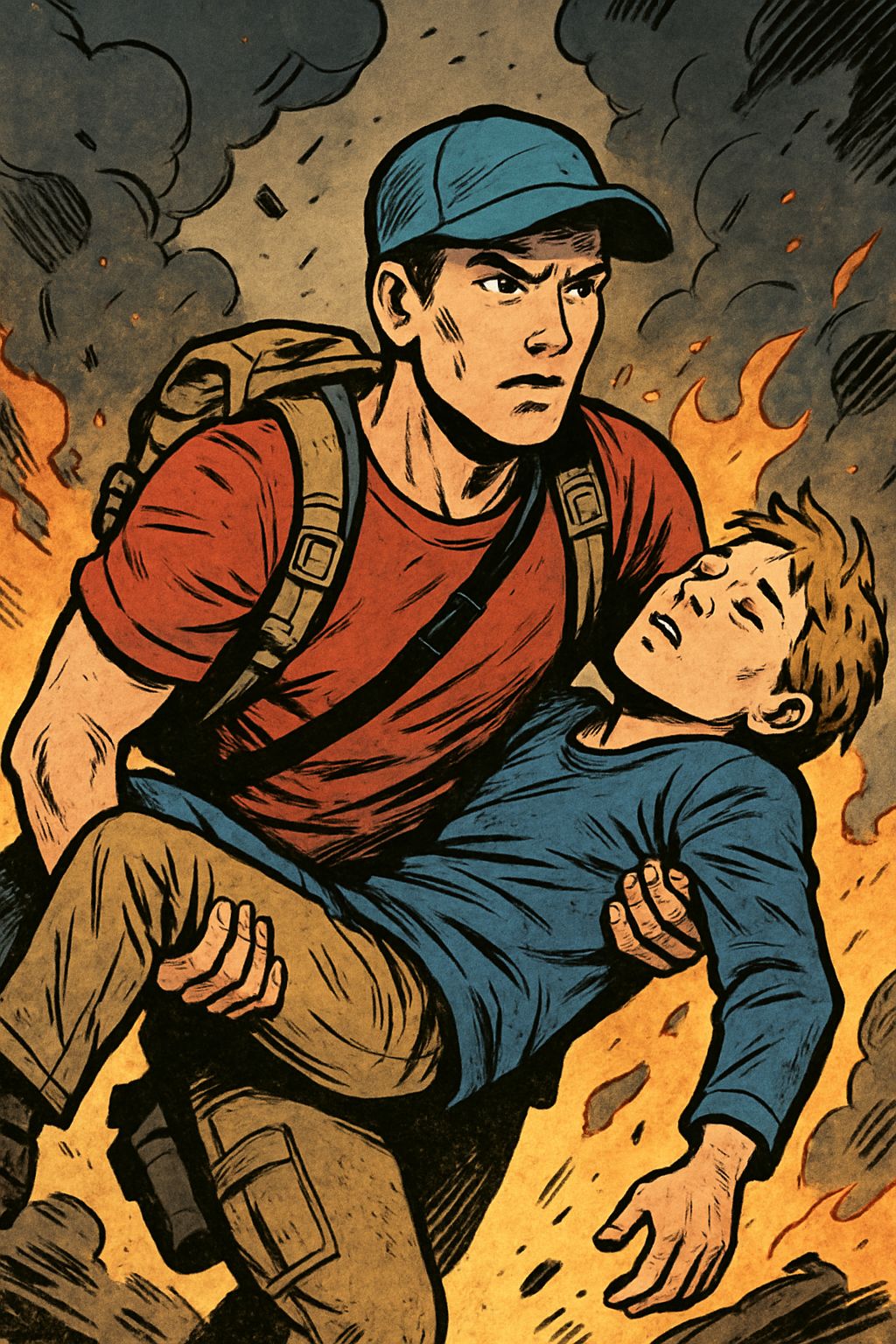
Most people discover too late that their fitness level and their ability to survive a crisis are two very different things.
Emergency situations don’t follow a script. Whether it’s evacuating a building, pulling someone out of a vehicle, or hiking five miles on foot because roads are blocked, your body will be asked to perform in ways no standard workout ever prepared it for. Leaders in smart home gym technology frame this perfectly — real preparedness isn’t about aesthetics or athletic performance, it’s about functional capacity when everything goes wrong.
Why Standard Fitness Routines Fall Short in Real Emergencies
The average gym-goer focuses on isolated muscle groups, timed rest periods, and controlled environments. That’s fine for building a physique, but it creates a dangerous illusion of readiness. When an emergency hits, there are no rest periods, no ideal conditions, and no machines to guide your movement range.
The Gap Between Gym Fitness and Functional Emergency Readiness
Functional emergency fitness is about transfer — how well your training translates to real-world physical demands. A person who runs on a treadmill for 30 minutes three times a week may still collapse after dragging a 180-pound person across a parking lot while adrenaline is surging and smoke is filling the air. The movement patterns, energy systems, and psychological demands are completely different. Standard routines simply don’t bridge that gap.
What Your Body Actually Needs to Perform Under Pressure
Under acute stress, your body activates the sympathetic nervous system — heart rate spikes, breathing becomes shallow, fine motor skills degrade. Training that never mimics these conditions leaves you physically capable but functionally unprepared. What you need is a fitness approach built around unpredictable, compound, high-effort movement — the kind that teaches your body to keep working even when it wants to stop.
The Core Physical Skills Every Emergency Demands
Emergencies are physically diverse. A house fire demands something different from a flood or a structural collapse, but there are four physical capabilities that cut across nearly every scenario. To enhance your preparedness, consider exploring how ready you really are for any emergency situation.
1. Strength for Lifting, Carrying, and Moving Obstacles
Raw, functional strength is non-negotiable. You may need to move debris from a doorway, lift an injured person, or force open a jammed exit. This isn’t the kind of strength built by curls and cable flyes — it requires compound, whole-body movements that develop real-world load capacity. Many experts have specifically highlighted that physical capacity to assist others is one of the most critical and overlooked dimensions of community emergency response.
2. Cardiovascular Endurance for Sustained Crisis Response
Emergencies rarely last two minutes. Whether you’re helping coordinate a neighborhood evacuation or navigating a wilderness survival situation, sustained cardiovascular output is essential. The goal isn’t just aerobic fitness — it’s the ability to maintain purposeful physical activity under stress for extended durations without your decision-making deteriorating alongside your energy levels.
3. Agility and Mobility for Navigating Dangerous Terrain
Crises create obstacles. Broken glass, collapsed structures, flooded streets, uneven ground — your body needs to move through these environments quickly and safely. Agility training develops your ability to change direction fast, and mobility work ensures your joints can handle the unpredictable angles that real emergency terrain demands. These two qualities together significantly reduce your injury risk when conditions are at their worst.
Mobility is especially important for older adults and those who spend most of their day seated. Limited hip flexor range or poor ankle mobility can turn a simple step over debris into a fall with serious consequences.
4. Grip Strength for Climbing, Pulling, and Holding
Grip strength is one of the most underleveraged components of emergency fitness and one of the first to fail under fatigue. Climbing a fence, pulling yourself up from a ledge, holding a rope, or maintaining control of someone you’re assisting — all of these depend on your ability to grip under load and under stress.
Research consistently links grip strength to overall functional capacity and resilience, making it a valuable training target not just for emergencies but for long-term physical independence.
- Dead hangs — hang from a pull-up bar for time to build raw grip endurance
- Farmer’s carries — walk with heavy weights in each hand to simulate load-carrying scenarios
- Pull-ups/Towel pull-ups — drape a towel over a bar and grip the ends to increase grip difficulty
- Plate pinches — pinch weight plates together with your fingers for timed holds
- Rope climbs — combine upper body strength with real grip demand in a single movement
Exercises That Directly Build Emergency Readiness
The right exercises don’t just build fitness — they build capacity for specific, real-world demands. Every movement you train should have a clear answer to the question: when would I need this in a crisis?
The following exercises were selected because they develop the four core physical skills outlined above, require minimal equipment, and translate directly to the kinds of physical challenges emergencies create.
Deadlifts and Loaded Carries for Real-World Strength
The deadlift is arguably the most functional emergency preparedness exercise that exists. It mirrors the exact mechanics of picking up a heavy, awkward object from the ground — whether that’s a person, a piece of debris, or a packed emergency bag. Train conventional deadlifts with progressive load, focusing on hip hinge mechanics and a neutral spine. Pair these with loaded carries — picking up two heavy dumbbells or kettlebells and walking with them for distance — to build the kind of grip, core, and total-body endurance that actually transfers to crisis scenarios.
Interval Sprints That Simulate Evacuation Demands
Evacuation is rarely a jog. It’s a sudden, high-intensity burst of movement — often while carrying something, often on uneven ground, often while your heart is already pounding from adrenaline. Interval sprints train your body for exactly this energy system demand.
The protocol is simple: sprint at maximum effort for 20 to 30 seconds, recover for 60 to 90 seconds, and repeat 6 to 10 rounds. Over time, compress the rest periods and add load by wearing a weighted vest or carrying a backpack. This directly simulates the physical experience of a rapid evacuation better than any steady-state cardio session ever could. For further insights on maintaining readiness, explore preparedness psychology.
For an added layer of realism, perform sprint intervals on stairs, hills, or mixed terrain. Flat-surface treadmill sprints build a foundation, but emergency terrain is never flat or predictable.
Stair Climbs and Weighted Hikes for Endurance Under Load
If you ever need to evacuate a multi-story building on foot, help someone down a stairwell, or move to higher ground during a flood, stair climbing under load will be the physical demand you face. Train it directly by climbing stairs repeatedly with a loaded backpack — start with 10 to 15% of your body weight and build toward 25 to 30% over several weeks. Weighted hikes over varied terrain add a complementary endurance stimulus that builds the hip, knee, and ankle resilience you’ll need when conditions underfoot are unpredictable. For more ways to prepare for unexpected situations, consider these preparedness culture tips for your home.
Bodyweight Drills You Can Do Without Any Equipment
Equipment access disappears fast in an emergency. Your bodyweight doesn’t. Building a foundation of bodyweight strength and mobility ensures your fitness doesn’t depend on a gym being open or gear being available.
Focus on movements that mirror emergency demands: burpees for getting up and down from the ground quickly, crawling patterns for moving through low-clearance spaces, step-ups for stair navigation, and jumping lunges for explosive leg power. These aren’t just conditioning tools — they’re movement skills with direct crisis applications.
Practice getting up from the floor without using your hands. It sounds simple, but it’s a genuine functional test that many people fail — and it’s exactly the kind of movement required when recovering from a fall in a crisis environment.
Quick-Reference: Bodyweight Emergency Readiness Drills
Burpees — Full-body conditioning, simulates getting up from the ground under fatigue
Bear crawls — Core stability and low-clearance navigation through debris or smoke
Jumping lunges — Explosive leg power for climbing, jumping, and rapid direction changes
Push-ups — Upper body pushing strength for forcing open doors or moving obstacles
Step-ups (weighted) — Direct stair and terrain navigation training
Floor-to-stand drills — Recovery from falls, essential mobility for all ages
Plank holds — Core endurance for sustained carrying, dragging, and crawling tasks
How to Build a Weekly Emergency Fitness Plan
Consistency beats intensity every time. A well-structured weekly plan that you can actually sustain will build far more emergency readiness than sporadic hard training sessions followed by days of soreness and inactivity.
Structuring Strength and Cardio Around Preparedness Goals
Aim for four to five training sessions per week, alternating between strength-focused and cardio-focused days. A practical structure might look like: two days of compound strength work centered on deadlifts, loaded carries, and bodyweight drills; two days of interval sprints or weighted hikes; and one day of mobility and agility work. Keep sessions between 30 and 50 minutes — emergency response demands short-duration, high-output capacity, and your training should reflect that.
Recovery Is Part of the Plan, Not Optional
An injured or chronically fatigued person cannot respond effectively to an emergency. Recovery isn’t a reward for hard training — it’s a core component of the program. Prioritize sleep above all else, as this is when strength adaptations and neurological recovery actually occur. Add active recovery days that include walking, light stretching, and breathwork rather than complete inactivity. For more on maintaining balance and stability, consider learning about joint preparedness.
Pay particular attention to joint health. Emergency movements put unpredictable stress on knees, hips, shoulders, and ankles. Regular foam rolling, targeted mobility work, and adequate protein intake — a minimum of 0.7 grams per pound of body weight daily — keep these systems resilient and responsive when you need them most.
Mental Readiness Is a Physical Skill Too
The body and mind are not separate systems in a crisis. When psychological stress peaks, physical performance degrades — unless you’ve trained them together. Stress inoculation, the practice of deliberately exposing yourself to controlled discomfort during training, is one of the most powerful tools available for building genuine emergency readiness.
Military and first responder training programs have used this principle for decades. By finishing workouts with high-intensity stress exposure — cold water, unexpected load changes, timed challenges under fatigue — you teach your nervous system to stay regulated when conditions deteriorate. This isn’t about being tough. It’s about building a physiological baseline that keeps you functional when the unexpected hits.
How Controlled Breathing Keeps You Functional Under Stress
When adrenaline floods your system, your breathing becomes shallow and rapid, which accelerates mental fog, degrades motor control, and amplifies panic. Learning to override this response through deliberate breathing technique is a trainable skill — and one that emergency responders specifically practice. The tactical breathing method used across military and first responder training is straightforward: inhale for four counts, hold for four counts, exhale for four counts, hold for four counts. Practiced regularly, this technique becomes accessible even under extreme stress and can restore enough physiological calm to make sound decisions when it matters most.
Simulation Exercises That Train Your Mind and Body Together
Simulation training is where physical fitness and mental readiness merge into genuine emergency preparedness. The concept is simple — you deliberately train in conditions that approximate the discomfort, unpredictability, and cognitive demands of a real crisis. This is far more effective than training in ideal conditions and hoping performance holds when everything falls apart.
You don’t need elaborate setups to make simulation training effective. Small adjustments to your existing routine create meaningful stress exposure that builds real resilience over time. For more insights on building stability and confidence, explore our guide on joint preparedness.
- Train fasted occasionally — emergencies don’t wait for your post-workout meal window
- Finish workouts with a loaded sprint — practice decision-making tasks immediately after peak physical exertion
- Train in unfamiliar environments — parks, stairwells, parking structures, and trails all present different challenges than a gym floor
- Practice breathing drills mid-workout — deploy tactical breathing between hard intervals to rehearse the skill under elevated heart rate
- Add time pressure — give yourself a task with a countdown; the cognitive load of a deadline simulates crisis urgency
- Train with a weighted pack occasionally — wearing 15 to 25 pounds during cardio sessions replicates the load of an emergency go-bag
The goal of simulation training isn’t to exhaust yourself — it’s to expand your comfort zone under stress so that real emergencies feel less foreign to your nervous system. Consistency in this kind of training builds the confidence that no amount of theoretical preparation can replicate.
Emergency Readiness Training Starts Today, Not When Crisis Hits
- Start with an honest assessment — can you carry your own bodyweight up three flights of stairs? If not, that’s your first training target.
- Pick two compound movements and commit to them twice a week — deadlifts and farmer’s carries cover more emergency-relevant ground than almost any other combination.
- Add one interval session per week — even six rounds of 20-second sprints with 90-second recovery dramatically improves your evacuation-ready cardiovascular capacity.
- Practice getting off the floor — literally. Do it daily without using your hands. It’s a small habit that preserves a critical emergency skill.
- Learn one breathing technique — tactical box breathing takes three minutes to learn and can save your decision-making capacity in a crisis.
- Build gradually and consistently — four months of steady, purposeful training delivers more genuine readiness than any crash fitness program.
The single most important shift you can make is to stop thinking about fitness as a personal goal and start treating it as a community responsibility. Your physical capacity in an emergency doesn’t just affect you — it affects everyone around you who may need your help.
Simon Lewis, Head of Resilience at the National Emergencies Trust, put it plainly: the visible response to any emergency is just the tip of the iceberg. What determines outcomes is the unseen preparation — the planning, the training, the physical conditioning that happened long before any crisis arrived. And critically, that preparation must be inclusive, accounting for people of all ages, abilities, and circumstances.
Every session you complete, every breathing drill you practice, every loaded carry you push through is an investment in a version of yourself that can act rather than freeze, help rather than wait, and endure rather than collapse. That version of yourself is built one workout at a time — and it starts now.
Frequently Asked Questions
These are the most common questions people have when they start approaching fitness through the lens of emergency preparedness rather than conventional training goals.
What is the most important physical fitness component for emergency preparedness?
Functional strength is the most foundational component, but no single quality operates in isolation. The ability to exert force — lifting, carrying, pushing, pulling — underpins almost every physical demand an emergency creates. However, without cardiovascular endurance to sustain that effort, and agility to navigate unpredictable terrain, strength alone falls short. For a comprehensive approach, consider building stability and balance as well.
|
Physical Component |
Emergency Application |
Priority Level |
|---|---|---|
|
Functional Strength |
Lifting debris, carrying injured persons, forcing doors |
Critical |
|
Cardiovascular Endurance |
Sustained evacuation, prolonged response activity |
Critical |
|
Agility & Mobility |
Navigating obstacles, uneven terrain, tight spaces |
High |
|
Grip Strength |
Climbing, pulling, controlling loads under fatigue |
High |
|
Mental Resilience |
Decision-making under stress, sustained focus |
High |
If you had to prioritize one area to start, focus on compound movements that simultaneously build strength and cardiovascular demand — deadlifts, loaded carries, and stair climbs with weight cover the most ground in the shortest time. For more on building a preparedness mindset, check out this article on introducing preparedness culture at home.
The secondary goal should be grip strength, which is frequently the first physical capability to fail under fatigue and one that directly impacts your ability to assist others during a crisis.
How often should I train specifically for emergency readiness?
Four sessions per week is the practical sweet spot for most people — two strength-focused sessions and two cardiovascular or interval sessions. This frequency builds real adaptation without generating the accumulated fatigue that leads to injury or burnout. One dedicated mobility and recovery session per week rounds out a complete preparedness training week.
If four sessions per week is too ambitious right now, start with two and focus on compound movements that cover multiple fitness components simultaneously. Two well-chosen sessions per week — a heavy strength day and a loaded cardio day — deliver significantly more emergency readiness than six sessions built around isolated exercises.
Can older adults or people with limited mobility train for emergency readiness?
Absolutely — and this population has the most to gain from purposeful emergency readiness training. The physical demands of a crisis don’t scale down based on age or current fitness level, which means proactive preparation is even more critical for those who may already be working with reduced capacity.
The key is substituting high-impact movements for lower-impact equivalents that build the same physical qualities. Chair-assisted squats replace jumping lunges. Resistance band rows replace heavy deadlifts. Seated breathing drills and floor-to-stand practice deliver real functional gains without joint stress. The goal is consistent, progressive movement that expands physical capability over time — not replicating what a 25-year-old athlete does in training.
Emergency readiness training for older adults or those with limited mobility should emphasize three areas above all others: communication, mobility, and essential medical skills.
- Balance and fall prevention — single-leg stands, heel-to-toe walking, and lateral step exercises directly reduce fall risk in crisis terrain
- Floor-to-stand capability — practicing getting up and down from the floor preserves a skill that becomes critical after any fall or ground-level emergency
- Grip and upper body endurance — resistance band exercises, light carries, and dead hangs scaled to ability maintain the pulling and holding strength needed to assist others or control movement
- Breathing and stress regulation — tactical breathing requires zero physical capacity and delivers significant mental and physiological resilience benefits at any fitness level
What is the difference between general fitness and emergency preparedness fitness?
General fitness is typically goal-oriented around aesthetics, athletic performance, or health markers — body composition, race times, or cardiovascular benchmarks. Emergency preparedness fitness is task-oriented. Every training choice is evaluated by whether it improves your ability to perform a specific physical action in a high-stakes, uncontrolled environment.
The practical difference shows up in exercise selection, training environment, and stress exposure. General fitness programs use controlled conditions, predictable loads, and structured rest. Emergency preparedness training deliberately introduces variability — unfamiliar terrain, time pressure, physical fatigue combined with cognitive demands, and movements that mirror real crisis scenarios rather than gym machines.
Someone with general fitness may perform impressively in a controlled gym environment and still be underprepared for the physical and psychological demands of a real emergency. Someone trained specifically for preparedness develops a broader, more transferable physical capacity that holds up when conditions are chaotic, when rest isn’t available, and when the stakes are real. For those looking to enhance their readiness, exploring how ready you really are can be a valuable step in the right direction.
Do I need special equipment to train for emergency situations?
No. The most effective emergency readiness training requires almost no equipment. Your bodyweight, a backpack loaded with household items, a staircase, and outdoor terrain give you everything you need to build genuine preparedness across all four core physical skills. For more tips, check out the best budget-friendly preparedness purchases.
Where equipment adds value is in progressive overload — specifically, the ability to increase load systematically over time. A set of adjustable dumbbells or kettlebells, resistance bands, and a pull-up bar are the three most impactful additions you can make to a home-based emergency readiness setup. Smart home gym systems can provide versatile, space-efficient resistance training that covers strength, endurance, and mobility work within a single platform — useful for consistent training without gym access.
The bottom line: don’t let lack of equipment become a reason to delay. Start with what you have, train movement patterns rather than machines, and add tools incrementally as your training progresses. The goal is a body that functions under pressure — and that’s built through consistent, purposeful movement, not sophisticated gear.




Leave a Reply