
- Your neighbors are your true first responders — in a major disaster, professional emergency services will be overwhelmed, and the people next door may reach you first.
- Knowing your neighbors before a crisis is a survival strategy — a simple conversation today builds the trust and coordination that saves lives tomorrow.
- Shared skills and resources multiply your resilience — one neighbor may have medical training, another a generator, and another a truck with a trailer.
- Vulnerable neighbors need your network too — elderly, disabled, or isolated residents in your area depend on community connections when disaster hits.
- There are proven programs like CERT and Neighborhood Watch that give your neighborhood a ready-made framework for organized emergency response — keep reading to learn how they work.
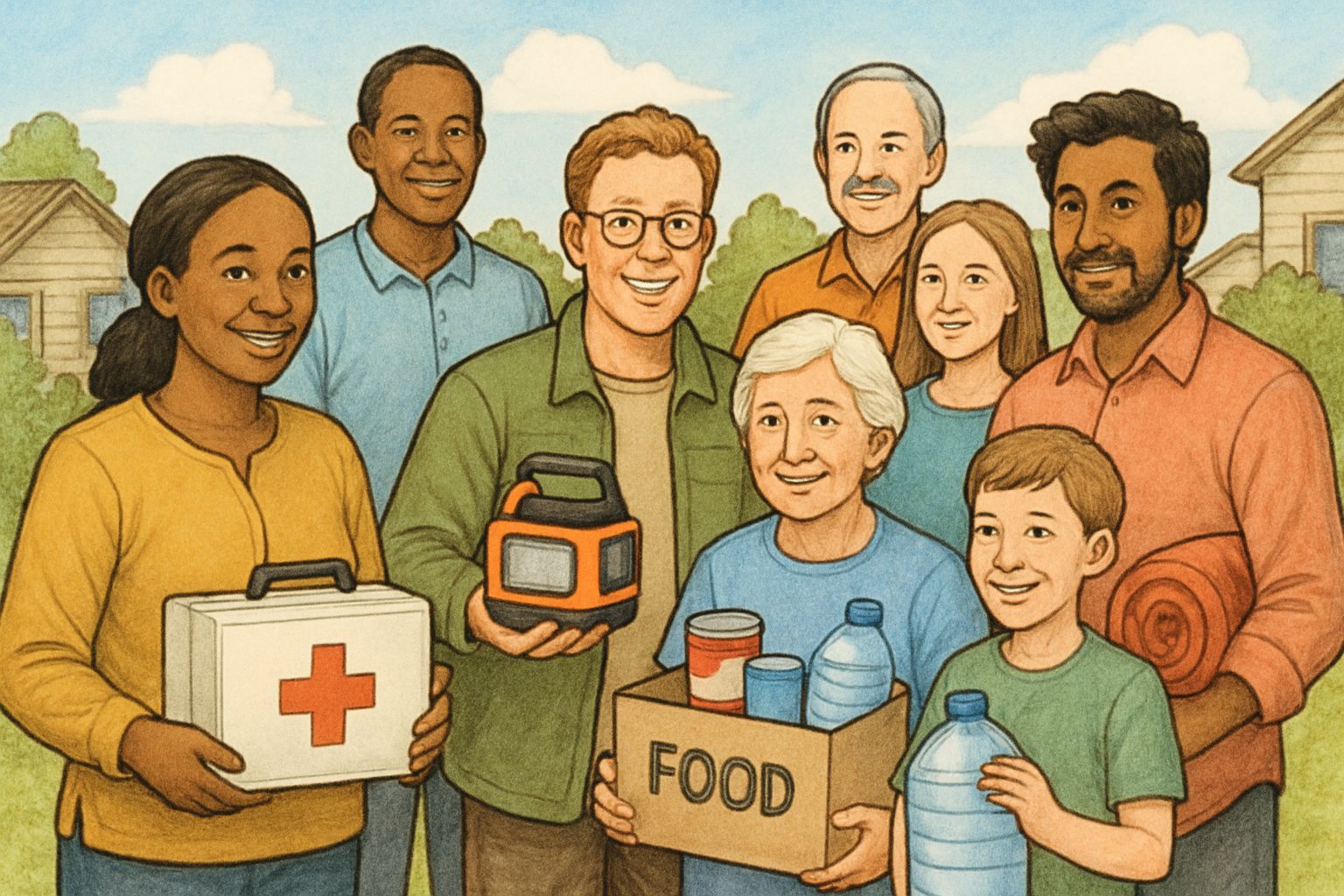
The most overlooked item in any emergency preparedness plan isn’t a tool, a stockpile, or an app — it’s the people living twenty feet away from you.
Most people spend their preparedness energy building personal kits, stocking food and water, and planning family escape routes. Those are smart moves. But they all share a critical blind spot: they assume you’ll be on your own when disaster strikes. The reality is far more complicated — and far more communal. Preparedness focused organizations consistently point to neighborhood networks as one of the most powerful and underutilized resources in emergency planning.
Your Neighbors Could Save Your Life
When a major disaster hits — a tornado, earthquake, hurricane, or extended power grid failure — the scenario most people imagine is a solo survival situation. In reality, the first person to pull you from rubble, bring you water, or check whether your elderly mother made it through the night is almost certainly going to be your neighbor, not a first responder.
This isn’t pessimism about emergency services. It’s a simple logistical reality. Disasters don’t target one house — they impact entire regions simultaneously. That means every emergency call, every fire truck, every ambulance, and every rescue crew is stretched to a breaking point across thousands of simultaneous incidents. Your neighborhood becomes its own micro-community of survival, whether you planned for it or not. The only question is whether your neighbors are strangers or allies.
Why Emergency Services Won’t Be There Right Away
In a localized emergency — a house fire, a medical episode, a car accident — 911 works exactly as designed. Help arrives within minutes. But scale that same event up to a regional disaster and the entire system changes. Roads become impassable, communications fail, and response teams are redirected to mass casualty situations. The neighbors right outside your door become the de facto first line of response.
What Happens to First Responders During a Major Disaster
During large-scale disasters, first responders face the same conditions everyone else does. Their own families are affected. Their stations may be damaged. Fuel becomes scarce, roads collapse, and radio communications degrade. A coordinated federal or state response — through agencies like FEMA — can take 72 hours or more to mobilize at scale. Local responders do their best, but they are working a triage system where the most critical incidents get priority. Your neighborhood may simply have to wait.
The Cascadia Subduction Zone: A Wake-Up Call for Every Community
Emergency planners studying the Cascadia Subduction Zone — a fault line running off the coast of the Pacific Northwest — have modeled scenarios where a full rupture produces a magnitude 9.0+ earthquake followed by a major tsunami. In those projections, entire communities along the Oregon and Washington coasts could be cut off from outside help for weeks. Bridge collapses, downed power infrastructure, and debris fields would make conventional emergency response nearly impossible for days. These are not fringe scenarios. They are the planning baseline for Pacific Northwest emergency management agencies.
Why Being on Your Own Is Not a Survival Strategy
The solo prepper model — the individual or family with a bunker full of supplies and a detailed bug-out plan — makes for compelling media but poor real-world strategy. Extended disasters create scenarios that no single household can fully manage: medical emergencies requiring multiple people, heavy debris that one person cannot move, the psychological toll of isolation, and resource needs that outlast any reasonable stockpile. Community isn’t just a comfort in these situations — it’s a functional necessity. For more insights, explore the rise of capability-based preparedness and how it can benefit you.
What Makes Neighbors Your Best Preparedness Asset
Proximity is the most underrated factor in emergency response. Your neighbors are already there. They don’t need to be dispatched, routed, or briefed on local geography. They know which house has the elderly resident who uses oxygen, which yard floods first, and where the nearest accessible water source is. That local knowledge, combined with physical proximity, makes a prepared neighbor more immediately valuable than almost any piece of gear you could stockpile.
There is also a compounding effect when neighbors prepare together. One household’s food supply runs out — but three households sharing resources can sustain longer. One family doesn’t own a chainsaw — but a neighbor two doors down has one and knows how to use it. One resident doesn’t know CPR — but their buddy-system partner is a retired nurse. Neighborhood preparedness doesn’t just add resources, it multiplies them.
Think of your neighborhood as a preparedness ecosystem. Every skill, tool, and supply that exists within a two-block radius is potentially available to you — but only if relationships and agreements were built before the disaster hit. A stranger with a generator stays inside. A neighbor you know knocks on your door.
Strength in Numbers: How Shared Resources Beat Solo Stockpiling
Storing three months of food, a medical kit, a water filtration system, a generator with fuel, communication equipment, and emergency tools for one household costs thousands of dollars and significant storage space. Distribute that same preparation across ten households in a coordinated neighborhood network and each family carries a fraction of the cost while the collective capability is far greater. This is the core economic and logistical argument for neighborhood preparedness — it is simply more efficient than doing it alone.
Skills Your Neighbors Have That You Don’t
One of the most powerful things you can map before a disaster is the hidden skill set living within your own block. You likely have no idea that your neighbor three houses down spent twenty years as an Army combat medic, or that the family across the street has a licensed electrician, a fluent Spanish speaker, and someone with wilderness first aid training. These skills don’t appear on any emergency supply list, but in a real disaster, they are often more valuable than physical supplies.
Vulnerable Neighbors Need You Too
Not everyone in your neighborhood has the same capacity to prepare or respond. Elderly residents, people with mobility limitations, individuals who rely on powered medical equipment, and those living alone face compounding risks in any disaster scenario. A power outage that is an inconvenience for a healthy adult can become life-threatening within hours for someone who depends on a home oxygen concentrator or refrigerated medication.
Identifying and connecting with vulnerable neighbors before a crisis is not just an act of kindness — it is a critical component of a functional neighborhood preparedness plan. A simple check-in, a shared phone number, and an agreement to knock on their door in an emergency costs nothing and could be the difference between a neighbor surviving or not. Build these relationships now, while there is time to do it thoughtfully.
How to Start Building a Prepared Neighborhood
The barrier to starting is almost always social, not logistical. People assume their neighbors won’t be interested, or that bringing up disasters will seem alarmist or strange. In practice, most people respond positively when a neighbor approaches the topic with genuine friendliness and a focus on mutual support rather than worst-case fear. You don’t need a formal program, a budget, or a committee. You need a conversation.
1. Start a Simple Conversation With Two or Three Neighbors
The most effective first step is also the simplest: walk next door and introduce yourself if you haven’t already, or deepen an existing relationship by bringing up preparedness directly. Keep the tone light and practical. You’re not warning anyone about imminent catastrophe — you’re talking about the same kind of practical planning most people already do in the back of their minds but never act on.
A good opening is honest and low-pressure. Something like: “We’ve been thinking about what we’d do if we lost power for a week — do you have a plan for that?” Most people will engage immediately because the question is relatable. From there, the conversation naturally opens into broader preparedness topics without anyone feeling overwhelmed or lectured. For more insights, explore the five fundamentals of personal preparedness.
Focus these early conversations on a few concrete, shared concerns relevant to your specific area — whether that’s hurricanes, wildfires, ice storms, or earthquakes. Local relevance makes the conversation feel urgent and practical rather than abstract.
- Exchange phone numbers and agree to check in during any emergency affecting the neighborhood
- Ask if they have any medical needs or mobility limitations you should know about
- Share one preparedness tip or resource without overwhelming them with information
- Mention that you’re interested in connecting a few more neighbors and ask if they’d like to be included
- Keep it casual — this is a relationship, not a recruitment pitch
2. Host a Low-Key Block Gathering
Once you have two or three neighbors engaged, a casual block gathering is the natural next step. A backyard BBQ, a porch happy hour, or even a simple coffee morning gives neighbors a relaxed setting to connect — and gives you a natural opening to introduce preparedness as a shared community interest rather than a niche personal hobby.
You don’t need a formal agenda or a presentation. Mentioning that one reason you wanted to get people together was to talk about how the block might support each other during a major storm or extended outage is enough to get the conversation going organically. People who would never attend a formal “emergency preparedness meeting” will happily talk about it over a plate of food with their neighbors.
3. Create a Shared Neighborhood Skills and Resources List
Once a few neighbors are engaged, create a voluntary inventory of the skills and resources available within your immediate area. This doesn’t need to be a formal document — a shared note, a group chat, or even a printed sheet distributed to participating households works fine. The goal is to make sure that when something goes wrong, people know who to call and what help is actually nearby.
Ask neighbors to voluntarily share relevant skills — medical training, construction experience, mechanical knowledge, language fluency, or anything else that could be useful in an emergency. Do the same for physical resources: generators, trucks or trailers, chainsaws, large water storage, first aid supplies, or ham radio equipment. This inventory becomes one of the most practical documents your neighborhood can have.
4. Set Up a Buddy System for Vulnerable Neighbors
Pair each vulnerable neighbor — elderly residents, those with disabilities, anyone living alone — with one or two nearby households who agree to check on them immediately in any emergency. The agreement is simple: if something significant happens, you check on your buddy before anything else. This system requires almost no infrastructure and saves lives.
Make sure the buddy pairing is mutual and consensual, and that the vulnerable neighbor has a way to signal distress — a specific text, a flag in the window, or a pre-agreed knock pattern. Also ensure that at least one household in the buddy pair knows about any medical equipment, medications, or mobility limitations that would affect how they provide help.
5. Plan a Neighborhood Preparedness Meeting
When the groundwork is laid and enough neighbors are engaged, formalize the effort with a structured preparedness meeting. Use a resource like the nine-step neighborhood readiness framework developed by community preparedness programs to guide the agenda. Cover communication plans, resource sharing agreements, vulnerable neighbor identification, and a basic response plan for the most likely local hazards. Keep it to ninety minutes, assign simple follow-up tasks, and schedule the next meeting before everyone leaves.
Local Programs That Make Neighborhood Preparedness Easier
If building a neighborhood network from scratch feels daunting, you don’t have to start from zero. Several well-established programs provide frameworks, training, and community infrastructure that make organized neighborhood preparedness significantly more accessible. These programs have already done the curriculum design, the training protocols, and the organizational structure — your job is simply to plug your neighborhood into them.
How CERT Teams Work and How to Join One
The Community Emergency Response Team (CERT) program, administered nationally through FEMA and delivered locally by fire departments and emergency management offices, trains community members in basic disaster response skills. CERT training covers light search and rescue, basic first aid and triage, fire safety, disaster psychology, and team organization. Graduates are equipped to take meaningful action in the critical window between when a disaster strikes and when professional responders arrive. To find a CERT program near you, visit ready.gov/cert and search by zip code.
Neighborhood Watch as a Preparedness Foundation
Most people think of Neighborhood Watch as a crime prevention tool — and it is. But a well-organized Neighborhood Watch program already has something that takes years to build from scratch: an active communication network, a roster of engaged residents, and an established habit of neighbors looking out for one another. Those are exactly the foundations a disaster preparedness network needs. Many communities have found that their Neighborhood Watch became the backbone of their emergency response plan with minimal additional effort, simply by expanding the scope of existing conversations and check-in systems.
A Prepared Neighborhood Starts With One Conversation
Everything covered in this article — the buddy systems, the skills inventories, the CERT teams, the block gatherings — traces back to a single starting point: one neighbor deciding to talk to another. That first conversation doesn’t need to be polished or perfectly timed. It just needs to happen.
Neighborhood preparedness is not a project that requires a committee, a budget, or a permit. It requires trust, and trust is built one interaction at a time. The neighbor who knocks on your door during a blackout to make sure you’re okay didn’t earn that instinct at a formal training session — they earned it through years of small, consistent acts of connection. You can start building that foundation right now, today, before anything goes wrong.
Think about the two or three neighbors whose faces you already know. Start there. A short conversation, a phone number exchange, a simple question about whether they have a plan for the next major storm in your region. That is the entire first step. Everything else — the networks, the programs, the coordinated response plans — grows naturally from that beginning.
Frequently Asked Questions
Neighborhood preparedness raises a lot of practical questions, especially for people who are just getting started. The answers are almost always simpler than people expect, and the barriers are almost always smaller than they appear. For those looking to start on a budget, check out our guide on how to start preparing on any budget.
Whether you’re wondering how to approach a disinterested neighbor, how many people you actually need involved, or what skills matter most in a real emergency, the questions below cover the ground that comes up most often when communities start building these networks.
The common thread across all of them is this: starting small is not just acceptable — it is the right strategy. Neighborhood preparedness is built incrementally, and every single step you take before a disaster makes a measurable difference when one arrives.
What Is the First Step to Getting My Neighborhood Prepared?
The first step is starting a direct, low-pressure conversation with two or three neighbors you already have some connection with. You don’t need a plan, a program, or a presentation — you need a genuine human exchange about a topic most people already think about but rarely discuss out loud.
Keep the initial focus narrow and local. Reference a recent event in your area — a bad storm, a multi-day power outage, a wildfire — and use it as a natural entry point into the question of how your immediate neighborhood would manage something similar. That context makes the conversation feel relevant rather than hypothetical.
A simple conversation starter that works:
“Hey, with the way storms have been lately, I’ve been thinking about what our block would do if we lost power for a week. Do you have a plan for something like that? I’d love to compare notes and maybe connect a few of us.”
This approach is honest, non-alarmist, locally relevant, and invites collaboration rather than delivering a warning. It works in almost any neighborhood, with almost any neighbor.
Once you’ve had that first conversation with two or three people, the momentum often builds on its own. One engaged neighbor tends to bring in another, and the network expands organically without anyone feeling pressured or recruited into something they didn’t choose. For more on preparedness, consider exploring five fundamentals of personal preparedness.
From there, move toward a shared contact list, a voluntary skills and resources inventory, and eventually a more structured neighborhood meeting. But none of that happens without the first conversation — so prioritize that above everything else.
What If My Neighbors Are Not Interested in Preparedness?
Not every neighbor will engage right away, and that is completely normal. Some people are skeptical, some are overwhelmed with other life priorities, and some simply don’t see the relevance until a disaster hits close to home. Don’t treat initial disinterest as a permanent rejection — circumstances change, and a neighbor who seemed indifferent last year may become highly motivated after a regional event makes the risk feel real.
In the meantime, focus your energy on the neighbors who are receptive. Even two or three engaged households create meaningful collective capacity. You don’t need unanimous block participation to build a functional preparedness network — you need enough committed people to cover the core functions: communication, vulnerable neighbor check-ins, shared resources, and basic first aid capability. Work with what you have and leave the door open for others to join when they’re ready.
How Many Neighbors Do I Need to Involve to Make a Difference?
Two households are better than one. Three are better than two. There is no minimum threshold for neighborhood preparedness to start delivering real value — every additional prepared household in your immediate area increases your collective resilience. That said, most community preparedness frameworks suggest that engaging between six and ten households on a single block creates enough critical mass to handle the most common disaster scenarios: medical emergencies, debris clearing, resource sharing, and vulnerable neighbor support. Start with whoever is willing, and build from there.
What Skills Are Most Valuable in a Neighborhood Preparedness Network?
Medical and first aid skills consistently rank at the top of every disaster response needs list. CPR certification, wilderness first aid training, nursing or paramedic experience, and even basic wound care knowledge become extraordinarily valuable when professional medical response is delayed or unavailable. If your neighborhood network has even one person with meaningful medical training, that is a significant asset.
Beyond medical skills, the capabilities that make the biggest practical difference include learning how to reduce your dependence on fragile systems.
- Chainsaw operation and debris clearing — critical for restoring access to blocked roads and properties after wind events or earthquakes
- Mechanical and electrical knowledge — for generator maintenance, improvised repairs, and assessing structural or utility damage safely
- Ham radio operation — provides communication capability when cell networks and internet infrastructure fail
- Fluency in additional languages — essential for reaching non-English-speaking neighbors and coordinating with broader community response teams
- Mental health and counseling background — disaster psychology is a real and serious factor in extended emergencies; having someone who understands trauma response is more valuable than most people realize
- Construction and structural assessment — helps determine which buildings are safe to enter or shelter in after an earthquake or major wind event
What Is a CERT Team and How Do I Start One in My Neighborhood?
A Community Emergency Response Team (CERT) is a group of trained community volunteers who are prepared to provide immediate assistance during a disaster before professional responders arrive. The CERT program is federally supported through FEMA and delivered locally by fire departments and emergency management agencies across the country. Participants complete a standardized training curriculum covering fire safety, light search and rescue, basic medical operations, disaster psychology, and team coordination.
To start the process of forming a CERT team in your neighborhood, visit ready.gov/cert to locate your local CERT program coordinator. In most areas, the program is run through the local fire department or Office of Emergency Management. You’ll connect with a coordinator who can walk you through the training schedule, what’s required of participants, and how to organize a neighborhood-level team once members are trained.
|
CERT Training Module |
What You Learn |
Why It Matters in a Disaster |
|---|---|---|
|
Disaster Preparedness |
Hazard identification, family and community planning |
Sets the foundation for organized neighborhood response |
|
Fire Safety |
Fire suppression techniques, utility shutoff procedures |
Enables safe intervention before fire units arrive |
|
Disaster Medical Operations |
Triage, basic first aid, treating shock and bleeding |
Bridges the gap when EMS is overwhelmed or delayed |
|
Light Search and Rescue |
Search techniques, debris removal, victim extraction |
Critical in the first hours after structural collapse or earthquake |
|
Disaster Psychology |
Stress responses, supporting survivors emotionally |
Helps maintain team function and supports community morale |
|
Team Organization |
Incident command basics, team roles and coordination |
Ensures the group functions efficiently under pressure |
Most CERT training programs are completed over a single weekend or across several weekday evening sessions, making the time commitment manageable for most people. Once trained, CERT members are registered with their local emergency management office and activated through official channels during declared disasters — though the skills they carry are useful far outside of formal activations.
Even if a full CERT team isn’t immediately achievable for your block, encouraging two or three neighbors to complete the training individually creates meaningful capability within your network. Trained CERT members also often become the natural organizers and leaders of broader neighborhood preparedness efforts, because they’ve already built relationships with local emergency management officials and have a working understanding of how community response systems function.



Leave a Reply