
Article At A Glance
- Learning practical skills in a group setting accelerates progress — social accountability and peer feedback create faster, more lasting results than solo study.
- The right support system turns motivation into consistency — surrounding yourself with people who share your learning goals keeps you on track when motivation dips.
- Not all skills are equal when it comes to group learning — some practical skills, like communication, financial literacy, and first aid, deliver dramatically better outcomes when practiced with others.
- There’s a proven science behind why humans learn better together — understanding it changes how you approach building any new skill.
- Your life stage determines which skills to prioritize first — students, working professionals, and retirees each have a different high-impact starting point for collaborative skill-building.
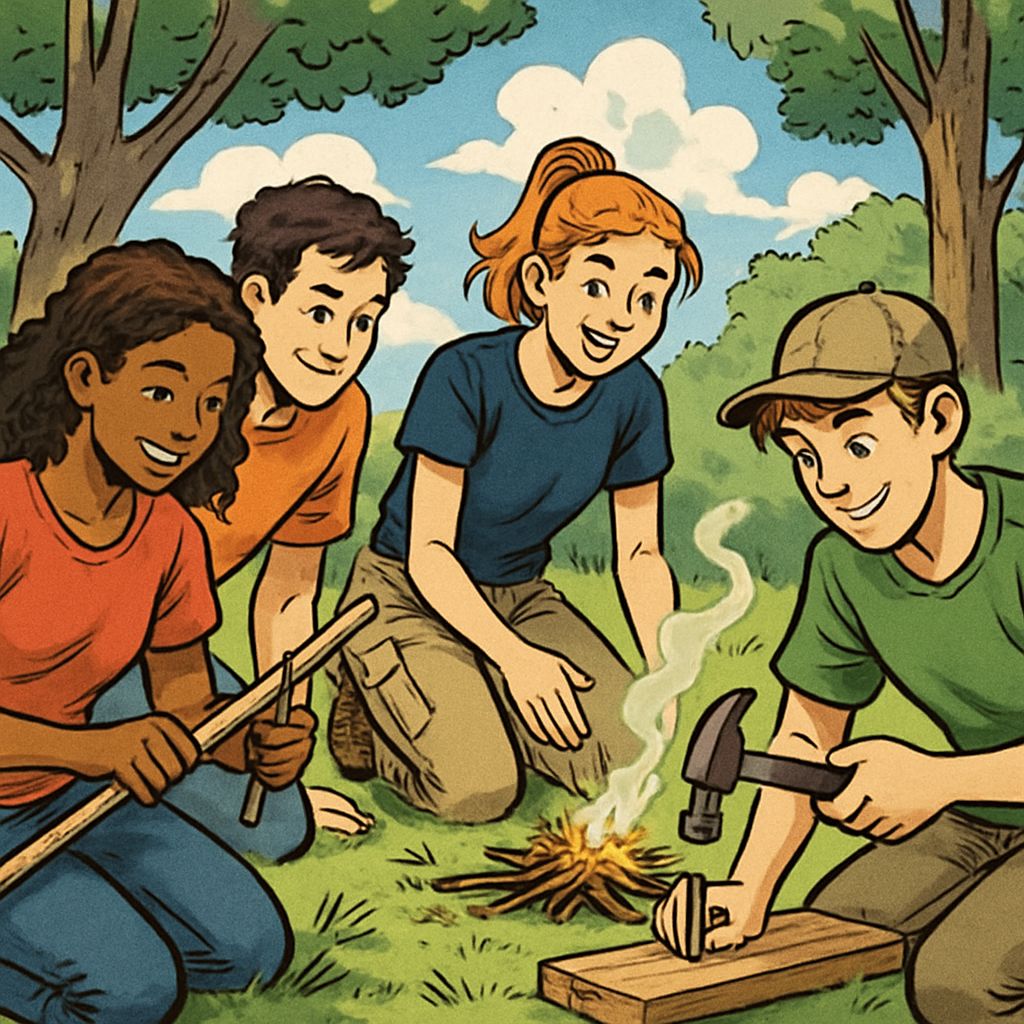
Learning a practical skill alone is hard — learning it with others is a completely different experience.
Whether you’re picking up financial literacy, improving your cooking, or finally getting comfortable with technology, the people around you can be the difference between giving up in week two and actually sticking with it. A learning support system isn’t just a motivational tool — it’s a structural advantage that shapes how quickly and how deeply new skills take root.
Learning With Others Makes Skills Stick Faster
There’s a reason military training, medical school, and trade apprenticeships are all done in group environments — repetition combined with social pressure and real-time feedback is the fastest path to competence. When you learn alongside others, you don’t just absorb information; you apply it, defend it, and refine it through conversation and observation. That process locks knowledge in at a much deeper level than reading or watching tutorials alone ever could.
Why a Support System Changes How You Learn
A support system reframes the entire learning experience. Instead of a solitary grind, skill-building becomes a shared project — one where progress is visible, celebrated, and reinforced by people who are invested in the same outcome as you. This collaborative approach can be likened to introducing a preparedness culture at home, where everyone contributes to a common goal.
The Science Behind Social Learning
Psychologist Albert Bandura’s social learning theory established that people learn most effectively by observing others, imitating behaviors, and receiving social reinforcement. This isn’t abstract theory — it plays out every time someone picks up a knife technique faster by watching a friend cook in real time than by rewinding a YouTube tutorial fifteen times. Group environments also activate a phenomenon called co-regulation, where the calm, focused state of those around you literally influences your own nervous system, making it easier to concentrate and absorb new information.
How Accountability Keeps You Consistent
Accountability is one of the most underrated forces in skill development. When you commit to showing up for a group — whether that’s a weekly cooking session, a financial literacy meetup, or an online study circle — the social cost of dropping out becomes a real deterrent. Research consistently shows that people who share their goals publicly and check in with others are significantly more likely to follow through.
The mechanics are simple but powerful. Knowing someone will ask “Did you practice this week?” creates a low-level but persistent motivational pressure that self-discipline alone rarely sustains. That external check-in bridges the gap between intention and action, especially in the early weeks when a new habit hasn’t yet formed on its own.
Motivation Is Contagious in Group Settings
When one person in a group makes a breakthrough — finally nails a budget spreadsheet, completes their first aid certification, or cooks a meal from scratch without a recipe — it sends a signal to everyone around them: this is achievable. That shared momentum is hard to manufacture alone and nearly impossible to sustain without it.
The Most Valuable Practical Skills to Learn With Others
Not every skill benefits equally from group learning. The ones that do tend to involve real-world application, communication, or decision-making under pressure — areas where feedback from another person is genuinely irreplaceable. The following skills consistently show better outcomes when practiced collaboratively.
Choosing the right skills to focus on as a group also matters. Picking skills that are immediately applicable to daily life keeps engagement high and gives everyone in the group a fast, tangible return on their time investment.
1. Communication and Active Listening
Communication is the one practical skill that improves almost every other area of your life — and it simply cannot be developed in isolation. You can read every book on active listening ever written, but until you sit across from a real person, resist the urge to interrupt, and practice reflecting back what you heard, none of it transfers to your actual conversations.
Group practice creates the repetition that communication skills require. Role-playing difficult conversations, practicing public speaking in front of peers, and getting honest feedback on how you come across are all experiences that a group environment makes possible in a way solo study never can.
The skills worth building here include more than just talking clearly. Real communication competency looks like this:
- Active listening without interrupting or formulating your response mid-sentence
- Asking clarifying questions that show genuine understanding
- Reading non-verbal cues and body language accurately
- Giving and receiving constructive feedback without defensiveness
- Adapting your communication style to different people and contexts
2. Financial Literacy and Budgeting
Most people were never formally taught how money works — and the consequences follow them for decades. Learning financial literacy in a group normalizes conversations that most people find uncomfortable and creates a space where real questions get honest answers, not judgment. Talking through budgeting strategies, comparing approaches to debt repayment, or working through the basics of investing alongside others who are also figuring it out removes the shame that often keeps people financially stuck.
Group financial learning also introduces you to strategies and perspectives you’d never encounter on your own. Someone in your group might have already navigated student loan repayment, negotiated a raise, or figured out how to build an emergency fund on a tight income — and that lived experience is worth more than any textbook chapter on the subject.
3. Cooking and Nutrition
Cooking is one of the most immediately rewarding practical skills you can develop — and learning it in a group dramatically speeds up the process. Cooking alongside others exposes you to techniques, flavors, and approaches you wouldn’t discover alone, and the social element makes the repetitive practice that skill-building requires genuinely enjoyable rather than a chore.
Nutrition knowledge pairs naturally with cooking skills when learned together. Understanding why certain foods affect energy, mood, and long-term health gives context that makes healthy eating feel purposeful rather than restrictive. Groups that cook and learn about nutrition together tend to hold onto those habits long after the sessions end, because the behavior becomes socially embedded rather than an individual act of willpower.
Some of the most impactful cooking skills to build with others include:
- Basic knife skills and prep techniques that make cooking faster and safer
- Meal planning and batch cooking to reduce daily decision fatigue
- Reading and adapting recipes based on available ingredients
- Understanding macronutrients and how to build a balanced plate without overthinking it
- Food storage and reducing waste to lower weekly grocery costs
4. Digital Literacy and AI Productivity Tools
Technology is evolving faster than most individuals can track on their own, and the gap between those who can use digital tools effectively and those who can’t is widening every year. Learning digital literacy in a group setting is particularly effective because the skill set is broad, the learning curve varies wildly between people, and peer teaching — where someone who just figured something out explains it to someone who hasn’t yet — accelerates everyone’s progress. You can also read about a preparedness progress review to assess your readiness.
AI productivity tools like ChatGPT, Notion AI, and automation platforms are increasingly relevant across every profession and life stage. A group learning environment lets people experiment with these tools together, troubleshoot in real time, and share practical use cases that make abstract technology immediately useful in daily life.
5. First Aid and Emergency Response
Key Fact: The American Heart Association reports that effective bystander CPR, provided immediately after cardiac arrest, can double or triple a person’s chance of survival. CPR is a skill that must be physically practiced — reading about it is not enough.
First aid is one of the few practical skills where group learning isn’t just beneficial — it’s essentially required. Performing CPR correctly, applying pressure to a wound, or managing a choking incident are all physical, high-pressure responses that need to be rehearsed with real people in real scenarios. A group setting provides the only realistic way to build the muscle memory and calm decision-making these situations demand.
The added benefit of learning first aid in a group is that it creates a network of competent responders. When the people in your household, workplace, or community all know what to do in an emergency, the collective safety of everyone improves dramatically. One person’s certification is useful — five people’s certification is a genuinely safer environment for everyone in it. For more on fostering a culture of readiness at home, check out this guide on introducing preparedness culture.
First aid courses like the Red Cross First Aid/CPR/AED certification or St John Ambulance training programs are specifically designed for group participation. Many organizations offer workplace or community group rates, making this one of the most cost-effective group learning investments available.
6. Time Management and Organization
Time management sounds like a solo discipline, but learning it in a group reveals something most productivity books leave out — your systems need to work in the context of real relationships and shared responsibilities. When you compare approaches with others, workshop your weekly planning together, and troubleshoot where your time actually disappears, you get a much more honest picture than any personal audit ever gives you. Shared tools like time-blocking templates, group accountability check-ins, and collaborative project boards turn abstract productivity principles into lived habits.
How to Build Your Own Learning Support System
Building a learning support system doesn’t require a formal program or a large group. It starts with being intentional about who you learn alongside and what you’re committing to together. The most effective groups are small, focused, and consistent — three to six people with a shared goal and a regular meeting rhythm will outperform a large, loosely organized cohort every time.
Find People Who Share Your Learning Goals
Start with your existing network before looking outward. Colleagues, neighbors, friends, or family members who have expressed interest in similar skills are your lowest-friction starting point. If your immediate network doesn’t offer the right fit, platforms like Meetup, Facebook Groups, Reddit communities, and local library or community center noticeboards are reliable places to find people who are actively seeking the same kind of collaborative learning environment. The key is alignment on both the skill and the commitment level — a group where everyone wants different things or brings wildly different levels of availability will struggle to maintain momentum.
Set Clear Goals as a Group
Vague intentions produce vague results. Before your group’s first session, agree on a specific outcome — not “we want to get better at budgeting” but “by the end of eight weeks, each of us will have a working monthly budget and three months of expense tracking completed.” Specific, time-bound group goals give every session a purpose and give every member a clear measure of progress. revisit those goals monthly and adjust as a group when life shifts — the ability to recalibrate together without the group falling apart is what separates sustainable learning communities from short-lived ones.
Choose the Right Format: In-Person vs. Online
Both formats work — the best choice depends on your group’s geography, schedules, and the nature of the skill itself. In-person sessions are better for hands-on skills like cooking, first aid, or woodworking, where physical presence and shared materials matter. Online formats via platforms like Zoom, Google Meet, or Discord work extremely well for knowledge-based skills like financial literacy, digital tools, or communication theory. Many of the most resilient learning groups use a hybrid model — meeting in person monthly for deeper sessions while maintaining momentum through a group chat or weekly online check-in between meetings.
Common Mistakes That Slow Down Group Learning
Even well-intentioned learning groups plateau or dissolve when they fall into predictable traps. Recognizing these patterns early is the difference between a group that builds real skills over time and one that meets enthusiastically for a month and quietly disappears.
Taking On Too Many Skills at Once
The enthusiasm of a new group often leads to an overloaded agenda — everyone wants to cover cooking, budgeting, communication, and digital literacy all at once. The result is shallow exposure to everything and genuine competence in nothing. The most effective groups pick one skill per learning cycle, go deep on it for six to ten weeks, and only expand the focus once real proficiency has been built. Breadth is the enemy of depth, especially in the early stages when habits and group routines are still forming.
Watching Tutorials Without Practicing
This is probably the single most common mistake in any learning context — group or individual. Tutorial consumption feels productive because it’s effortful and generates a sense of progress. But watching someone else demonstrate a skill and being able to perform that skill yourself are two completely different things, and the gap between them only closes through direct, repeated practice.
Groups can unintentionally reinforce this pattern by spending session time watching videos together instead of doing. The fix is simple but requires discipline: structure every session so that at least 60 to 70 percent of the time is spent on active application — cooking the actual dish, building the actual spreadsheet, practicing the actual conversation — with tutorials used only to introduce a concept, not as the main event.
- Set a rule that tutorials are watched before the group session, not during it
- Open every meeting with a hands-on task that applies what was reviewed individually
- Debrief after practice — what worked, what didn’t, what needs to be refined
- Rotate who leads the practical component so everyone gets teaching experience
- Track completed practice sessions, not hours of content consumed
Teaching a skill to someone else is one of the most powerful learning techniques available. When group members take turns explaining what they’ve learned or demonstrating a technique to the rest of the group, retention increases dramatically — a principle backed by research on the protégé effect, which shows that preparing to teach something forces deeper processing of the material than studying it for yourself alone.
Skipping the Fundamentals
There’s a strong pull in group settings to move quickly — partly to maintain energy and partly because covering advanced material feels more impressive than drilling the basics. But skipping foundational skills creates gaps that compound over time. A group that jumps to advanced budgeting strategies without first building a clear picture of current income and expenses will hit a wall. A cooking group that skips knife skills and heat management will struggle to execute any recipe reliably, regardless of how sophisticated their ambitions are.
Fundamentals aren’t the boring part of skill-building — they’re the load-bearing structure everything else sits on. The most effective groups spend more time than feels comfortable on the basics, because members who have genuinely solid foundations progress faster and more confidently at every stage that follows. Rushing the foundation to get to the interesting parts is one of the most reliable ways to ensure a group stalls out halfway through its learning goals.
Practical Skills Learning by Life Stage
The practical skills that deliver the highest return on your time and energy shift significantly depending on where you are in life. A 19-year-old university student, a 38-year-old professional managing a household, and a 65-year-old entering retirement are all starting from different baselines with different daily pressures — and the skills that will make the biggest immediate difference in each of their lives are genuinely different. Matching your learning focus to your life stage isn’t about limiting your ambition; it’s about being strategic with the time and energy you actually have available. For those managing a household, understanding common financial mistakes can be crucial.
Best Skills for Students to Learn Together
Students are navigating some of the steepest learning curves of their lives — academically, socially, and financially — often for the first time and without much of a safety net. The practical skills that deliver the biggest return at this stage are the ones that directly support daily independence: budgeting on a limited income, cooking affordable and nutritious meals, managing time across competing deadlines, and communicating effectively in professional contexts. Learning these skills in a group setting with peers who are facing the exact same pressures creates an environment of genuine mutual relevance — everyone in the room has skin in the game.
Study groups that expand beyond academic content into life skills tend to build stronger bonds and better outcomes across the board. When students cook together, manage shared household expenses collaboratively, or practice job interview techniques with each other, they’re building competencies that outlast any single course or semester. The peer dynamic at this life stage is also uniquely powerful — advice and accountability from someone your own age who is living the same reality carries a credibility that formal instruction sometimes struggles to match.
Skills Worth Prioritizing in Your Working Years
During your working years, time is the scarcest resource — which means the skills you choose to develop in a group need to generate a clear, tangible return. The highest-priority skills at this stage tend to cluster around financial independence, health management, leadership communication, and home competency. These are areas where gaps in knowledge have direct consequences: not understanding how to invest means missing decades of compounding growth; poor communication skills create friction in careers and relationships that compounds over time; not knowing how to manage a household efficiently creates daily stress that erodes energy and focus.
Group learning during working years often works best when it integrates naturally with existing social structures. A group of colleagues exploring AI productivity tools together, a neighborhood network sharing home maintenance skills, or a cohort of parents learning basic first aid and child nutrition simultaneously — these formats respect the time constraints of busy adults while delivering genuine skill development. The overlap between social connection and learning is especially valuable during a life stage where both tend to be deprioritized in favor of immediate obligations.
The most impactful skills to focus on during your working years include:
- Investment basics and retirement planning — understanding compound interest, superannuation or 401(k) contributions, and index fund fundamentals before it becomes urgent
- Advanced communication and negotiation — salary negotiation, conflict resolution, and leadership communication that directly affects career progression
- Home maintenance fundamentals — basic plumbing, electrical safety checks, and general repairs that reduce ongoing costs and reliance on tradespeople
- Health literacy — understanding how nutrition, sleep, and stress management interact and building sustainable habits as a group rather than relying on individual willpower
- Digital productivity and automation — tools that genuinely reduce workload and free up time, learned collaboratively so adoption is faster and more consistent
How Retirees Benefit From Collaborative Skill-Building
Retirement reshapes everything — structure, social connection, purpose, and daily routine all shift simultaneously, often leaving people more isolated than they anticipated. Learning practical skills in a group during retirement addresses several of these challenges at once. The skill development itself builds cognitive engagement and a sense of ongoing growth, while the group structure provides the regular social interaction and sense of belonging that work previously supplied. Skills worth focusing on at this stage include digital literacy (to stay connected and avoid scams), cooking for changing nutritional needs, basic home safety and fall prevention, and financial management of retirement income. The payoff isn’t just capability — it’s the quality of life that comes from remaining active, connected, and genuinely useful to the people around you.
The Long-Term Payoff of Learning Practical Skills With Others
The compounding effect of collaborative skill-building is something most people underestimate until they’re living it. A budgeting group that meets for eight weeks doesn’t just produce eight weeks of financial literacy — it produces habits, relationships, and a shared language around money that members carry forward for years. A cooking group that stays together through a single season often transforms the eating habits of everyone involved, along with the households they return to after each session. The skills themselves are the visible output, but the lasting payoff is the network of capable, motivated people you’ve built them alongside.
Independent capability and strong community aren’t opposing forces — they reinforce each other. The more practical skills you develop, the more value you bring to every group you’re part of. The more you learn alongside others, the faster and more deeply those skills develop. That loop, once started, doesn’t stop at the edge of any single skill or learning cycle. It becomes the foundation of a life where growth is social, challenges are shared, and progress compounds in ways that solitary learning simply cannot replicate.
Frequently Asked Questions
The common thread across all of these is that they involve either physical practice, interpersonal dynamics, or behavioral change — three areas where other people aren’t just helpful, they’re essentially required for genuine development.
How Do I Find a Support System for Learning New Skills?
Start with the people already in your life — colleagues, neighbors, or friends who have mentioned wanting to develop similar skills are your most accessible and lowest-effort starting point. If your existing network doesn’t offer the right fit, platforms like Meetup, Reddit communities (such as r/personalfinance, r/cookingforbeginners, or r/productivity), local library programs, community centers, and Facebook Groups are all reliable places to find people actively seeking collaborative learning environments. The key is to be specific about what you want to learn and what level of commitment you’re looking for — vague outreach attracts vague responses, but a clear invitation tends to find the right people quickly.
Is It Better to Learn Practical Skills Alone or With Others?
For most practical skills, learning with others produces faster progress, better retention, and more sustainable habits than solo learning. The exception is highly personal or introspective skills — journaling, meditation, or solo creative pursuits — where solitude is part of the practice itself. For anything that involves application in the real world, which covers most practical life skills, a group environment consistently outperforms individual study because it provides feedback, accountability, and the motivational momentum that self-directed learning struggles to maintain over time.
How Many Skills Should I Focus on Learning at Once?
One to two skills at a time is the practical ceiling for most people, and for most learning groups. Attempting more than that dilutes attention, slows progress in all areas simultaneously, and dramatically increases the likelihood of abandoning the effort altogether. Pick one primary skill to develop deeply over a six to ten week cycle, allow a secondary skill to develop passively in the background if it arises naturally, and resist the pull to expand the agenda until genuine competency in the primary skill has been established. Depth first, breadth second — always.
Can Online Communities Replace In-Person Learning Groups?
Online communities can absolutely replicate many of the benefits of in-person learning groups — accountability, shared resources, peer feedback, and consistent social motivation are all achievable in digital environments. Platforms like Discord servers, Reddit communities, Slack groups, and structured online courses with cohort-based learning have proven this repeatedly. For knowledge-based skills like financial literacy, digital tools, or time management strategies, online communities are genuinely effective and often more accessible than local alternatives.
Where online communities fall short is in skills that require physical presence and hands-on practice. Learning CPR over Zoom, developing knife skills through a video call, or practicing home electrical repairs in an online forum introduces a gap between instruction and real-world execution that in-person settings simply don’t have. For these skills, in-person learning isn’t just preferable — it’s necessary for the skill to transfer reliably when it actually matters.
The most practical answer for most people is a hybrid approach: use online communities for consistent accountability, resource sharing, and between-session support, while reserving in-person sessions for the hands-on application that physical skills genuinely require. This combination captures the accessibility and flexibility of digital learning without sacrificing the irreplaceable value of real-world practice with real people.




Leave a Reply