
Article-At-A-Glance
- Psychological preparedness strategies are not about eliminating fear — they are about building the mental tools to function clearly when fear shows up.
- Your brain physically shifts into survival mode during a crisis, which impairs decision-making, communication, and emotional regulation.
- Practice and mental rehearsal are the most underrated — and most effective — psychological preparedness tools available to everyday people.
- Vulnerable individuals face disproportionately higher psychological risk during crises, and inclusive preparedness strategies can close that gap.
- There is a specific point where normal crisis stress crosses into something that requires professional support — and knowing that line could change everything.
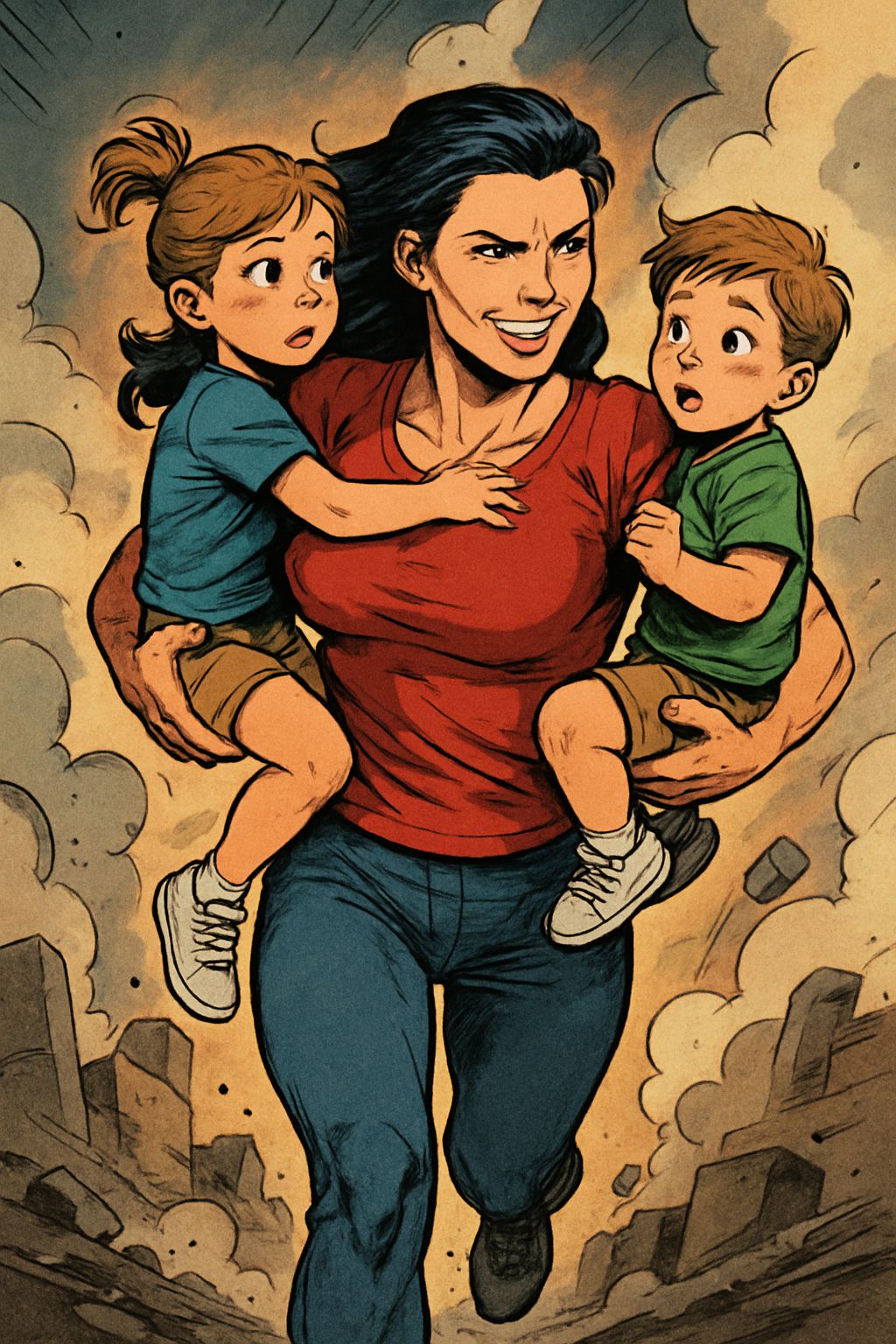
Most people prepare for a disaster by stockpiling water, building go-bags, and memorizing evacuation routes — but almost no one prepares the one thing most likely to fail first: their mind.
Psychological preparedness strategies are the mental and emotional frameworks that help you stay functional when a crisis strips away the ordinary structure of your life. They are not about staying calm in the movie-hero sense. They are about having enough internal resources to make decisions, communicate with people you love, and recover after the storm. Many experts have long emphasized that emotional preparation is just as critical as physical preparation — yet it remains the most skipped step in most people’s planning.
Your Brain Works Against You in a Crisis
This is not a motivational metaphor. It is neuroscience. When your brain detects a serious threat, it triggers a cascade of biological responses designed to protect you — but those same responses can make you worse at thinking, deciding, and communicating precisely when you need those skills the most.
Why the Brain Shifts Into Survival Mode
The amygdala — the brain’s threat-detection center — responds to danger faster than the prefrontal cortex, which handles rational thinking and decision-making. When a crisis hits, the amygdala sounds the alarm, flooding your body with cortisol and adrenaline before your thinking brain has even fully registered what is happening. This is not a flaw. It is a survival mechanism that kept early humans alive. The problem is that it was not designed for the complex, information-dense crises that modern people face.
In a genuine emergency, the prefrontal cortex — responsible for planning, judgment, and emotional regulation — becomes less active. You are literally less able to think clearly at the exact moment clear thinking matters most.
What Survival Mode Actually Does to Your Thinking
When the brain shifts into survival mode, several things happen simultaneously that most people do not anticipate:
- Tunnel vision — attention narrows to the immediate threat, making it harder to see the bigger picture or consider alternatives
- Memory disruption — information processed under extreme stress is often fragmented or difficult to recall later
- Impaired communication — language processing slows, making it harder to give or receive clear instructions
- Emotional flooding — feelings of panic, anger, or grief can override logical processing entirely
- Decision fatigue accelerates — even small choices feel overwhelming, leading to paralysis or impulsive action
Understanding this in advance is itself a form of psychological preparedness. When you know why your brain behaves the way it does under pressure, you are less likely to be blindsided by your own reactions. For further reading, you might find this article on mental health and disaster preparedness helpful.
Why Struggling Now Makes Future Crises Harder
Chronic stress — the low-grade, ongoing kind that most people carry right now — already taxes the nervous system before any disaster strikes. A nervous system operating near its limit has very little buffer left when something genuinely serious happens. This is why psychological preparedness strategies are especially important for people who are already struggling. The smaller the reserve, the greater the impact of any additional disruption.
Mental Health Preparedness Is Not About Feeling Ready
Here is something that trips most people up: emotional preparedness does not mean you feel ready. It does not mean you feel calm, confident, or unafraid. It means you have enough structure, skill, and support in place that you can function even when you do not feel ready.
The Difference Between Emotional Readiness and Feeling Okay
Feeling okay is a mood. Emotional readiness is a capacity. You can feel anxious, exhausted, or overwhelmed and still have the coping tools that allow you to move through a crisis without completely falling apart. Mental health preparedness builds that capacity ahead of time — not by eliminating difficult emotions, but by creating a practiced relationship with them. The goal is not composure. The goal is function.
Why Fear Is Not the Enemy
Fear is a signal, not a failure. It tells you something important is at stake and that your brain is paying attention. The psychological preparedness approach does not try to suppress fear — it works with fear by giving you practiced responses to fall back on when fear shows up. When you have a plan, a support contact, and a practiced coping strategy, fear has less empty space to fill with panic.
Practice Is the Most Underrated Preparedness Tool
Physical drills save lives not just because they teach people what to do — but because they train the nervous system to function under pressure. The same principle applies to psychological preparedness. Mental rehearsal, practiced routines, and deliberate low-stakes stress exposure all build the neural pathways that make crisis response more automatic and less dependent on a prefrontal cortex that may be temporarily offline.
Real-World Example: Psychologists Dr. Terry Lyles and Dr. Elia Gourgouris worked directly with U.S. Space Command personnel on disaster preparedness training. Their approach emphasized physical drills as a core psychological tool. As Dr. Gourgouris explained, “One of the best ways to get the mind to perform under pressure is to physically practice beforehand.” The repetition builds not just procedural memory, but psychological confidence — the belief that you have done this before and can do it again.
Why Mental Rehearsal Reduces Panic
Mental rehearsal works because the brain does not sharply distinguish between a vividly imagined experience and a real one at the neurological level. Walking through crisis scenarios in your mind — imagining the steps you would take, the calls you would make, the way you would breathe — activates and strengthens the same neural pathways that would fire during an actual event. Athletes use this technique deliberately. First responders train with it. And everyday people can apply it to psychological preparedness with the same results, enhancing their self-reliance.
Small Daily Stressors as Low-Stakes Training Grounds
You do not need a disaster scenario to train your stress response. Everyday friction — a difficult conversation, a canceled plan, an unexpected workload — is genuine low-stakes training material. How you respond to small stressors is essentially a rehearsal for how you will respond to large ones. Deliberately practicing regulation tools like slow breathing, pausing before reacting, or naming your emotional state during minor stress builds the exact capacity you will need when the stakes are much higher. For practical self-defense techniques, consider exploring everyday protection strategies.
How to Build Stress Resilience When Life Is Already Hard
The most common reason people skip psychological preparedness is that they are already stretched thin. When daily life feels unmanageable, preparing for a hypothetical future crisis can seem absurd. But stress resilience is not built in a single session of intense preparation — it is built in small, repeated actions that compound over time. Starting small is not a compromise. It is the actual strategy.
The four approaches below are not theoretical. They are grounded in how the nervous system actually changes under consistent, intentional practice. Each one is designed to be accessible even when emotional bandwidth is limited.
1. Start With the Smallest Possible Action
When everything feels heavy, the instinct is to wait until you feel better before doing anything. That instinct works against resilience-building. Momentum is created by action, not by readiness. Identify one preparedness step so small it feels almost pointless — writing down one emergency contact, doing two minutes of slow breathing, or identifying one exit in your building. That action creates a reference point your brain can build on. For more tips on self-reliance, explore why self-reliance matters.
The goal at this stage is not competence. It is proof of movement. Each small completed action signals to the nervous system that you are not stuck — and that signal matters more than the action itself in the early stages of building resilience.
2. Anchor Your Nervous System With Routine
Routine is one of the most powerful and least recognized psychological preparedness tools available. During a crisis, familiar routines become anchors — they signal safety to a nervous system that is scanning for threat. Maintaining simple daily rituals like a consistent wake time, regular meals, or a short evening wind-down practice builds nervous system predictability that carries directly into crisis situations. When everything external is chaotic, internal rhythm becomes stabilizing.
3. Step Outside Your Comfort Zone Regularly
Deliberate, manageable discomfort builds stress tolerance the same way physical training builds endurance. This does not require extreme challenges. Trying a new social situation, speaking up when it feels uncomfortable, or attempting a skill you are not good at all create small doses of productive stress that expand your psychological capacity over time.
The key word is manageable. Overwhelming stress does not build resilience — it depletes it. The aim is a consistent, gentle stretch just beyond the comfort zone, not a leap into territory that triggers shutdown. For instance, understanding the benefits of calisthenics can help maintain a balance between challenge and manageability.
4. Reach Out and Help Someone Else
Research consistently shows that prosocial behavior — helping others — activates reward pathways in the brain and reduces the subjective experience of stress. During a crisis, people who focus on contributing to others often report feeling more in control and less overwhelmed than those focused solely on their own situation. Building this habit before a crisis means it is already available as a coping mechanism when you need it most.
Preparedness for People Who Are Already Vulnerable
Standard preparedness messaging tends to assume a baseline of stability — a functioning support network, reliable access to resources, and a nervous system that is not already under significant chronic load. For many people, that baseline does not exist. Children, elderly individuals, people with disabilities, those experiencing poverty, and people managing mental health conditions all face compounded psychological risk during crises, and generic preparedness advice often fails to account for that reality.
Inclusive psychological preparedness does not mean creating entirely separate systems. It means actively identifying who in your household, neighborhood, or community is operating with fewer resources and fewer buffers — and building preparedness plans that account for those specific gaps rather than assuming equal starting points.
Why Vulnerable Groups Face Greater Psychological Risk
Vulnerability during a crisis is rarely about personal strength or character. It is about resource access, prior trauma exposure, neurological differences, and social isolation. A child who has experienced adverse childhood experiences processes crisis-level stress differently than a child who has not. An elderly person living alone has fewer real-time support contacts to activate. A person managing a serious mental health condition may find that crisis conditions disrupt the medication routines, therapy access, and environmental stability that their daily functioning depends on. These are structural realities, not individual failures — and psychological preparedness strategies must reflect that.
What Inclusive Preparedness Actually Looks Like
Inclusive preparedness starts with one honest question: who in my circle is least equipped to handle disruption, and what specific barriers do they face? From there, the planning becomes concrete. It might mean creating a communication plan that does not rely on reading ability or smartphone access. It might mean identifying a neighbor who can physically check on an elderly resident when phone lines are down. It might mean building a medication inventory into an emergency kit, or ensuring a child with anxiety has a practiced, simple script for what to do if separated from family. The specifics vary. The principle does not: preparedness that only works for the already-stable is incomplete preparedness. For more insights, consider exploring why self-reliance matters in inclusive preparedness.
Warning Signs You Need Professional Support
Normal crisis stress looks like disrupted sleep, difficulty concentrating, heightened anxiety, irritability, and temporary withdrawal. These responses are expected and, for most people, resolve as the immediate threat passes and stability returns. But some stress responses do not resolve on their own — and knowing the difference between expected distress and something that requires professional support is itself a critical psychological preparedness skill. If any of the following persist for more than two weeks after a crisis or become severe enough to interfere with basic daily functioning, professional support is warranted:
- Intrusive thoughts or flashbacks about the event that feel impossible to control
- Persistent emotional numbness or feeling disconnected from yourself or others
- Inability to sleep, eat, or complete basic self-care tasks
- Using alcohol, substances, or high-risk behaviors to manage emotional pain
- Feelings of hopelessness, worthlessness, or thoughts of self-harm
- Complete withdrawal from relationships and social contact
- Intense and ongoing fear or panic that does not decrease over time
Seeking professional help is not a sign that your psychological preparedness failed. It is a sign that you are accurately reading your own system — which is exactly what preparedness training is designed to help you do.
Emotional Preparedness Is Not Optional Anymore
The Bottom Line: Physical supplies expire. Skills do not. A go-bag helps you survive the first 72 hours. Psychological preparedness strategies help you survive — and recover from — everything that comes after. In a world where crises are becoming more frequent, more complex, and more psychologically demanding, emotional preparedness is no longer a bonus feature of a good emergency plan. It is the foundation of one.
The gap between people who cope during a crisis and people who collapse is rarely about strength, intelligence, or character. It is almost always about preparation, practice, and support systems built before the crisis arrived. The nervous system does not improvise well under extreme pressure. But it responds extraordinarily well to consistent, intentional training — even when that training is small, imperfect, and done while already struggling.
Start where you are. Use what you have. Build the internal infrastructure now, during ordinary life, so that when disruption comes — and it will — your mind has somewhere to stand.
Frequently Asked Questions
These are the questions that come up most often when people begin thinking seriously about psychological preparedness. The answers below are designed to be practical, honest, and immediately usable — not abstract.
Question
Short Answer
What is mental health disaster preparedness?
Preparing emotionally and psychologically before a crisis, not just physically
Can you build resilience while already overwhelmed?
Yes — starting with the smallest possible action is both valid and effective
What are the best coping strategies for everyday people?
Routine, social connection, practiced breathing, and mental rehearsal
How does helping others improve your own survival?
It activates reward pathways that reduce subjective stress and increase perceived control
When should you seek professional help?
When distress persists beyond two weeks or interferes with basic daily functioning
What Is Mental Health Disaster Preparedness?
Mental health disaster preparedness is the practice of building emotional, psychological, and nervous system resources before a crisis occurs. It includes identifying coping strategies, establishing support contacts, practicing stress regulation tools, maintaining routines, and knowing when professional help is needed. It is the emotional equivalent of a go-bag — assembled in advance so it is ready when you need it most.
Can You Build Stress Resilience When You Are Already Overwhelmed?
Yes — and this is one of the most important things to understand about psychological preparedness. Resilience is not built from a place of perfect stability. It is built through small, consistent actions taken even when things are hard. Starting with a two-minute breathing practice, a single written emergency contact, or one honest conversation about your support needs is not inadequate. It is exactly how resilience-building begins for most people. The size of the action is far less important than the consistency of it.
What Are the Best Crisis Coping Strategies for Everyday People?
The most effective crisis coping strategies are the ones that are simple enough to remember and practice when the nervous system is under load. Complex multi-step techniques often fail precisely when they are most needed. The strategies with the strongest evidence base for everyday use include: understanding mental health disaster preparedness and building stress resilience.
- Slow diaphragmatic breathing — extending the exhale longer than the inhale activates the parasympathetic nervous system within minutes
- Grounding techniques — using the five senses to anchor attention to the present moment and interrupt panic spirals
- Maintaining one predictable daily routine — even during crisis, one familiar anchor reduces nervous system activation
- Limiting media exposure — consuming crisis-related news in defined, limited windows reduces chronic stress activation
- Named support contact — having one specific person identified in advance to call reduces decision load during distress
How Does Helping Others During a Crisis Improve Your Own Survival?
When you help someone else during a crisis, your brain shifts — at least partially — from a threat-focused state to a purpose-focused one. That shift reduces the subjective experience of helplessness, which is one of the most psychologically damaging components of any crisis. Research on prosocial behavior consistently shows that people who contribute to others during high-stress events report greater perceived control, lower anxiety, and faster emotional recovery. It is not selfless at the expense of self-preservation. It is one of the most effective self-preservation strategies available.
When Should You Seek Professional Help After a Crisis?
The clearest indicator is persistence. If distress responses — including flashbacks, numbness, panic, inability to function, or withdrawal — continue beyond two weeks after the acute crisis has passed, professional support is the appropriate next step. The same applies if symptoms are severe enough to interfere with work, relationships, sleep, or basic self-care at any point, regardless of timing.
Reaching out to a licensed mental health professional, a crisis line, or a community mental health center is not a last resort. It is a calibrated response to a clear signal from your own nervous system — and acting on that signal early leads to significantly better outcomes than waiting until the distress becomes crisis-level itself. For those interested in overall self-reliance, understanding why self-reliance matters can be an essential part of mental health preparedness.
If you are unsure whether what you are experiencing warrants support, the answer is almost always: reach out anyway. A single conversation with a professional can clarify whether ongoing support is needed — and that clarity is itself a form of relief.




Leave a Reply