
What You Need to Know Before You Start:
- You don’t need a massive renovation budget to make your home significantly more resilient — strategic upgrades under $600 can cover security, power, water, and food preparedness simultaneously.
- Door and window reinforcements are the highest-impact, lowest-cost upgrades you can make, addressing both disaster vulnerability and everyday security in one move.
- Backup power and water filtration solutions range from simple hand-crank radios to rainwater collection systems — and knowing which to prioritize for your region can make all the difference.
- Most homeowners skip the upgrades that matter most — keep reading to find out which small changes deliver the biggest payoff when things go wrong.
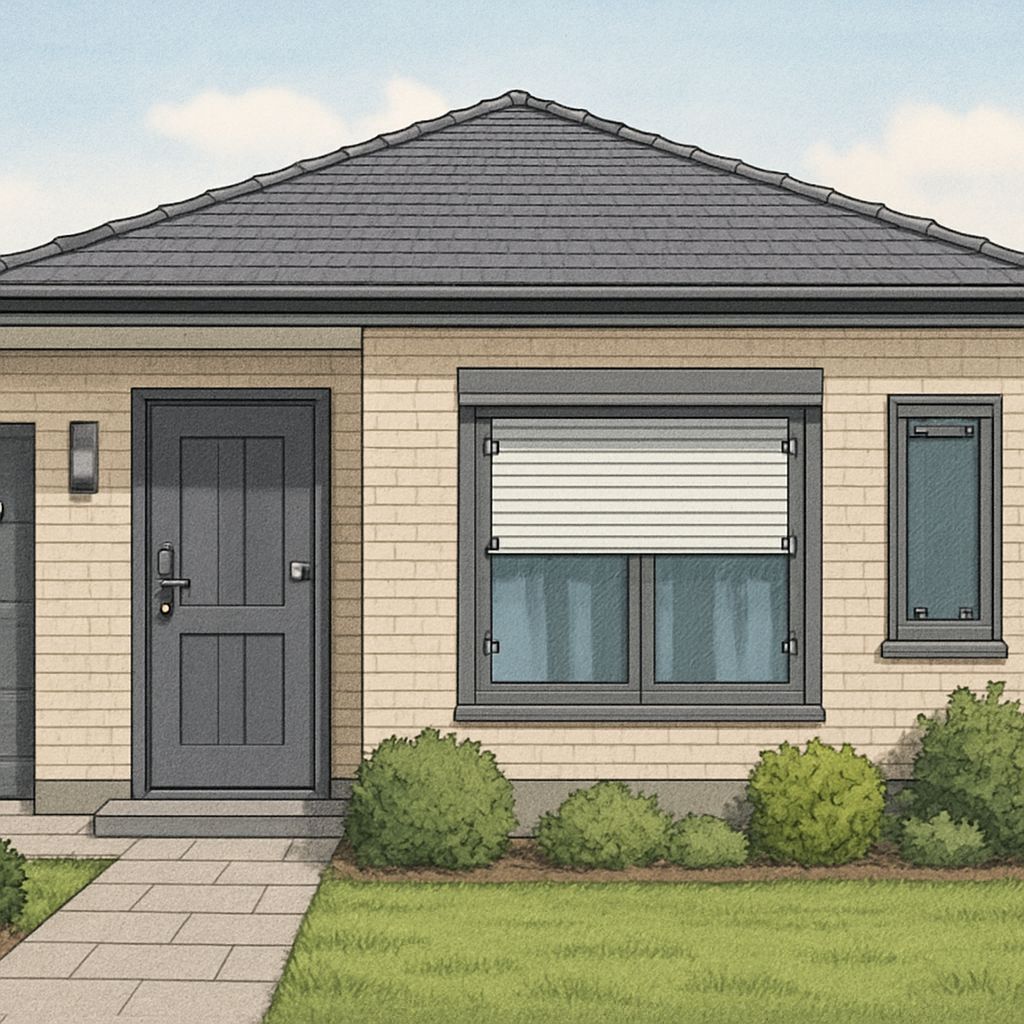
Most people think disaster-proofing a home means spending thousands — it doesn’t.
The truth is, a focused budget applied to the right upgrades can protect your home from burglary, fire, flooding, and extended utility outages. The key isn’t spending more — it’s spending smart. That means skipping the cosmetic upgrades and going straight for the structural and functional improvements that hold up when things go sideways.
Whether you’re a first-time prepper or just someone who wants a safer home, the upgrades covered here are ranked by impact, priced for real budgets, and easy enough to tackle on a weekend.
$500 – $600 Can Seriously Disaster-Proof Your Home
Five or six hundred dollars sounds modest, but when you break it down strategically, it covers an impressive amount of ground. A DIY security system, window reinforcement film, a basic emergency kit with a NOAA hand-crank weather radio, a portable power bank, and a quality water filter can all be sourced for well under that ceiling. The Augason Farms 72-Hour Emergency Food Supply, for example, covers a family’s basic caloric needs for three days and costs around $30 to $50. A robust emergency kit — including flashlights, a fire extinguisher, and a carbon monoxide detector — can be assembled for approximately $150. What remains can go toward door hardware or window security upgrades that deliver long-term protection.
Reinforce Doors and Windows First
If there’s one area that delivers the most protection per dollar, it’s your entry points. Doors and windows are the primary vulnerabilities during both natural disasters and intrusion events, yet most homes have nothing beyond a basic deadbolt and standard glass. Reinforcing these entry points is the first and most impactful step in any home resilience plan.
During emergencies — whether a major storm or a neighborhood-wide power outage — the risk of intrusion increases sharply. Reinforced entry points serve double duty: they protect against weather-related damage and deter opportunistic break-ins when normal security infrastructure is compromised.
Door Frame and Lock Reinforcements That Actually Hold
Most residential doors aren’t kicked in at the lock — they fail at the door frame. Standard door frames use short screws that anchor only into the thin door jamb, not the structural framing behind it. Replacing those screws with 3-inch steel screws that reach the stud, or installing a dedicated door jamb reinforcement kit, dramatically increases resistance to forced entry. Products like the Door Armor MAX Complete Door Reinforcement Kit address the frame, hinge, and strike plate simultaneously, and install with basic tools in under an hour. Pair that with a door security bar like the Master Lock 265DCCSEN Security Bar for an additional layer of protection that requires zero hardware installation.
Window Security Film: Cheap Protection Against Break-Ins and Storms
Window security film is one of the most underrated upgrades available to homeowners on a budget. Applied directly to existing glass, it holds shattered glass in place after impact — whether from a thrown object, storm debris, or an attempted break-in. Products like 3M Safety Series Window Film are available in sheets sized for standard residential windows and cost far less than impact-resistant glass replacement. The film doesn’t make windows unbreakable, but it significantly slows entry and reduces injury risk from flying glass during high-wind events. For homes in storm-prone regions, this is a non-negotiable upgrade.
Sliding Door Security Bars and Pin Locks
Sliding glass doors are notoriously easy to bypass — even when locked. The standard latch mechanism on most sliding doors can be defeated in seconds. A simple sliding door security bar dropped into the track eliminates this vulnerability entirely and costs less than $20. For added security, drilling a downward-angled hole through the inner door frame and inserting a steel pin or bolt locks both panels in place and prevents the door from being lifted off its track — a common and effective break-in technique that most homeowners never consider.
Smart Smoke and Carbon Monoxide Detectors Are Worth Every Penny
Detector technology has improved enormously in the past decade, and the gap between a $10 basic detector and a $40 smart detector is significant in ways that matter during real emergencies. Interconnected smart detectors alert every unit in the home simultaneously when one triggers, giving occupants more response time regardless of where the threat originates. For more on preparedness, check out these five fundamentals of personal preparedness.
Why Outdated Detectors Put Your Family at Risk
Smoke detectors have a functional lifespan of roughly 8 to 10 years — after that, the sensing chamber degrades and false negatives become a real risk. Many homeowners have detectors that are well past this threshold without realizing it. Beyond age, placement matters enormously: a detector mounted too close to a kitchen will nuisance-alarm constantly, training occupants to ignore it. Carbon monoxide detectors are equally time-sensitive, with electrochemical sensors that degrade and require replacement every 5 to 7 years regardless of whether the unit still beeps during testing.
What to Look for in a Smart Detector
The best budget-friendly smart detectors combine smoke and CO detection in a single unit, reducing both cost and installation time. Look for these key features when shopping:
- Interconnectivity: Units that link wirelessly so all alarms sound when one triggers
- Dual-sensor technology: Both ionization (fast-flaming fires) and photoelectric (slow, smoldering fires) sensors in one unit
- Battery backup: Essential for continued protection during power outages
- Smartphone alerts: Models like the Kidde Intelligent Wire-Free Interconnect Smoke & CO Alarm send push notifications even when you’re away from home
- Voice alerts: Audible location-specific warnings (“Fire detected in kitchen”) instead of a generic alarm tone
The First Alert SCO7CN Combination Smoke and Carbon Monoxide Alarm is a reliable, budget-conscious option that covers both threats in a single unit with a 10-year sealed battery — eliminating the most common reason detectors fail: dead batteries.
Backup Power Solutions for Extended Outages
Power outages lasting more than 24 hours expose every weakness in an unprepared home — no lighting, no communication, no refrigeration, and in cold climates, no heat. The good news is that layered backup power doesn’t require a whole-home standby generator. A tiered approach using portable generators, solar charging stations, and hand-crank radios covers most household needs at a fraction of the cost.
Backup Power Tier System at a Glance
Tier 1 — Communication ($20–$40): Hand-crank NOAA weather radio. No fuel required. Powers on demand and receives emergency broadcasts.
Tier 2 — Device Charging ($30–$80): High-capacity portable power bank (20,000–40,000mAh). Keeps phones, flashlights, and small devices running for days.
Tier 3 — Essential Appliances ($200–$500): Portable inverter generator (2,000–3,500 watts). Powers refrigerators, medical devices, and lighting circuits.
Tier 4 — Extended Independence ($150–$400+): Solar panel + power station combo. Recharges without fuel during multi-day outages.
Each tier builds on the last. Most households only need Tiers 1 and 2 for short outages — and both can be sourced for under $100 combined. Tiers 3 and 4 are worth the investment for households in regions with frequent or prolonged grid disruptions, or for anyone with medical equipment that requires continuous power.
The biggest mistake homeowners make is purchasing backup power equipment after a disaster is announced. Generators sell out within hours of a major storm warning. Building your backup power setup during normal conditions — even incrementally — means you’re never scrambling when it matters most. For more insights, consider avoiding preparedness mistakes that many beginners make.
Portable Generators: What Size Do You Actually Need
Generator sizing is where most buyers either overspend or underestimate their needs. For the average household during an outage, the goal isn’t to power everything — it’s to power the essentials. A standard refrigerator draws approximately 100–400 watts running (with startup surges up to 1,200 watts). A window AC unit draws 500–1,500 watts. Basic lighting via LED bulbs draws under 10 watts per fixture. Add it up, and most households can cover their critical loads with a 2,000–3,500 watt inverter generator.
The Champion Power Equipment 2000-Watt Portable Inverter Generator is a well-regarded option in this range, offering clean power output safe for sensitive electronics, a runtime of up to 11.5 hours on a single tank, and a noise level low enough for residential use. Inverter generators are more fuel-efficient than conventional models and produce stable power that won’t damage laptops, medical equipment, or smart home devices — a critical distinction most buyers overlook until it’s too late.
Solar-Powered Charging Stations as a Low-Cost Alternative
For homeowners who don’t want to manage fuel storage, a solar generator is a compelling alternative. The Jackery Explorer 300 Plus paired with the Jackery SolarSaga 40W Solar Panel creates a compact, fuel-free charging station capable of powering phones, laptops, CPAP machines, and LED lighting for days. The setup costs between $250 and $350 depending on sales, produces zero fumes — making it safe for indoor use — and recharges passively during daylight hours. It won’t run a full refrigerator indefinitely, but for communication, lighting, and medical device continuity, it’s one of the most practical investments on this list.
Hand-Crank NOAA Weather Radios Keep You Informed When the Grid Goes Down
When cell towers go down and internet service fails, a NOAA weather radio is often the only reliable source of real-time emergency information. The Midland WR400 Deluxe NOAA Weather Alert Radio and the more portable Kaito KA500 5-Way Powered Emergency Radio both receive all seven NOAA weather band frequencies and include hand-crank charging, solar charging, and battery backup in a single unit. The Kaito KA500 also includes a built-in flashlight and USB charging port — making it genuinely useful across multiple emergency scenarios for under $40.
This is one purchase that should be non-negotiable for every household. A weather radio requires no monthly fees, no cellular signal, and no internet connection — and it works in exactly the conditions where everything else fails.
Water Security Starts at Home
After power, water is the resource most households are least prepared to manage without municipal infrastructure. The standard recommendation is one gallon per person per day for drinking and basic sanitation — meaning a family of four needs a minimum of 12 gallons for a 72-hour emergency. That’s a starting point, not a ceiling. Pets, cooking, hygiene, and medical needs all add to that baseline, and real-world disruptions rarely end at 72 hours.
The two most practical approaches for residential water security are on-site collection and point-of-use filtration. Neither requires significant infrastructure investment, and both can be implemented in a single weekend for well under $200. To enhance your overall preparedness, consider these fundamentals of personal preparedness.
Rainwater Collection Systems for Off-Grid Water Supply
A basic rainwater collection setup — a 50 to 55-gallon food-grade rain barrel connected to a downspout diverter — can be installed for $80 to $150 and provides a meaningful supplemental water supply for non-potable uses like sanitation and garden irrigation. For potable use, collected rainwater should always be filtered and treated before consumption. It’s worth checking local regulations, as some states have restrictions on rainwater harvesting, though most now permit residential collection for personal use. The Good Ideas Rain Wizard 50-Gallon Rain Barrel is a widely available, straightforward option with an integrated spigot and overflow valve that connects to standard garden hose fittings.
Affordable Water Filtration: Brita Longlast vs. Big Berkey
Not every household can justify the $250 to $350 price point of a Big Berkey Water Filter System — and they don’t have to. The Brita Longlast Everyday Water Filter Pitcher removes 99% of lead, chlorine, asbestos, and benzene from tap water, with each filter lasting up to 120 gallons (approximately 6 months for average use) at a cost of around $16 per filter. It’s not a field-grade filtration system, but for households on municipal water dealing with temporary contamination events, it’s a highly practical and affordable solution. The Big Berkey, by contrast, handles a broader range of contaminants including bacteria and viruses — making it the better long-term investment for households in areas with aging infrastructure or well water dependency.
A Dedicated Food Storage Pantry Beats Scattered Shelves
Random canned goods spread across kitchen cabinets aren’t a food storage strategy — they’re an inventory problem waiting to happen. A dedicated food storage pantry, even if it’s just a single set of shelving in a garage, basement, or spare closet, changes how you manage, rotate, and rely on your emergency food supply. The principle is simple: stock what you eat, eat what you stock, and rotate continuously so nothing expires unused. For more home improvement ideas for preppers, explore additional resources.
The most efficient way to build a pantry is to start with a 72-hour supply and expand systematically to 30 days, then 90 days. Pre-packaged emergency food kits like the Augason Farms 30-Day Emergency Food Supply provide a calorie-dense, shelf-stable foundation that requires minimal planning — just dedicated shelf space and a cool, dry location. From there, layering in canned proteins, whole grains, and freeze-dried vegetables creates a genuinely well-rounded supply that doesn’t rely on a single product line.
Labeling and dating every item is non-negotiable for effective rotation. A simple solution is a label maker or permanent marker on the can lid with the purchase date, combined with a first-in, first-out restocking habit. Shelving units with gravity-fed can organizers — like the Shelf Reliance FIFO Can Tracker — automate the rotation process entirely, ensuring the oldest cans are always at the front. This removes the most common failure point in home food storage: forgetting what you have until it’s already expired.
Small Additions That Make a Big Difference
Not every resilience upgrade is a system or a structural change — some of the highest-value additions to a prepared home are single items that cost under $30 and take minutes to deploy. These are the items most households don’t think about until they need them urgently, and by then, it’s too late to order them online.
Fire Extinguishers: Placement and Size Matter
A fire extinguisher is only useful if it’s in the right place at the right moment. The National Fire Protection Association recommends having at least one extinguisher on every floor of the home, with a dedicated unit in the kitchen — the origin point of the majority of residential fires. The Amerex B500 5lb ABC Dry Chemical Class A B C Fire Extinguisher is a commercial-grade option available for under $60 that handles wood, paper, electrical, and flammable liquid fires — the four most common residential fire types in a single unit. Mount it on the wall near an exit, never inside a cabinet, so it’s accessible in the first critical seconds of a fire when visibility and reaction time are compromised.
Portable Power Banks for Communication During Outages
A high-capacity portable power bank is one of the simplest and most immediately impactful resilience purchases a household can make. The Anker 737 Power Bank (PowerCore 24K) delivers 24,000mAh of capacity — enough to fully charge a smartphone six to eight times — and includes a 140W output capable of powering laptops and tablets alongside phones simultaneously. For a family of four managing communication during a multi-day outage, a single unit at this capacity level keeps everyone connected through the duration of most grid disruptions. Keep it charged as a baseline habit, not just during storm season. For additional insights on preparedness, consider exploring how to start preparing on any budget.
Your Home Is More Resilient Than You Think With the Right Upgrades
Here’s the part most resilience guides skip: the gap between a vulnerable home and a genuinely prepared one isn’t as wide as it seems. A reinforced door frame, a window security film application, a working smoke and CO detector, a charged power bank, and three days of food and water on a dedicated shelf — that’s it. That’s already more prepared than the majority of households in any given neighborhood. Each of those upgrades costs under $50 individually, takes less than an afternoon to implement, and addresses a real, documented vulnerability.
The most effective approach is incremental. Start with the highest-impact, lowest-cost items — door reinforcements, detectors, and a basic emergency kit — and build systematically from there. By the time you’ve worked through the full list outlined here, your home will be equipped to handle power outages, water disruptions, intrusion attempts, and fire events without a single major renovation. Resilience isn’t a destination; it’s a habit of intentional, practical upgrades applied consistently over time. The homeowners who come through emergencies best aren’t the ones who spent the most — they’re the ones who started earliest.
Frequently Asked Questions
Home resilience upgrades raise practical questions — especially when you’re trying to prioritize on a limited budget. The following answers cover the most common points of confusion homeowners encounter when building out a resilience plan for the first time.
These aren’t hypothetical scenarios. They’re the exact decisions that come up when a real storm warning is issued, a power outage stretches past 24 hours, or a neighborhood security incident makes the news. Having clear answers in advance means you can act, not scramble.
What Is the Most Affordable Home Resilience Upgrade I Can Make Right Now?
The most affordable high-impact upgrade is replacing the short screws in your door strike plate with 3-inch steel screws that anchor into the wall stud behind the door frame. This single change — which costs nothing if you already own a drill, or under $5 in hardware — transforms a door that can be kicked in with one strike into one that requires sustained, noisy force to breach. It takes under 15 minutes and requires no special tools or skills. If you want to spend a bit more, adding a sliding door security bar and a window security film sheet to the most accessible ground-floor windows covers your three highest-priority entry points for under $50 total.
Do Smart Smoke Detectors Work Without Wi-Fi?
Yes. Smart smoke detectors are designed to function fully as standalone alarm devices whether or not they have a Wi-Fi or app connection. The wireless interconnect feature — where triggering one alarm sounds all units simultaneously throughout the home — typically operates on a separate radio frequency (often 433MHz or Z-Wave) that is entirely independent of your home internet network. Wi-Fi connectivity adds the smartphone notification feature, which is genuinely useful when you’re away from home, but losing internet access during a power outage does not disable the core alarm functionality. Units like the Kidde Intelligent Wire-Free Interconnect Smoke & CO Alarm will continue to detect, sound, and interconnect with other units in the home regardless of network status. For more on staying prepared, check out five fundamentals of personal preparedness.
How Much Food Storage Does a Family of Four Actually Need?
The standard 72-hour emergency recommendation covers only the most basic short-term disruptions. A more realistic preparedness baseline is a 30-day supply — approximately 2,000 calories per adult per day, scaled for children and any specific dietary needs in the household. For a family of four with two adults and two school-age children, that translates to roughly 200,000 to 220,000 calories of shelf-stable food for a 30-day supply. That sounds like a lot, but pre-packaged options like the Augason Farms 30-Day Emergency Food Supply Pail handles the calculation for you and store in a single stackable container.
Beyond pre-packaged kits, a realistic pantry strategy layers in canned proteins (tuna, chicken, beans), whole grains (white rice stores up to 30 years in sealed containers), and freeze-dried vegetables to create nutritional variety. A 50-pound bag of white rice and a case of mixed canned goods can add weeks of caloric coverage for under $60. The goal isn’t to build a bunker — it’s to ensure that any disruption to grocery access, whether from a natural disaster, supply chain interruption, or personal financial emergency, doesn’t immediately become a food security crisis for your family.
Can Window Security Film Really Stop a Break-In?
Window security film won’t stop a determined intruder with unlimited time and no concern about noise — but that’s not the threat most homeowners actually face. The realistic threat model for residential break-ins is an opportunistic intruder who wants to gain entry quickly and quietly, without attracting attention. Security film defeats that model effectively by holding shattered glass in place after impact, forcing an intruder to continue striking the same area repeatedly — creating noise, taking time, and dramatically increasing the risk of detection. Most opportunistic break-ins are abandoned within 60 seconds when the entry point doesn’t yield quickly. For more on enhancing home security, consider these capability-based preparedness tips.
Products like 3M Safety Series Window Film are rated to hold glass fragments in place under significant impact, and the same properties that resist forced entry also protect against storm-driven debris — a dual benefit that makes it one of the most cost-effective upgrades available per square foot of coverage. For ground-floor windows and any glass adjacent to door locks, security film combined with upgraded window pin locks creates a layered barrier that takes most residential windows from a 5-second breach point to a 60-second-plus obstacle.
What Size Portable Generator Do I Need to Power My Home During an Outage?
The right generator size depends entirely on what you actually need to power — not the whole house. Start by listing your critical loads: refrigerator (400–800 starting watts, 100–400 running watts), LED lighting (10 watts per fixture), phone and device charging (20–100 watts), and any medical equipment. Add those running watts together, then factor in the highest single starting watt surge in your list — typically the refrigerator compressor. Most households land in the 1,500 to 3,000 running watt range for genuine essentials.
A 2,000-watt inverter generator — such as the Champion Power Equipment 2000-Watt Portable Inverter Generator or the Honda EU2200i — handles this load range efficiently, quietly, and with fuel consumption low enough for extended runtime. Inverter generators produce clean sine wave power, which is safe for sensitive electronics including laptops, CPAP machines, and smart home devices. Conventional generators in the same wattage range cost less but produce power fluctuations that can damage electronics over time.
If your household includes central air conditioning or an electric water heater, those loads require a significantly larger unit — typically 5,000 watts or more — which moves into a different price and fuel consumption tier entirely. For most homeowners, the smarter approach is a mid-range inverter generator covering true essentials, paired with a solar charging station for device and lighting continuity. Together, they cover the full spectrum of outage needs without the operational complexity of a whole-home standby system.
Small home upgrades can significantly increase your home’s resilience against unexpected events. By focusing on affordable improvements, you can enhance your living space without breaking the bank. One crucial aspect is ensuring you have a stock of essential items. For more information on what foods you should always have in storage, check out this guide on in-stock foods. These small changes can make a big difference in maintaining comfort and security in your home.




Leave a Reply