
Article At A Glance
- A get-home bag and a bug-out bag serve completely different missions — confusing the two could leave you stranded, over-packed, or completely unprepared when it counts.
- A get-home bag should weigh under 10 lbs and is designed to get you from wherever you are back to your home base in a crisis — typically covering a 2–4 hour movement window.
- A bug-out bag is a 72-hour minimum survival kit built for when staying home is no longer an option — loaded between 20–35 lbs with food, shelter, water filtration, and more.
- Most people make the critical mistake of building a bug-out bag first — when statistically, a get-home bag is the kit you’re far more likely to need first.
- There’s a third bag type that sits between these two that most preppers overlook entirely — and it could be the most important one you own.
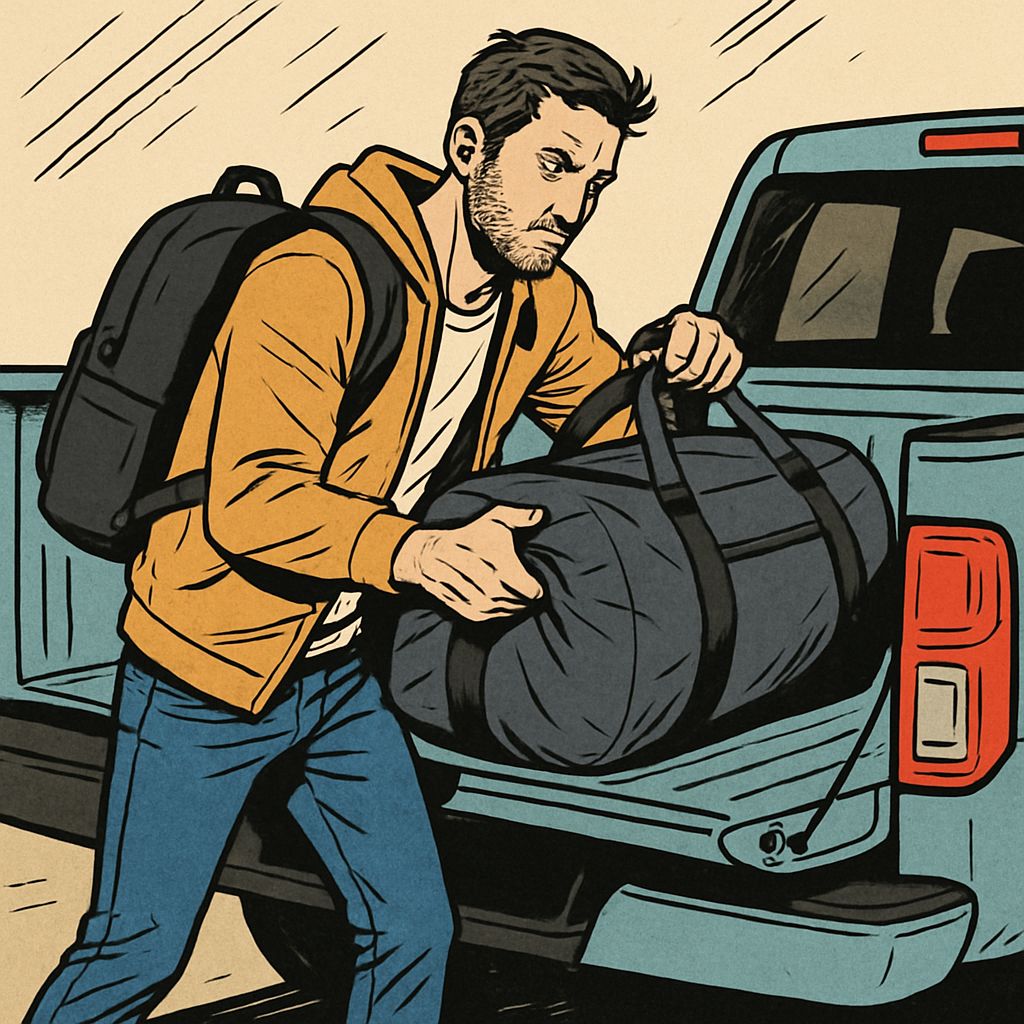
It’s possible to start building your first emergency kit wrong from the start — and that single mistake could cost them everything when a real crisis hits.
The bug-out bag gets all the attention. YouTube channels, prepper forums, and survival blogs are obsessed with it. But here’s the truth: the get-home bag is the kit most people will actually reach for first. Military Overstock, a trusted source for tactical and survival gear, breaks it down clearly — these two bags serve fundamentally different missions, and lumping them together is one of the most common and dangerous mistakes in the prepper community.
Two Bags, Two Completely Different Missions
At first glance, a get-home bag (GHB) and a bug-out bag (BOB) might seem like variations of the same concept. They’re not. The confusion comes from the fact that both are emergency bags you grab in a crisis — but the mission, the weight, the contents, and the scenarios that trigger each one are entirely different.
A get-home bag answers one question: How do I get from where I am right now back to my home or family? A bug-out bag answers the opposite question: How do I survive when I have to leave my home entirely? One gets you to safety. The other is your safety.
What a Get-Home Bag Is Built For
The get-home bag is your everyday carry solution for grid-down situations, civil unrest, natural disasters, or any scenario where your normal commute or travel route becomes impassable. It lives in your car, your office desk drawer, or your work locker — anywhere you regularly spend time away from home. The whole point is to bridge the gap between where you are and where your resources are. You can also explore budget-friendly preparedness purchases.
Primary Goal: Cover Up to 50 Miles on Foot
A well-built GHB should realistically support 2–4 hours of movement — and in extreme cases, up to a full day of travel on foot. The realistic range for most people is somewhere between 10 and 50 miles depending on terrain, physical fitness, and the scenario. You’re not trying to survive a week in the wilderness. You’re trying to get home without relying on infrastructure that may have already failed.
Keep It Under 10 Pounds or You’ll Regret It
Weight discipline is the single most important design principle of a get-home bag. The target is under 10 pounds fully loaded. Every ounce over that threshold is a pound you’ll be carrying over potentially miles of stressed, chaotic terrain — possibly in dress shoes or work clothes. The lighter the bag, the faster you move, and speed is survival in an urban emergency.
This is where most people sabotage their GHB before they even pack it. They start adding “just in case” items until the bag hits 20 pounds — at which point it has essentially become a stripped-down bug-out bag without the capacity to actually serve that purpose either. Ruthless minimalism is the mindset here.
Essential Items That Belong in a Get-Home Bag
The GHB packing list is intentionally lean. Every item earns its place by serving the singular mission of getting you home:
- Water: 2 liters minimum, plus a compact filtration option like a Sawyer Squeeze or LifeStraw
- Navigation: Paper map of your local area and a compass — GPS fails when infrastructure fails
- First aid: A compact IFAK (Individual First Aid Kit) with tourniquet, Israeli bandage, and basic wound care
- Communication: A small hand-crank or battery emergency radio
- Footwear: A spare pair of broken-in athletic or trail shoes if your daily footwear isn’t walking-appropriate
- Light: A compact headlamp like the Black Diamond Spot 400 with spare batteries
- Cash: Small bills — ATMs go dark when the grid does
- Energy: High-calorie compact food bars such as Datrex 3600 Emergency Food Rations
- Self-defense: Whatever is legal in your area and you are trained to use
- Rain protection: A lightweight emergency poncho or packable rain jacket
Notice what’s not on that list: a tent, a sleeping bag, a camp stove, or multiple days of food. Those belong in a different bag entirely.
What a Bug-Out Bag Is Built For
A bug-out bag is a fully self-sufficient survival kit designed for one scenario: you cannot stay where you are, and you may not be going back anytime soon. Wildfire evacuation, chemical spill, civil collapse, flooding that renders your home uninhabitable — these are BOB scenarios. The assumption built into every item you pack is that your home is no longer a resource available to you.
72-Hour Minimum Survival Away From Home
The “72-hour bag” label gets used interchangeably with bug-out bag, and for good reason — 72 hours is the baseline. That’s the window emergency management agencies historically cite as the period before organized relief efforts reach most affected areas. But serious preppers build for longer. A well-constructed BOB should realistically support 72 hours of independent survival with the gear and skills to extend that window significantly.
Target Weight: 20–35 Pounds Loaded
A loaded bug-out bag typically runs between 20 and 35 pounds. That’s not an arbitrary range — it reflects the balance between carrying enough to survive and not destroying your body over miles of movement. As a general rule, your BOB should not exceed 25% of your body weight. A 180-pound person has a ceiling of about 45 pounds, but staying closer to 25–30 keeps you mobile and functional under stress.
The bag itself matters too. The two main options are a tactical backpack or a hiking backpack. A tactical pack like the 5.11 RUSH72 offers MOLLE webbing and compartmentalization. A hiking pack like the Osprey Atmos AG 65 distributes weight more efficiently over long distances. Your choice depends on your bug-out scenario — urban movement favors tactical, wilderness movement favors hiking design.
Essential Items That Belong in a Bug-Out Bag
The BOB list is significantly deeper than a GHB. You’re building for multi-day independent survival across potentially hostile or resource-depleted environments. Core categories include:
- Water: 3–4 liters capacity plus a robust filtration system like the Katadyn BeFree 1.0L or MSR TrailShot, and purification tablets as backup
- Shelter: Lightweight bivy or emergency tarp — the SOL Escape Bivvy weighs just 8.5 oz and retains 70% of body heat
- Fire: Three ignition methods minimum — a Bic lighter, a ferrocerium rod like the Light My Fire Swedish FireSteel, and waterproof matches
- Food: 72+ hours of calorie-dense options — freeze-dried meals, energy bars, jerky, and hard candy for quick glucose
- First aid: A full IFAK plus prescription medications, blister treatment, and any personal medical needs for at least 3 days
- Navigation: Topographic maps of your bug-out route, compass, and a backup GPS device like the Garmin inReach Mini 2
- Clothing: One complete weather-appropriate change, moisture-wicking base layer, and rain gear
- Tools: A fixed-blade knife like the Morakniv Companion, multi-tool, paracord (50 ft minimum), and duct tape
- Communication: A hand-crank emergency radio and a Baofeng UV-5R dual-band radio for broader situational awareness
- Power: A compact solar charger like the BioLite SolarPanel 5+ and a power bank for essential electronics
Water, Shelter, and Food: The Non-Negotiables
If you had to strip your BOB down to the absolute core, water, shelter, and food are the three pillars that everything else is built around. You can survive roughly 3 days without water, 3 weeks without food, and in harsh weather, less than 3 hours without adequate shelter. That hierarchy should drive every packing decision you make — weight comes off the food category before it ever comes off water filtration or emergency shelter.
Get-Home Bag vs. Bug-Out Bag: Side-by-Side Breakdown
Numbers cut through the confusion faster than any explanation can. Here’s how these two bags compare across every critical dimension:
|
Feature |
Get-Home Bag (GHB) |
Bug-Out Bag (BOB) |
|---|---|---|
|
Primary Mission |
Get from current location to home |
Sustain yourself 72+ hours away from home |
|
Duration |
2–4 hours of movement |
72 hours minimum |
|
Target Weight |
Under 10 lbs |
20–35 lbs loaded |
|
Water Carried |
2 liters + compact filter |
3–4 liters + robust filtration system |
|
Shelter Included |
No |
Yes — bivy, tarp, or tent |
|
Food Supply |
High-calorie bars only |
Full 72-hour caloric supply |
|
Stored Location |
Car, office, or workplace |
Home — near exit point |
|
Bag Type |
Compact daypack or sling bag |
Tactical or hiking backpack 40–72L |
|
Trigger Scenario |
Disaster strikes while away from home |
Home is compromised or unsafe |
When to Grab Your Get-Home Bag vs. Your Bug-Out Bag
The decision comes down to a single question: Can you get home? If the answer is yes — even if it requires effort, alternate routes, or hours on foot — you reach for the GHB. If the answer is no, or if home itself is the danger, you activate your bug-out plan and grab the BOB.
Scenarios That Call for a Get-Home Bag
These are the situations where your GHB earns its place in your car or office: when you need to ensure staying connected when cell towers go down during an emergency.
- A major earthquake collapses freeway overpasses and you’re 12 miles from home
- Civil unrest breaks out in the city center while you’re at work downtown
- An EMP or grid failure shuts down traffic systems and public transportation simultaneously
- A chemical spill closes your normal route and you need to navigate around a 5-mile exclusion zone
- Your vehicle breaks down during a winter storm on a rural road with no cell service
In every one of these scenarios, your home is still your destination. Your supplies, your bug-out bag, your family, and your shelter are all waiting there. The GHB is simply the bridge that gets you back to all of it.
Scenarios That Call for a Bug-Out Bag
BOB scenarios are more extreme and, statistically, less frequent — but the consequences of being unprepared are far more severe. Rapidly spreading wildfire threatening your neighborhood, mandatory evacuation orders from flooding or hazardous material release, prolonged grid-down situations making your home untenable, or civil unrest that makes your location a direct target — these are the moments your BOB was built for. The key distinction is that home is no longer the answer. You need to move, sustain yourself, and reach a predetermined bug-out location (BOL) with everything on your back. For more on maintaining readiness, consider exploring how to build emergency readiness.
Where Do Go Bags and EDC Fit In?
The GHB and BOB are the two primary kits, but they exist within a larger preparedness ecosystem. Two other concepts — the go bag and everyday carry (EDC) — complete the picture and fill the gaps these bags leave behind.
Go Bag: Built for Speed, Not Survival
A go bag sits between a GHB and a BOB in concept, but it’s primarily defined by speed of deployment. It’s the bag you grab in 30 seconds when you need to leave immediately — no time to think, no time to add items. Many preppers keep a go bag by their front door pre-packed with critical documents, hard drives, medications, a small amount of cash, and basic 24-hour supplies. For those looking to enhance their preparedness, consider exploring budget-friendly preparedness purchases to ensure your go bag is well-equipped without breaking the bank.
The go bag is not designed for extended survival. It’s designed to ensure that in a chaotic, fast-moving emergency, you don’t leave behind the irreplaceable items — birth certificates, passports, insurance documents, hard drives with photos, and prescription medications that can’t be restocked easily in a post-disaster environment.
Everyday Carry: Your Last Line of Defense
EDC is what’s on your body when everything else fails. A quality folding knife like the Benchmade Bugout 535, a compact flashlight like the Streamlight MicroStream USB, a lighter, a small amount of cash, a tourniquet like the CAT Gen 7, and a basic phone charging solution. These items cost almost nothing in terms of weight and effort, but they represent your absolute baseline capability if you’re caught completely off-guard — bag left in the car, bag stolen, bag inaccessible.
Think of it as a layered system. EDC is layer one. GHB is layer two. Go bag is layer three. BOB is layer four. Each layer builds on the last, and each one covers a different time horizon and threat scenario. The preppers who struggle most in real emergencies are the ones who built layer four before they even thought about layers one and two.
The Biggest Mistake Preppers Make With These Bags
The single most common error in the prepper community is treating these two bags as interchangeable — or worse, building one hybrid bag that tries to serve both missions. A bag that attempts to do everything ends up doing nothing well. It’s too heavy to move fast when you need to get home, and too under-equipped to sustain you when you need to bug out.
The second most damaging mistake is over-packing the get-home bag. It starts with good intentions — adding a trauma kit here, a fire starter there, a change of clothes, an emergency blanket — and before long the bag weighs 22 pounds and it never leaves the closet because it’s too uncomfortable to keep in the car. A GHB that isn’t staged where you actually are when disaster strikes is completely useless. For more tips on efficient packing, check out budget-friendly preparedness purchases that can keep your bag light and functional.
The third mistake is failing to account for the specific route between where you spend your time and where you live. A generic bag packed from a YouTube checklist isn’t a get-home bag. A real GHB is built around your actual commute, your actual terrain, and your actual physical capability. That requires doing a route analysis — on foot if possible — before you ever pack a single item.
- Don’t build one hybrid bag that tries to serve both GHB and BOB missions — it will fail at both
- Don’t over-pack your GHB past the 10-pound threshold — if it’s uncomfortable, it won’t be staged where it needs to be
- Don’t skip the route analysis — know your terrain, alternate paths, and chokepoints before you need them
- Don’t neglect bag maintenance — rotate food and water every 6 months, check batteries annually, and update documents regularly
- Don’t skip training — a bag full of tools you don’t know how to use is just dead weight under pressure
Build Your Get-Home Bag First — Here’s Why
Statistically, the scenario where you’re away from home when a crisis hits is far more likely than the scenario where your home itself becomes uninhabitable. You commute, you travel, you run errands — every one of those moments is an opportunity for a grid-down event, a natural disaster, or civil unrest to strand you miles from your supplies and your family. Build the GHB first, stage it properly, and then turn your attention to the BOB. That sequencing reflects reality, not fantasy preparedness.
Frequently Asked Questions
These are the questions that come up most often when preppers start thinking seriously about the difference between these two kits — answered directly and without the fluff.
Can a get-home bag double as a bug-out bag?
Technically, no — and attempting to make it do so undermines both missions. A GHB optimized for mobility and speed under 10 pounds simply doesn’t have the capacity to sustain you for 72 hours away from home. You’d be missing shelter, adequate food, robust water filtration, and the tools needed for extended independent survival. They serve different time horizons and different threat scenarios. The right answer is to have both, staged in the right locations.
How far should a get-home bag realistically cover?
A get-home bag should cover the realistic maximum distance between where you regularly spend time — work, school, frequent travel routes — and your home. For most people, that’s somewhere between 10 and 50 miles. If your commute is 8 miles, your GHB is built for an 8-mile worst-case foot movement. If you regularly travel 40 miles from home for work, build accordingly — more water capacity, slightly more food, and a more detailed route map.
Do I need both a get-home bag and a bug-out bag?
Yes — and the reasoning is straightforward. These two bags cover opposite ends of the emergency spectrum. One gets you to your resources; the other sustains you when those resources are gone. Owning only a BOB means you’re unprepared for the far more common scenario of being stranded away from home. Owning only a GHB means you have no plan if home becomes the threat. To ensure you’re prepared for any emergency, it’s crucial to have both.
The good news is that building both doesn’t require doubling your budget overnight. Start with the GHB — it’s cheaper, lighter, and more immediately practical. A solid GHB can be assembled for under $150 using quality but not excessive gear. The BOB is a longer-term build that can be assembled in stages over several months as budget allows.
Priority order matters too. GHB first, staged in your vehicle. BOB second, positioned near your primary home exit. Go bag third, by the front door. EDC every single day without exception. That layered approach is what separates a prepared person from someone who just owns a lot of gear.
Where should I store my get-home bag and bug-out bag?
Your get-home bag belongs wherever you are when you’re not home. For most people, that means the trunk of their vehicle — ideally in an insulated bag or container that protects food and water from temperature extremes. If you commute by public transit, a compact GHB that can pass as a normal backpack kept under your desk or in a work locker is the right approach.
Your bug-out bag belongs at home, positioned near your primary exit point — the front door, the garage, or wherever your evacuation route begins. Some preppers keep a secondary, lighter BOB in their vehicle as well, particularly if they live far from work or travel frequently. The key principle is that both bags need to be staged, not stored. Staging means positioned exactly where you’ll grab them under pressure, without searching, without thinking.
Temperature management matters more than most people realize. Standard alkaline batteries lose significant capacity in extreme cold. Water stored in a hot car can degrade plastic containers over time and create bacteria growth risks. Rotate your GHB water supply every six months at minimum, and consider lithium batteries for any flashlights or electronics in your car kit — they perform reliably down to -40°F, unlike alkaline alternatives.
A bug-out bag and a get-home bag serve different purposes in emergency preparedness. While a bug-out bag is designed for long-term survival situations, a get-home bag is intended for short-term emergencies that require you to return home quickly.




Leave a Reply