
Article-At-A-Glance
- A home food system is fundamentally different from a stockpile — it’s a living, self-reinforcing network of growing, sourcing, preserving, and sharing food that doesn’t run out when the shelves do.
- Food security means reliable access to safe, nutritious food year-round, regardless of supply chain disruptions, inflation, or emergencies.
- Starting with a one to two-week emergency supply is the right first move, but the real goal is building habits that extend far beyond that.
- Later in this article, learn exactly which foods to cut from your long-term plan — and what to replace them with.
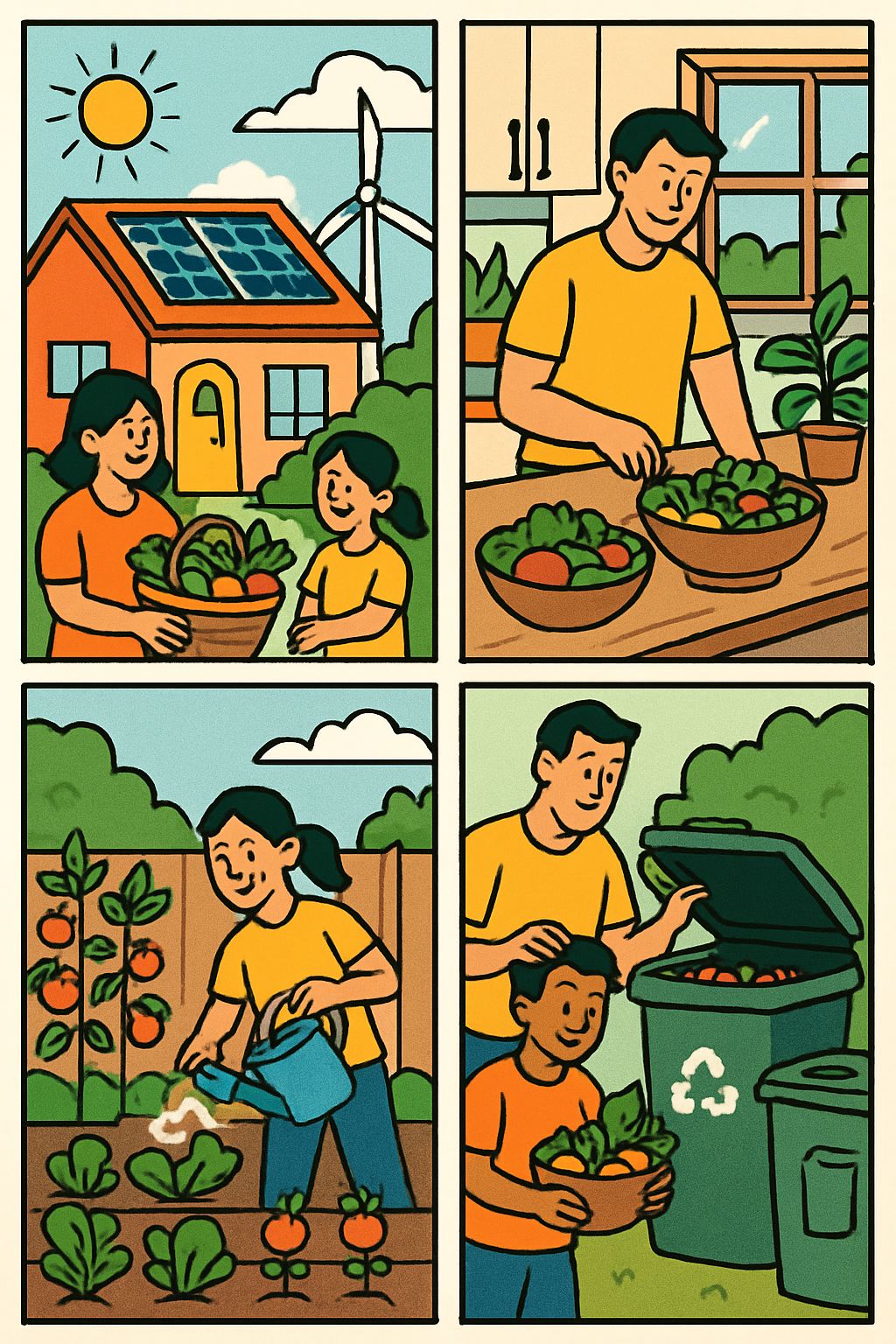
Sometimes people build a stockpile and call it food security — but the moment that stockpile runs out, so does their plan.
There’s a real difference between having extra cans on a shelf and building an actual system that feeds you consistently, sustainably, and on your own terms. A stockpile is a snapshot. A food system is a cycle. One is reactive; the other is intentional. And the shift between the two starts with how you think about food in the first place — not just what you store, but where it comes from, how it’s produced, and who else is part of that chain.
A Stockpile Runs Out — A Food System Does Not
A three-month supply of canned goods is genuinely useful — until month four arrives and nothing has changed. The core limitation of a stockpile mindset is that it treats food security as a destination rather than a practice. When your stored food is gone, you’re back to depending entirely on grocery stores, supply chains, and systems that have already proven they can fail. The 2020 supply chain disruptions, ongoing food price inflation, and regional weather disasters have all made this painfully clear to millions of people who considered themselves prepared.
A home food system, by contrast, is regenerative. It produces, preserves, and replenishes. Whether that means a backyard vegetable garden, relationships with local farmers, a deep pantry stocked through intentional buying habits, or a combination of all three — the system keeps feeding you because it keeps running.
What Food Security Actually Means at Home
Food security is defined as reliable access to safe, nutritious food year-round — not just during a crisis, and not just in terms of calories. That definition matters because it shapes how you build your system. True food security isn’t just about having enough food stored. It’s about having the right food, in accessible forms, that actually supports the health of every person in your household.
Access to Safe, Nutritious Food Year-Round
The emphasis on year-round access is important. Many people plan only for emergencies — a short-term disruption, a power outage, a storm. But food insecurity more often creeps in slowly through inflation, job loss, or gradual supply chain tightening. Building a system that works in February and in July, during normal life and during disruption, is the actual goal.
Nutrition is where most stockpiles fall short. Shelf-stable calories are easy to come by — rice, pasta, canned goods. What’s harder to maintain is a consistent intake of vitamins, minerals, fiber, and protein that keeps your household genuinely healthy. A well-built home food system accounts for this by incorporating fresh or home-preserved produce, protein sources that can be grown or locally sourced, and dietary variety that prevents the deficiencies that come from eating the same shelf-stable rotation indefinitely. To ensure you’re prepared for any situation, consider reviewing your preparedness progress regularly.
What Does a Nutritionally Complete Home Food System Look Like?
A genuinely secure home food system should cover all major nutritional categories — not just caloric volume. Here’s a simple framework:
Nutritional Need
Home System Source
Example Foods
Carbohydrates
Stored grains, root vegetables
Wheat berries, potatoes, sweet potatoes
Protein
Legumes, eggs, meat, fish
Dried beans, backyard hens, canned sardines
Healthy Fats
Stored oils, nuts, seeds
Olive oil, sunflower seeds, peanut butter
Vitamins & Minerals
Home garden, fermented foods
Kale, tomatoes, sauerkraut, dried herbs
Fiber
Legumes, grains, fresh produce
Lentils, oats, garden greens
Why Commercial Supply Chains Are Not a Safety Net
The assumption that grocery stores will always be stocked is one of the most deeply embedded — and most fragile — beliefs in modern life. The average grocery store carries roughly three days of inventory. Distribution networks depend on just-in-time logistics that have no meaningful buffer when something goes wrong at scale. When fuel prices spike, when weather disrupts transport corridors, or when a single processing facility shuts down, those gaps show up on shelves within days.
This isn’t an argument for extreme prepping. It’s a straightforward case for not outsourcing 100% of your food security to a system you have zero control over. Building even a partial home food system — one that covers a portion of your household’s needs through growing, local sourcing, and preservation — meaningfully reduces that dependence.
Start With What You Already Eat
The most common mistake people make when building a home food system is starting with what they think they should store rather than what they actually eat. The result is a pantry full of unfamiliar foods that nobody knows how to cook, nutrition that doesn’t match the household’s real needs, and wasted money on items that quietly expire. Start with reality, then build from there.
How to Take a Staple Foods Inventory
A staple foods inventory is exactly what it sounds like: a list of the foods your household consumes consistently, week in and week out. Go through your grocery receipts or spend one week tracking what you actually buy and cook. What proteins appear every week? What grains, vegetables, and fats? Which condiments or flavor bases make your meals edible? That list is the foundation of your food system — because those are the foods you need to be able to grow, source, store, or replace.
Identify Which Staples You Can Grow, Source, or Replace
Once you have your staple list, go through each item and ask three questions: Can I grow this? Can I source it locally? If neither, what’s a reasonable substitute I can produce or store long-term? Garlic, herbs, salad greens, tomatoes, and beans are all highly growable even in limited space. Eggs can come from backyard hens. Meat can often be sourced directly from local farms in bulk. This exercise quickly reveals where your food system has real options — and where it has gaps.
Cut Foods That Can’t Fit a Long-Term Food Plan
Some foods simply don’t belong in a long-term food security plan — not because they’re unhealthy, but because they can’t be grown, stored, or locally sourced in any practical way. Highly processed snack foods, items with very short shelf lives, or ingredients dependent on global supply chains with no local alternative are worth reconsidering. This doesn’t mean eliminating them from your diet entirely, but it does mean they shouldn’t be central pillars of your food security strategy.
Short-Term Food Preparedness Builds Long-Term Habits
Before you design an elaborate food system, get the basics right. Short-term preparedness — having enough food and water stored for one to two weeks — is the entry point. It’s practical, achievable quickly, and builds the organizational habits that a larger system requires. The University of Georgia and FEMA both recommend starting here, with a mix of ready-to-eat options and shelf-stable staples, before scaling up.
Build a One to Two-Week Emergency Food and Water Supply First
A one to two-week supply gives you a meaningful buffer without requiring significant space or budget all at once. Focus on foods your household already eats, in shelf-stable forms: canned beans and vegetables, dried grains, nut butters, canned fish, and shelf-stable milk. Store at least one gallon of water per person per day. Rotate stock regularly so nothing expires unused. This short-term foundation also doubles as a deep pantry during normal life — reducing grocery runs and food waste simultaneously.
Nutrition Matters More Than Calories Alone
It’s easy to hit a calorie target with rice and pasta. It’s much harder to maintain actual health over weeks or months on that kind of diet. When building your short-term supply, deliberately include foods that provide micronutrients: canned tomatoes for vitamin C, canned fish for omega-3s and protein, dried legumes for iron and fiber, and a multivitamin as a backup. Palatability matters too. Food that nobody in your household will eat during stress is not part of your food security plan, no matter how nutritious it is on paper.
Your Deep Pantry Is Insurance, Not Just Emergency Prep
Think of your deep pantry as a living financial instrument — one that pays dividends in food security, reduced grocery spending, and genuine peace of mind. Unlike a one-time emergency cache, a deep pantry is actively used and continuously replenished. You cook from it, rotate through it, and restock it incrementally. This practice — sometimes called the “stock up and use down” method — means you’re never starting from zero, and you’re never scrambling during a disruption.
The deep pantry also absorbs price volatility. When staple food prices spike — and they do, regularly — households with a well-stocked pantry don’t feel it the same way. You bought your rice, oil, and canned goods at last month’s price. That’s real money saved, and it’s one of the most overlooked financial benefits of building a home food system. To ensure your preparedness, you might consider a preparedness progress review to see how ready you really are.
Multiple Ways to Grow Your Own Food
Growing your own food is the most direct route to genuine food independence, but it doesn’t require a homestead or rural land to be meaningful. Even a small growing operation — a few containers on a balcony, a 4×8 raised bed, a windowsill herb garden — reduces your dependence on purchased food and builds skills that scale. The goal in the early stages isn’t to grow everything you eat. It’s to grow something, learn from it, and expand deliberately.
The most productive home growers share one trait: they started small, paid attention, and kept going. Food gardening is a skill that compounds over time. Your second season will be more productive than your first. Your third will outpace your second. The knowledge you build through direct experience with your soil, your microclimate, and your growing season is something no book or video can fully replicate.
Assess Your Space Before You Plant Anything
Before buying a single seed packet, spend time genuinely observing your available space. Track sunlight across the day — most food crops need a minimum of six hours of direct sun to be productive. Note where water naturally collects or drains. Identify which areas have the most accessible soil and which are compacted or contaminated. In urban environments especially, soil testing for heavy metals is worth doing before growing food directly in the ground. This assessment takes less than a week and saves you from planting in the wrong spot and wondering why nothing grew.
Match Growing Methods to Your Living Situation
- Apartment or balcony: Container gardening with dwarf tomato varieties like Tumbling Tom, salad greens, herbs, radishes, and strawberries. Grow bags work exceptionally well for potatoes and peppers in tight spaces.
- Small urban backyard: Raised beds with intensive planting (Square Foot Gardening method) maximize yield per square foot. A 4×8 bed planted with the right crops can produce meaningful quantities of greens, beans, and root vegetables.
- Suburban lot: Combines raised beds with in-ground planting for larger crops like winter squash, corn, or sprawling tomato varieties. Food forests and perennial plantings (fruit trees, berry bushes) make long-term sense here.
- Rural property: Full-scale vegetable gardening, livestock integration, and cover cropping for soil health. Focus on calorie-dense crops — potatoes, dry beans, winter squash, grains — alongside nutrient-dense vegetables.
No matter your situation, herbs are always worth growing first. Basil, rosemary, thyme, chives, and parsley are expensive at the grocery store, easy to grow in almost any conditions, and immediately improve the palatability of everything else in your pantry. Starting with herbs also builds confidence quickly — a critical ingredient in long-term gardening success.
Perennial food plants deserve special attention because they produce year after year with minimal replanting effort. Asparagus, rhubarb, Jerusalem artichokes, fruit trees, berry canes, and perennial herbs all fall into this category. The initial investment of planting a blueberry bush or an apple tree pays returns for decades. If you have any ground space at all, prioritizing perennials is one of the highest-leverage moves in home food system building.
Seed saving is the logical extension of growing your own food — and it’s also where food sovereignty becomes real. When you save seeds from open-pollinated and heirloom varieties like Cherokee Purple tomatoes or Dragon Tongue beans, you close the loop. You’re no longer dependent on seed companies, garden centers, or annual purchases. Your food system becomes genuinely self-renewing in a way that purchased hybrid seeds never allow. Learning practical skills like seed saving can be enhanced by building a support system with others.
Local Relationships Are Part of Your Food System
- Find a CSA (Community Supported Agriculture) farm within driving distance and commit to a seasonal share
- Identify farmers markets in your area and build relationships with specific vendors, not just the market itself
- Locate a local grain mill, egg producer, raw honey supplier, or pastured meat farm for staple sourcing outside of grocery stores
- Connect with neighbors who garden and explore informal seed, produce, and knowledge exchanges
Local food relationships do something a pantry full of canned goods can’t: they connect you to living, producing sources of food that replenish themselves. A relationship with a nearby farmer means access to fresh eggs, seasonal vegetables, and sometimes bulk meat purchases at prices that undercut grocery stores significantly. These relationships are the connective tissue of a real food system.
They also build resilience in a fundamentally different way than stockpiling. Stored food is finite by definition. A relationship with a food producer is renewable. When your pantry stock runs low, your local connections give you a path to resupply that doesn’t depend on a functioning national supply chain.
Building these relationships takes time, and that’s actually the point. A food system isn’t assembled in a weekend. It’s cultivated — in exactly the same way a garden is cultivated — through consistent attention, investment, and presence. Showing up at the farmers market regularly, buying a CSA share, introducing yourself to the vendor who grows the garlic you love: these small actions accumulate into something genuinely valuable over a season or two.
Find Farmers, Market Gardeners, and Local Suppliers Near You
The USDA’s Local Food Directories tool at ams.usda.gov lets you search for farmers markets, CSA farms, food hubs, and on-farm stores by zip code across the United States. This is the fastest way to map what’s actually available within a reasonable distance of your home. Beyond that, platforms like LocalHarvest.org and EatWild.com connect consumers directly with small-scale producers — including pastured meat and poultry farms that sell in bulk.
Why One Person’s Stockpiling Can Cause Another’s Shortage
Panic buying is a perfect example of how individual food security behavior, when scaled across a population, can actively undermine community food security. When one household buys ten times its normal supply of flour or rice in response to a perceived shortage, it creates the shortage it feared. Building a home food system through steady, incremental accumulation — rather than reactive bulk purchasing during a crisis — is the ethical and ultimately more effective approach. It protects your household without depleting resources that others depend on.
How to Share Preparations With Neighbors and Trusted Community Members
Shared preparation is genuinely more resilient than isolated preparation. A neighborhood where five households each specialize in different preservation or production skills — one grows vegetables, one keeps chickens, one pressure cans, one bakes from whole grains, one forages — is more food secure than five households each trying to do everything alone. Division of labor is how human communities have always managed food security, and it works better at the neighborhood scale than at the individual household scale. To further enhance your community’s resilience, consider learning how to become harder to disrupt in everyday life.
Starting these conversations doesn’t require a formal community organization. It can begin as simply as offering a neighbor excess zucchini from your garden and seeing what develops from there. Food is one of the most natural conversation starters that exists. People who might never discuss emergency preparedness will talk about tomatoes, sourdough starter, or where to find good local eggs.
Consider organizing a simple neighborhood food skills swap — an afternoon where a few people each demonstrate one preservation or growing technique. Someone shows how to make sauerkraut. Someone else demonstrates seed saving. A third person explains how they set up their container garden. These low-stakes events build community knowledge and relationships simultaneously, which is exactly the kind of social infrastructure that makes a community more resilient over the long term.
Build a Network of People Who Know How to Produce Food
Knowledge is arguably the most valuable resource in a home food system — more durable than stored food, more scalable than any single garden, and completely inflation-proof. A person who knows how to grow, preserve, forage, and cook from scratch is food secure in a way that someone with a full pantry and no skills simply isn’t. When the pantry empties, the skills remain. This is why investing in food production knowledge — your own and your network’s — is one of the highest-return actions you can take. For those looking to enhance their readiness, consider training for the unexpected to build a comprehensive skill set.
Your network doesn’t need to be large to be valuable. Three or four people with complementary skills and a genuine willingness to share resources during a disruption is more useful than a loosely connected group of fifty people who don’t know each other well. Depth of relationship and skill diversity matter far more than network size when it comes to food resilience.
Skills That Make Your Network Valuable: Growing, Raising, Butchering, Preserving
The most valuable food production skills aren’t exotic or complicated — they’re the practical, hands-on competencies that previous generations considered basic. Growing vegetables from seed, raising backyard chickens, butchering a rabbit or a chicken, water bath canning high-acid foods, pressure canning low-acid foods, fermenting vegetables, drying herbs and fruit, milling grain, baking from whole ingredients: these are the skills that make a food system function independent of external supply chains.
Butchering in particular is a skill that very few people in most modern communities possess — which makes someone who has it exceptionally valuable in any food network. The same applies to grain milling, cheese making, and the ability to safely pressure can low-acid foods like beans, meat, and root vegetables. These are the skills worth deliberately seeking out and learning, or finding in your community network.
Foraging is another layer worth adding. Knowing your local edible landscape — which wild plants are nutritious and safe to harvest, where they grow, and when they’re available — extends your food system beyond what you grow or store. Nettles, dandelions, lamb’s quarters, wild berries, and mushrooms (with proper identification knowledge) are examples of freely available food that most people walk past without recognizing.
Core Food Production Skills by Category
Skill Category
Specific Skills
Why It Matters
Growing
Seed starting, soil building, companion planting, seed saving
Creates renewable food production from your own land or containers
Raising Animals
Backyard chickens, rabbits, goats, beekeeping
Provides protein and fats independent of commercial meat supply
Preserving
Water bath canning, pressure canning, fermenting, dehydrating, smoking
Extends seasonal abundance into year-round food security
Butchering
Poultry, small game, larger livestock processing
Closes the loop between animal raising and table-ready meat
Foraging
Wild plant identification, mushroom identification, seasonal harvesting
Adds a free, renewable food layer to any system
Cooking from Scratch
Bread baking, legume cooking, fermentation, whole grain use
Makes stored ingredients edible and nutritious without processed shortcuts
Trading and Bartering During Emergencies
When currency-based purchasing becomes difficult or supply chains break down, the ability to trade food, skills, and goods becomes genuinely important. Communities with established barter relationships — built during normal times — transition into these arrangements far more smoothly than those attempting to negotiate trades under pressure for the first time. If your garden produces far more zucchini than you can eat, and your neighbor has excess eggs, the informal barter is already happening. Formalize it slightly, expand it gradually, and you have the beginning of a community food network that functions with or without a functioning grocery system.
Long-Term Food Preservation Is Non-Negotiable
Growing and sourcing food is only half of a functional food system. What you do with that food — especially the surplus from a productive growing season — determines whether your system is genuinely self-sustaining or perpetually dependent on fresh inputs. Long-term preservation is the bridge between seasonal abundance and year-round food security. Without it, a bumper crop of tomatoes in August is just a composting problem by September. For those interested in enhancing their self-sufficiency, it’s crucial to build emergency readiness as part of your overall strategy.
Common Preservation Methods Worth Learning
The two most important preservation methods to learn first are water bath canning and pressure canning — and they are not interchangeable. Water bath canning works only for high-acid foods: tomatoes, pickles, jams, jellies, and most fruit preserves. The high acid content prevents botulism growth at boiling water temperatures. Pressure canning, on the other hand, reaches 240°F (116°C) — temperatures that safely process low-acid foods like beans, corn, meat, broth, and root vegetables. Using a water bath canner for low-acid foods is genuinely dangerous, and this is the single most important food safety distinction in home preservation.
Beyond canning, lacto-fermentation is one of the most accessible and nutritionally powerful preservation methods available. Sauerkraut, kimchi, fermented pickles, and kvass require nothing more than vegetables, salt, water, and time — no special equipment, no heat processing, no electricity. The fermentation process not only preserves food but actively increases its nutritional value by producing beneficial bacteria, B vitamins, and enhanced mineral bioavailability. A simple half-gallon mason jar of shredded cabbage and salt will produce shelf-stable, probiotic-rich sauerkraut in seven to fourteen days at room temperature.
Dehydration is the third method worth prioritizing, particularly for herbs, fruit, vegetables, and jerky. A basic food dehydrator like the Excalibur 3926TB runs between 95°F and 165°F and can process an entire tray of herbs or sliced tomatoes in six to twelve hours, depending on moisture content. Dehydrated foods retain most of their nutritional profile and reduce dramatically in weight and volume — making them ideal for both long-term storage and any situation where space is constrained. Properly dried and vacuum-sealed foods stored in cool, dark conditions can last anywhere from one to five years depending on the specific item.
How Much Storage Space You Actually Need
The answer depends entirely on how many people you’re feeding and how long you want your system to sustain you, but a useful working number is roughly 10 to 12 cubic feet of dedicated dry storage per person for a three-month supply of shelf-stable staples. That’s roughly the interior of a standard wardrobe — manageable in almost any living situation if you approach it intentionally. Temperature matters as much as volume: ideal long-term storage conditions are consistently cool (50°F to 70°F), dark, and dry. A spare bedroom closet, a basement shelf, or even the space under a bed with temperature-controlled storage bins can work effectively. What doesn’t work is a hot garage or a damp basement — both of which dramatically accelerate spoilage and shorten the usable life of your stored food. For more tips on preparing for unexpected situations, you can explore how to build emergency readiness.
Your Household Needs Shape Your Food System
There’s no universal home food system template that works for every household. A single adult living in a studio apartment has a fundamentally different set of constraints and opportunities than a family of five on a half-acre suburban lot. Building a system that actually functions for your real life means accounting honestly for who’s eating, what they need, and what your actual physical and financial resources allow. Generalized advice gets you started — but personalization is what makes a food system stick.
Accounting for Pets, Kids, and Medical Dietary Needs
Pets are a food security variable that’s easy to overlook until you’re in the middle of a disruption. Dogs and cats have specific nutritional requirements that commercial pet food is formulated to meet — and in an extended disruption, that food may not be available. Consider storing a three-month supply of dry pet food, rotated regularly, as part of your household food system. For households with infants, specialty formula, baby food, and age-appropriate nutrition need explicit inclusion in storage plans — these are not improvised solutions. Medical dietary needs — celiac disease, severe allergies, diabetes, kidney disease — require equally specific planning. A household member who cannot eat gluten, for example, needs a dedicated supply of gluten-free grains like certified oat groats, rice, millet, and buckwheat, not just the wheat-heavy staples that dominate most pantry-building advice.
Rural vs. Urban Food Security Considerations
Rural households generally have more space for growing, storing, and raising animals — but may face longer distances to resupply points and greater vulnerability to localized weather disruptions. Urban households face space and zoning constraints but typically have access to more diverse local food networks, farmers markets, and community resources. The core principles of a home food system apply equally in both contexts, but the tactical implementation differs significantly. Urban food growers should maximize vertical space, embrace container and rooftop growing, and lean heavily into local food relationships. Rural households should prioritize developing production skills, on-site water storage, and connections with neighboring producers for skill and resource sharing.
A Food System Is Built Over Time, Not Overnight
The most important thing to understand about building a home food system is that it is a process, not a project. There is no single weekend where you complete it and check it off a list. Every season teaches you something new about your garden. Every year of rotating your pantry reveals which staples your household actually uses and which sit untouched. Every relationship with a local farmer deepens your understanding of how food actually moves from soil to table. This is not a limitation — it’s what makes the system genuinely resilient. Resilience is not a static state; it’s a dynamic capacity built through practice over time.
Start where you are, with what you have. A single raised bed, a three-week pantry supply, and one relationship with a local food producer is already a food system — a small one, but a real one. Build from that foundation methodically: add a preservation skill, expand your growing space, deepen a local food connection, add another layer of storage. Within two to three years of consistent, incremental investment, most households can build a genuinely robust home food system that feeds them through disruption, inflation, seasonal gaps, and emergencies alike — without depending on a supply chain that was never designed with their security in mind.
Frequently Asked Questions
These are the questions that come up most often when people move from thinking about food security to actually building it. The answers are practical, specific, and designed to help you take the next concrete step — wherever you’re starting from.
What Is the Difference Between a Food Stockpile and a Home Food System?
A food stockpile is a fixed quantity of stored food that depletes without replenishment. A home food system is a living network of practices — growing, sourcing, preserving, and sharing food — that continuously produces and replenishes itself. A stockpile has a hard expiration point; a food system, properly built, does not. The practical difference is that a stockpile requires you to eventually return to full dependence on commercial supply chains, while a food system progressively reduces that dependence over time. Both have value — but a stockpile is a starting point, not a destination.
How Much Food and Water Should I Store for Short-Term Emergencies?
Both FEMA and the University of Georgia Extension recommend a minimum two-week supply for household emergencies, with one gallon of water per person per day as the baseline. For a family of four, that’s 28 gallons of water minimum for two weeks — plus additional water for cooking and basic hygiene. Food storage for two weeks should prioritize:
- Shelf-stable proteins: canned fish like sardines or tuna, canned chicken, dried lentils and beans, nut butters
- Complex carbohydrates: rolled oats, white or brown rice, whole wheat pasta, crackers
- Fats: olive oil, coconut oil, ghee in sealed tins — all with reasonable shelf lives
- Fruits and vegetables: canned tomatoes, canned corn and peas, dried fruit, vegetable broth
- Flavor and morale: instant coffee or tea, salt, pepper, hot sauce, honey, dark chocolate
- Special needs items: infant formula, pet food, prescription medications, medical supplies
Store water in food-grade containers — either commercially sealed water jugs or food-grade plastic containers like the WaterBOB bathtub bladder system, which holds up to 100 gallons in a standard bathtub during an emergency. Avoid repurposing milk jugs for water storage as they degrade quickly and are difficult to fully sanitize.
Rotate your food supply consistently — at minimum once per year, and ideally every six months for items with shorter shelf lives. The easiest rotation system is FIFO: First In, First Out. New purchases go to the back; older stock comes to the front and gets used first in your regular cooking. This simple discipline prevents waste and ensures your stored food is always within its best-quality window.
Don’t forget a manual can opener. It sounds obvious, but it’s one of the most commonly forgotten items in emergency food planning — and entirely useless to have seventeen cans of food you can’t open.
What Foods Should I Prioritize When Building a Deep Pantry?
- Whole grains with long shelf life: Hard red winter wheat berries stored in sealed Mylar bags with oxygen absorbers last 25 or more years. White rice in the same conditions lasts 20 to 30 years. Rolled oats last 20 to 30 years sealed. These are the caloric foundation of any serious pantry.
- Dried legumes: Pinto beans, black beans, chickpeas, red lentils, and split peas are nutritional powerhouses with 25-plus year shelf lives when properly sealed. They provide protein, fiber, iron, and complex carbohydrates in a single inexpensive package.
- Cooking fats: Refined coconut oil lasts two or more years at room temperature. Ghee lasts one year or more unsealed and longer refrigerated. Extra virgin olive oil in dark bottles maintains quality for 18 to 24 months. Fat is calorie-dense and critical for fat-soluble vitamin absorption.
- Salt, sugar, and honey: Pure salt and white sugar have indefinite shelf lives. Raw honey, stored sealed at room temperature, does not expire and has antimicrobial properties. These three items also serve as preservatives for other foods.
- Canned goods: Prioritize low-sodium options where possible. Canned tomatoes, beans, fish, and coconut milk are high-utility pantry staples that cover multiple nutritional categories.
Avoid building your deep pantry around highly processed convenience foods even if their shelf life seems appealing. Ramen noodles and instant mac and cheese will keep you alive in the short term, but they won’t sustain your health across an extended period of dependence on stored food. Whole food ingredients that you know how to cook from scratch are always the superior long-term investment.
Invest in proper storage containers before buying large quantities of bulk food. The Mylar bag and food-grade bucket system — 5-gallon buckets with gamma-seal lids lined with 5-mil Mylar bags and 2000cc oxygen absorbers — is the gold standard for long-term grain and legume storage. A single 5-gallon bucket holds approximately 33 pounds of rice or 30 pounds of wheat berries, enough to provide a meaningful portion of one adult’s caloric needs for months when combined with other pantry staples.
Track what you store with a simple inventory spreadsheet or even a handwritten list on the inside of your pantry door. Include the item name, quantity, purchase date, and best-by date. Review and update it every three months. This single habit prevents the most common deep pantry failure mode: buying food, forgetting about it, and discovering expired supplies during the exact emergency you were preparing for.
How Do I Start Growing Food If I Have Limited Space?
Start with a single container of herbs — basil, chives, and flat-leaf parsley in a 12-inch pot on your sunniest windowsill or balcony. This is not a compromise; it’s a genuine entry point that builds the observation habits, watering consistency, and confidence that all successful food growing requires. From there, add one grow bag of salad greens and one 5-gallon bucket with a dwarf tomato variety like Tumbling Tom Red. These three containers together require less than 10 square feet of space, cost under $50 to set up, and produce fresh food throughout the growing season. Once you’ve kept plants alive through a full season, expand deliberately — add a 4×8 raised bed if you have ground access, or scale up your container system with additional grow bags for peppers, cucumbers, and root vegetables like radishes and carrots. You can also consider learning practical skills with others to enhance your gardening knowledge.
How Can I Find Local Food Producers and Suppliers Near Me?
The USDA Agricultural Marketing Service maintains the Local Food Directories at ams.usda.gov/local-food-directories, which lets you search for farmers markets, CSA farms, food hubs, co-ops, and on-farm stores by zip code across the United States. This is the most comprehensive publicly available directory of local food sources, and it’s updated regularly.
LocalHarvest.org is another highly useful platform that connects consumers with small farms, CSAs, and farmers markets. The site allows you to filter by production type — organic, pasture-raised, grass-fed — and includes farms that sell direct to consumers outside of traditional market settings. EatWild.com specifically focuses on pasture-raised meat, poultry, dairy, and eggs from farms that sell directly, often at prices that significantly undercut specialty grocery stores when purchased in bulk.
For grain, flour, and specialty food staples, search for a regional grain mill or food co-op in your area. All small regional mills — sell direct to consumers and offer whole grain flours, cornmeal, and grits that are dramatically fresher and more nutritious than supermarket equivalents. Many also provide detailed information about their growing practices and sourcing.
Don’t underestimate the value of simply talking to people at your local farmers market. Introduce yourself to vendors, ask questions about their growing practices, and express genuine interest in their work. These relationships open doors that online directories never will — including access to bulk purchasing, u-pick opportunities, and informal networks of other local producers who may not be listed anywhere publicly. Many of the best local food sources operate entirely through word of mouth.
If you’re in a rural area without an active farmers market, check with your local agricultural extension office — every U.S. state has a land-grant university extension service with county offices that maintain lists of local producers, host food preservation workshops, and connect community members with agricultural resources. These offices are consistently underutilized and genuinely valuable for anyone serious about building a home food system rooted in their local food landscape.




Leave a Reply