
Article At A Glance:
- Calories come first: A survival garden that skips calorie-dense staples like potatoes, dry beans, and corn will leave you hungry no matter how many vegetables you grow.
- Six crops do the heavy lifting: Potatoes, sweet potatoes, dry beans, corn, winter squash, and sunflowers form the calorie backbone every survival garden needs.
- Open-pollinated seeds are non-negotiable: Hybrid seeds cannot reliably be saved year to year — heirloom and open-pollinated varieties are what keep your garden self-sustaining.
- Storage is part of the plan: Several of the best survival crops store for months or years without refrigeration — but only if harvested and cured correctly.
- There’s a specific space calculation that tells you exactly how much ground one person needs to survive on garden calories alone — and the number may surprise you.
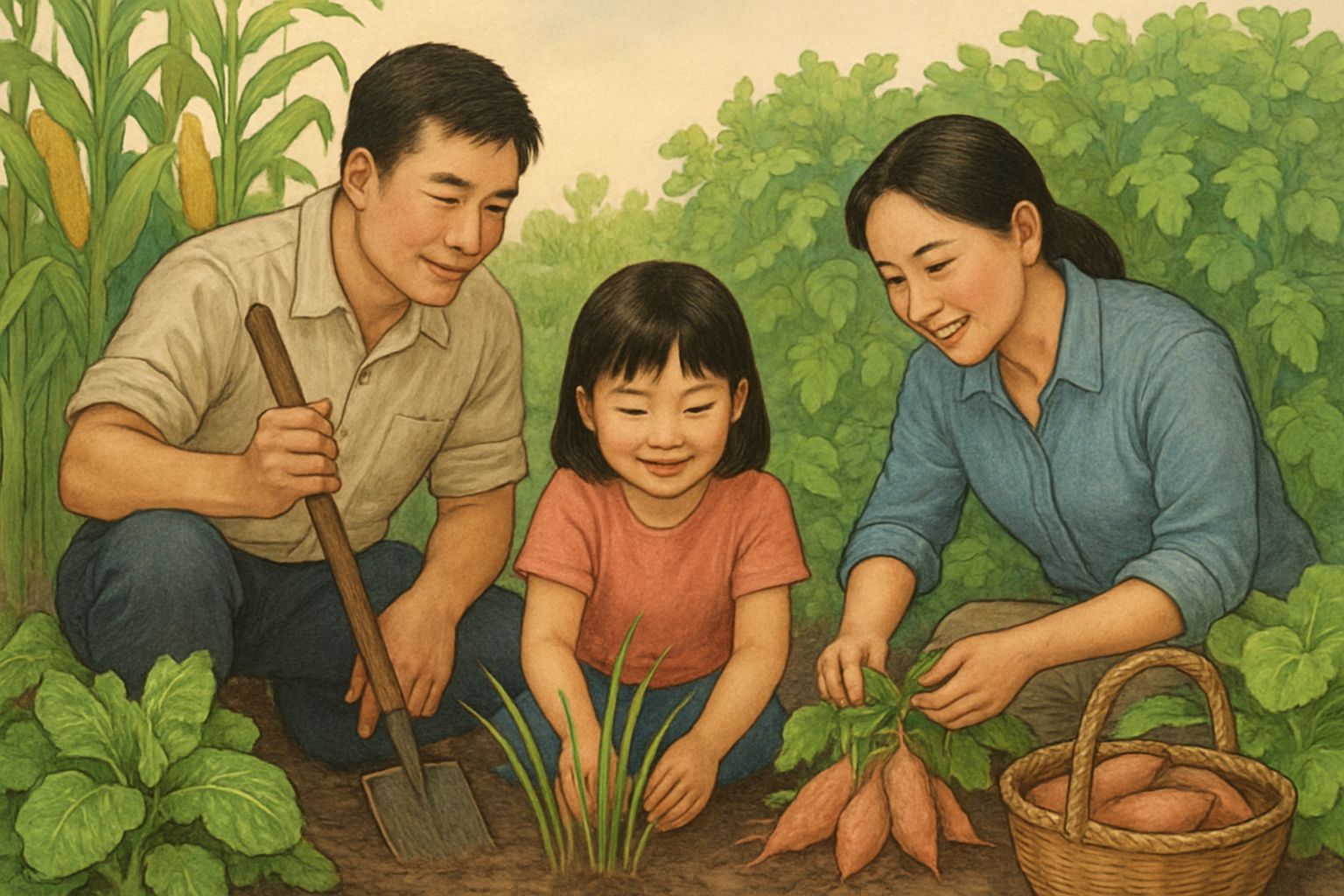
Most survival gardens fail before the first frost — not because of pests or weather, but because they were planted like a hobby garden instead of a food system.
The difference between a garden that feeds your family through a crisis and one that just supplements your grocery trips comes down to crop selection. Not every vegetable earns its space when food security is the goal. You need crops that deliver serious calories, store without electricity, and can be replanted from seed you save yourself. Learn how to break down the real numbers behind survival gardening — calories per square foot, storage timelines, and the seed strategies that make a garden truly self-sustaining year after year.
This guide is built around those numbers. Every crop listed here was chosen for a reason, and by the end, you’ll have a clear picture of what to plant, how much of it to grow, and how to store what you harvest.
A Survival Garden Is Built on Calories First, Flavor Second
A hobby garden grows what is enjoyable. A survival garden grows what keeps people alive. That mental shift changes everything about how you plan your space.
The average adult needs roughly 2,000 calories per day to maintain basic function. Leafy greens, cucumbers, and tomatoes — the staples of most backyard gardens — deliver between 70 and 100 calories per pound. You would need to harvest an unrealistic volume of those crops every single day just to meet basic energy needs. The math simply does not work, highlighting why self-reliance matters in food production.
Two planning rules follow from this reality. First, dedicate 70 to 80 percent of your growing space to calorie-dense staple crops. Second, fill the remaining space with vitamin-rich crops that prevent nutritional deficiencies over the long term. Flavor comes third — and only if there is room left.
Best High-Calorie Crops for a Survival Garden
These six crops form the foundation of any serious survival garden. Each one was selected based on calories per square foot, storage potential without refrigeration, and ease of seed saving. Notice what is not on this list: tomatoes, peppers, and cucumbers. Grow them if you want, but do not budget core survival space for them. At roughly 80 calories per pound, a tomato is a condiment in this math, not a staple.
|
Crop |
Calories per Pound |
Storage Without Refrigeration |
Seed Saving Difficulty |
|---|---|---|---|
|
Potatoes |
~350 |
4–6 months (root cellar) |
Easy (save tubers) |
|
Sweet Potatoes |
~390 |
6–12 months (cured) |
Easy (save slips) |
|
Dry Beans |
~1,500 |
2–5 years (dried) |
Very Easy |
|
Dent Corn |
~1,600 |
Years (dried/ground) |
Easy |
|
Winter Squash |
~200 |
4–6 months (cured) |
Easy |
|
Sunflowers |
~2,400 (seeds) |
1+ year (dried) |
Easy |
|
Calorie figures sourced from USDA FoodData Central. Storage estimates based on University of Minnesota Extension guidelines. |
1. Potatoes: The Most Calorie-Dense Vegetable You Can Grow
Potatoes are the undisputed anchor of a survival garden. No other vegetable a beginner can reliably grow delivers more calories per square foot, and no processing is needed between digging them out of the ground and putting them in a pot. One pound of potatoes provides roughly 350 calories, and a well-managed 100-square-foot bed can yield anywhere from 50 to 100 pounds depending on variety and soil quality.
For storage, potatoes need cool, dark, and humid conditions — ideally 38 to 40°F with 90 percent relative humidity, according to Michigan State University Extension. A basic root cellar, a cool basement corner, or even an insulated buried bin can get you there. Do not wash them before storing. Cure them first at 50 to 65°F for one to two weeks to harden the skin, then move them to long-term storage. Varieties like Kennebec and Yukon Gold are reliable performers with good storage traits.
2. Sweet Potatoes: Nutrition, Calories, and Easy Storage
In zones 7 and warmer, sweet potatoes outperform regular potatoes in both calorie density and storage life. A cured sweet potato stored at 55 to 60°F can last 6 to 12 months — nearly double what a white potato manages. They are also loaded with beta-carotene, which converts to vitamin A, making them one of the few crops that pulls double duty as both a calorie source and a critical micronutrient.
Sweet potatoes are not grown from seed but from slips — sprouts that grow from a saved tuber. This makes them one of the easiest crops to perpetuate year after year without buying anything. Start slips indoors 6 weeks before your last frost date by submerging a saved sweet potato halfway in water. Varieties like Beauregard and Covington are widely adapted and high-yielding. For more insights on how to feed your family year-round with a survival garden, check out this article.
3. Winter Squash and Pumpkins: Long Storage Without Refrigeration
Winter squash does not have the raw calorie count of beans or corn, but it earns its place in the survival garden for two reasons: it stores on a shelf without any special equipment, and it delivers meaningful amounts of vitamin A alongside its carbohydrates. A properly cured butternut squash will sit on a cool, dry shelf from October through March without any attention. That is free food sitting on a shelf through the hardest months of the year.
Curing is the critical step most beginners skip. After harvest, cure winter squash at 80 to 85°F for 10 to 14 days to harden the skin and seal the stem. Then move to a cool, dry location — ideally 50 to 55°F. Waltham Butternut, Blue Hubbard, and Long Island Cheese Pumpkin are three varieties with proven long storage records and easy seed saving.
4. Dried Beans: Protein and Calories That Last for Years
Why dry beans belong at the center of every survival garden: One pound of dried beans delivers approximately 1,500 calories and 90 grams of protein. Properly dried and stored in airtight containers, they remain viable and nutritious for 2 to 5 years without refrigeration. No other crop gives you that combination of protein, calories, and shelf life from a single planting.
Dry beans are also the easiest crop to save seed from. Let the best plants fully mature until the pods are dry and rattling on the vine, pull the entire plant, hang it in a dry location for two more weeks, then shell and store. Varieties worth growing include Jacob’s Cattle, Mortgage Lifter Bean, and Hidatsa Shield Figure — all open-pollinated, all excellent producers, and all with strong storage qualities.
Plant pole varieties over bush types when space is limited. Pole beans like Kentucky Wonder produce over a longer season and yield more per square foot. Give them a simple trellis made from stakes and twine, and they will climb without any further intervention.
5. Corn: A Calorie Staple That Dries and Stores Well
Dent corn — not sweet corn — is what belongs in a survival garden. Sweet corn is harvested young and eaten fresh. Dent corn is left on the stalk until fully dry, then ground into cornmeal that stores for years. At roughly 1,600 calories per pound of dried grain, it is one of the most calorie-dense crops you can grow. The trade-off is space: corn needs room to pollinate properly and should be planted in blocks of at least four rows rather than single rows. It is the first crop to cut if your garden is under 1,000 square feet. If you have the space, varieties like Bloody Butcher and Hopi Blue are open-pollinated dent types with centuries of proven performance.
Best Vitamin-Dense Crops to Round Out Your Nutrition
Calories keep you alive. Vitamins keep you functional. A diet built entirely on potatoes and dry beans will eventually cause deficiencies in vitamins A, C, and K — all of which affect immune function, wound healing, and blood clotting. The crops below do not add significant calories to your garden math, but they are essential to long-term health and should fill the remaining 20 to 30 percent of your survival garden space.
One critical planning note: grow what your family will actually eat. Kale is nutritionally excellent, but if nobody in your household touches it, it is wasted ground — and a survival garden has no ground to waste. Swap within categories where needed (collards for kale, chard for spinach) but keep the vitamin layer in your plan.
Cabbage: Vitamin C That Stores for Months
Cabbage is one of the most underrated survival crops in a temperate climate. A single head can store for 3 to 4 months at 32°F and high humidity — or up to a year if fermented into sauerkraut, which also adds beneficial probiotics. It is one of the best sources of vitamin C available from a storage crop, which makes it critically important when citrus is not an option. Varieties like Late Flat Dutch and Danish Ballhead were bred specifically for long storage and are worth prioritizing over modern hybrid types.
Kale and Leafy Greens: Fast-Growing Nutritional Powerhouses
Kale, collards, and Swiss chard grow fast, tolerate frost, and deliver dense nutrition in a small footprint. Kale in particular is one of the most nutrient-dense plants per square foot you can grow — rich in vitamins K, A, and C. It can be harvested as a cut-and-come-again crop, meaning a single planting produces continuously through the season rather than being a one-time harvest. In mild climates, kale will overwinter and continue producing through late winter when nothing else is available. For more on how to prepare your home garden, check out essential safety items every home should have.
Do not overlook the speed factor. Leafy greens can go from seed to harvest in as little as 30 days, which means they fill nutritional gaps during the long wait for staple crops to mature. Plant them as a cool-season crop in early spring and again in late summer for a fall harvest.
Carrots: Root Vegetables That Store in the Ground
Carrots solve a storage problem that most crops cannot: they store best right where they grow. In climates with mild winters, you can leave carrots in the ground and harvest them as needed through the cold months, covering the bed with a thick layer of straw mulch to prevent the soil from freezing solid. This turns your garden bed into a natural root cellar with zero construction required. For colder climates, harvest before the ground freezes hard and store in damp sand or sawdust at 32 to 38°F, where they will keep for 4 to 6 months according to University of Minnesota Extension guidelines.
Beyond storage, carrots are one of the best sources of beta-carotene available from a root vegetable, making them a direct nutritional complement to the calorie staples in your garden. Varieties like Danvers 126 and Chantenay Red Core are open-pollinated, shorter-rooted types that perform well in heavy or rocky soils where longer varieties struggle. If your soil is compacted, grow Oxheart — a wide, short carrot that tolerates difficult ground better than most.
Crops That Practically Grow Themselves
The most resilient survival crops are the ones that require the least intervention once established. These perennial and self-propagating plants are especially valuable because they reduce your dependence on annual seed starting, replanting, and intensive care. In a true crisis scenario, energy conservation matters — every calorie you spend maintaining your garden is a calorie you need to replace. These crops tip that equation in your favor.
Jerusalem Artichokes: High-Calorie Tubers That Spread on Their Own
Jerusalem artichokes — also called sunchokes — are one of the most calorie-efficient plants you can put in the ground. They are native to North America, tolerant of poor soil and neglect, and once planted, they return and spread every year without replanting. A single tuber left in the ground after harvest will sprout the following spring. They produce abundantly, reaching 6 to 10 feet tall, and the edible tubers provide meaningful carbohydrates and inulin fiber. One practical warning: plant them in a contained bed or area where spreading is acceptable, because they will spread aggressively. The variety Stampede is an early-maturing type suited to shorter growing seasons. For those interested in self-reliance, these tubers are an excellent addition to your survival garden.
Egyptian Walking Onions: Self-Propagating and Hardy
Egyptian walking onions are a perennial allium that reproduce without any effort from you. Instead of flowering, they produce small bulblets called topsets at the tip of each stalk. When the stalk bends under the weight and touches the ground, the topsets root and form a new plant — hence the name “walking.” They are extraordinarily cold-hardy, surviving winters in zones 3 and above, and they provide fresh greens in early spring before almost anything else is growing. Plant them once and they will supply green onion tops, small bulbs, and topsets for planting indefinitely. They require almost no maintenance beyond occasional thinning.
Fruit and Nut Trees: Low Maintenance Once Established
Fruit and nut trees are a long-term investment that pays compounding returns. An apple tree takes 3 to 5 years to bear fruit, but once it does, it produces for decades with minimal inputs. Nut trees like American Hazelnut and Carpathian Walnut deliver high-calorie, high-fat harvests that store well without processing. A single mature walnut tree can produce 50 to 80 pounds of shelled nuts per year. If you are planning for multi-year resilience rather than a single-season emergency, planting even two or three fruit or nut trees now significantly strengthens your long-term food position. Choose disease-resistant varieties suited to your specific hardiness zone.
Why Open-Pollinated Seeds Are Non-Negotiable
Seed selection is not a minor detail — it is the decision that determines whether your survival garden is a one-time event or a permanent food system. The wrong type of seed means you are dependent on a supply chain every single planting season, which directly undermines the entire purpose of growing your own food.
The Difference Between Heirloom and Hybrid Seeds
Hybrid seeds — labeled F1 on most seed packets — are crosses between two parent varieties bred to produce specific traits like uniform size, disease resistance, or early maturity. They perform well in their first generation. The problem is what happens in the second generation: seeds saved from F1 hybrids will not reliably reproduce the parent plant. You get unpredictable results, reduced yields, or traits that revert to one of the parent lines. In a survival context, that unpredictability is unacceptable.
Open-pollinated seeds reproduce true to type when properly isolated from other varieties of the same species. Save seed from an open-pollinated Mortgage Lifter tomato, and next year’s plants will be Mortgage Lifter tomatoes. That consistency is what makes your garden self-renewing. Heirloom seeds are a subset of open-pollinated seeds — they are simply open-pollinated varieties that have been maintained for 50 years or more, often with documented histories and strong regional adaptation. For those interested in self-sufficiency, understanding why self-reliance matters can further enhance the value of cultivating such seeds.
The practical takeaway is straightforward: buy open-pollinated or heirloom seeds from reputable sources like Seed Savers Exchange, Baker Creek Heirloom Seeds, or High Mowing Organic Seeds. Avoid any packet labeled F1 for crops you intend to save seed from. Budget hybrid seeds only for crops you plan to purchase new each year as a supplement — never as a survival staple.
How to Save Seeds From Your Best Crops
Seed saving is easiest with the crops that matter most for calories: beans, peas, corn, squash, tomatoes, and sunflowers are all beginner-friendly. The core principle is consistent across all of them — let the best plants fully mature far beyond eating stage, harvest seed when completely dry, and store in cool, dark, airtight containers with a silica gel packet to control moisture. Label everything with variety name and harvest year. Most properly dried vegetable seeds remain viable for 3 to 6 years when stored correctly.
Cross-pollination is the main risk with seed saving. Corn crosses freely with any other corn within a quarter mile. Squash crosses within the same species — a Waltham Butternut (Cucurbita moschata) will not cross with a Delicata (Cucurbita pepo), but two C. pepo varieties absolutely will. When in doubt, grow only one variety of each species per season, or stagger planting times so their flowering periods do not overlap.
How Much Garden Space Does One Person Actually Need
The honest answer depends on your calorie target, your soil quality, and which crops you are growing — but a reliable baseline figure used by serious food security planners is 4,000 square feet per person to cover a significant portion of calorie needs from a well-managed garden in a temperate climate. That is roughly a 40 x 100 foot plot. This assumes good soil, full sun, and efficient use of every square foot through succession planting and vertical growing.
A more realistic starting target for most households is 200 square feet per person dedicated to calorie staples, supplemented by grocery purchases or stored food for the remainder. Even that smaller footprint, planted entirely in potatoes and dry beans, can produce a meaningful emergency food reserve. The key is maximizing calorie output per square foot rather than planting area diversity.
Vertical growing dramatically changes the math. Pole beans, vining winter squash, and cucumbers trained upward on trellises free up ground space for additional root crops and corn. A 4 x 8 foot raised bed with a sturdy trellis along the north end can grow pole beans vertically while a root crop like carrots or beets fills the bed below. Every square foot you reclaim through vertical growing is another square foot you can dedicate to calories.
Build Your Survival Garden Plan Before You Plant Anything
Planning on paper before putting a seed in the ground is one of the most important things you can do for your survival garden. A well-thought-out plan accounts for your available space, your family’s calorie needs, your local climate and frost dates, your storage capacity, and your seed inventory — before any of those factors become a problem mid-season. Skipping this step is the single most common reason survival gardens underperform.
Map Your Space and Calculate Calorie Targets First
Start with a simple site assessment. Walk your property and identify every area that receives a minimum of 6 to 8 hours of direct sunlight daily — that is the non-negotiable threshold for productive food crops. Measure those areas precisely, then sketch them to scale on graph paper or a free tool like GrowVeg Garden Planner. Once you know your total square footage, multiply the number of people you are feeding by 4,000 to get your full calorie-independence target, then compare that against what you actually have. Most households will have a gap. That gap tells you exactly how much stored food, preserved harvest, or supplemental purchasing you need to plan for alongside your garden.
Prioritize Crops With the Best Calorie-to-Space Ratio
Once your space is mapped, allocate it in order of calorie return. Potatoes and dry beans should claim the largest sections of your plan — they deliver more food energy per square foot than almost anything else a beginner can grow reliably. Winter squash and corn come next if space allows, followed by sweet potatoes in warmer zones. Only after the calorie backbone is fully accounted for should you allocate space to vitamin crops like cabbage, kale, and carrots. This sequencing is the most important discipline in survival garden planning, and it is the step most home gardeners skip entirely. For more insights on home preparation, consider how important safety items can enhance your home’s resilience.
Use a two-season planting structure to maximize your space across the full growing year:
- Cool season (before last frost): Potatoes, cabbage, kale, carrots, and peas go in first. These crops tolerate cold and fill the garden during the weeks when warm-season staples cannot yet be planted.
- Warm season (after last frost): Beans, corn, squash, sweet potatoes, and sunflowers take over. This planting carries the primary calorie load of the entire year.
- Fall extension: A second planting of kale, carrots, and spinach extends fresh food production deep into autumn, often past the first hard frosts in many zones.
Plan for Storage Alongside Planting
Storage is not an afterthought — it is half the system. A survival garden that produces 200 pounds of potatoes and has nowhere to store them properly is only marginally better than no garden at all. Before your first seeds go in the ground, decide where your harvest will go. A root cellar is the gold standard, maintaining the 32 to 40°F range and high humidity that potatoes, carrots, and cabbage need. If a root cellar is not feasible, a cool basement corner, an insulated outdoor storage bin, or even a buried garbage can can replicate those conditions adequately for small harvests.
Dry goods like beans, corn, and sunflower seeds need a different approach: low moisture and airtight containers. Store them in Mylar bags with oxygen absorbers inside food-grade 5-gallon buckets for maximum shelf life. Beans stored this way can remain viable and nutritious for up to 5 years. Squash and pumpkins simply need a cool, dry shelf at 50 to 55°F — no special equipment required. Map out your storage locations on paper the same way you map your growing beds, and make sure your storage capacity matches your expected harvest volume before planting season begins. For more tips on increasing your home’s resilience, consider these small home upgrades.
The Right Survival Garden Feeds You Every Year, Not Just Once
The goal was never a single season of food. A true survival garden is a closed-loop system: you grow food, you save seed, you replant, you improve your soil with compost from the previous season’s plant matter, and you refine your crop selection based on what actually performed in your specific conditions. That cycle, repeated year after year, is what builds genuine food independence — not a one-time emergency planting.
Every decision covered in this guide points toward that loop. Open-pollinated seeds make it possible. Calorie-first crop selection makes it sufficient. Proper storage makes it continuous. The survival gardeners who get it right are not the ones who planted the most — they are the ones who planned the most carefully before anything went into the ground. Start there, plant with intention, and your garden becomes something that feeds your family not just through one crisis, but through every season that follows.
Frequently Asked Questions
What is the single most important crop for a survival garden?
Potatoes are the single most important crop for a survival garden. They deliver more calories per square foot than any other vegetable a beginner can reliably grow, they require no processing between harvest and cooking, and they store for 4 to 6 months in basic cool, dark conditions. A 100-square-foot potato bed can yield 50 to 100 pounds of food — enough to provide a meaningful portion of one person’s calorie needs for several months. Pair them with dry beans for protein, and you have the foundation of a functional survival diet.
How big does a survival garden need to be to feed a family of four?
A family of four aiming for significant calorie independence from their garden needs approximately 16,000 square feet — roughly a third of an acre — planted intensively with calorie-dense staple crops in good soil with full sun. That figure assumes efficient use of space through vertical growing and succession planting. Most suburban lots cannot reach that target, which is why honest gap analysis matters: know exactly how much your garden can produce, then supplement the difference with long-term stored food. Even a well-managed 800 to 1,000 square foot garden can provide meaningful emergency food security when planted with the right crops.
Which survival crops store the longest without refrigeration?
Dry beans and dent corn store the longest of any survival garden crop — both can remain nutritious and viable for 2 to 5 years when properly dried and sealed in airtight containers with oxygen absorbers. Sunflower seeds stored similarly last over a year. Winter squash and pumpkins store 4 to 6 months on a cool, dry shelf after proper curing. Potatoes last 4 to 6 months in root cellar conditions, and sweet potatoes push 6 to 12 months when cured correctly at 85°F for 10 days before moving to cool storage.
Fermentation extends storage even further for some crops. Cabbage fermented into sauerkraut remains safe and nutritious for up to a year at cool temperatures without any refrigeration or canning equipment. This makes it one of the most practical preservation methods available to a survival gardener working without electricity.
Can you start a survival garden with no gardening experience?
Yes — and the best first crops for a complete beginner are dry beans, potatoes, and winter squash. All three are forgiving of imperfect technique, produce reliably in average soil, and require minimal equipment or specialized knowledge to grow successfully. Start with a small, well-prepared bed of 100 to 200 square feet, focus on soil improvement with compost, and plant just one or two varieties of each crop in your first season. The knowledge and confidence you build in that first year is itself a survival asset — it cannot be purchased or stockpiled, only grown through practice.
What seeds should you stockpile for a survival garden?
Prioritize open-pollinated seeds from the calorie backbone first: a dent corn variety like Bloody Butcher, a reliable dry bean like Jacob’s Cattle, a storage potato variety like Kennebec, a winter squash like Waltham Butternut, and a long-storage cabbage like Danish Ballhead. Add open-pollinated kale, carrots, and sunflowers to cover the vitamin layer. Purchase from reputable heirloom seed companies like Seed Savers Exchange or Baker Creek Heirloom Seeds, store sealed packets in a cool, dark location, and rotate your stock by planting and resaving seed every 2 to 3 years to maintain germination rates.
Build your seed inventory to cover at least two full growing seasons for every crop on your list. This buffer protects against a failed germination year, a crop loss from disease or pests, or a season where you need to replant after an unexpected frost. Seed is the cheapest insurance in any survival food plan — a full seed collection for a substantial garden costs less than a single week of grocery shopping.
Store seeds in Mylar bags or glass mason jars with tight-fitting lids, add a small silica gel desiccant packet to each container, and keep them in the coolest, driest location available in your home. A consistent 40 to 50°F storage temperature significantly extends viability beyond the standard 3 to 6 year window for most vegetable seeds. Freezer storage is viable for long-term reserves as long as seeds are completely dry before sealing — any residual moisture will destroy viability when it freezes and expands inside the seed tissue.
When planning a survival garden, it’s important to consider the types of crops that will thrive in your specific environment. Researching local climate conditions and soil types can help you select the best options for your garden.




Leave a Reply