
Article At A Glance:
- Calisthenics uses your own bodyweight as resistance, making it one of the most accessible and effective training methods for building strength, endurance, and mobility — no gym required.
- Mobility is not the same as flexibility — and calisthenics targets both simultaneously, reducing injury risk and improving how your body moves in everyday life.
- Research confirms that bodyweight training builds muscle just as effectively as traditional weightlifting, while also boosting aerobic capacity, core endurance, and coordination.
- Both military units and elite gymnasts rely on calisthenics as a foundation of physical readiness — a strong signal of its real-world effectiveness.
- You don’t need equipment, a gym membership, or a perfect schedule — keep reading to find out exactly how to build a calisthenics routine that actually sticks.
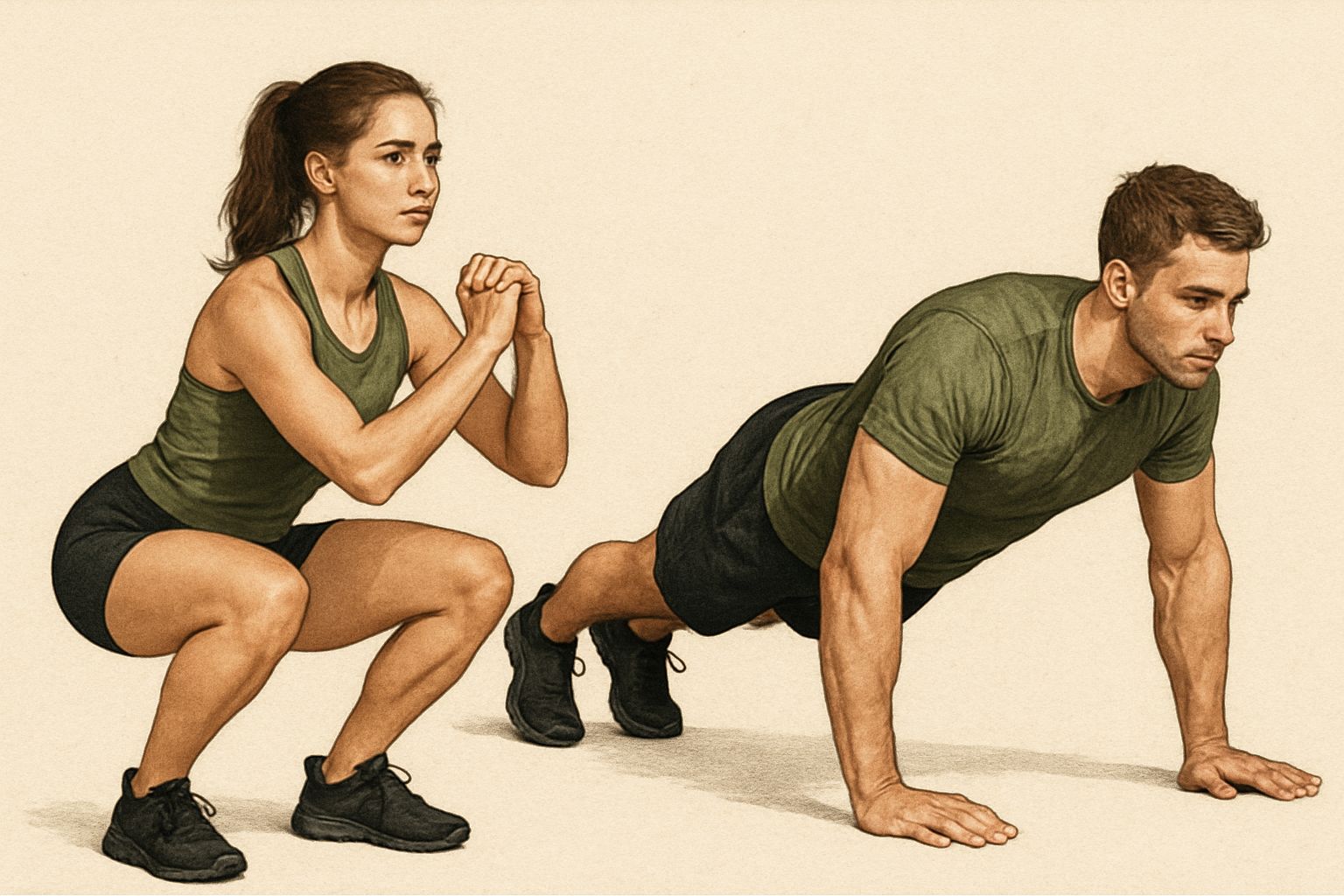
Your body is the only gym you’ll ever truly need — and calisthenics proves it every time.
Somewhere between the rise of expensive gym memberships and overcomplicated workout gear, a simple truth got buried: movement itself is the medicine. Calisthenics — the practice of using your own bodyweight as resistance — has been around since ancient Greece, and it’s still one of the most effective training systems ever developed. Push-ups, squats, pull-ups, planks — these aren’t beginner moves. They’re the foundation of functional human performance.
For fitness enthusiasts looking to build real-world strength without a barbell in sight, calisthenics training programs offer a complete path to mobility, endurance, and physical readiness. Whether you’re training in a studio, a park, or your living room, the principles stay the same: control your body, own your movement, build from the ground up.
Why Mobility Is the Missing Piece in Most Fitness Routines
Most people chase strength or cardio and skip mobility entirely — until something breaks down. Tight hips, stiff shoulders, and a locked-up thoracic spine are the silent saboteurs of nearly every fitness plateau and overuse injury. Mobility isn’t a warm-up bonus. It’s the foundation your strength is built on.
The Difference Between Flexibility and Mobility
Flexibility is passive — it’s how far a muscle can stretch when an external force is applied. Mobility is active — it’s how much usable range of motion your joints have under your own muscular control. You can be flexible and still move terribly. Mobility is what actually translates to performance and injury prevention.
How Poor Mobility Leads to Injury
When a joint can’t move through its full range, neighboring joints compensate. A stiff ankle forces the knee inward during a squat. Limited hip flexion loads the lower back. Over time, these compensations create chronic stress on structures that weren’t designed to handle it. Poor mobility doesn’t just limit performance — it creates a slow-building injury waiting to happen.
Why Calisthenics Targets Mobility Better Than Weightlifting
Weightlifting often trains muscles through fixed, isolated ranges of motion. Calisthenics, by contrast, demands that your body move through natural, multi-joint patterns — the same ones your body was designed to perform. Exercises like deep squats, pike push-ups, and hanging movements actively develop joint range while simultaneously building the strength to control it. That combination is exactly what mobility training is supposed to achieve.
The Core Benefits of Calisthenics for Everyday Readiness
The word “readiness” means something specific in fitness: can your body handle what life demands of it? Can you carry groceries up three flights of stairs, sprint for a bus, play with your kids without wincing, or recover from a stumble without going down? That’s the real test — and calisthenics trains for all of it. To further enhance your preparedness, consider exploring why self-reliance matters in everyday life.
Because bodyweight exercises are built around natural human movement patterns — pushing, pulling, hinging, squatting, and carrying — they directly transfer to the demands of daily life. There’s no machine to stabilize you, no fixed bar path to guide the weight. Every rep requires your body to coordinate, balance, and stabilize itself. That’s not a limitation of calisthenics. That’s the point.
Research supports this completely. Studies confirm that bodyweight training increases aerobic capacity, builds muscle endurance — particularly in the core — and improves flexibility. It’s also the training system of choice for both military units and elite gymnasts, two groups whose physical requirements are about as demanding as it gets.
Builds Functional Strength for Real-Life Movement
Functional strength means strength that works outside the gym. A bicep curl makes your bicep stronger in one plane of motion. A pull-up makes your bicep, back, shoulders, and core stronger together — the way they actually work in real life. Calisthenics exercises are functional by design, directly improving your ability to lift, pull, push, and carry in ways that matter beyond a workout.
This is why fitness experts consistently classify calisthenics as functional training. Every movement pattern — from a lunge to a plank — mirrors something your body does every day. Training those patterns makes you more capable, more resilient, and more ready for whatever physical demands come your way.
Improves Balance, Coordination, and Posture
Without a machine to stabilize you, every calisthenics exercise activates your stabilizer muscles — the small, deep muscles that control joint alignment and posture. Over time, this builds the kind of balance and coordination that dramatically reduces fall risk, corrects postural imbalances from long hours sitting at a desk, and makes every other physical activity feel more controlled and effortless.
Strengthens Bones and Protects Joints
- Weight-bearing bodyweight exercises like squats and lunges stimulate bone density by placing controlled stress on the skeletal system — the same mechanism that makes bones adapt and grow stronger over time.
- Low-impact variations like planks, glute bridges, and dead bugs protect joint health by building the surrounding musculature without grinding cartilage under heavy external loads.
- Natural movement patterns in calisthenics keep joints moving through their intended ranges, reducing stiffness and maintaining the synovial fluid circulation that lubricates and nourishes joint tissue.
Because bodyweight exercises are grounded in natural movement, they place far less compressive force on joints than heavy barbell work. This makes calisthenics one of the safest long-term training methods available — particularly for people managing knee, hip, or shoulder discomfort. The load is always proportional to your bodyweight, and progression is controlled entirely by you.
Bone health is often overlooked in fitness conversations until it becomes a problem. Consistent resistance training — even using only bodyweight — triggers the mechanical stress signals that prompt bone remodeling. Over months and years, this translates to measurably stronger bones and a significantly lower risk of fractures and osteoporosis-related complications.
The joint protection benefits are equally significant. Strengthening the muscles around a joint creates a natural brace that absorbs impact and prevents excessive movement during dynamic activities. Calisthenics builds this protective musculature systematically across every major joint in the body — hips, knees, ankles, shoulders, and spine — without ever requiring you to load more than your body can handle.
Boosts Mood and Reduces Stress Through Endorphin Release
Exercise is one of the most well-documented mood regulators available — and calisthenics delivers that benefit without requiring a gym, a schedule, or a financial commitment. Bodyweight training triggers the release of endorphins, dopamine, and serotonin, the neurochemicals responsible for feelings of well-being, motivation, and calm. A 20-minute calisthenics session can shift your mental state as effectively as it shifts your physical one.
The accessibility factor amplifies this benefit significantly. Because you can train anywhere — your bedroom floor, a park, a hotel room — there’s no friction between you and the mood-boosting effects of movement. The lower the barrier, the more consistently you train. The more consistently you train, the more durable the psychological benefits become. For people managing stress, anxiety, or low energy, building a calisthenics habit is one of the highest-return investments in mental health available.
Best Calisthenics Exercises for Mobility and Readiness
Choosing the right exercises matters. Not every bodyweight movement is created equal when mobility is the goal. The exercises below are selected specifically because they develop strength and usable range of motion simultaneously — which is exactly the combination that builds long-term physical readiness.
Lower Body: Squats, Lunges, and Hip Hinges
The squat is the single most important lower body movement in calisthenics. A full-depth bodyweight squat requires — and simultaneously develops — ankle dorsiflexion, hip flexion, and thoracic extension. Done consistently, it opens the hips, strengthens the glutes and quads, and builds the mobility foundation that every other lower body movement depends on. Start with your feet shoulder-width apart, push your knees out over your toes, and work toward getting your thighs parallel to the floor or below.
Lunges add a single-leg stability demand that squats don’t fully address. They expose and correct left-right imbalances, strengthen the hip flexors through a lengthened range of motion, and improve the kind of coordinated lower body control that translates directly to running, climbing stairs, and changing direction quickly. Hip hinges — like the bodyweight Romanian deadlift or the glute bridge — complete the lower body picture by targeting the posterior chain: hamstrings, glutes, and lower back. Together, these three movement patterns cover every major lower body mobility and strength demand.
Upper Body: Push-Ups, Pull-Ups, Pike Press, and Shoulder Circles
Push-ups are far more than a chest exercise. A properly performed push-up engages the chest, triceps, anterior deltoids, serratus anterior, and core — all in one movement. Elevate your feet for a decline push-up to shift emphasis to the upper chest and shoulders, or try archer push-ups to increase the unilateral load. Pull-ups develop the lats, biceps, and rear deltoids while simultaneously improving shoulder mobility and grip strength — a combination almost impossible to replicate with machines. The pike press targets overhead shoulder mobility and strength, while shoulder circles performed in a dead hang position actively decompress the shoulder joint and restore lost range of motion from prolonged sitting and poor posture.
Core: Planks, Dead Bugs, and Hollow Body Holds
Core training in calisthenics goes well beyond sit-ups. The plank builds isometric endurance in the deep stabilizers — transverse abdominis, multifidus, and obliques — that protect the spine during every other movement you perform. Hold for 20 to 60 seconds with a completely neutral spine, no sagging hips, and full-body tension from head to heel.
The dead bug is arguably the most underrated core exercise in bodyweight training. Lying on your back with arms extended to the ceiling and knees at 90 degrees, you slowly lower opposite arm and leg toward the floor while keeping your lower back pressed flat — a movement that trains anti-extension core stability under controlled conditions. The hollow body hold, borrowed directly from gymnastics, creates full-body tension by pressing the lower back into the floor while extending arms overhead and lifting the legs, building the kind of rigid core control that makes every push-up, pull-up, and squat more powerful and more stable.
How to Build a Calisthenics Routine That Sticks
The most effective calisthenics program is the one you’ll actually do — consistently, progressively, and with intention. Building a routine that sticks isn’t about willpower. It’s about structure. Start with a clear framework, eliminate decision fatigue, and make the entry point low enough that skipping feels harder than starting.
Start With Movement Patterns, Not Muscle Groups
Forget chest day and arm day. In calisthenics, you organize your training around the six fundamental movement patterns that cover every muscle in the body:
- Push — push-ups, pike press, dips
- Pull — pull-ups, inverted rows, Australian pull-ups
- Squat — bodyweight squats, jump squats, pistol squat progressions
- Hinge — glute bridges, single-leg deadlifts, good mornings
- Carry — farmer carries, suitcase carries (using any weighted object)
- Core — planks, dead bugs, hollow body holds, L-sit progressions
Training by movement pattern ensures balanced development across the entire body, prevents the postural imbalances that come from overtraining one muscle group, and makes programming far simpler. A full-body session covering push, pull, squat, hinge, and core hits every major muscle group in under 40 minutes.
For beginners, three full-body sessions per week with a rest day between each is the most effective starting structure. As fitness improves, you can split the patterns across more days or add volume within sessions. The key is consistency over intensity — showing up three times a week for three months will outperform any heroic one-week effort followed by burnout.
How to Progress Without Adding Weight
One of the most common misconceptions about calisthenics is that it has a ceiling — that once push-ups get easy, you’ve run out of road. In reality, bodyweight training has an almost unlimited progression system built entirely around leverage, range of motion, tempo, and unilateral loading. A standard push-up becomes an archer push-up, then a single-arm negative, then a full single-arm push-up. A bodyweight squat progresses to a Bulgarian split squat, then a shrimp squat, then a full pistol squat. Slow the tempo to a 4-second eccentric, pause at the bottom, add a plyometric component, or reduce your base of support — each variable makes the same exercise dramatically more demanding without adding a single kilogram of external load.
Who Calisthenics Works For
Calisthenics works for virtually everyone — and that’s not a marketing claim, it’s a structural reality. Because every exercise is scaled to your own bodyweight and modified through leverage rather than load, the system adapts to you rather than demanding you adapt to it. A 60-year-old recovering from knee surgery and a 25-year-old training for a military fitness test are both doing calisthenics — just at very different points on the same progression ladder.
Beginners benefit from the low barrier to entry. There’s no technique learning curve as steep as Olympic lifting, no equipment to purchase, and no gym to travel to. The fundamental movements — pushing, pulling, squatting, hinging — are patterns your body already knows. You’re not learning a new skill from scratch. You’re refining movement you already do every day, and building the strength to do it better.
Advanced athletes find that calisthenics exposes weaknesses that barbells can hide. Machine-based training stabilizes the weight for you. Calisthenics does not. When a strong powerlifter attempts their first proper pistol squat or hollow body hold, they often discover mobility and coordination gaps that years of heavy lifting never revealed — and fixing those gaps makes every other aspect of their training sharper.
Calisthenics Is the Most Accessible Path to Long-Term Fitness
No gym, no equipment, no excuses — calisthenics strips fitness down to its most essential form and delivers results that rival any training system on the planet. If long-term physical health is the goal, the best training method is the one you can do consistently, anywhere, for the rest of your life — and nothing fits that description better than your own bodyweight.
Frequently Asked Questions
Calisthenics raises a lot of questions — especially from people accustomed to traditional gym training. The answers below cut through the noise and give you exactly what you need to move forward with confidence.
Whether you’re weighing calisthenics against weightlifting, wondering how quickly you’ll see results, or figuring out how to get started with zero equipment, these are the questions that matter most for anyone serious about making this training style work.
Here’s what the research and real world training experience actually says.
Can calisthenics replace weightlifting for building muscle?
Research confirms it: Bodyweight training builds muscle just as effectively as traditional weightlifting when training volume and progressive overload are applied consistently. The mechanism is identical — mechanical tension, metabolic stress, and muscle damage trigger hypertrophy regardless of whether the resistance comes from a barbell or your own bodyweight.
The key variable is progressive overload. In weightlifting, you add plates. In calisthenics, you manipulate leverage, tempo, range of motion, and unilateral loading to make exercises progressively harder. A push-up progression from standard to archer to single-arm creates the same stimulus for muscle growth as adding weight to a bench press — the muscle doesn’t know the difference between a challenging bodyweight movement and a barbell. It only responds to tension.
Where weightlifting has a clear edge is in isolating specific muscle groups for hypertrophy-focused training and in maximally loading the lower body for pure strength. A 200kg back squat creates a stimulus that bodyweight alone can’t fully replicate at advanced levels. However, for the vast majority of people — those training for health, functional fitness, mobility, and general strength — calisthenics delivers complete muscle development without a single piece of equipment.
The practical advantage of calisthenics for muscle building is sustainability. You can train anywhere, at any time, with no cost and no commute. Consistency drives muscle growth more than any single training variable — and calisthenics removes every barrier to consistency that gym-based training creates.
How often should I do calisthenics for mobility improvement?
For meaningful mobility improvement, three to five sessions per week is the sweet spot for most people. Mobility adapts through consistent, repeated exposure to end-range positions under muscular control — which means frequency matters more than session length. A focused 20-minute full-body calisthenics session four times a week will produce faster and more durable mobility gains than one long session per week. If you’re specifically targeting a tight area — like hip flexors or thoracic rotation — daily targeted work of even five to ten minutes accelerates the adaptation significantly.
Is calisthenics suitable for older adults or people with joint pain?
Not only is calisthenics suitable for older adults and people managing joint pain — for many, it’s the best option available. Because the load is always limited to your bodyweight and progression is entirely self-directed, the compressive and shear forces on joints remain within manageable ranges. Low-impact variations like wall push-ups, seated leg raises, glute bridges, and supported squats allow people with significant physical limitations to train effectively and safely.
The joint-strengthening effects of consistent bodyweight training are particularly valuable for older adults. Building the musculature surrounding the hips, knees, and shoulders creates a natural protective mechanism that reduces pain, improves stability, and lowers fall risk. Many people who experience discomfort with weighted gym exercises find that equivalent calisthenics movements are entirely pain-free — because the load is proportional, the range of motion is self-selected, and no external resistance forces the joint beyond what it can handle. Always consult a healthcare professional before beginning any new training program if you’re managing an existing injury or medical condition.
How long before I see results from calisthenics training?
Most people notice meaningful improvements in strength, energy, and mobility within two to four weeks of consistent training — particularly if they were previously sedentary. These early gains are largely neurological: your nervous system becomes more efficient at recruiting the muscle fibers you already have, which produces rapid strength improvements before significant muscle growth has even occurred.
Visible changes in muscle definition and body composition typically become apparent between six and twelve weeks of consistent training, depending on nutrition, sleep, and training frequency. Mobility improvements follow a similar timeline — regular exposure to full-range bodyweight movements produces noticeable increases in joint freedom within four to eight weeks for most people. The most important factor is not intensity in any single session, but rather unbroken consistency across weeks and months. Show up, move well, and progress deliberately — the results follow reliably.
Do I need any equipment to start a calisthenics routine?
No. A complete, effective, and progressively challenging calisthenics program requires nothing but a floor and enough space to lie down flat. Push-ups, squats, lunges, glute bridges, planks, dead bugs, mountain climbers, and hollow body holds cover every major movement pattern and muscle group in the body — all with zero equipment.
That said, a few low-cost additions can dramatically expand your exercise library as you progress. A pull-up bar — mountable in a doorframe for under $30 — unlocks the entire pulling movement category, which is otherwise difficult to train without equipment. Gymnastic ring add instability and leverage variation to pushing and pulling exercises, and a resistance band opens up dozens of mobility and accessory exercise options. None of these are necessary to start. They’re useful tools to add once you’ve built a consistent foundation.
The real barrier to starting calisthenics is never equipment. It’s the same barrier that blocks most people from any training system: beginning. Once you’re moving consistently — even with five basic exercises three times a week — the routine builds its own momentum. Progress becomes visible, movement feels better, and the habit reinforces itself. That’s the cycle calisthenics is uniquely positioned to create, because it removes every logistical obstacle between you and your training.



Leave a Reply