
Article-At-A-Glance
- Your nervous system responds to training just like muscle tissue does — repeated, intentional practice builds stronger, more efficient neural pathways over time.
- Most people are stuck in chronic fight-or-flight mode, which silently drives poor sleep, anxiety, slow recovery, and difficulty focusing.
- Five key methods — cold exposure, vagus nerve stimulation, resistance training, aerobic exercise, and daily grounding habits — form the foundation of an effective nervous system training plan.
- Heart Rate Variability (HRV) is one of the most reliable ways to measure your nervous system’s fitness, and you can track it today with tools you likely already own.
- There’s a specific weekly training template that combines physical workouts with targeted nervous system drills — and it’s simpler than you’d expect.
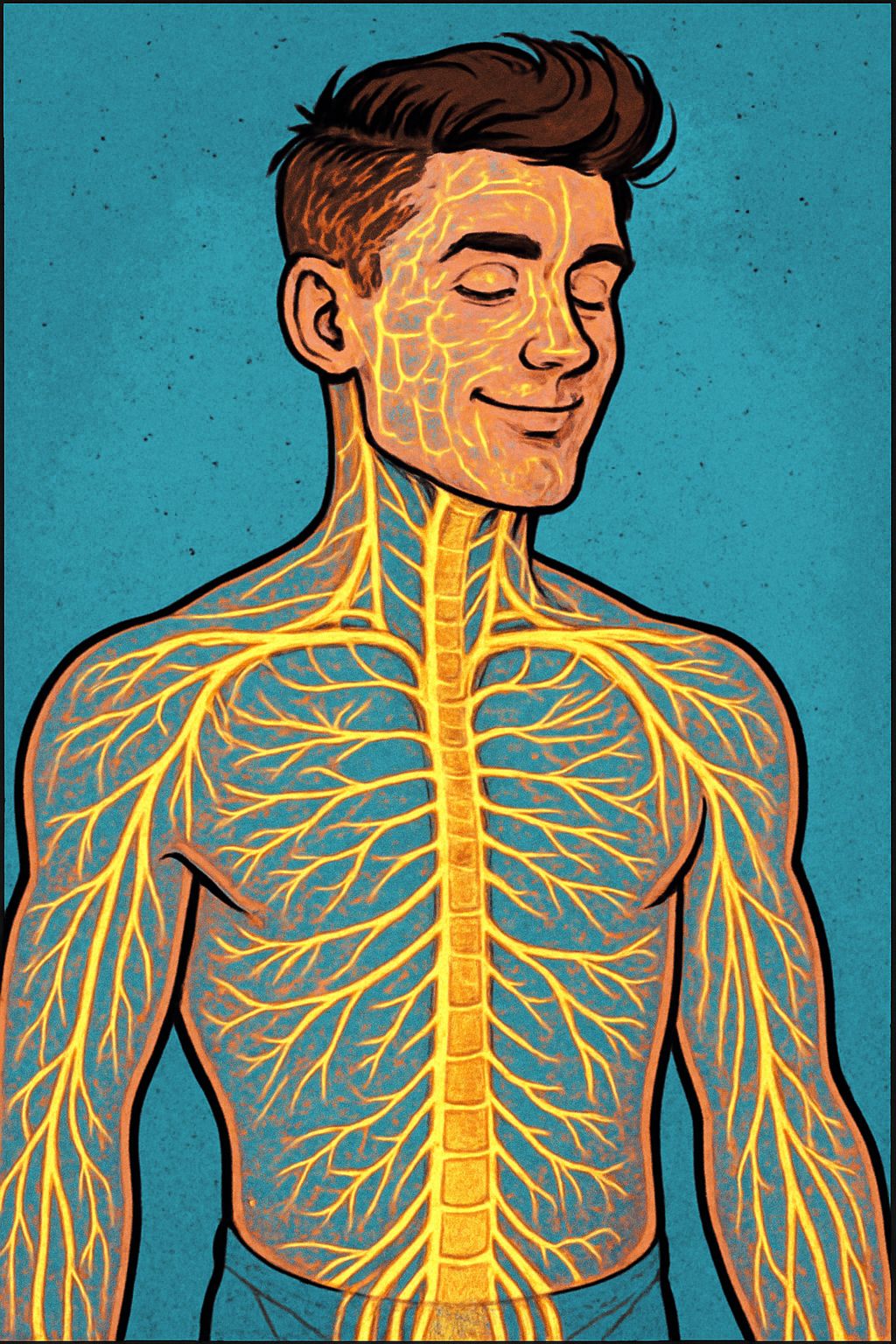
Your nervous system controls everything — and most people never train it.
Every movement you make, every thought you have, and every stress response your body fires all run through your nervous system. Yet while most wellness conversations focus on muscles, heart health, or gut function, the nervous system gets left out of the conversation entirely. The good news is that the nervous system has plasticity. It physically changes based on what you do repeatedly, meaning you can train it, strengthen it, and reshape how it responds to the world around you.
Your Nervous System Can Be Trained — Here’s What That Means
Think of your nervous system like a muscle that you’ve never deliberately worked out. It’s been responding to stress, environment, and habit — but without any intentional programming. Nervous system training means deliberately and repeatedly activating specific neural pathways until those pathways become faster, stronger, and more efficient at doing their job.
The autonomic nervous system — the branch responsible for automatic functions like heart rate, digestion, and stress response — is the primary target. When you train it, you’re building your body’s ability to shift between high-alert states and deep recovery states with greater speed and control. That shift is what separates people who thrive under pressure from those who feel perpetually drained by it.
Fight-or-Flight vs. Rest-and-Digest: The Balance Your Body Needs
Your autonomic nervous system operates through two opposing branches. The sympathetic nervous system triggers fight-or-flight — the cascade of hormones and physical changes that prepare your body to respond to danger. The parasympathetic nervous system activates rest-and-digest — the state where healing, recovery, and calm processing happen. Both are essential. The problem is that modern life has most people spending far too much time in sympathetic overdrive.
What Happens When Fight-or-Flight Stays Switched On
When your sympathetic nervous system stays chronically activated, it stops being a survival tool and starts becoming a health liability. Cortisol stays elevated, digestion slows, inflammation increases, and your brain’s ability to focus or regulate emotion takes a serious hit. Over time, this chronic activation wears down the very neural pathways it was designed to protect.
How Rest-and-Digest Mode Restores Balance
Every time you successfully activate your parasympathetic nervous system — through breathwork, cold exposure, gentle movement, or other deliberate practices — you strengthen that neural pathway. Just like progressive resistance makes muscles more capable, repeated parasympathetic activation makes your body faster at returning to calm after stress. That’s the core mechanic behind all nervous system training. For more on the importance of recovery, see why recovery is an overlooked part of physical preparedness.
Clear Signs Your Nervous System Needs Attention
Before diving into how to train, it helps to recognize whether your nervous system is currently dysregulated. These signs are easy to dismiss as “just stress” — but they’re your body sending clear signals that the system needs support.
Sleep Disruption and Fatigue That Won’t Quit
Feeling wired but exhausted at bedtime is one of the most telling signs of a nervous system stuck in sympathetic overdrive. Your body is physically fatigued but neurologically too activated to allow deep, restorative sleep. This creates a cycle that compounds quickly.
- Difficulty falling asleep despite feeling tired
- Waking between 2–4am and struggling to return to sleep
- Unrefreshing sleep even after 7–8 hours
- Persistent daytime fatigue that caffeine barely touches
- A feeling of “crashing” in the afternoon regardless of sleep quality
If several of these resonate, your nervous system’s recovery capacity is likely compromised. The good news is that even small, consistent interventions can reverse this pattern within weeks.
Anxiety, Irritability, and Emotional Reactivity
A dysregulated nervous system dramatically lowers your emotional threshold. Things that wouldn’t normally bother you — a slow driver, a critical comment, a full inbox — trigger disproportionate reactions. This isn’t a personality flaw. It’s a nervous system that has lost its buffer zone between stimulus and response. Training that buffer back is entirely possible.
Difficulty Focusing or Recovering After Exercise
When your nervous system is overtaxed, cognitive tasks become harder and physical recovery slows down noticeably. You might find it difficult to concentrate for extended periods, or notice that your muscles feel sore for much longer than they should after a normal workout. These are signs that your neural recovery mechanisms — not just your muscles — are under strain.
1. Cold Exposure Builds Stress Resilience Fast
Cold exposure is one of the fastest and most researched ways to train your nervous system’s stress response. When cold water hits your skin, your sympathetic nervous system fires immediately — heart rate spikes, breathing tightens, and your body mobilizes a rapid stress response. The training effect comes from what happens next: you choose to breathe, stay calm, and ride through it. That deliberate override of a stress response is exactly the neural pattern you want to reinforce.
With repeated practice, your nervous system becomes measurably better at responding to stressors without overreacting. The initial shock diminishes, your recovery time shortens, and the same controlled-calm response you practice in the shower starts showing up in everyday high-pressure moments.
How Cold Water Trains Your Stress Response
Cold exposure activates and then resolves a sympathetic stress response in a controlled, safe environment. Each time you complete that cycle — stress activation followed by deliberate calm — you reinforce the neural pathway between your body’s alarm system and its off switch. Over time, that connection becomes faster and more reliable, which is precisely what nervous system strength looks like in practice.
Cold Shower Protocol for Beginners
Start simple. You don’t need an ice bath or a cryotherapy chamber to get meaningful results. A standard cold shower, done consistently, delivers real nervous system adaptation. The key is progression — starting with what’s challenging but manageable, then gradually extending duration and intensity as your tolerance builds.
Begin with your normal warm shower, then switch to cold for the final 30 seconds. Do this daily for one week. In week two, extend to 60 seconds. By week four, aim for 2–3 minutes of full cold exposure. The goal isn’t suffering — it’s controlled stress followed by deliberate calm.
- Week 1: 30 seconds cold at the end of your normal shower
- Week 2: 60 seconds cold, focus on slow nasal breathing throughout
- Week 3: 90 seconds cold, try to relax your shoulders and jaw actively
- Week 4+: 2–3 minutes cold, maintaining calm and controlled breathing from the first second
The breathing is the training. Anyone can grit their teeth and endure cold — but using slow, controlled exhales to bring your heart rate down while under cold stress is where the actual neural adaptation happens. That’s the skill you’re building.
2. Vagus Nerve Stimulation for Direct Nervous System Training
The vagus nerve is the longest cranial nerve in the body, running from your brainstem all the way down through your heart, lungs, and digestive tract. It is the primary highway of your parasympathetic nervous system, carrying signals that regulate heart rate, breathing, digestion, inflammation, and even mood. Stimulating it directly is one of the most powerful tools available for nervous system training.
When vagus nerve tone is high — meaning the nerve is responsive and well-conditioned — your body can shift from stress to calm quickly and efficiently. When vagal tone is low, that transition becomes sluggish, and you’re left stuck in activation longer than necessary. Training vagal tone is essentially training your body’s ability to recover from stress.
What the Vagus Nerve Controls
The scope of vagus nerve influence is remarkable. It doesn’t just manage one or two functions — it plays a regulatory role across nearly every major system in the body that determines how you feel day to day.
Vagus Nerve Function Map
🧠 Brain: Mood regulation, stress response modulation, cognitive clarity
❤️ Heart: Heart rate variability, cardiovascular recovery after exertion
🫁 Lungs: Respiratory rate, breathing depth, oxygen efficiency
🦴 Gut: Digestion speed, gut-brain communication, microbiome signaling
🛡️ Immune System: Inflammation regulation, immune response calibration
This is why improving vagal tone tends to produce broad, system-wide benefits rather than isolated improvements. When you strengthen the vagus nerve, you’re upgrading the communication infrastructure that ties all of these systems together.
Low vagal tone has been associated with increased anxiety, poor heart rate variability, digestive issues, and heightened inflammatory responses. High vagal tone correlates with emotional resilience, faster physical recovery, and a stronger ability to self-regulate under pressure. The difference comes down to how consistently and deliberately you stimulate that nerve.
Proven Methods to Stimulate the Vagus Nerve
Several evidence-supported methods activate the vagus nerve without any equipment. Extended exhale breathing — inhaling for 4 counts and exhaling for 6 to 8 counts — directly stimulates vagal activity with every breath cycle. Humming, chanting, or gargling vibrate the muscles of the throat where vagal branches run, creating a direct mechanical stimulus. Cold water on the face triggers the diving reflex, which is a hardwired vagal response that immediately slows heart rate. For those wanting a more consistent, measurable approach, dedicated handheld vagus nerve stimulation devices deliver targeted electrical stimulation to the vagus nerve at the neck, offering a precise and repeatable training stimulus that complements these natural methods.
3. Resistance Training Strengthens Neural Pathways
Strength training is not just a muscular adaptation — it’s a neurological one. In fact, much of the strength gained in the first 4–8 weeks of a new resistance training program comes not from muscle growth but from improved neural recruitment. Your brain gets better at sending stronger, faster signals to your muscles. That improvement in brain-to-muscle communication is a direct form of nervous system training.
The neural adaptations from resistance training extend beyond the gym. Regular strength work has been shown to improve autonomic nervous system balance, increase parasympathetic activity at rest, and reduce baseline cortisol over time. Done correctly, it is one of the most effective tools for building a more resilient, well-regulated nervous system.
How Weight Training Improves Brain-to-Muscle Signaling
Every rep you perform is a neural event. Your motor cortex sends a signal, motor neurons fire, and muscle fibers contract in a coordinated sequence. When you train consistently, the efficiency of that entire sequence improves — neurons fire faster, more fibers are recruited simultaneously, and the coordination between muscle groups sharpens. This is called neuromuscular efficiency, and it reflects genuine structural adaptation in the nervous system itself.
Balancing Intensity to Avoid Nervous System Overload
Here’s where most people go wrong: they treat every session like a maximum effort test and wonder why they feel chronically drained. High-intensity resistance training — particularly heavy compound lifts like squats, deadlifts, and overhead presses — places significant demand on the central nervous system (CNS). Push too hard too often without adequate recovery, and the CNS becomes overtaxed before the muscles even show signs of fatigue.
The fix is structured variation. Alternate between high-intensity sessions (heavy loads, low reps, long rest periods) and moderate-intensity sessions (moderate loads, controlled tempo, shorter rest). This oscillation gives your nervous system the stimulus it needs to adapt without accumulating the kind of fatigue that stalls progress and drives dysregulation.
Sample Weekly Resistance Training Structure for Nervous System Health
💪 Monday — High Intensity: Heavy compound lifts (75–85% 1RM), 4 sets of 4–6 reps, 3-minute rest between sets
🏋️ Wednesday — Moderate Intensity: Moderate loads (60–70% 1RM), 3 sets of 10–12 reps, controlled tempo, 90-second rest
🧘 Friday — Low Intensity / Recovery: Bodyweight or light resistance, mobility focus, slow controlled movement, 5 minutes of post-session breathwork
Adding 5 minutes of slow exhale-focused breathing immediately after your heaviest sessions actively down-regulates sympathetic activation and begins the parasympathetic recovery process while your nervous system is most primed to adapt.
4. Aerobic Exercise Elevates Brain and Nervous System Function
Consistent aerobic exercise is one of the most well-documented interventions for nervous system health. Moderate-intensity cardio — think brisk walking, cycling, swimming, or jogging at a pace where you can still hold a conversation — increases the production of brain-derived neurotrophic factor (BDNF), a protein often described as “fertilizer for the brain.” BDNF supports the growth, maintenance, and survival of neurons, which directly contributes to the nervous system’s ability to adapt and strengthen over time.
Beyond BDNF, regular aerobic training improves heart rate variability, reduces resting cortisol, and increases parasympathetic tone at rest. Aim for 150 minutes per week of moderate-intensity aerobic activity spread across multiple sessions. Avoid clustering all sessions into one or two long efforts — frequency matters more than duration when the goal is nervous system adaptation rather than athletic performance.
5. Daily Sunlight and Grounding Support Nervous System Health
Not all nervous system training requires structured effort. Some of the most powerful inputs your nervous system receives come from basic environmental contact — the kind modern indoor lifestyles have almost completely eliminated. Sunlight and direct ground contact are two of the most underrated tools for supporting nervous system regulation.
Morning sunlight exposure — specifically within 30 to 60 minutes of waking — sets your circadian rhythm by triggering a cortisol pulse that is timed, appropriate, and quickly resolved. This is healthy sympathetic activation: sharp, purposeful, and followed by a natural decline. Without it, cortisol patterns become erratic, sleep quality degrades, and the nervous system loses one of its primary daily reset mechanisms.
Grounding, also called earthing, involves direct physical contact between your skin and the earth’s surface — bare feet on grass, soil, sand, or natural stone. Research published in the Journal of Environmental and Public Health has explored grounding’s potential effects on autonomic nervous system balance, suggesting it may support parasympathetic activity and reduce markers of physiological stress. Whether or not you’re convinced by the research, the act of standing barefoot outside combines light movement, fresh air, and sensory input in a way that consistently promotes a calmer physiological state.
Daily Environmental Reset Checklist
☀️ Morning sunlight: 10–20 minutes of outdoor light exposure within 60 minutes of waking, no sunglasses
🦶 Barefoot grounding: 10–20 minutes of direct skin-to-earth contact, ideally on natural surfaces
🌳 Nature exposure: Time in green or natural environments shown to reduce cortisol and sympathetic activation
🌙 Evening light reduction: Dimming artificial light after sunset to support melatonin and parasympathetic wind-down
Morning Sunlight and Vitamin D for Neural Function
Vitamin D — produced when UVB light contacts your skin — plays a direct role in nervous system function. Receptors for vitamin D are found throughout the brain and nervous system, and deficiency has been linked to increased anxiety, impaired cognitive function, and disrupted sleep architecture. Regular morning sunlight exposure supports natural vitamin D synthesis while simultaneously anchoring the circadian signals that keep your autonomic nervous system cycling correctly between activation and recovery.
This doesn’t require long sun exposure. Even 10 to 15 minutes of direct morning light on exposed skin several times per week makes a meaningful contribution to vitamin D levels and circadian health, particularly during warmer months. In winter or high-latitude locations, supplementation with vitamin D3 (typically 1,000–2,000 IU daily, though individual needs vary) can help maintain the levels necessary for healthy neural function.
Walking Barefoot and Its Effect on the Nervous System
The soles of your feet contain a dense concentration of sensory nerve endings. When you walk barefoot on natural terrain, those nerve endings are constantly receiving varied tactile input — textures, temperatures, pressure gradients — that activates sensory neural pathways and keeps them sharp. This sensory stimulation also has a grounding effect on the nervous system itself, promoting proprioceptive awareness and a kind of neurological calm that shoes on flat indoor surfaces simply can’t replicate.
How to Track Your Nervous System Progress
One of the most common frustrations with nervous system training is that the results feel invisible — at least at first. Unlike muscle growth, which shows up in the mirror, or cardiovascular fitness, which shows up on a stopwatch, nervous system adaptation shows up in how you feel and how you respond. That makes tracking essential. Without it, you’re flying blind and likely to quit before the real gains arrive.
The good news is that there are two highly practical ways to measure progress — one objective and biometric, one subjective and self-reported. Used together, they give you a reliable picture of how your nervous system is adapting over weeks and months of consistent training.
Neither method requires expensive equipment or clinical testing. What they do require is consistency — checking in at the same time each day under similar conditions so that your data reflects genuine change rather than daily noise.
Nervous System Progress Tracker: Weekly Check-In Template
📅 Day: Monday — Sunday
❤️ Morning HRV Reading: Record immediately upon waking, before getting out of bed
🧘 Subjective Calm Score (1–10): Rate your baseline calm within the first 30 minutes of the day
😴 Sleep Quality (1–10): How rested did you feel upon waking?
⚡ Stress Reactivity Note: Did you notice any disproportionate stress responses yesterday?
📝 Weekly Trend: Is your HRV trending up? Is your calm score rising? Are reactions becoming more measured?
Review your weekly data every Sunday. You’re not looking for perfection — you’re looking for a slow, upward trend over 4 to 8 weeks. A rising HRV average combined with a rising calm score is one of the clearest signals that your nervous system is genuinely getting stronger.
Heart Rate Variability as a Key Metric
Heart rate variability (HRV) measures the variation in time between each heartbeat. A higher HRV indicates that your autonomic nervous system is flexible and responsive — able to shift between sympathetic and parasympathetic states efficiently. A low or declining HRV suggests the system is under strain. Wearable devices like the WHOOP 4.0, Oura Ring Gen3, or Garmin fitness trackers with HRV tracking can measure this daily. Take your reading first thing in the morning before getting out of bed, and track the 7-day rolling average rather than fixating on single-day readings, which can vary significantly based on the previous day’s activity, alcohol, or sleep quality.
Subjective Calm Score: Rate Your Daily Baseline
Each morning, within 30 minutes of waking, rate your baseline sense of calm on a scale of 1 to 10. A score of 1 means you woke up already anxious, tense, or mentally racing. A score of 10 means you feel genuinely settled, clear-headed, and ready. This takes five seconds and requires no equipment — but tracked consistently over weeks, it becomes a surprisingly reliable window into how your nervous system is adapting to your training habits. When your calm score trends upward alongside your HRV, you know the work is having a real effect. For more insights on improving your physical readiness, consider exploring why recovery is an overlooked part of physical preparedness.
Weekly Training Template: Workouts Plus Nervous System Drills
Combining physical training with deliberate nervous system practices doesn’t require adding hours to your week. The key is integration — pairing nervous system drills with workouts you’re already doing, and using recovery days as active nervous system training opportunities rather than simply doing nothing.
|
Day |
Physical Training |
Nervous System Drill |
|---|---|---|
|
Monday |
Heavy strength training (compound lifts, 75–85% 1RM) |
5 minutes of extended exhale breathwork post-session |
|
Tuesday |
Moderate aerobic (30–40 min brisk walk or cycle) |
10–20 min barefoot grounding outdoors post-cardio |
|
Wednesday |
Moderate strength training (60–70% 1RM, controlled tempo) |
Vagus nerve stimulation session (humming, gargling, or device-based) |
|
Thursday |
Aerobic intervals (20–25 min, conversation-pace effort) |
Cold shower protocol (2–3 minutes, slow exhale breathing throughout) |
|
Friday |
Light resistance or yoga (bodyweight, mobility focus) |
10–20 min morning sunlight exposure within 60 min of waking |
|
Saturday |
Active recovery (nature walk, swimming, light movement) |
Extended exhale breathing (4 counts in, 8 counts out) for 10 minutes |
|
Sunday |
Full rest |
Review HRV and calm score data, adjust next week’s plan accordingly |
Small Daily Habits Compound Into Long-Term Nervous System Resilience
The biggest mistake people make when they discover nervous system training is trying to overhaul everything at once. They add cold showers, breathwork, vagus nerve stimulation, HRV tracking, grounding, and a restructured workout program all in week one — and then burn out by week three. Nervous system training works through consistent repetition of small inputs over time, not through dramatic gestures performed occasionally.
Pick one or two practices from this article and do them daily for 30 days before adding more. Cold showers and morning breathwork are the most accessible starting points for most people. From there, layer in HRV tracking, then grounding, then structured resistance training with recovery breathwork. Each new practice reinforces and amplifies the others. Within 60 to 90 days of consistent effort, the cumulative effect on how you feel, perform, and respond to stress is genuinely significant — not because any single practice is miraculous, but because the nervous system responds powerfully to repeated, intentional signals.
Frequently Asked Questions
Below are the most common questions people ask when they start exploring training your nervous system — answered directly and practically.
How Long Does It Take to Strengthen Your Nervous System?
Most people notice meaningful changes within 4 to 8 weeks of consistent practice. Early signs include falling asleep more easily, waking feeling more rested, and noticing a slight increase in HRV readings. Deeper changes — faster stress recovery, greater emotional resilience, and sustained calm under pressure — typically emerge between the 8 and 12-week mark.
The nervous system adapts more slowly than muscle tissue but the adaptations are more durable. A muscle you stop training begins to atrophy within weeks. Neural pathways that have been consistently reinforced tend to remain accessible much longer, particularly when lifestyle habits that support nervous system health — sleep, nutrition, low chronic stress — remain in place. Check out recovery is an overlooked part of physical preparedness, which plays a crucial role in maintaining these pathways.
Can You Overtrain Your Nervous System?
Yes — and it’s more common than most people realize. Central nervous system fatigue is a real phenomenon that occurs when the cumulative demand placed on the nervous system through intense training, high stress, poor sleep, and insufficient recovery exceeds its ability to adapt. Signs include persistent low HRV, unusual irritability, a feeling of flatness or lack of motivation despite rest, and workouts that feel disproportionately hard at normal intensity levels. The solution is always the same: reduce training intensity, prioritize sleep, increase parasympathetic practices like slow breathwork and gentle movement, and give the system 7 to 14 days of reduced demand before building back up gradually.
What Foods Support Nervous System Health?
Nutrition plays a foundational role in nervous system function. The nervous system is metabolically expensive — it requires a steady supply of specific nutrients to produce neurotransmitters, maintain myelin sheaths around nerve fibers, and regulate inflammatory pathways that affect neural communication.
Several nutrients are particularly critical for nervous system strength and should be prioritized in your diet consistently, not just occasionally.
- Magnesium: Regulates NMDA receptors and supports parasympathetic activity — found in dark leafy greens, pumpkin seeds, and dark chocolate
- Omega-3 fatty acids (EPA and DHA): Support neuronal membrane integrity and reduce neuroinflammation — found in fatty fish like salmon, sardines, and mackerel
- B vitamins (particularly B6, B9, and B12): Essential for neurotransmitter synthesis and myelin production — found in eggs, liver, legumes, and fortified foods
- Vitamin D: Regulates over 200 genes in the nervous system, many involved in mood and stress response — synthesized from sunlight and found in fatty fish and fortified dairy
- Zinc: Supports synaptic signaling and protects neurons from oxidative stress — found in beef, shellfish, pumpkin seeds, and cashews
- Polyphenols: Reduce neuroinflammation and support BDNF production — found in berries, green tea, olive oil, and dark chocolate
Hydration matters more than most people account for. Even mild dehydration — as little as 1 to 2% of body weight — has been shown to impair cognitive function, worsen anxiety symptoms, and reduce the nervous system’s ability to regulate stress responses effectively. Aim for consistent fluid intake throughout the day, prioritizing water and electrolyte-rich options like coconut water or mineral water.
Ultra-processed foods, excessive alcohol, and high added-sugar diets actively disrupt nervous system function by promoting neuroinflammation, destabilizing blood sugar (which directly affects sympathetic tone), and depleting the B vitamins and magnesium your nervous system depends on. Getting the dietary fundamentals right isn’t optional — it’s the floor on which every other nervous system training practice stands.
Is Yoga Effective for Nervous System Training?
Yoga is one of the most effective practices available for nervous system training, particularly for developing parasympathetic tone. The slow, deliberate movements combined with coordinated breathing create a powerful and repeatable stimulus for vagal activation. The emphasis on present-moment body awareness — proprioception, breath, sensation — also trains the kind of interoceptive awareness that helps you recognize and respond to stress signals earlier, before they escalate.
Not all yoga is equally effective for nervous system purposes. Fast-paced, heated styles like Bikram or power yoga primarily activate the sympathetic system and function more like moderate aerobic training. For targeted nervous system benefit, prioritize Yin yoga, Restorative yoga, or slow Hatha sequences — styles where poses are held for extended periods and the emphasis is explicitly on nervous system down-regulation rather than physical challenge.
How Does Sleep Affect Nervous System Strength?
Sleep is not passive recovery — it is the primary period during which your nervous system consolidates the adaptations made during the day. Memory consolidation, synaptic pruning, glymphatic clearance of metabolic waste from the brain, and the restoration of autonomic balance all happen predominantly during sleep. Consistently cutting sleep short is the single fastest way to undo the gains made through every other practice in this article. For those interested in understanding how doing difficult things together can impact overall well-being, check out this related topic.
Deep sleep (slow-wave sleep) is where physical restoration and neural repair are most concentrated. REM sleep supports emotional processing and the consolidation of learned stress-response patterns — including the parasympathetic training you’ve been doing deliberately during your waking hours. Without sufficient REM, the neural pathways you’re reinforcing through breathwork and cold exposure don’t consolidate as effectively.
Seven to nine hours of quality sleep per night is not a luxury for nervous system trainees — it’s a non-negotiable training input. Prioritizing sleep consistency (same bedtime and wake time daily), reducing artificial light after sunset, keeping the bedroom cool (around 65–68°F or 18–20°C), and avoiding alcohol within three hours of sleep all directly improve sleep architecture and, by extension, the quality of nervous system recovery every single night.
If you wake consistently between 2 and 4am, it’s often a sign of elevated cortisol or blood sugar dysregulation — both rooted in nervous system imbalance. Address the training and nutrition fundamentals in this article consistently, and that pattern typically resolves within 4 to 6 weeks as your autonomic balance improves.




Leave a Reply