
Article At A Glance
- Shared struggle is one of the fastest ways to build deep, lasting friendships — faster than shared interests alone.
- Your brain is wired to bond more strongly through pain and challenge than through pleasure, thanks to overlapping neurological processes.
- Conflict, handled well, can actually bring friends closer rather than push them apart — most people get this completely wrong.
- Accountability to another person dramatically increases the likelihood you’ll push through hard things, whether physical, emotional, or spiritual.
- Explore the specific types of hard things that create the strongest bonds — and how to use them intentionally.
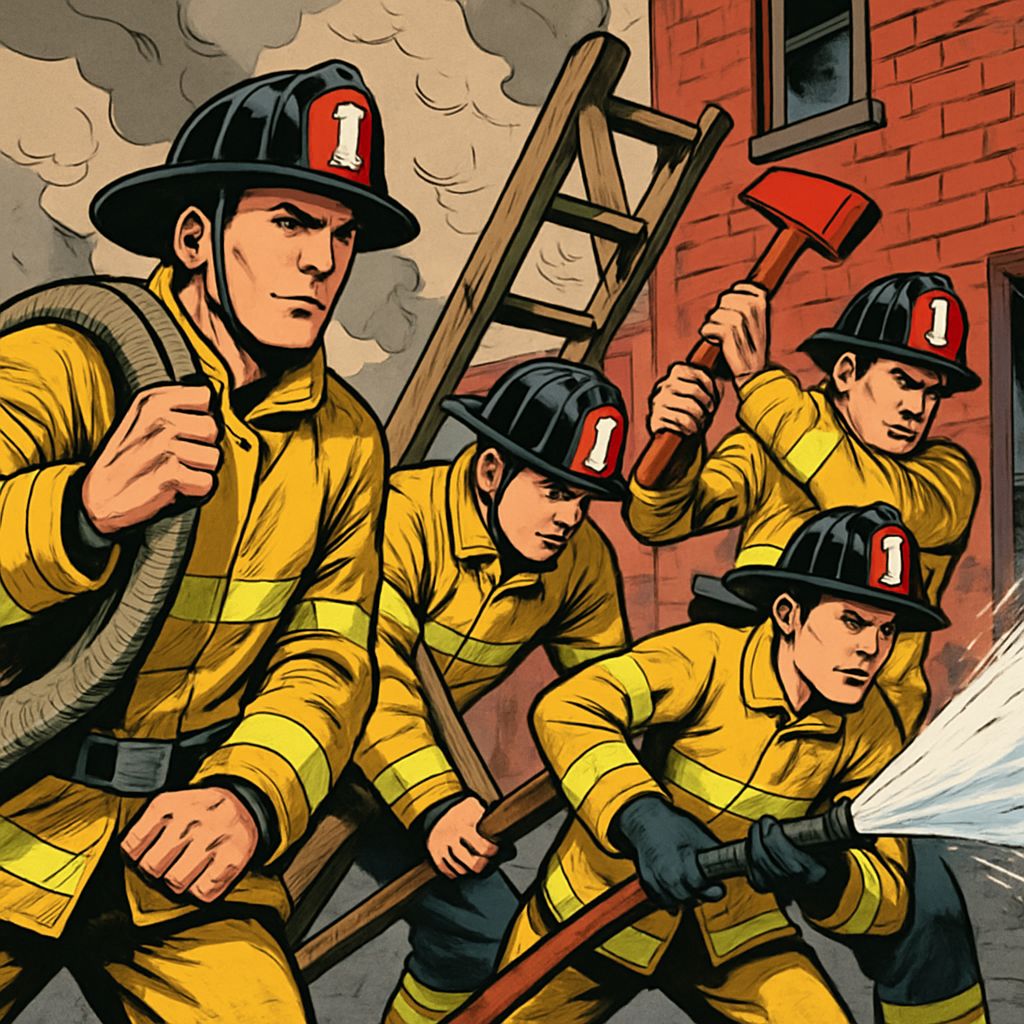
The friendships that last aren’t built over coffee or tea — they’re forged in the moments where both people wanted to quit but didn’t.
Most people think friendship is about finding someone who likes the same things you do. And while common interests help you start a friendship, they rarely deepen one. What actually creates the kind of bond that holds through seasons of life, disagreement, and change is something harder to engineer: shared struggle.
Enduring Together Builds Real Friendships
Think about your closest friends. Chances are, there’s a story there. A hard move, a brutal training season, a painful loss you walked through side by side, or even a conflict you both survived. That’s not a coincidence. Challenge creates intimacy at a speed that casual hangouts simply can’t match.
There’s a reason running clubs, gyms, and study groups produce some of the tightest social circles around. When you suffer alongside someone — even voluntarily — something shifts. You stop being two separate people managing your own experiences and start becoming a unit. That transition from “I” to “we” is where real friendship begins.
The (Shared) Struggle Is Real
The bond that forms between people who endure hard things together isn’t just emotional folklore. There are measurable psychological and neurological reasons why shared difficulty accelerates closeness in ways that shared comfort never will.
Shared Pain Creates Stronger Bonds Than Shared Pleasure
Research consistently shows that people who undergo challenging experiences together report higher levels of closeness and trust than those who only share positive experiences. The reason comes down to vulnerability. When you’re struggling, your defenses drop. You can’t keep up appearances when you’re out of breath, overwhelmed, or emotionally raw. That authenticity signals safety to the people around you — and safety is the foundation of real friendship.
Shared physical effort also releases oxytocin, the bonding hormone, in ways that passive social interaction doesn’t. Whether it’s pushing through the last mile of a run or sitting with someone in a hospital waiting room, the body registers these shared high-stakes moments differently than a normal conversation over lunch.
Why Your Brain Remembers Hard Moments With Others
The brain encodes emotionally intense experiences more deeply than neutral ones. This is why you remember your first marathon finish, a difficult conversation that changed everything, or a night spent helping a friend through a crisis — far more vividly than you remember most ordinary evenings. When another person is present during those high-intensity moments, your brain ties the memory of them to the memory of that experience. Over time, this builds a deeply wired sense of: this person was there when it mattered.
Vulnerability Is the Hidden Engine of Deep Friendship
Hard things force vulnerability, and vulnerability is what separates acquaintances from close friends. When you’re comfortable, it’s easy to stay surface-level. But when you’re struggling — whether physically, emotionally, or spiritually — you inevitably reveal something real about who you are. That revelation, when met with acceptance rather than judgment, is the moment a friendship changes depth permanently.
Dr. Marisa G. Franco, New York Times bestselling author of Platonic, makes the case that expressing emotion — even anger — within a friendship is a portal to greater intimacy, not a threat to the relationship. The instinct to stay pleasant and avoid friction is actually what keeps most friendships shallow, much like how avoiding disruptions can prevent deeper personal growth.
Why Quitting Is Harder When Someone Else Is Watching
One of the most underrated benefits of doing hard things with others is simple: you don’t stop. The presence of another person fundamentally changes your relationship with discomfort and temptation to quit. Whether it’s a 5am workout partner or someone who knows you’re fasting, studying, or trying to break a habit — being witnessed raises the stakes in the best possible way.
Accountability Changes How We Show Up
When you’re accountable only to yourself, quitting is a private decision. You negotiate with your own mind, and your mind is very good at finding reasons to stop. But when someone else is involved, quitting becomes a social event. That shift in stakes isn’t pressure in a toxic sense — it’s exactly the kind of external structure that helps people exceed what they thought they were capable of.
This is why group-based challenges consistently outperform solo attempts across almost every domain — fitness, recovery, spiritual practice, creative work. The other person doesn’t just witness your effort; they create a relational field that pulls the best out of you.
The Commitment Effect
There’s a psychological phenomenon that researchers call commitment consistency — the tendency to follow through on something once you’ve declared it to another person. When you tell a friend “I’ll be there at 5am,” you’ve made a social contract. Breaking it doesn’t just affect your goal; it affects the relationship. That added layer of meaning is often exactly what gets you out of bed.
This is why the most effective accountability partnerships are built around specific, shared commitments rather than vague intentions. “We’re training for this race together” works better than “let’s try to work out more.” The more concrete the shared challenge, the stronger the pull to show up — for yourself and for them.
Over time, these repeated acts of showing up compound into something more significant than the original goal. You become someone your friend can count on. They become someone you can count on. That reliability, tested and proven through hard things, is the backbone of friendships that actually last decades.
- Set a specific shared challenge with a clear start and end date
- Check in regularly — not just about progress, but about how you’re both feeling
- Acknowledge when the other person shows up, especially when it was clearly hard for them
- Let the friendship exist outside the challenge too, so it doesn’t end when the goal does
The goal was never really the goal. The goal was always the person beside you.
Conflict Is Part of the Process, Not a Sign to Quit
Here’s what almost no one tells you about doing hard things with friends: it will sometimes create friction. Expectations get misaligned. One person pushes harder than the other. Old patterns surface under pressure. And when that happens, most people do the worst possible thing — they go quiet and start to pull away.
Why Friends Avoid Conflict More Than Couples Do
Romantic relationships have an implicit contract that includes working through disagreement. Friendships often don’t. Because friendship is voluntary and there’s no formal structure holding it together, conflict feels more threatening. The thought process goes: if this gets uncomfortable, they might just leave — and I might just let them. That fragility is exactly why most friendships stay surface-level. The moment something hard comes up, one or both people choose comfort over honesty.
Dr. Marisa G. Franco points directly to this pattern in her work on friendship. She argues that we’ve normalized withdrawing from friendships at the first sign of tension, when the research actually shows the opposite approach produces better outcomes. Addressing conflict with empathy is correlated with greater intimacy — not less. The discomfort of a hard conversation is, counterintuitively, the price of a deeper friendship.
How to Express Anger Without Destroying the Friendship
The key isn’t to suppress frustration or explode with it — it’s to stay anchored to the goal of healing the friendship rather than winning the argument. Dr. Franco’s advice is practical: before you speak, get clear on what outcome you actually want. If the goal is to feel heard and restore closeness, that shapes how you say what you need to say. Lead with the impact, not the accusation. Stay connected to the fact that this person matters to you, even while you’re upset with them. For more insights, consider exploring the compounding benefits of learning any martial art to help manage emotions and improve interpersonal skills.
What Happens When You Address Issues Instead of Ghosting
When you work through conflict honestly instead of disappearing from it, something remarkable happens — the friendship becomes more secure, not less. You both learn that the relationship can handle real feelings. That proof of durability is exactly what transforms a casual friendship into one that can weather anything. The friendships that survive a hard conversation are almost always stronger on the other side of it than they were before.
The Types of Hard Things That Bring Friends Closer
- Physical challenges — training for a race, a fitness program, hiking a difficult trail, or waking up early to work out together
- Emotional and spiritual growth — going to therapy in parallel, attending a retreat, doing a Bible study or meditation practice together
- Life’s difficult seasons — grief, job loss, health challenges, major transitions like divorce or relocation
- Creative and intellectual challenges — co-writing, starting a business, studying for a certification, or building something from scratch
Not every hard thing looks dramatic. Some of the most bonding experiences are quiet ones — sitting with a friend through a difficult diagnosis, committing to show up for weekly honest conversations, or doing a hard financial fast together. The specific challenge matters far less than the shared commitment to see it through.
What these experiences share is this: they require something real from both people. They can’t be faked or performed. And because of that, they reveal character — yours and theirs. Seeing who someone is when things are hard is the most reliable data point you’ll ever have about whether a friendship can go the distance.
The beauty of intentionally choosing hard things together is that you don’t have to wait for life to force the moment. You can create conditions for depth on purpose. That’s not manufactured closeness — that’s wisdom about how connection actually works.
1. Physical Challenges
Physical challenge is one of the most accessible entry points for shared struggle. There’s something uniquely equalizing about being out of breath next to someone. Status, profession, and social performance all fall away when you’re both suffering through mile 10 of a trail run or grinding through the last set of a workout neither of you wanted to finish. CrossFit gyms, running clubs, and boot camp classes have known this for years — the format isn’t just about fitness, it’s about forging bonds through collective effort.
2. Emotional and Spiritual Growth Together
This is the category most people overlook, and it may be the most powerful one. Deciding with a friend to go deeper — whether through a shared spiritual practice, a reading group built around personal growth, or simply committing to have honest monthly conversations about how your lives are actually going — creates a level of intimacy that physical challenge alone can’t reach.
Soul Care’s vision for community centers on exactly this: gathering people, whether in person or virtually, to ask the deeper questions together. What am I actually struggling with? Where am I growing? What do I need right now that I haven’t asked for? These aren’t questions most people answer out loud — but doing so with a trusted friend changes the texture of the relationship entirely.
When someone witnesses your spiritual or emotional journey — not just your highlight reel, but the actual interior of your experience — something irreversible happens. They know you in a way that casual friendship never allows. And you know them. That mutual knowing is what most people are actually hungry for, even if they can’t name it.
- Commit to a shared devotional, meditation, or reflection practice
- Set a standing monthly conversation with the explicit purpose of being honest about your inner life
- Attend a retreat or workshop together with the intention of going deep, not just having a good time
- Read the same book simultaneously and discuss it with real vulnerability, not just intellectual analysis
The point isn’t the format. The point is the decision to go somewhere real together, rather than staying in the comfortable shallows where most friendships live out their entire lifespan.
3. Navigating Life’s Difficult Seasons Side by Side
Grief, job loss, divorce, illness, relocation — these aren’t moments you plan for, but they are moments that reveal everything about who your people actually are. When a friend chooses to stay present during the hard seasons of your life — not just sending a text but actually showing up, sitting with you, walking alongside you over weeks and months — that choice permanently changes the weight of the relationship. You don’t forget the people who were there when life fell apart, helping you become harder to disrupt in everyday life.
And here’s what’s rarely said: being the one who shows up for a friend in a hard season also changes you. It asks something of you. It requires you to set your comfort aside, to not know what to say but show up anyway, to prioritize someone else’s pain over your own discomfort with it. That kind of giving is its own form of growth — and it deepens your investment in the friendship at the same time it deepens theirs in you.
Strong Friendships Are Built, Not Found
The idea that great friendships just happen — that you meet the right person and the closeness follows naturally — is one of the most damaging myths in our cultural understanding of connection. The friendships that endure are almost always the product of intentional choices, made repeatedly, over time. The choice to reach out. The choice to be honest. The choice to show up when it’s inconvenient. The choice to do the hard thing together rather than waiting until life is easier to reconnect.
You don’t find a deep friendship. You build one — through accumulated moments of shared effort, navigated conflict, and mutual vulnerability. The good news is that this means deep friendship is available to almost anyone willing to pursue it with intention. It doesn’t require perfect chemistry or a history that goes back decades. It requires two people willing to stop keeping things comfortable and start doing something real together.
Frequently Asked Questions
Here are the most common questions people ask about building stronger friendships through shared challenge — answered directly and practically.
Why do shared struggles make friendships stronger?
Shared struggle creates stronger friendships because it forces genuine vulnerability, and vulnerability is the core ingredient of real intimacy. When you’re in the middle of something hard, you can’t maintain a performance of having it all together. Your defenses drop, you reveal something authentic, and if the other person stays present rather than pulling away, it signals deep relational safety. On a neurological level, the brain encodes high-intensity emotional experiences more strongly than neutral ones — meaning the person who was beside you during something difficult becomes permanently wired into your most significant memories. Shared physical effort also triggers the release of oxytocin, the bonding hormone, reinforcing closeness at a biological level that ordinary social interaction simply doesn’t reach.
Can conflict actually improve a friendship?
- Conflict, when addressed with empathy, is correlated with greater intimacy — not less, according to research cited by Dr. Marisa G. Franco
- Avoiding conflict keeps friendships surface-level; working through it signals that the relationship can handle something real
- The goal during conflict should be restoring closeness, not winning the argument or assigning blame
- Friendships that survive a hard, honest conversation almost always come out stronger and more secure on the other side
Yes — conflict can absolutely improve a friendship, but only when both people approach it with the goal of healing rather than punishing. The instinct most people have is to withdraw at the first sign of friction. That instinct feels protective, but it’s actually what keeps friendships permanently shallow. When you stay in it — when you say the hard thing and listen to the hard thing in return — you prove to each other that the relationship is durable.
Dr. Franco describes expressing anger or frustration within a friendship not as a threat, but as a portal to healing. That framing matters. It repositions the uncomfortable conversation from something to avoid into something worth moving toward. The key practical step is getting clear on what you actually want before you speak — if the answer is genuine reconnection, that intention shapes everything about how the conversation unfolds.
Most friendships don’t end dramatically. They quietly dissolve because one or both people chose comfort over honesty one too many times. The antidote isn’t conflict for its own sake — it’s a willingness to care enough about the relationship to say what’s true, even when it’s uncomfortable.
What counts as a “hard thing” to do with a friend?
A hard thing is anything that requires real effort, sustained commitment, or genuine vulnerability — and that both people would find easier to abandon if they were doing it alone. It doesn’t need to be dramatic or extreme. What matters is that it asks something real of both people.
Examples of Hard Things Worth Doing Together
Physical: Training for a 5K or marathon, committing to a 30-day fitness program, waking up early to work out before the rest of the world is awake.
Emotional: Going to therapy in parallel and checking in with each other, having a standing monthly conversation about how your lives are actually going, processing grief or a major life transition side by side.
Spiritual: A shared devotional or meditation practice, attending a retreat with the intention of going deep, committing to a structured Bible study or reflection group.
Intellectual/Creative: Co-writing a project, studying for a certification together, reading the same challenging book and discussing it honestly.
Life Seasons: Supporting each other through a career pivot, a health challenge, a major move, or any season where showing up requires sacrifice.
The format matters far less than the decision to commit to something together that neither of you could walk away from without it meaning something. That’s the defining quality of a hard thing worth doing — it has real stakes, and both of you know it.
Start smaller than you think you need to. A weekly honest check-in call is a harder thing than it sounds, and it can be more friendship-forming than signing up for a marathon together if neither of you is actually ready for it. Match the challenge to where the friendship currently is, then let it pull you both forward.
How do I stay connected with a friend when we stop doing the hard thing together?
This is where a lot of friendships stall. The training program ends, the group wraps up, the hard season passes — and suddenly the structure that was holding the connection together disappears. The friendship doesn’t have to disappear with it, but it does require a deliberate transition. The shared experience you’ve been through is now part of your history together, and history is something you can build on rather than just look back at.
The most effective approach is to name the transition explicitly. Tell your friend that you want the friendship to continue beyond the thing that brought you close. Then create a new shared commitment — something smaller and sustainable that keeps the relationship active. A regular phone call, a monthly dinner, a new book you’re both reading. The specific structure matters less than the mutual acknowledgment that what you built together during the hard thing is worth maintaining. Friendships don’t maintain themselves — but a single honest conversation about wanting to stay close can set the foundation for years of continued connection.
Is it possible to build deep friendships as an adult?
Yes — and the path to deep adult friendship is almost exactly what this article describes: intentional shared challenge, navigated conflict, and sustained vulnerability. The reason adult friendships feel harder to build isn’t that closeness becomes less possible with age — it’s that life becomes more structured and comfortable, leaving fewer natural opportunities for the kind of struggle that accelerates bonding. Adults have to create those opportunities on purpose, such as learning how to become harder to disrupt in everyday life.
The research on adult friendship consistently shows that proximity and repeated, unplanned interaction — the things that make childhood friendships feel effortless — are harder to replicate in adulthood. But the underlying mechanism of bonding doesn’t change. What changes is that you have to be more deliberate about engineering the conditions. Join a group that does hard things. Commit to showing up consistently. Be the person who goes a little deeper in conversation than the moment strictly requires. Over time, those small acts of intention compound into the kind of friendship most adults believe they can no longer have.




Leave a Reply