
Article At A Glance
- Most families have no emergency plan — and the gap between feeling safe and being safe is wider than most people realize.
- Starting the conversation is the hardest part — framing preparedness around safety rather than fear makes it far easier for families to engage.
- A preparedness culture isn’t built in a day — small, consistent habits practiced by every family member create genuine resilience over time.
- Kids can and should be included — age-appropriate roles and responsibilities make children more confident, not more anxious, during emergencies.
- Keep reading to learn how a simple six-month practice schedule could be the difference between panic and calm when a real emergency hits.
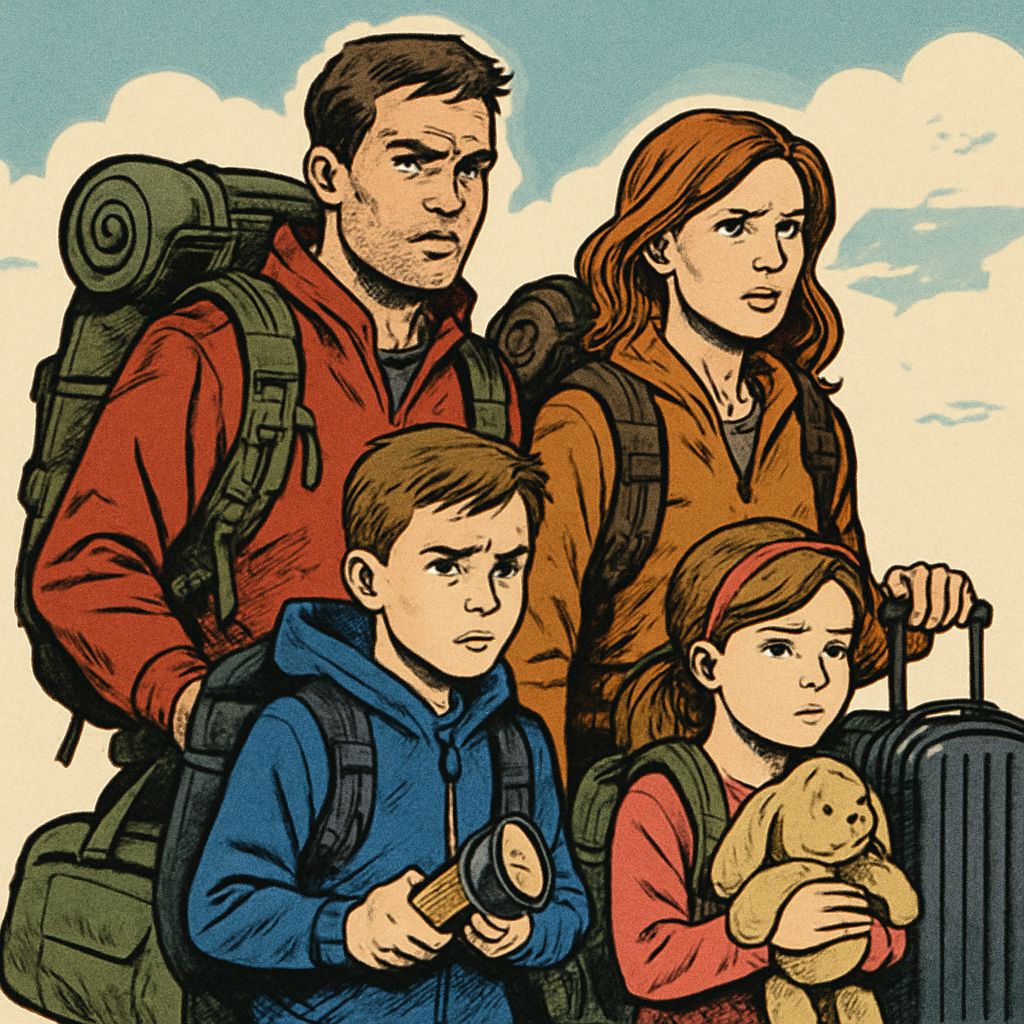
Most Families Are One Emergency Away From Chaos
When the power goes out for three days, the floodwater reaches the front door, or a wildfire forces an evacuation order at 2 a.m. — that is when a family finds out exactly how prepared they really are. For most households, the honest answer is: not very.
According to FEMA, only about 39% of Americans have a household emergency plan in place. That means the majority of families are navigating one of the most stressful situations imaginable without any shared strategy, assigned roles, or agreed-upon meeting points. The consequences range from confusion and delay to genuine danger. Ready.gov, the national public safety resource, emphasizes that household preparedness is one of the single most impactful steps any family can take to improve their odds in a disaster.
Building a preparedness culture at home isn’t about worst-case-scenario paranoia. It’s about giving every person in your household — from your youngest child to your oldest family member — a sense of agency, calm, and direction when things go sideways.
Why Families Avoid Preparedness (And Why That Has to Change)
The intention to prepare is almost universal. The follow-through? Far less common. Understanding why families stall is the first step to actually moving past it.
The “It Won’t Happen to Us” Mindset
Optimism bias is a well-documented psychological phenomenon where people consistently underestimate the likelihood of negative events affecting them personally. This isn’t ignorance — it’s human nature. Families in suburban neighborhoods discount flood risk. Households in mild climates dismiss the need for emergency heat sources. The problem is that emergencies rarely announce themselves in advance, and they have no obligation to skip your zip code.
The data tells a different story than the bias. Between 2000 and 2023, the United States experienced a dramatic increase in federally declared disasters — from weather events to infrastructure failures to public health emergencies. No region, income level, or family structure is exempt. Understanding the importance of preparedness psychology can help families better cope with these challenges.
Overwhelm Stops Families Before They Start
Search “family emergency preparedness” and within sixty seconds, most people are staring at 72-hour kit checklists with forty items, evacuation binder templates, and water storage calculators. It’s a lot — and for busy families already managing work, school, and everything in between, it becomes easier to close the tab and come back “later.” Later, as most families eventually discover, never comes.
The solution isn’t a more comprehensive checklist. It’s a smaller starting point. One conversation. One meeting place decided. One phone number written down. Preparedness culture is built incrementally, not all at once.
Preparedness Gets Mistaken for Extremism
Pop culture hasn’t done preparedness any favors. The word “prepper” carries a specific cultural image — bunkers, stockpiles, survivalist isolation. That image has nothing to do with what family preparedness actually looks like in practice. Teaching your kids where to meet if they can’t reach home, keeping three days of water in the pantry, and knowing your neighbor’s phone number — none of that is extreme. All of it is responsible.
How to Start the Preparedness Conversation at Home
The first conversation sets the tone for everything that follows. Get it right, and the whole family engages. Get it wrong — leaning too hard on fear or catastrophe — and you risk shutting people down entirely. Engaging your children is critical to ensuring your whole family is on board.
Frame It Around Safety, Not Fear
Lead with empowerment, not emergency statistics. Instead of opening with “what happens if there’s a major earthquake,” try “I want us to all know what to do if something unexpected happens, so nobody panics.” The goal of the conversation is to make preparedness feel like a natural extension of how your family already takes care of each other — like wearing seatbelts or locking the front door.
Use Real Local Emergencies as a Starting Point
Abstract threats are hard to motivate around. Concrete, local ones aren’t. If your area experienced a major snowstorm that knocked out power last winter, use that. If a neighboring town recently dealt with a gas leak evacuation, use that. Real, nearby events make the conversation immediate and relevant — not hypothetical. Check your local emergency management office’s website for region-specific hazard histories. Most counties publish them publicly.
Get Every Family Member’s Buy-In Early
Preparedness only works if everyone participates. A plan that one parent knows and three family members don’t is barely a plan at all. Hold an initial family meeting where every person — including kids old enough to understand basic instructions — has a voice. Ask what they’re worried about. Ask what they think would help. When people contribute to a plan, they remember it and they follow it. For more ideas on how to engage everyone, consider exploring joint preparedness strategies that build stability, balance, and confidence.
Build a Family Emergency Plan That Actually Works
A family emergency plan is not a document you file away and forget. It’s a living framework that every person in your household knows by heart — or at least knows well enough to act on when stress and adrenaline make thinking clearly a challenge. The difference between a plan that works and one that doesn’t almost always comes down to specificity.
Vague plans fail. “We’ll meet somewhere outside” is not a plan. “We’ll meet at the large oak tree at the corner of Maple and 5th, and if that’s not safe, we’ll go to the parking lot of Riverside Community Church on Elm Street” — that’s a plan. The more concrete the details, the less cognitive load your family carries during an actual emergency.
1. Choose Two Meeting Points Outside Your Home
Every family needs two designated meeting points: one just outside your home for sudden emergencies like a house fire, and one further away in case your neighborhood becomes inaccessible. The first location should be something immediately recognizable — a specific tree, a mailbox cluster, the end of the driveway. The second should be a public landmark or community building within a mile or two that everyone knows how to reach independently.
Walk both locations with your family in person. Don’t just describe them — physically go there together. When a child has stood at a meeting point with their parent, they can find it again under pressure. A location they’ve only heard about is far less reliable.
2. Assign Roles Based on Age and Ability
Every person in the household should have a defined role. Adults handle communication, vehicle operation, and critical decision-making. Older teenagers can be responsible for grabbing the go-bag, helping younger siblings, or accounting for pets. Even children as young as five or six can be given a simple, clear job — like going to the front door and waiting, or staying with an older sibling. When people know their role, they act instead of freeze.
3. Establish an Out-of-State Contact Person
Local phone lines and cell networks frequently become overloaded or damaged during regional disasters, making it nearly impossible for family members in the same area to reach each other. An out-of-state contact — a relative, a close friend — serves as a communication hub. Every family member calls or texts that one person, who then relays information between everyone. It’s a simple workaround that bypasses local network congestion entirely. Learn more about staying connected when cell towers go down. Make sure every family member has that contact’s number memorized or written on a physical card in their backpack or wallet.
4. Map Evacuation Routes From Your Neighborhood
Most families know one way out of their neighborhood. During an emergency, that route may be blocked by flooding, fire, debris, or traffic gridlock. Identify at least two alternate evacuation routes from your home and trace them on a physical paper map — not just a phone app that requires internet access to function.
Drive the alternate routes with your family so they aren’t abstract. Note landmarks, bridges, underpasses, and any segments that might flood in heavy rain. Local emergency management offices often publish official evacuation route maps for hazard-specific scenarios. Download and print them before you need them. Engaging children in emergency preparedness is critical to ensuring your whole family is ready for any situation.
5. Practice the Plan Every Six Months
A plan practiced twice a year is retained. A plan discussed once and never revisited is forgotten within weeks. Schedule two family drills per year — one announced, one unannounced. The announced drill lets you walk through the plan calmly and correct any gaps. The unannounced drill tests whether the plan actually holds up under realistic conditions.
Tie your drills to easy-to-remember calendar markers, like when daylight saving time changes — the same prompt used for smoke detector battery checks. After each drill, hold a five-minute debrief. Ask what went smoothly, what felt confusing, and what needs updating. Plans should evolve as your family does. For additional safety measures, consider learning essential medical skills that everyone should know.
Make Preparedness a Family Habit, Not a One-Time Event
The families that are genuinely prepared aren’t the ones who had one intense preparedness weekend years ago. They’re the ones who made small, consistent habits part of their normal household rhythm — checking supplies the way they check the oil in their car, and reviewing the plan the way they’d review any important household policy.
Turn Drills Into Games for Younger Kids
Young children are remarkably capable of learning emergency procedures — but the delivery has to match their developmental stage. A drill framed as a serious, high-stakes exercise can generate anxiety rather than competence. The same information delivered as a timed challenge or a family game builds the exact same skills with completely different emotional results.
Try a “beat the clock” fire evacuation drill where the family races to reach the outdoor meeting point. Give younger kids a small “hero badge” for completing their assigned role correctly. Create a simple scavenger hunt that ends with locating the emergency kit. These aren’t just fun — they encode location memory, procedural memory, and calm decision-making in a way that sticks far better than a lecture ever would.
Children who grow up practicing emergency procedures in low-stress, game-like environments are significantly more likely to respond effectively during real events. The American Academy of Pediatrics has noted that calm, age-appropriate preparedness education reduces rather than increases childhood anxiety around emergencies.
Age-Appropriate Preparedness Roles at a Glance
Ages 4–6: Know full name, parent’s first name, and home address. Go to the designated door or meeting spot when told.
Ages 7–10: Memorize the out-of-state contact number. Know two evacuation routes from home. Help younger siblings reach the meeting point.
Ages 11–13: Operate a basic first aid kit. Lead younger children to the secondary meeting point independently. Know how to send a text when calls fail.
Ages 14+: Take ownership of the go-bag. Drive (if licensed) or navigate alternate evacuation routes. Manage communication with the out-of-state contact.
Give Teenagers Real Responsibility in the Plan
Teenagers respond poorly to being assigned passive or trivial roles — and honestly, they shouldn’t be. A fifteen-year-old is capable of managing the family go-bag, performing basic first aid, navigating to a secondary meeting point, and serving as a communication relay if parents are separated. Giving them that real responsibility communicates trust and significantly increases their engagement with the overall plan.
Involve teenagers in updating the emergency kit, researching local hazard risks, and teaching younger siblings their roles. When an older child becomes the one explaining the plan to a younger sibling, their own retention and commitment to the plan increases dramatically. Make them a genuine stakeholder, not a bystander.
How to Sustain a Preparedness Culture Long-Term
Getting started is one challenge. Staying consistent is another. The families who maintain genuine preparedness over years aren’t doing anything heroic — they’ve simply integrated maintenance habits into routines they already have, making preparedness nearly effortless to sustain.
Do Monthly Check-Ins on Supplies and Expiry Dates
Set a recurring calendar reminder on the first of every month — five minutes, nothing more. Use it to do a quick walk-through of your emergency supplies. Rotate food and water stock before it expires, replace batteries in flashlights and radios, and confirm that medications in your kit are still current. This single habit prevents the most common preparedness failure: discovering your supplies are useless exactly when you need them most.
- Water: Store one gallon per person per day for at least three days. Commercially sealed water lasts up to two years; home-filled containers should be rotated every six months.
- Food: Focus on shelf-stable items with long expiration windows — canned goods, freeze-dried meals, and protein bars. Check dates monthly and rotate into regular grocery use before they expire.
- Batteries and power: Test flashlights, hand-crank radios, and backup power banks. Replace standard batteries annually even if they haven’t been used — sitting batteries degrade.
- First aid kit: Restock anything used, and replace items like antiseptic wipes and adhesive bandages that degrade over time even unopened.
- Documents: Confirm that copies of critical documents — IDs, insurance policies, medication lists, and emergency contacts — are current and stored in a waterproof container.
Keep your emergency supplies in one consistent, accessible location that every family member knows. A kit no one can find in the dark is not a functioning kit. A dedicated shelf in a hallway closet, a labeled bin in the garage, or an under-bed storage container all work — what matters is consistency and accessibility.
As your family changes, so should your kit. A new baby means adding formula, diapers, and infant medications. A new pet means adding food, water, and copies of vaccination records. A family member with new medical needs means updating the medications and equipment stored. Treat your monthly check-in as both a maintenance task and a review of whether the kit still reflects your household accurately.
Expand Skills Gradually: First Aid, Fire Safety, and Navigation
Supplies without skills only go so far. The most resilient families pair their physical preparedness with ongoing skill development — not through intensive survival training, but through steady, practical learning. Start with a basic first aid and CPR certification through the American Red Cross, which offers courses for adults and age-appropriate versions for children as young as nine. From there, expand into home fire safety drills, fire extinguisher operation, and basic navigation using a compass and paper map. Layer these skills in gradually, one per quarter, and within a year your family will have a genuine, functional capability set that most households entirely lack.
A Prepared Family Is a Resilient Family
Preparedness culture at home isn’t a project with a finish line. It’s a way of operating as a family — one where safety is treated as a shared responsibility, drills are a normal part of the calendar, and every family member knows their role when it counts. The families who weather emergencies with the least trauma aren’t the ones who got lucky. They’re the ones who decided, at some ordinary moment before anything went wrong, that they were going to be ready.
Start with one conversation. Pick one meeting point. Write down one phone number. Then build from there. The investment is small. The return — calm, competence, and cohesion when your family needs it most — is everything.
Frequently Asked Questions
The most common questions families ask about emergency preparedness share a theme: they want to know how to start without being overwhelmed, and how to keep going without it consuming their lives. The answers are simpler than most people expect. For instance, understanding preparedness psychology can make the process more manageable and less daunting.
At What Age Should Kids Learn About Emergency Preparedness?
Children can begin learning basic emergency preparedness concepts as early as age three or four. At that age, the focus is purely on recognition and simple action — knowing their full name, knowing to go to mommy or daddy, knowing what a smoke alarm sounds like and what to do when they hear it.
By age six, most children can memorize a parent’s phone number and understand the concept of a meeting point. By age ten, they can take on meaningful roles in a family emergency plan, operate basic first aid supplies, and make independent decisions about reaching a secondary meeting location. The key is to scale complexity to the child’s developmental stage and always frame the learning as empowering rather than frightening.
How Much Does It Cost to Build a Basic Family Emergency Kit?
A functional 72-hour emergency kit for a family of four can be assembled for between $75 and $150 using everyday grocery store and hardware store items. That figure covers water storage, shelf-stable food, a basic first aid kit, flashlights, batteries, and a hand-crank or battery-powered NOAA weather radio.
Pre-assembled emergency kits from brands like Sustain Supply Co. or Ready America range from $80 to $250 depending on kit size and contents, and can be a practical starting point for families who prefer a packaged solution over building from scratch. Costs can also be spread over several months by adding a few items per grocery run, making preparedness genuinely accessible at almost any household budget.
What Is the Most Important Part of a Family Emergency Plan?
Communication is the single most critical component of any family emergency plan. When family members are separated — kids at school, parents at work, a teenager at a friend’s house — the ability to reach each other or a shared contact determines everything about how the situation unfolds.
Family Emergency Communication Checklist
✅ Every family member has the out-of-state contact’s number memorized or written on a physical card.
✅ Every family member knows the two household meeting points by name and location.
✅ School and workplace emergency notification systems are up to date with current contact information.
✅ Family members know to send a text when voice calls fail — texts route through congested networks more reliably.
✅ A physical contact card is stored in every child’s backpack and every adult’s wallet or bag.
Meeting points matter enormously as well — but they only work if family members can communicate about which one to use. The communication framework is the backbone that makes every other element of the plan functional.
The out-of-state contact deserves special attention here. This person needs to be briefed in advance — they should know they’re serving this role, understand the family’s plan, and be reachable by all family members. Don’t assign this role to someone without telling them.
How Often Should a Family Practice Their Emergency Plan?
Families should practice their emergency plan at minimum twice per year — once as an announced walkthrough and once as an unannounced drill that tests real-time readiness. Tying these drills to the daylight saving time changes in March and November creates a built-in reminder that’s already associated with household safety maintenance. After each drill, hold a brief debrief to identify what worked, what didn’t, and what needs to be updated as the family’s circumstances evolve.
What Emergencies Should a Family Plan For First?
Start with the hazards most statistically likely in your specific geographic area. Every region carries its own primary risks — coastal areas face hurricanes and storm surge, the Midwest contends with tornadoes, the Pacific Northwest faces earthquake and tsunami exposure, and virtually every region is subject to severe weather events and extended power outages. For those interested in preparing for these challenges, consider learning essential medical skills to enhance your family’s preparedness.
Your local or county emergency management office maintains a published hazard profile for your area. This document identifies the specific threats your community faces and often includes guidance tailored to local geography and infrastructure. Use it as your starting framework before branching into general preparedness.
After region-specific hazards, prioritize the emergencies most likely to affect any household regardless of location: house fires, extended power outages lasting three or more days, and sudden medical emergencies. These three scenarios alone account for the vast majority of household emergency events in the United States — and having a solid plan for all three gives any family a meaningful preparedness baseline.




Leave a Reply