
Article-At-A-Glance: Read Body Language, Stay Safe
- Up to 93% of communication is nonverbal — meaning body language is one of the most powerful tools you have for detecting danger before it happens.
- Predators actively select targets based on nonverbal cues like posture, gait, and lack of awareness — your own body language can either attract or deter a threat.
- Learning to read clusters of nonverbal signals — not just single gestures — is the key to accurately assessing whether someone poses a real risk.
- There are specific pre-attack signals most people completely miss — and recognizing them could be the difference between walking away safely and becoming a victim.
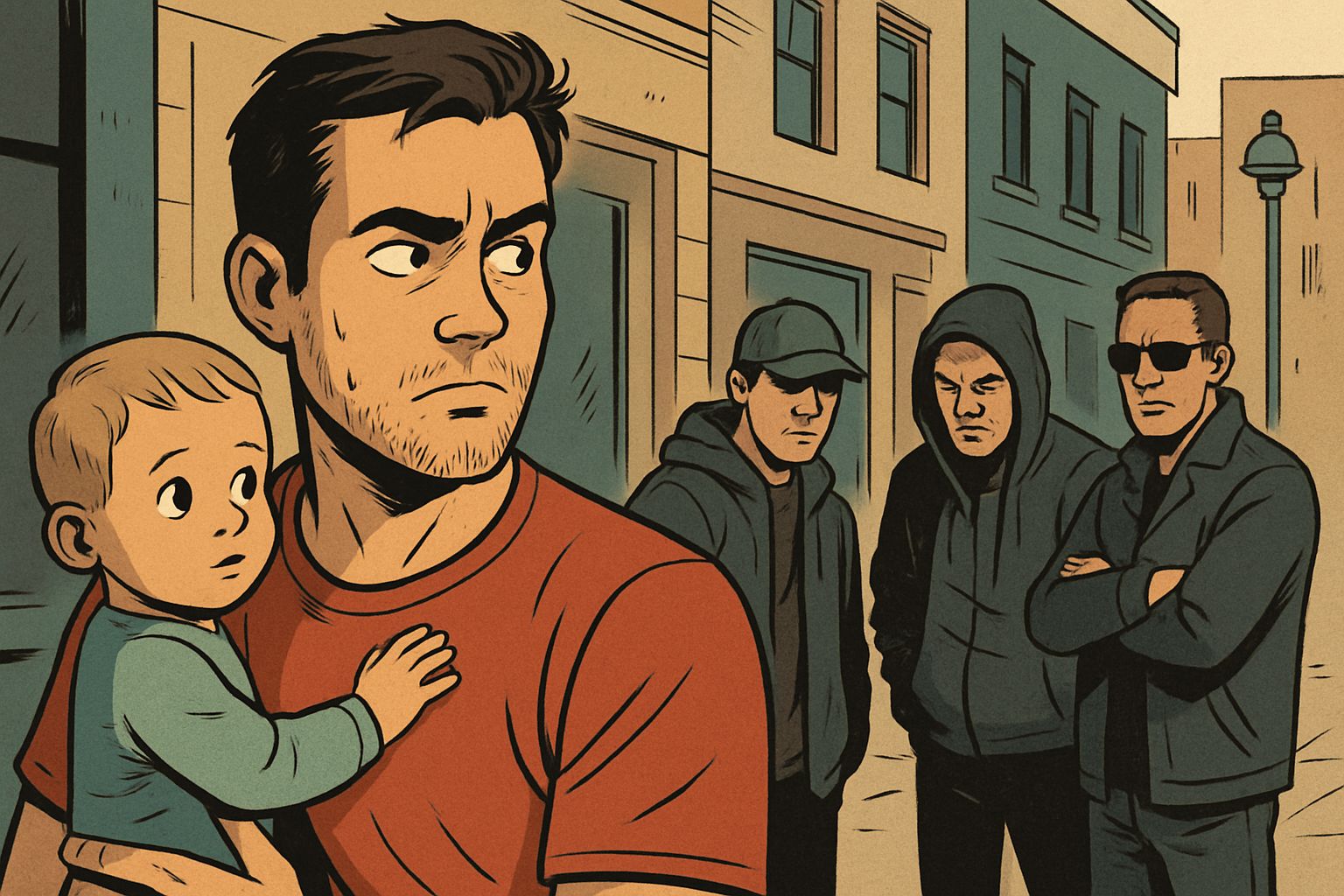
Your body is always talking, even when your mouth isn’t — and in a dangerous situation, knowing how to listen could save your life.
Most people think of personal safety in terms of physical tools — pepper spray, self-defense classes, or knowing how to throw a punch. But the truth is, the most powerful safety tool you have is your ability to observe and interpret nonverbal communication. Reading the environment around you, understanding what others are signaling through their bodies, and managing what your own posture and movement communicate to potential threats — these are skills that work before any physical danger begins.
93% of Communication Is Nonverbal — Here’s Why That Matters for Your Safety
Research into human communication, most famously associated with psychologist Albert Mehrabian, has long suggested that the vast majority of what we communicate happens through tone, facial expression, and body movement rather than words. Whether you’re trying to assess a stranger’s intentions or manage how you come across in a tense situation, nonverbal signals carry enormous weight. In a safety context, this means words are often the last reliable indicator of danger — not the first.
When someone is building toward aggression, their body broadcasts it. Tension in the jaw, changes in breathing, subtle shifts in stance — these happen before any verbal threat is made. Training yourself to notice these signals early gives you a critical window of time to make smart decisions: leave, de-escalate, or prepare.
Warning Signs Hidden in Plain Sight
Most danger doesn’t announce itself loudly. It creeps in through small, easy-to-dismiss signals that feel like nothing in the moment — a glance that lingers too long, a posture that seems slightly off, a person who moves just a little too deliberately. Learning to catch these subtle cues is what separates reactive safety from proactive safety.
Facial Expressions That Signal Aggression or Distress
The human face is capable of expressing over 10,000 distinct muscle configurations, and many of the most telling ones happen in fractions of a second. Microexpressions — involuntary facial movements that flash across the face in as little as 1/25th of a second — can reveal emotions a person is actively trying to hide. In a threat scenario, watch for these specific facial cues:
- Jaw clenching or grinding — a sign of rising tension and suppressed aggression
- Flared nostrils — the body preparing itself for physical exertion
- Lips pressed tightly together — holding back words or emotion, often a sign of controlled anger
- A sudden, flat facial expression — sometimes called “going blank,” this can precede an explosive outburst
- Furrowed brow combined with wide eyes — a mix of anger and fear that often signals unpredictability
Distress signals matter just as much as aggression cues. Someone nearby who looks frozen, avoids eye contact with everyone around them, or appears pale and stiff may be in danger themselves — and that means the situation around you could be escalating in ways you haven’t yet identified.
Posture and Body Movement Red Flags
Posture tells a story about intent. An aggressive person will often shift their weight forward, blade their body (turning slightly sideways to present a narrower profile, a subconscious fighting stance), or begin rocking subtly from foot to foot. These are the body’s way of physically preparing for confrontation. Equally concerning is the person who becomes very still — not relaxed stillness, but rigid, coiled stillness that suggests someone on the edge of action.
Hands are another critical indicator. When someone’s hands disappear — tucked into pockets, hidden behind their back, or gripping something inside a bag — your awareness should immediately sharpen. Visible, open hands are generally a sign of non-threatening intent. Concealed or tense hands are not.
Eye Contact as a Threat Indicator
Eye contact exists on a spectrum, and both extremes can signal danger. Prolonged, hard eye contact — the kind that feels like a challenge — is a classic dominance display and a potential precursor to aggression. On the other end, someone who is deliberately avoiding all eye contact while tracking your position with their peripheral vision may be casing you as a potential target. Normal social eye contact has a natural rhythm of engagement and break. When that rhythm is off, trust the signal.
What Criminals Telegraph Before They Act
Criminal behavior is rarely as spontaneous as it seems in hindsight. Most predatory acts — robberies, assaults, abductions — involve a period of target selection, surveillance, and preparation that produces a distinct set of observable behaviors. Law enforcement professionals and personal safety experts train specifically to recognize these patterns. You can too.
- Unusual loitering — someone who has no clear purpose for being where they are, yet stays
- Repeated scanning behavior — checking exits, watching people’s movements, assessing the environment
- Incongruent behavior — someone who is overdressed for the environment, moving against the flow of foot traffic, or whose behavior simply doesn’t match the context
- Interviewing — approaching multiple people with small, probing questions to test response and assess vulnerability
- The “thousand-yard stare” — a detached, unfocused gaze that indicates dissociation, intoxication, or intense internal focus on a target
Security consultant Gavin de Becker, author of The Gift of Fear, documented extensively how victims of violent crime almost universally reported sensing something was wrong before the incident — but ignored or rationalized away the feeling. The cues were there. The instinct fired. But social conditioning to appear polite, not make assumptions, or avoid confrontation overrode it.
Understanding what criminal preparation looks like transforms these vague “something feels wrong” moments into concrete, identifiable signals you can act on with confidence.
Target Selection: How Predators Read You First
Before you ever notice a potential threat, they may have already noticed — and evaluated — you. Studies on criminal behavior, including interviews with convicted offenders, have consistently shown that predators make rapid assessments of potential targets based almost entirely on nonverbal information. They’re looking for indicators of vulnerability: distraction, submissive posture, lack of awareness, and hesitant movement.
A widely referenced study by researchers Betty Grayson and Morris Stein had convicted violent offenders watch footage of pedestrians and rate them as targets. The selections were strikingly consistent — and had nothing to do with physical size or strength. The highest-risk targets shared specific movement qualities: uneven gait, short shuffling steps, head downcast, and a general appearance of disconnection from their environment.
What predators look for in a target:
Nonverbal Cue
What It Signals to a Predator
Head down, eyes on ground
Unaware of surroundings, easy to approach undetected
Slouched, collapsed posture
Low confidence, less likely to resist or cause a scene
Distracted by phone or earbuds
Sensory tunnel vision, slow reaction time
Hesitant, shuffling gait
Uncertain, less likely to flee quickly or fight back
Avoiding eye contact with strangers
Conflict-averse, unlikely to draw attention
The takeaway isn’t that victims are at fault — it’s that awareness and posture are active, learnable defenses that change how you are perceived before any interaction even begins. For more on building confidence and stability, consider reading about joint preparedness.
Pre-Attack Signals Most People Miss
There is a cluster of behaviors that consistently appear in the moments just before a physical attack. Security and law enforcement professionals refer to these as pre-attack indicators, and they are remarkably consistent across different types of violent incidents.
Watch for what’s known as target glancing — rapid, repeated looks at a specific area of your body, often where a wallet might be kept, or sizing up your jaw or throat. This is the attacker mentally rehearsing the strike or grab. Combined with weight shifting forward onto the balls of the feet and hands moving from a relaxed position to a tense or fisted one, this cluster is a high-reliability warning sign.
Another frequently missed signal is the adrenaline dump response — visible signs that someone’s sympathetic nervous system has activated. This includes a sudden flush of color to the face or neck, rapid shallow breathing, and hand tremors. Contrary to what most people expect, this doesn’t mean the person is afraid of you — it often means they have made the decision to act and their body is physically preparing.
Why Ignoring Your Gut Feeling Is Dangerous
Your subconscious mind processes nonverbal information far faster than your conscious mind can articulate it. That inexplicable feeling of unease around a specific person — what we colloquially call a “gut feeling” or intuition — is often your brain pattern-matching against threat-related cues you haven’t consciously registered yet. Dismissing it as irrational isn’t just unnecessary — in some situations, it’s genuinely dangerous. When your instincts are firing, the intelligent response is to take them seriously and give yourself permission to act on them without waiting for verbal confirmation of the threat.
Your Own Body Language Can Put You at Risk
Personal safety awareness isn’t just about reading others — it’s about understanding the signals you are broadcasting at all times. Your posture, your pace, your eye contact, and your level of environmental engagement all communicate something to everyone around you, including people with bad intentions. Fortunately, this is entirely within your control.
Nonverbal Cues That Make You a Target
The single most dangerous nonverbal habit in terms of personal safety is distraction. Walking with your head buried in your phone, earbuds blocking out ambient sound, or eyes fixed on the ground removes you from your environment entirely. From a predatory perspective, this is an invitation — you’ve essentially communicated that you won’t see them coming and won’t react quickly when they do.
Beyond distraction, submissive body language creates a profile of low resistance. Rounded shoulders, a caved chest, a downward gaze, and a hesitant walking pace all signal low confidence and low situational awareness. None of this is about physical strength — a 6-foot person with collapsed posture and unfocused eyes can appear far more vulnerable than a smaller person who moves with purpose and scans their environment deliberately.
Predictability is another underestimated risk factor. Taking the same route at the same time every day, always sitting in the same spot in a public space, or following rigid, observable routines gives anyone watching you a reliable script to work from. Varying your patterns — even slightly — removes that advantage entirely. For more on how to protect yourself, explore practical self-defense and everyday carry (EDC) strategies.
How to Project Confidence Without Confrontation
Projecting confidence is not about being aggressive or dominant — it’s about appearing switched-on and engaged with your surroundings. Keep your head level and your gaze forward, scanning the environment naturally rather than staring at the ground or at your phone. Walk with deliberate, even strides, with your weight centered and your shoulders back but relaxed. This posture communicates presence and awareness — two qualities that consistently reduce the appeal of someone as a target.
Eye contact is a nuanced but powerful tool here. Brief, calm, direct eye contact with people in your environment signals that you have noticed them — which immediately changes the dynamic if someone was considering you as a target. You don’t need to hold the gaze or make it confrontational. A natural glance that says I see you is enough to shift the calculus for most opportunistic threats.
How to Read a Room for Potential Danger
Walking into any environment — a parking garage, a crowded bar, a subway car, a hotel lobby — with a quick, deliberate scan is a habit that takes seconds and can make an enormous difference. You’re not looking for anything specific at first. You’re establishing a baseline: What is the normal energy of this space? How are people moving? What’s the ambient noise level? Where are the exits? Once you have that baseline, anything that deviates from it becomes immediately visible.
The concept of baseline behavior is central to how trained security professionals assess threat environments. A person standing still in a space full of moving people stands out. Someone dressed incongruently with the context stands out. A sudden drop in ambient noise — conversations stopping, people moving away from an area — stands out. These deviations from baseline are your early warning system, and you don’t need formal training to use them. You just need the habit of looking.
High-Risk Environments and What to Watch For
Certain environments carry statistically higher risk and warrant a sharper level of attention. Parking structures, ATM locations, stairwells, public transit platforms late at night, and areas with limited foot traffic are consistently overrepresented in crime data. In these spaces, elevate your scanning behavior, minimize phone use entirely, and position yourself with your back toward a wall where possible to eliminate blind spots behind you.
In crowded environments like concerts, festivals, or busy transit hubs, the risk profile shifts. Here, watch for individuals who are moving against the general flow of crowd movement without apparent reason, anyone who appears to be tracking a specific person through the crowd, and clusters of people whose energy suddenly changes — raised voices, a circle forming, or people quickly moving away from a specific point. These are reliable indicators that something is developing.
Reading Group Dynamics and Tension Between Others
Danger doesn’t always involve you directly. A conflict building between other people in your environment can escalate rapidly and unpredictably, pulling bystanders into harm’s way. Watch for dyadic tension — two or more people whose body language is locked in an escalating loop: voices dropping low, bodies squared up, the surrounding group beginning to pull back. When the people around a situation start creating distance, follow their lead immediately. That instinctive crowd response is a reliable signal that something is about to break.
The Difference Between Nervous and Threatening Behavior
Not everyone who looks anxious is dangerous, and misreading nervousness as a threat can cause unnecessary alarm. Someone who is fidgeting, avoiding eye contact, and appearing uncomfortable may simply be socially anxious, running late, or dealing with a personal situation. The distinction lies in the direction of their attention. A nervous person is generally focused inward — distracted, self-conscious, disengaged from others. A threatening person’s attention has an external target. Their eyes are tracking. Their body is orienting. Their energy is outward and focused. Understanding these nuances is crucial for preparedness psychology.
Context also matters enormously. Sweating and rapid breathing in a gym is baseline. The same signals in a quiet library or an empty parking structure at night carry a completely different weight. Always interpret nonverbal signals within the full context of the environment, not in isolation. For more on how to be prepared in various environments, consider exploring essential safety items every home should have.
Practical Steps to Sharpen Your Nonverbal Awareness
Reading body language for safety is a trainable skill, and like any skill, it improves with deliberate practice. The good news is that most of the practice happens in everyday life — during your commute, at a coffee shop, in the waiting room of any public building. Every environment you move through is an opportunity to build the observational habits that will serve you when the stakes are higher.
Start with low-pressure environments where you can observe without any personal stake in the outcome. Coffee shops, airports, and parks are ideal. Practice establishing baselines, identifying deviations, and reading clusters of nonverbal cues in people around you. Over time, this moves from a conscious exercise to an automatic background process — exactly how it functions in trained security professionals and law enforcement officers.
Quick-Reference: Nonverbal Safety Awareness Skill Levels
Skill Level
What You’re Doing
What to Practice
Beginner
Reactive — noticing things after they happen
Establish baselines in low-risk environments daily
Intermediate
Present — catching signals as they occur
Read clusters of cues, not single behaviors
Advanced
Proactive — anticipating behavior before it unfolds
Pattern recognition across environments and contexts
Moving from reactive to proactive awareness is the core goal. At the advanced level, you’re not waiting to feel threatened — you’re reading the environment continuously and identifying potential issues while you still have maximum options available to you. To further enhance your readiness, consider learning practical self-defense techniques.
1. Observe Clusters of Cues, Not Single Gestures
One of the most common mistakes in reading body language — in any context — is treating a single gesture or expression as a definitive signal. Crossed arms do not automatically mean defensiveness. A person looking away is not automatically being deceptive. Nonverbal communication is a language, and like any language, individual words only carry meaning within a sentence. In body language terms, that means you’re looking for clusters — three or more congruent signals pointing in the same direction before drawing a reliable conclusion. A clenched jaw alone means little. A clenched jaw, forward weight shift, target glancing, and fisted hands together form a coherent, high-reliability cluster that demands your attention.
2. Match Verbal and Nonverbal Signals for Inconsistencies
When someone’s words and body language contradict each other, the body language is almost always the more truthful signal. This is because verbal communication is largely under conscious control — people choose their words carefully. Nonverbal communication, especially microexpressions, muscle tension, and autonomic responses like sweating or flushing, bypasses conscious control entirely. The mismatch itself is the signal.
A practical example: someone who says “I’m completely calm” while their hands are shaking, their jaw is set, and they’re rocking subtly forward on their feet is not calm — and the incongruence tells you that they are actively managing or suppressing an emotional state. In a safety context, that suppressed state is what you need to be paying attention to, not the words.
3. Practice Active Situational Awareness Daily
Former U.S. Army Ranger and security consultant Dave Grossman popularized the concept of color codes of awareness — a system originally developed by Lt. Col. Jeff Cooper that describes different levels of environmental alertness. The target state for everyday life is Condition Yellow: relaxed but alert, scanning the environment without fixating on any specific threat. This is not paranoia — it’s the same baseline awareness that experienced travelers, security professionals, and law enforcement officers maintain as a default.
Practicing this daily means making a habit of entering every new space with a brief environmental scan, identifying exits, noting who is present and what the baseline energy is, and updating that picture as the environment changes. It takes less than ten seconds. Over time, it becomes entirely automatic — and it is the single most impactful habit you can build for personal safety.
4. Trust and Train Your Instincts
As discussed earlier, intuition is your subconscious threat-detection system processing nonverbal data faster than your conscious mind can articulate. The goal of deliberate practice isn’t to replace that instinct — it’s to calibrate it. The more you actively observe and interpret nonverbal behavior, the more accurate and reliable your instinctive responses become. You stop second-guessing the feeling because you begin to understand where it’s coming from.
Instinct Calibration: What Your Gut Is Actually Telling You
The Feeling
Possible Nonverbal Data Your Brain Detected
Suggested Response
“Something feels off about this person”
Incongruent behavior, unusual stillness, target glancing
Increase distance, stay alert, prepare to exit
“This space feels wrong”
Baseline deviation, crowd energy shift, blocked exits
Reposition, identify exits, consider leaving
“I feel like I’m being followed”
Repeated presence of same individual, mirrored movements
Change direction, enter a populated space, seek help
“That interaction felt threatening”
Pre-attack indicators, adrenaline response in the other person
Create distance immediately, do not turn your back
The goal is not to live in a state of constant vigilance — that’s exhausting and counterproductive. It’s to develop a relationship with your own instincts that is informed, calibrated, and trusted. You notice, you assess, you act. That loop — when it becomes fast and automatic — is one of the most powerful personal safety tools that exists.
Pairing this with consistent real-world practice creates a compounding effect. Each time you correctly identify a signal, each time you trust your gut and it proves accurate, you reinforce the neural pathways that make this kind of awareness faster and more reliable. It genuinely gets easier — and more automatic — the more you do it.
Body Language as a De-escalation Tool
Most people think of body language purely as a reading tool — something you use to assess others. But your own nonverbal communication is equally powerful as a tool for shaping how a situation unfolds. In a tense interaction, what you do with your body can either pour fuel on the fire or quietly diffuse it. This isn’t a soft skill — it’s a practical, high-stakes capability that security professionals, hostage negotiators, and crisis intervention specialists rely on as a primary tool.
The physiological reality is that humans are deeply wired to mirror each other’s emotional states through nonverbal cues. When you project calm — through your posture, your breathing, your facial expression, your movement — you create genuine neurological pressure on the other person to regulate toward that state. It doesn’t work every time, and it doesn’t work on everyone. But it works often enough that it should be the first tool you reach for in any escalating situation.
The key principle is this: de-escalation through body language is about removing threat signals from your communication, not about submitting or appearing weak. There is an important distinction between a posture that communicates I am not a threat to you and one that communicates I am an easy target. Getting that distinction right is what separates effective de-escalation from creating a new vulnerability.
Nonverbal Signals That Calm Tense Situations
De-escalation Body Language: What to Do and What to Avoid
Understanding the importance of nonverbal communication can be crucial in tense situations. It’s essential to recognize which signals can help de-escalate a scenario and which might exacerbate it. For instance, maintaining a calm demeanor and open posture can significantly influence the outcome. If you’re interested in further enhancing your skills, you might find it beneficial to explore essential medical skills everyone should learn as they can complement your ability to manage stress effectively.
|
De-escalating Signal |
What It Communicates |
What to Avoid |
|---|---|---|
|
Open palms, visible hands |
“I am not concealing a weapon or aggressive intent” |
Hands in pockets, fists, or hidden behind back |
|
Slow, deliberate breathing |
Emotional regulation, calm state |
Rapid, shallow, audible breathing |
|
Soft, steady eye contact |
Engagement without challenge or dominance |
Hard, unblinking stare or rapid eye avoidance |
|
Neutral facial expression |
Non-reactive, emotionally stable |
Smirking, eye-rolling, or visible contempt |
|
Lowered, relaxed shoulders |
Reduced tension, non-threatening posture |
Squared-up, chest-forward dominant stance |
|
Slight, natural head nod |
Acknowledgment, active listening |
Chin jutting forward or tilted back (dominance display) |
Slowing your own movement is one of the most underrated de-escalation techniques available. When adrenaline hits, the natural tendency is to move faster — gestures become sharper, movements become more abrupt, and the pace of everything accelerates. This physical acceleration actually feeds the threat loop in the other person’s brain, triggering a mirrored escalation response. Deliberately slowing your movement — reaching slowly, turning slowly, speaking at a measured pace — directly counteracts that loop.
Voice tone and cadence are technically nonverbal communication, and they matter enormously here. A lowered pitch, slower rate of speech, and even volume communicate calm and control far more effectively than the words you’re choosing. In a confrontational situation, the instinct is to raise your voice — either defensively or assertively. Doing the opposite, deliberately softening and slowing your voice, is physiologically disarming in a way that matching energy simply isn’t.
Facial expression is the channel people watch most closely, especially during conflict. A micro-flash of contempt — that brief one-sided lip curl — is one of the most reliably escalating expressions a human face can produce. It signals disrespect at a level that bypasses rational thinking entirely. In a tense situation, your face needs to communicate calm acknowledgment, not evaluation or judgment. This takes conscious effort when you’re stressed, but it is a trainable response. For more on managing stress, consider exploring preparedness psychology.
One often-overlooked de-escalation tool is mirroring at a reduced intensity. When used carefully, subtly reflecting back elements of the other person’s posture — at a calmer, more contained version — can create a feeling of being understood without fueling the emotional state. This is a technique used in professional crisis negotiation and works by satisfying the human need for acknowledgment while simultaneously modeling a lower-arousal state for the other person to mirror back.
Positioning and Distance in Conflict Prevention
Where you position your body in relation to another person — and how much distance exists between you — sends powerful nonverbal signals and has direct practical implications for your safety. Proxemics, the study of interpersonal space, identifies distinct zones of distance that carry different social meanings. In a safety context, understanding and managing these zones gives you both tactical and communicative advantages.
- Public zone (12+ feet): Standard social distance with strangers — no interpersonal engagement implied. This is your maximum reaction-time buffer.
- Social zone (4–12 feet): Normal interaction distance for acquaintances and formal exchanges. Appropriate for most conflict de-escalation conversations.
- Personal zone (1.5–4 feet): Reserved for people we know and trust. An unknown person entering this zone without invitation is a yellow-flag signal.
- Intimate zone (0–1.5 feet): A stranger closing to this distance without consent is a high-alert signal — this is within striking, grabbing, and weapon-deployment range.
In a tense interaction, maintaining the social zone — roughly 4 to 6 feet — gives you adequate reaction time while still allowing normal conversation. It also prevents the situation from feeling physically threatening to the other person, which can itself trigger escalation. Never allow a confrontation to pull you into the intimate zone if you can avoid it. Create and maintain distance through deliberate, calm repositioning — stepping back or to the side naturally, without appearing to retreat submissively. For more insights on handling such situations, consider exploring practical self-defense techniques.
Your angle of orientation matters as much as your distance. Standing directly square-on to someone is a challenge posture — it’s how people stand when they’re prepared to fight. In a de-escalation scenario, standing at a slight angle — roughly 45 degrees — removes that confrontational framing entirely while keeping you in a position from which you can respond if necessary. It’s a posture that communicates non-threat without sacrificing your physical readiness.
Be consistently aware of what’s behind you. Positioning yourself with your back to a wall, a column, or any solid structure eliminates your blind spot and forces any threat to approach from the front — where you can see it. This is a habit practiced by law enforcement officers, security professionals, and experienced travelers without exception. In any public space, the few seconds it takes to find a position that gives you a clear sightline to the room and access to an exit is time that may prove invaluable.
Awareness Is Your First Line of Defense
Every physical self-defense technique, every piece of safety equipment, every protocol for responding to a threat — all of it works better when you have time. And time is what awareness gives you. The ability to read body language, interpret environmental signals, and recognize threat indicators early doesn’t just help you respond more effectively — it gives you options that disappear the moment a situation becomes physical. Avoidance, de-escalation, repositioning, calling for help — these are all only available in the window before the threat fully materializes. Awareness is what keeps that window open. For additional insights, explore our article on practical self-defense and everyday carry.
The skills covered in this article aren’t exotic or complicated. They’re a set of deliberate, practiced habits — scanning your environment, reading clusters of nonverbal cues, managing your own body language, trusting your instincts, and understanding the proxemics of confrontation. None of them require physical strength. All of them are available to anyone willing to pay attention. In a world where the most dangerous moments often give very little warning, the people best positioned to stay safe are not necessarily the strongest or the fastest — they’re the ones who saw it coming first.
Frequently Asked Questions
Understanding body language for personal safety raises a lot of practical questions — particularly around how to apply these concepts in real situations without overreacting or misreading normal behavior. The answers below address the most common points of confusion and provide clear, actionable guidance.
It’s worth emphasizing before diving in that none of these skills are about profiling or making snap judgments about people. They’re about reading behavior — specific, observable, contextual behaviors — not making assumptions about individuals based on appearance.
What are the most important body language signals to watch for in a dangerous situation?
The highest-reliability signals to watch for are clusters of pre-attack indicators: target glancing (rapid looks at a specific part of your body), forward weight shift onto the balls of the feet, hands moving from relaxed to tense or fisted, blading of the body (turning slightly sideways into a fighting profile), and visible signs of adrenaline activation like flushing, rapid breathing, or hand tremors. No single signal is definitive — it’s the presence of three or more congruent cues together that creates a reliable threat picture. Add to this any behavior that deviates sharply from the baseline of the environment, and you have a practical, high-accuracy framework for early threat recognition.
Can body language really predict violent behavior before it happens?
It’s more accurate to say that body language can reliably indicate that someone is preparing for violence, rather than that it predicts violence with certainty. The pre-attack indicators described in this article — target glancing, adrenaline responses, blading, weight shifting — are the physical outputs of a decision-making and physiological preparation process that happens before action. Recognizing these signals means you are reading that preparation process in real time, which gives you a meaningful early warning window.
No behavioral assessment system is 100% accurate, and context always matters. Someone displaying adrenaline signs in a competitive sports environment is not a threat. The same signs in an isolated stairwell at night carry a completely different weight. The skill is not in mechanically checking boxes — it’s in reading behavior within context and responding proportionally to what the full picture is telling you.
What the research and professional consensus consistently support is that violence — particularly predatory violence — almost always produces observable behavioral precursors. Security researchers, law enforcement trainers, and threat assessment professionals who have studied this extensively agree: the signals are almost always there. The gap is in whether the observer has been trained to recognize them and empowered to trust what they’re seeing.
Behavioral Reliability Scale: Common Signals and Their Threat Relevance
Understanding the importance of body language can significantly enhance your ability to interpret common signals and assess their threat relevance effectively.
|
Signal |
Standalone Reliability |
Reliability in a Cluster |
|---|---|---|
|
Intense eye contact |
Low — could be many things |
High when combined with blading and tension |
|
Target glancing |
Moderate — context-dependent |
Very high when combined with forward lean and fisting |
|
Visible adrenaline response |
Moderate — could indicate fear or excitement |
High when combined with focused attention on a target |
|
Bladed body stance |
Moderate — could be habitual posture |
High when combined with other pre-attack indicators |
|
Hands moving to waistband |
High — particularly in ambiguous environments |
Very high in combination with any other indicator |
How can I make my own body language less of a target for potential threats?
The most impactful changes you can make are: keep your head up and your gaze scanning your environment rather than fixed on your phone or the ground; walk with an even, deliberate pace with your weight centered; keep your shoulders back and your posture open rather than collapsed and rounded; make brief, calm eye contact with people in your environment to signal awareness; and eliminate sensory distractions like earbuds in higher-risk environments. These changes don’t require you to look aggressive or confrontational — they simply communicate that you are present, aware, and engaged with your surroundings. That profile alone significantly reduces your appeal as a target for opportunistic threats.
What is situational awareness and how does it relate to reading body language?
Situational awareness is the ongoing process of perceiving your environment, understanding what those perceptions mean, and projecting how the situation may develop — then acting on that understanding. It was formalized as a concept in aviation and military contexts but applies directly to personal safety in everyday life. Body language reading is one of the primary input channels for situational awareness — it’s the mechanism by which you gather real-time behavioral data from the people in your environment. For more insights on maintaining personal safety, explore practical self-defense and everyday carry (EDC) techniques.
Without situational awareness, body language skills have limited practical value. You might be able to identify a threat signal if someone is directly in front of you — but if you’re not scanning your environment, you’ll miss the signal entirely because you weren’t looking. Situational awareness is the habit that ensures you’re gathering information consistently; body language skills are what allow you to correctly interpret that information once you have it.
Together, they form a complete early-warning system. Situational awareness tells you where to look and keeps you updated on your environment as a whole. Body language reading tells you what it means when you find something worth examining. Neither skill is fully effective without the other.
- Perceive: Actively scan your environment — people, exits, energy, baselines
- Understand: Interpret what you’re seeing using behavioral knowledge and context
- Project: Anticipate how the situation could develop based on current signals
- Act: Make a decision — reposition, de-escalate, exit, seek help — while you still have options
How long does it take to get good at reading nonverbal communication for safety?
Basic competency — enough to meaningfully improve your personal safety — can be developed within a few weeks of consistent, deliberate practice. The habits of environmental scanning, baseline establishment, and basic pre-attack indicator recognition are not complex. They require repetition to become automatic, but the underlying concepts are accessible and learnable quickly. Most people who commit to practicing in low-stakes environments like coffee shops, transit stations, and public spaces report a noticeable shift in their observational awareness within two to four weeks. For those interested in enhancing their readiness, exploring bodyweight benefits and calisthenics can be a valuable addition to their routine.
Reaching an advanced level — where pattern recognition is fast, instinct is well-calibrated, and de-escalation body language is natural under stress — takes considerably longer and benefits significantly from structured learning, scenario-based practice, and ideally some exposure to professional training environments. Law enforcement officers and security professionals typically train these skills over years of active application. But it’s important not to let the ceiling discourage you from starting — even foundational competency in these skills is dramatically better than none.
The most important thing is consistent, active practice rather than passive reading about it. Every environment you move through is a practice opportunity. Every interaction you observe is data. The skill compounds rapidly when you treat daily life as the training ground it genuinely is — and the return on that investment, in terms of confidence, awareness, and real safety, is significant from very early on.




Leave a Reply