
Article At A Glance:
- Wildfires can spread faster than a person can run, making early preparation the difference between safety and catastrophe.
- Creating defensible space around your home is one of the single most effective actions you can take to reduce wildfire risk.
- Most homes ignite not from direct flames but from airborne embers that can travel over a mile ahead of the fire front.
- A ready-to-go emergency supply kit and a practiced evacuation plan can save critical minutes when every second counts.
- Later in this article, we break down the exact zone-by-zone defensible space system and what materials help your home survive ember attacks.
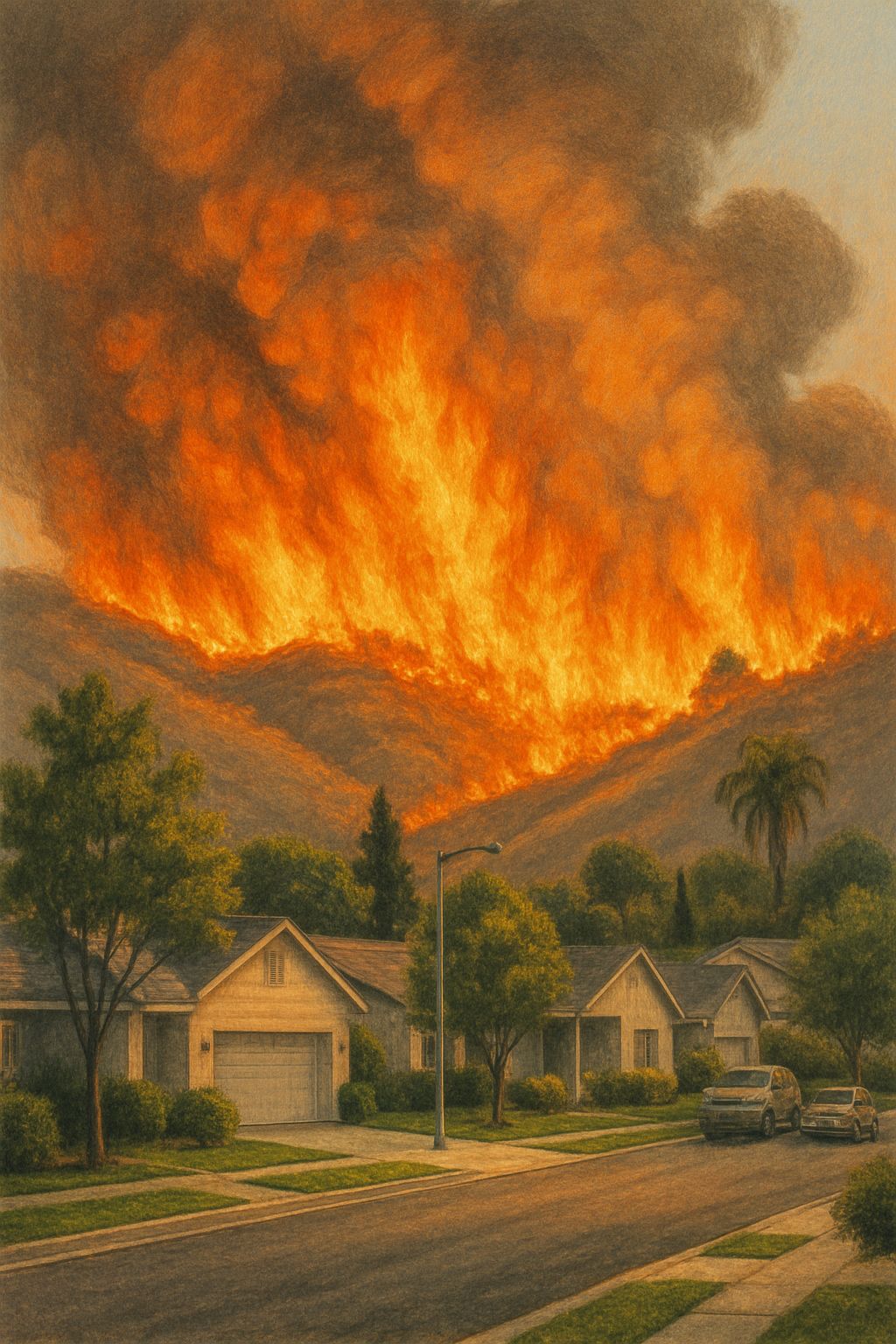
Wildfire preparedness isn’t optional anymore — it’s one of the most important things any homeowner can do to protect their family and property.
Every year, families lose homes and everything inside them to wildfires that moved faster than anyone anticipated. Many of those losses were preventable. The difference between a home that survives and one that doesn’t often comes down to decisions made weeks or months before the fire ever started. Resources like the National Association of State Fire Marshals (NASP) provide guidance that helps homeowners understand exactly what steps make the biggest impact.
Wildfires Move Faster Than You Think
A wildfire can travel up to 14 miles per hour in open terrain — faster in wind-driven conditions. That’s faster than most people can run, and in dense vegetation or during high-wind events, that speed can spike dramatically. The 2018 Camp Fire in Paradise, California destroyed more than 18,000 structures and killed 85 people, many of whom had very little warning before the fire reached their neighborhoods. Understanding that speed and scale is what makes preparation so non-negotiable.
Embers are often more dangerous than the fire itself. They travel ahead of the flame front, landing on rooftops, in gutters, through vents, and on dry vegetation around homes. By the time flames arrive, an ember-ignited structure may already be burning from the inside out. This is why hardening your home and clearing your property matters just as much as having an escape plan.
Build Your Family Evacuation Plan Now
Don’t wait for smoke on the horizon to figure out what your family will do. A solid evacuation plan built before fire season gives everyone a clear set of actions to take when time is short and stress is high. The plan needs to be specific — vague intentions don’t hold up under pressure.
1. Map Out Multiple Escape Routes
Identify at least two ways to leave your neighborhood from every direction. Wildfires can cut off roads quickly, and the route you typically use may be blocked by flames, smoke, or emergency vehicles. Study your local road maps and identify alternate paths that lead away from typical fire-prone areas. Drive those routes with your family so they are familiar, not just theoretical.
2. Choose a Family Meeting Point
Pick two meeting locations — one near your home (such as a neighbor’s driveway or a landmark at the end of your street) and one further away in case the immediate area becomes inaccessible. Every family member, including older children, should know both locations by memory. Write them down and keep a copy in your emergency kit.
3. Plan for Pets and Special Needs Family Members
Pets and family members with mobility limitations or medical needs require specific planning. Know in advance which evacuation shelters accept animals, because many general emergency shelters do not. Prepare carriers, leashes, and enough food and medication for at least 72 hours per pet. For family members with special needs, assign a specific person responsible for assisting them during evacuation so there is no confusion in a crisis.
4. Practice Your Plan Before Fire Season
Running a practice drill might feel unnecessary, but it reveals problems you wouldn’t catch otherwise — a gate that’s hard to open quickly, a child who doesn’t know the meeting point, or a vehicle with a near-empty gas tank. Walk through the full plan at least once before fire season begins each year. Keep your gas tank at least half full during high-risk periods so you’re never scrambling at a fuel station while a fire approaches.
What Goes in Your Emergency Supply Kit
Your emergency supply kit should be packed, portable, and ready to grab within minutes. Store it in a clearly labeled bag or container near your exit point — not buried in a closet. The goal is to sustain your family for a minimum of 72 hours without access to stores, utilities, or outside assistance.
Food, Water, and Medications
Store at least one gallon of water per person per day for three days minimum. Choose non-perishable food items that require little to no preparation — think canned goods, protein bars, and dried fruit. Don’t forget a manual can opener. Medications are critical: keep at least a week’s supply of any prescription medications in your kit, and rotate them regularly so they don’t expire. Include a basic first aid kit with bandages, antiseptic, and any specific medical supplies your family needs.
Documents and Valuables You Cannot Replace
Losing your home is devastating enough without also losing irreplaceable documents. Store copies of the following in a waterproof, fireproof bag or a secure cloud backup:
Documents to Include in Your Emergency Kit:
- Government-issued IDs (passports, driver’s licenses, birth certificates)
- Insurance policies and agent contact information
- Property deeds and mortgage documents
- Medical records and vaccination histories
- Bank account information and emergency cash
- Photos or video inventory of your home’s contents for insurance claims
A fireproof document bag costs under $40 and can protect physical copies from heat and smoke damage. Pair it with a cloud storage backup so you can access critical information from any device, anywhere.
Power and Communication Essentials
During a wildfire evacuation, cell towers can become overloaded or go offline entirely. A battery-powered or hand-crank NOAA Weather Radio — such as the Midland ER310 Emergency Crank Weather Radio — gives you access to emergency broadcasts without relying on cellular networks. Include portable phone chargers with full charges maintained, and consider a battery-powered lantern for low-visibility situations.
Power and Communication Checklist:
Item
Purpose
Recommended Minimum
Portable battery bank
Charge phones off-grid
20,000mAh capacity or higher
NOAA Weather Radio
Receive emergency broadcasts
1 per household
Battery-powered lantern
Lighting without electricity
1 per household
Whistle or signal mirror
Signal for help if stranded
1 per person
Backup contacts list
Reach family without phone memory
Printed copy in kit
Keep all electronic items charged and test your kit every six months to make sure batteries haven’t drained and supplies haven’t expired. Set a calendar reminder — fire season preparation should be as routine as changing your smoke detector batteries.
Create Defensible Space Around Your Home
Defensible space is the buffer zone you create between your home and the surrounding vegetation. It gives firefighters a safer area to defend your property and slows or stops the spread of wildfire before it reaches your structure. This is not optional landscaping — it’s one of the most proven strategies for home survival during a wildfire.
What Defensible Space Actually Means
Defensible space is not just about clearing a few bushes near your front door. It is a structured, zone-based approach to managing all vegetation, structures, and combustible materials around your home in a way that reduces the chance of ignition and gives fire crews room to work. The concept was developed through decades of post-fire research analyzing why some homes survived while neighboring ones didn’t — and vegetation management was one of the clearest differentiating factors.
The Zone System: How Far Back to Clear
California’s fire safety guidelines — which have become the national benchmark — divide defensible space into two primary zones. Zone 1 extends 0 to 30 feet from your home and requires the most aggressive clearing. Vegetation here should be well-irrigated, low-growing, and spaced apart so fire cannot travel continuously from plant to plant. Zone 2 covers 30 to 100 feet from your home and focuses on reducing fuel density. Trees in this zone should have branches pruned up at least 6 to 10 feet from the ground, shrubs should be spaced at least 4 feet apart, and dead plant material should be removed consistently. On slopes steeper than 20 degrees, these distances need to increase because fire travels faster uphill. For more on home safety, check out the most important safety items every home should have.
What to Remove and What Can Stay
In Zone 1, remove dead plants, dry leaves, pine needles, and anything that burns easily. Wooden fences connected directly to your home act as a fire highway — replace the section nearest the structure with metal or masonry. Patio furniture, doormats, and potted plants made from combustible materials should be brought inside when fire risk is elevated. In Zone 2, you can keep trees and larger shrubs, but spacing and pruning are essential. The goal is to eliminate the continuous fuel ladder that allows fire to climb from ground vegetation up into tree canopies. For more insights on preparedness, consider exploring capability-based preparedness.
Year-Round Property Maintenance That Saves Homes
Defensible space is not a one-time project. Vegetation grows back, debris accumulates, and conditions change with seasons. Building a regular maintenance schedule is what keeps your preparation effective year after year.
The highest-risk window for most western U.S. regions runs from late spring through early fall, but ember ignitions have occurred outside of traditional fire seasons due to shifting climate patterns. That means maintenance tasks need to happen on a calendar schedule, not just when you notice overgrowth. For more information on how to prepare, check out these homeowner wildfire preparedness tips.
Seasonal Maintenance Schedule:
Season
Key Tasks
Spring
Clear dead vegetation from winter, clean gutters, inspect roof vents and screens
Summer
Mow grass regularly, remove dried plant material from Zone 1, check propane and fuel storage
Fall
Remove fallen leaves from roof and gutters, trim overhanging branches, inspect deck and fence connections
Winter
Review and restock emergency kit, check NOAA radio batteries, review evacuation plan with family
Running through this schedule each season takes a few hours but dramatically reduces the accumulated risk that builds when maintenance is skipped. Set recurring reminders in your phone — treat it like a home maintenance task with real safety consequences, because it is.
Roof and Gutter Cleaning
Your roof and gutters are the most common ignition points during an ember attack. Dry leaves, pine needles, and debris that collect in gutters become a ready-made fire bed when an ember lands. Clean your gutters at minimum twice a year — once in late spring and again in fall after leaves drop. Consider installing ember-resistant gutter guards such as the Amerimax Home Products Gutter Guard to reduce debris buildup between cleanings. Metal gutters outperform vinyl in wildfire conditions and are worth the upgrade if you live in a high-risk area.
Tree Trimming: Remove Branches Up to 15 Feet High
Low-hanging branches act as a ladder for fire to climb from ground level into the tree canopy, and from there into your home. Prune all tree branches within Zone 1 up to a height of at least 10 feet from the ground — and up to 15 feet on larger trees or those on slopes. Keep branches trimmed back so none hang within 10 feet of your chimney and none overhang your roofline directly.
Between trees in Zone 2, maintain a horizontal canopy spacing of at least 10 feet measured from the outermost branches. This gap prevents fire from jumping from one tree crown to the next. Hire a certified arborist for large trees — improper cuts can damage trees structurally and create new hazards.
Safe Storage of Firewood, Propane, and Gasoline
Firewood stacked against your house is fuel stacked against your house. Store firewood at least 30 feet from any structure and keep it elevated off the ground to reduce the risk of ground fire ignition. Propane tanks should be kept at least 10 feet from structures with the valve pointing away from the home. Store gasoline in an approved fuel container inside a detached shed — never inside an attached garage or near the main structure — and keep quantities to what you realistically use within 30 days.
Harden Your Home Against Ember Attacks
Creating defensible space buys time and reduces risk, but hardening your home is what physically stops it from igniting. Research from the Insurance Institute for Business & Home Safety (IBHS) confirms that homes built or retrofitted with fire-resistant features have significantly higher survival rates during wildfires — even when surrounding properties are lost.
The good news is that most vulnerabilities are fixable without a full renovation. Many of the highest-impact changes are relatively low-cost retrofits that can be completed over a single weekend.
- Install 1/16-inch mesh screens over all roof vents, soffit vents, and foundation vents
- Replace or cover single-pane windows with tempered glass
- Seal gaps in siding, eaves, and where utility lines enter the structure
- Replace wood shake roofing with Class A fire-rated materials (tile, metal, or asphalt)
- Box in open eaves with fire-resistant soffit material
- Add weather stripping to exterior doors to block ember intrusion
Each of these changes addresses a specific pathway embers use to enter and ignite a home. None of them require a contractor for a homeowner with basic DIY skills, though the roofing and window work will likely need a professional.
Taken together, these upgrades create multiple layers of protection that compound each other’s effectiveness. A home with screened vents, tempered windows, and a Class A roof presents embers with almost no easy entry points — which is the entire goal.
Why Embers Are the Biggest Threat to Your Home
It’s easy to imagine a wildfire as a wall of flame advancing on your house. The reality is more insidious. Wind-driven embers called firebrands can travel more than a mile ahead of the fire front, landing on and around homes well before the main fire arrives.
These embers are small — sometimes no larger than a coin — but they are abundant. During a major fire event, thousands of embers can rain down on a single property simultaneously. A single ember landing in a dry gutter, through an unscreened vent, or on a wood deck can be enough to ignite a structure fire that destroys the entire home. To mitigate such risks, it’s crucial to ensure your home is equipped with the most important safety items that every home should have.
This is why physical hardening is not optional. Defensible space reduces the fuel available around your home, but hardening is what stops the ember from finding a way in.
How Ember Ignitions Happen:
Entry Point
Risk Level
Solution
Open roof vents
Very High
Install 1/16″ corrosion-resistant mesh screens
Wood shake or shingle roof
Very High
Replace with Class A fire-rated roofing material
Open eaves
High
Box in with ignition-resistant soffit material
Single-pane windows
High
Upgrade to dual-pane tempered glass
Gaps in siding or trim
Medium
Seal with fire-resistant caulk
Wood decking
Medium-High
Replace with composite or non-combustible decking
Fire-Resistant Building Materials Worth Using
When it comes to materials that actually perform under fire conditions, the data is clear. Class A fire-rated roofing materials — including concrete tile, metal roofing, and Class A asphalt shingles — dramatically outperform wood shake in ember and flame resistance. For siding, fiber cement products like James Hardie HardiePlank offer excellent ignition resistance at a reasonable cost compared to full masonry.
Fire-Resistant Material Comparison:
Component
Standard Material
Fire-Resistant Upgrade
Roof
Wood shake
Metal, concrete tile, or Class A asphalt shingles
Siding
Vinyl or wood lap
James Hardie HardiePlank fiber cement
Deck
Pressure-treated wood
Trex Transcend composite or concrete pavers
Windows
Single-pane glass
Dual-pane tempered glass
Vents
Open or standard screen
Brandguard ember- and flame-resistant vent covers
Fencing (near home)
Wood
Aluminum, steel, or masonry for first 5 feet
You don’t need to replace everything at once. Prioritize the roof and vents first — they represent the highest risk and the highest impact per dollar spent. Work down the list over time as budget allows.
When building new or doing major renovations, specify non-combustible or ignition-resistant materials from the start. The cost difference during new construction is far smaller than the cost of retrofitting an existing structure — or losing the home entirely. For more ideas on how to enhance your home’s resilience, consider these small home upgrades that can make a big difference.
Vulnerable Entry Points Embers Use to Get Inside
Beyond vents and rooflines, there are several entry points that homeowners regularly overlook. Gaps where pipes, electrical conduits, or gas lines enter the home’s exterior walls are prime ember entry points if not properly sealed. The junction between a wood deck and the home’s exterior wall is another common ignition point — debris and dead leaves accumulate in that crevice and can ignite from a single ember.
Garage doors are one of the most underestimated vulnerabilities. Most standard garage doors have gaps along the bottom and sides large enough to allow ember intrusion. Installing a garage door threshold seal and side seals costs under $50 and eliminates that pathway entirely. Additionally, mail slots, pet doors, and weep screeds in stucco exteriors all need to be evaluated and protected with appropriate screening or sealing materials. For more homeowner wildfire preparedness tips, consider additional safety measures.
How to Stay Informed When Fire Season Hits
Real-time information during a wildfire event is not a luxury — it’s a survival tool. The difference between a timely evacuation and a dangerous last-minute escape often comes down to whether a family was receiving accurate, up-to-date information about the fire’s location and behavior. For those interested in enhancing their preparedness, understanding why self-reliance matters can be crucial.
Sign up for your county or municipality’s emergency alert system immediately if you haven’t already. Most counties in high-risk states use systems like Wireless Emergency Alerts (WEA), Nixle, or their own county-specific platforms. These systems push text messages, emails, and automated calls directly to registered residents when conditions change. Registration is typically free and takes less than five minutes.
The National Interagency Fire Center (NIFC) publishes real-time fire activity maps and predictive forecasts that are publicly accessible at nifc.gov. During active fire events, the InciWeb Incident Information System provides location-specific updates on containment, evacuation zones, and road closures for fires across the United States. Bookmark both on your phone before you need them.
Weather conditions drive wildfire behavior, and knowing how to read them gives you a meaningful advantage. Red Flag Warnings are issued by the National Weather Service when combinations of low humidity, high temperatures, and strong winds create critical fire weather conditions. When a Red Flag Warning is active in your area, treat it as a signal to finalize your preparation, top off your gas tank, and be ready to leave quickly if an order comes.
Key Wildfire Information Resources:
Resource
What It Provides
How to Access
Wireless Emergency Alerts (WEA)
Government evacuation and emergency alerts
Automatic on most cell phones — verify it’s enabled
Nixle
Local law enforcement and emergency notifications
Register at nixle.com with your address
InciWeb
Active incident maps, evacuation zones, road closures
inciweb.wildfire.gov
National Interagency Fire Center
National fire activity and predictive forecasts
nifc.gov
NWS Red Flag Warnings
Critical fire weather condition alerts
weather.gov or the Weather.gov app
Midland ER310 Weather Radio
NOAA broadcasts without cellular dependency
Battery/hand-crank radio — purchase in advance
Emergency Alert Systems to Sign Up For
The most important alert system to enable right now is Wireless Emergency Alerts (WEA), which pushes government-issued evacuation warnings directly to your cell phone without requiring registration. Check your phone’s notification settings to confirm WEA alerts are turned on — they are sometimes disabled accidentally during routine phone updates. Beyond WEA, register with your county’s local alert system. In California, most counties use systems like AlertSCC, AlertSF, or similar platforms. In Oregon, Washington, and other high-risk states, county-specific systems vary but are almost always free to register and take under five minutes to set up. Don’t wait until a fire starts.
How to Read Wildfire Risk Conditions
A Red Flag Warning from the National Weather Service is the clearest signal that conditions are dangerous. It means forecasters have identified a combination of low relative humidity (typically below 25%), high temperatures, and sustained winds of 15 mph or more — the exact recipe for rapid fire spread and extreme ember travel. When a Red Flag Warning is posted for your area, treat it as your cue to finalize preparations, not start them.
The Fire Weather Watch is one level below a Red Flag Warning and indicates that dangerous conditions are possible within the next 24 to 72 hours. Seeing a Fire Weather Watch in your area means you should be reviewing your evacuation plan, topping off your gas tank, and making sure your emergency kit is accessible.
The National Fire Danger Rating System (NFDRS) uses a five-level color-coded scale — Low, Moderate, High, Very High, and Extreme — that is posted at trailheads, ranger stations, and on state forestry websites. During High or above conditions, outdoor burning is typically restricted and the risk of a fire starting and spreading is significantly elevated. Checking this rating daily during fire season takes about 30 seconds and keeps you calibrated to actual current risk in your area. For more information on how to prepare, explore why self-reliance matters in fire safety.
When Authorities Say Evacuate, Leave Immediately
There is no version of this where waiting is the right call. When an evacuation order is issued — not a warning, an order — your only job is to leave. Every minute spent deciding whether to go is a minute the fire uses to close the gap between you and safety. Pre-evacuation warnings exist to give you lead time; use that time to load your vehicle, gather your pets, and go. Firefighters cannot effectively defend your home if they are also managing civilian vehicles attempting to leave on the same roads they need open. Leaving early protects you and removes one obstacle from the people trying to stop the fire. If you are under an evacuation warning (not yet an order), begin preparing to leave immediately and monitor alerts closely — escalation to a full order can happen within minutes.
Work With Your Neighbors to Lower Everyone’s Risk
Wildfire preparedness does not stop at your property line. A well-prepared home surrounded by fire-ready properties has a fundamentally better chance of survival than an isolated effort in a neighborhood of unmaintained lots. One neighbor’s overgrown vegetation, stacked firewood against a fence, or debris-filled gutters can become the ignition point that threatens the entire block. Community-wide preparation multiplies the protection that any single homeowner can achieve alone.
Programs like NFPA’s Firewise USA provide a structured framework for neighborhoods to work together on collective risk reduction. Participating Firewise communities conduct site assessments, create community action plans, and qualify for potential insurance benefits. Connecting with your local fire department to request a free home ignition zone assessment is another powerful step — many fire agencies offer these inspections at no cost during non-emergency periods. Share what you know with neighbors, organize a neighborhood cleanup day before fire season, and make sure everyone on your street knows the evacuation routes. Collective action saves collective lives.
Preparation Today Protects Everything You Have Built
Every hour you invest in wildfire preparedness before fire season is worth more than anything you can do after smoke appears on the horizon. The families who survive wildfires with their homes intact are not the ones who were lucky — they are the ones who cleared their defensible space, hardened their home against embers, practiced their evacuation plan, and signed up for alerts before any emergency was declared. These are not difficult tasks. They are consistent, specific, and done in advance. For additional safety measures, consider important safety items every home should have.
Start with the highest-impact actions first: clean your gutters, clear Zone 1 vegetation, screen your vents, and register for local emergency alerts. Build from there. Wildfire risk is not going away, but neither is your ability to prepare for it — and preparation, done right, is the most powerful tool any homeowner has.
Frequently Asked Questions
These are the questions homeowners in high-risk areas ask most often when they start taking wildfire preparedness seriously. The answers reflect current guidance from fire safety research, state fire agencies, and post-fire structural analysis.
Wildfire Preparedness: Quick Reference FAQ
Question
Short Answer
How much defensible space do I need?
100 feet minimum, with Zone 1 at 0–30 feet and Zone 2 at 30–100 feet
What if I can’t evacuate in time?
Move to a room facing away from the fire, call 911, signal your location
How often should I update my kit?
Review every six months; replace expired items immediately
Are there fire-resistant plants?
Yes — succulents, ice plant, and hardwood trees with high moisture content
What should I do right now?
Clean gutters, register for alerts, and start Zone 1 clearing today
The questions below go deeper into each of these topics with specific, actionable guidance you can apply immediately to your property and household plan.
How much defensible space do I need around my home?
The standard recommendation is a minimum of 100 feet of defensible space from your home’s foundation, divided into two zones. Zone 1 (0–30 feet) requires the most aggressive management: remove all dead vegetation, keep plants well-spaced and well-irrigated, and eliminate any combustible materials directly adjacent to the structure. Zone 2 (30–100 feet) focuses on reducing fuel density — trees should be pruned up 6–10 feet from the ground and spaced with at least 10 feet of separation between canopy edges.
On slopes steeper than 20 degrees, these distances must increase because fire accelerates uphill and can reach a structure much faster than on flat terrain. Some states, including California, legally require 100 feet of defensible space for homes in State Responsibility Areas (SRAs), and local ordinances may require more. Check with your county fire department or Cal Fire for jurisdiction-specific requirements.
What should I do if I cannot evacuate in time?
If you are trapped and cannot leave safely, call 911 immediately and give your exact location. Move to a room on the side of the house away from the approaching fire. Close all windows and doors but leave them unlocked for firefighter access. Fill sinks and tubs with water, seal gaps under doors with wet towels, and turn off any gas appliances. Do not hide in your vehicle in an open area — if you must shelter in your car, park away from vegetation, keep the engine running for heat protection, and stay low in the seat. These are last-resort measures; the goal of all prior preparation is to ensure you never reach this point.
How often should I update my emergency supply kit?
Review your emergency kit every six months — a practical schedule is to align the reviews with the time changes in spring and fall. During each review, check expiration dates on food and medications, test batteries in all electronics, and confirm that documents are still current and complete.
Replace any expired items immediately rather than adding it to a to-do list. Prescription medications are the most commonly overlooked item — if a family member’s prescription has changed, the kit needs to reflect the current medication. Also reassess quantities as your household size changes, such as when children grow older, a new pet joins the family, or an elderly family member moves in.
Are there fire-resistant plants I can use in my landscaping?
Yes. Fire-resistant plants are not fireproof, but they have physical and chemical properties that make them harder to ignite and slower to burn. In Zone 1, low-growing succulents like ice plant (Delosperma cooperi) and aloe varieties are excellent choices — they retain high moisture content and produce minimal dead material accumulation. Hardwood trees with thick, moist leaves such as oak and maple are significantly more fire-resistant than conifers like pine or juniper, which contain flammable resins. Avoid plants labeled as aromatic or resinous for close-in planting, and replace ornamental grasses near the home with rock mulch or gravel, which does not burn and eliminates a common ember catch point.
What is the first thing I should do right now to prepare for wildfires?
If you are starting from zero, do three things today. First, register for your local emergency alert system — find your county’s platform by searching “[your county name] emergency alerts” and complete the five-minute registration. Second, walk around your home and clean out your gutters if there is any debris present — this single action eliminates one of the highest-risk ember ignition points on your property. Third, walk Zone 1 and remove any dead vegetation, firewood stacks, or combustible materials within 30 feet of your structure.
These three actions take a few hours combined and address three of the most statistically significant wildfire vulnerabilities a home can have. From there, work through the defensible space zones, build your emergency supply kit, and develop your family evacuation plan. Don’t try to do everything at once — consistent, prioritized action over a few weekends before fire season will put you significantly ahead of most homeowners in high-risk areas.




Leave a Reply