
- HIIT builds both aerobic and anaerobic fitness simultaneously, making it one of the most efficient training methods for real-world physical preparedness.
- You can get results comparable to traditional endurance training in significantly less time — a critical advantage when time and equipment are limited.
- Combining HIIT with resistance training amplifies VO2max gains and strength outcomes, which are both essential for high-demand physical tasks.
- Work-to-rest ratios are the engine behind HIIT’s effectiveness — and getting them right can make or break your results. More on that below.
- HIIT is scalable and requires minimal space or equipment, making it practical for virtually any training environment.
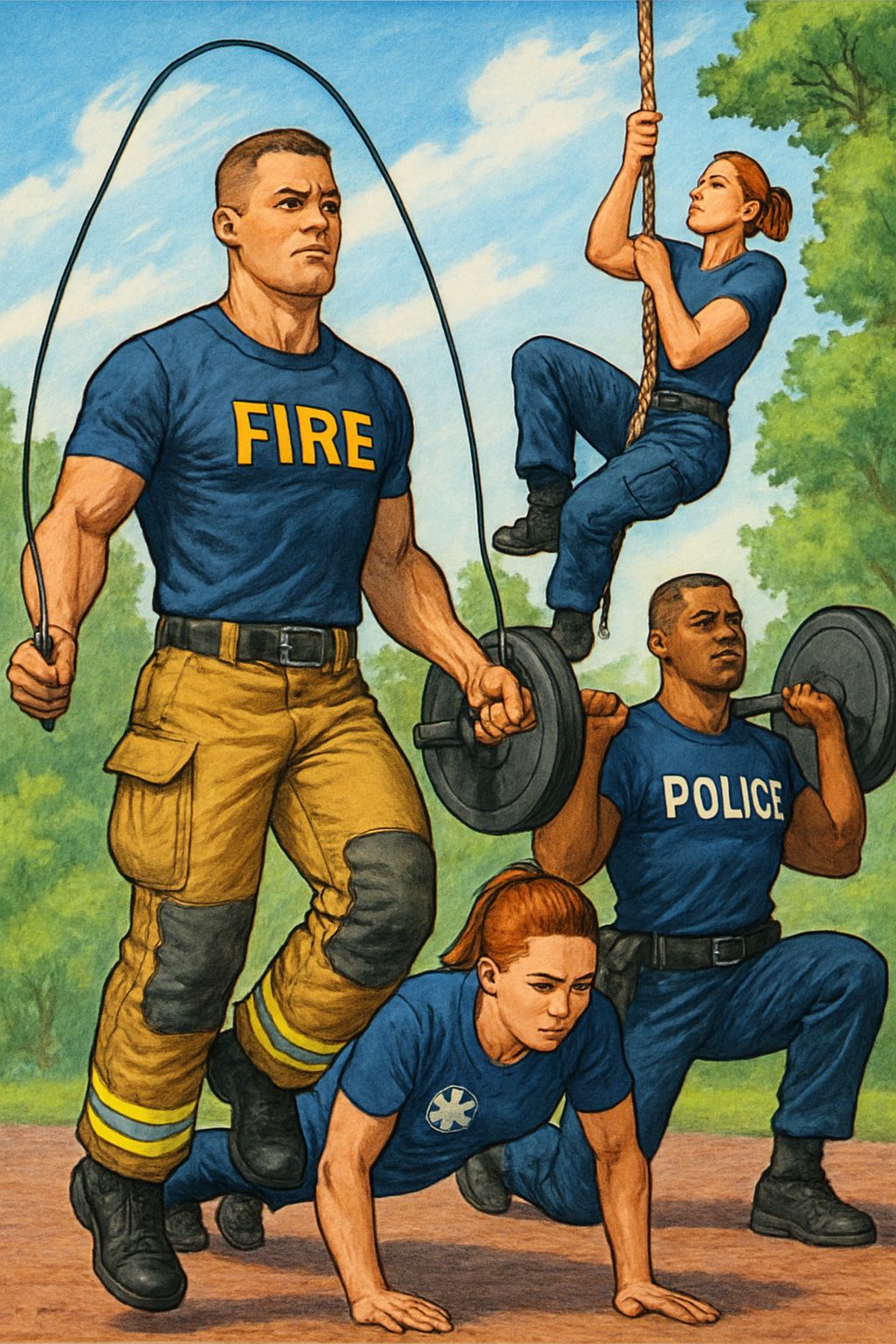
If you only have time for one training method that builds endurance, strength, and functional fitness all at once, HIIT is it.
High-intensity interval training has moved well beyond gym culture and into the world of tactical fitness, emergency preparedness, and real-world physical readiness. Whether you’re a soldier maintaining fitness during deployment, a first responder staying sharp between calls, or a fitness enthusiast looking to build functional endurance, HIIT delivers measurable results without demanding hours of your day.
HIIT Delivers More Than Just a Cardio Workout
“HIIT is an efficacious and efficient method of addressing the metabolic training needs of soldiers while they serve their country during deployment.”
— Research on HIIT Implementation for Military DeploymentsMost people think of HIIT as a calorie-burning cardio tool. That’s only part of the picture. What separates HIIT from a standard run or bike session is its dual-system approach — it trains both the aerobic and anaerobic energy systems within a single session. That means your body is building cardiovascular endurance and raw power output at the same time. For more on fitness readiness, check out lessons from natural disasters.
For preparedness-focused training, this is a game changer. Real physical demands — whether it’s carrying a load over rough terrain, responding to an emergency, or performing under stress — require both sustained endurance and explosive capability. HIIT is one of the few training methods that develops both simultaneously.
The time efficiency factor compounds the value further. Studies comparing HIIT to traditional continuous aerobic training show that HIIT produces similar or superior aerobic adaptations in a fraction of the training time. For anyone operating in time-constrained environments, that’s not just a convenience — it’s a strategic advantage.
What HIIT Actually Is (and Why It Works)
HIIT is high-intensity interval training — a method where short bursts of near-maximal effort are alternated with brief recovery periods. A 2014 review published in the British Journal of Sports Medicine defines HIIT as training that elicits 80 to 100 percent of maximum heart rate (HRmax) or aerobic capacity (VO2max). That intensity threshold is what separates HIIT from moderate-intensity interval training and makes it uniquely effective.
The physiological mechanism is straightforward. By pushing your body to near-maximal output repeatedly, you force both your cardiovascular system and your working muscles to adapt faster than they would under steady-state aerobic conditions. The recovery periods allow just enough restoration to sustain repeated high-intensity efforts, creating a compounding stress-adaptation cycle across the session.
High-Intensity Intervals vs. Traditional Cardio
Traditional continuous aerobic training — think a 30-minute moderate-pace run — primarily develops the aerobic energy system. It’s valuable, but it has a ceiling for time-pressed individuals. HIIT challenges the aerobic system just as effectively while also recruiting fast-twitch muscle fibers and taxing the anaerobic system. Research shows that HIIT with a 1:4 work-to-rest ratio can augment anaerobic power and enhance VO2max to a similar magnitude as 20 to 25 minutes of moderate-intensity continuous exercise.
How Work-to-Rest Ratios Drive Results
The work-to-rest ratio is the defining variable in any HIIT protocol. A 1:1 ratio (e.g., 30 seconds on, 30 seconds off) is more metabolically demanding and develops anaerobic capacity. A 1:2 or 1:4 ratio allows more recovery, enabling higher-quality output during work intervals while still driving significant aerobic adaptation. Matching the ratio to your training goal — power, endurance, or both — is what makes a HIIT program precise rather than just hard.
The Aerobic and Anaerobic Adaptations HIIT Triggers
HIIT drives a cascade of physiological adaptations that are directly relevant to physical preparedness:
- Increased VO2max, improving the body’s ability to use oxygen efficiently during sustained effort
- Enhanced anaerobic power output, supporting explosive movements under load
- Improved cardiac output, allowing the heart to pump more blood per beat
- Greater mitochondrial density in muscle tissue, boosting energy production at the cellular level
- Faster lactate clearance, reducing fatigue during repeated high-effort bouts
These adaptations don’t just make you fitter in a gym sense — they directly improve your capacity to perform under physical stress in unpredictable, real-world conditions.
The Physical Benefits of HIIT for Preparedness
Preparedness fitness isn’t about aesthetics. It’s about functional capacity — the ability to move, carry, sustain, and recover under demanding conditions. HIIT addresses every layer of that demand.
VO2max Improvements in Less Time
VO2max is the gold standard measure of aerobic fitness and a strong predictor of physical performance in high-demand tasks. HIIT has consistently demonstrated its ability to improve VO2max across fitness levels, often matching the results of traditional endurance programs that require significantly more training volume. For deployed personnel or anyone with limited training windows, this efficiency is mission critical.
Strength and Endurance Gains When Combined With Resistance Training
One of the most powerful applications of HIIT for preparedness is pairing it with resistance training in a concurrent training model. Research on Tabata-style HIIT performed alongside resistance training shows increases in maximal anaerobic power beyond what HIIT alone produces. Studies also confirm that combining resistance training with HIIT improves both VO2max and strength outcomes — the precise combination needed for physically demanding job roles.
Injury Risk Reduction Through Aerobic Fitness Maintenance
Maintaining aerobic fitness isn’t just about performance — it’s a direct injury prevention strategy. Soldiers and tactical athletes who experience declining cardiovascular fitness during deployments face higher injury risk when they return to full training loads. HIIT provides a practical solution by sustaining the aerobic base needed to support musculoskeletal health, recovery capacity, and movement efficiency under load.
Literature on tactical athlete training specifically identifies improved aerobic fitness as a protective factor against overuse injuries and training-related breakdowns. By keeping VO2max and cardiovascular output high through consistent HIIT sessions, individuals maintain the physiological buffer that absorbs physical stress without breaking down — which matters whether you’re returning from a six-month deployment or ramping up training intensity after a recovery period.
Why HIIT Fits Real-World Training Constraints
Most evidence-based training programs look great on paper but fall apart the moment real-world constraints hit — limited time, no gym access, inconsistent schedules, or confined spaces. HIIT was practically built for these conditions. Its structure doesn’t depend on treadmills, machines, or a full hour of uninterrupted training time. What it requires is effort, a work-to-rest protocol, and enough space to move.
This is precisely why HIIT has gained traction in military and tactical fitness communities. During deployments, training access is unpredictable. Space is often limited to a small room or an outdoor area. Equipment may be non-existent. HIIT thrives in exactly these conditions, delivering meaningful aerobic and anaerobic stimulus without infrastructure.
Minimal Equipment and Space Requirements
A full HIIT session can be executed with nothing but bodyweight and a timer. Exercises like burpees, squat jumps, mountain climbers, sprints, and push-up variations generate the intensity needed to hit 80 to 100 percent of HRmax without a single piece of equipment. This makes HIIT one of the most deployable fitness tools available — literally and figuratively. Whether you’re in a forward operating base, a hotel room, or a backyard, the training stimulus remains intact.
Scalable to Any Fitness Level or Physical Limitation
HIIT’s scalability is one of its most underappreciated qualities. The protocol is built around relative intensity — your near-maximal effort, not a fixed speed or load. A highly conditioned athlete and a beginner can perform the same HIIT structure and both achieve the intended physiological stimulus, simply at different absolute intensities. Work intervals, rest periods, exercise selection, and total session volume can all be adjusted to match current fitness levels without compromising the training effect.
For individuals managing minor injuries or physical limitations, exercise substitutions within a HIIT framework allow continued high-intensity training without aggravating problem areas. Upper body HIIT, seated protocols, or low-impact interval structures like cycling or rowing maintain the cardiovascular demand while reducing mechanical stress on vulnerable tissues.
How HIIT Prepares You for High-Demand Physical Tasks
Physical preparedness isn’t abstract — it shows up in specific moments. Carrying a 60-pound pack over broken terrain for three hours. Dragging an injured teammate to safety. Responding physically to an unexpected threat after hours of sedentary work. These scenarios share common physical demands: sustained aerobic output, the ability to produce explosive force on demand, and the mental toughness to keep moving under fatigue.
HIIT targets all three. The repeated high-intensity bouts build tolerance to physical discomfort and train the body to perform under metabolic stress — conditions that closely mirror what high-demand tasks actually feel like. Research specifically notes that HIIT improves a soldier’s operability and mission effectiveness by developing the exact energy system capacity required for job-related physical tasks.
- Sustained load-bearing tasks like long rucks and marches benefit from improved VO2max and aerobic base
- Explosive job demands — breaching, lifting, sprinting — are supported by HIIT-driven anaerobic power gains
- Recovery between high-effort bursts improves through enhanced lactate clearance and cardiac output
- Mental resilience under physical stress is trained through repeated exposure to near-maximal discomfort
The carry-over from HIIT to real-world physical performance is direct, not theoretical. The energy systems you train in a HIIT session are the same ones that get called on when the situation demands it.
Functional Movements That Mirror Real Physical Demands
Exercise selection within a HIIT session can be tailored to directly replicate job-specific movement patterns. Loaded carries, sled pushes, shuttle runs, box step-ups, and kettlebell swings all generate the required training intensity while developing movement patterns that transfer directly to real-world tasks. This is where HIIT becomes more than just conditioning — it becomes specific preparation for the physical realities of demanding environments.
Building the Stamina for Longer Duration Tasks
One of the counterintuitive benefits of HIIT is its positive effect on endurance performance for longer-duration tasks. Despite sessions often lasting 20 to 30 minutes, the aerobic adaptations generated — increased mitochondrial density, improved cardiac output, higher VO2max — directly support sustained physical output over hours. Research on tactical athletes confirms that HIIT supports performance in longer-duration job-related tasks, including extended marches and rucking events, by building the aerobic foundation those activities demand.
Training Variety That Prevents Adaptation and Boredom
Physiological adaptation is the enemy of long-term progress. When the body fully adapts to a training stimulus, gains plateau. HIIT’s flexible structure — variable work-to-rest ratios, rotating exercise selections, adjustable volume — makes it easy to continuously introduce novel training stimuli that prevent stagnation. Beyond the physiology, variety keeps training engaging, which matters for long-term adherence, especially in isolated or repetitive environments like deployments.
How to Structure a HIIT Session for Maximum Preparedness
Structure is what separates an effective HIIT session from just working hard randomly. The sequence, intensity, volume, and recovery periods all interact to determine the training outcome. For preparedness-focused training, the goal is to optimize both aerobic and anaerobic adaptation while preserving the capacity to perform resistance training within the same program.
Resistance Training Before HIIT for Optimal Results
Key Principle: Always sequence resistance training before HIIT within the same session. Literature consistently supports this intra-session exercise order to maximize both strength and cardiovascular adaptations.
The order of exercises within a training session isn’t arbitrary — it has a direct impact on the quality of adaptation you get from each component. When resistance training is performed first, your neuromuscular system is fresh, allowing for maximal force production and technique integrity during compound lifts. Following resistance work with HIIT capitalizes on an already-elevated heart rate and metabolic state, making the cardiovascular component more efficient without compromising the strength work.
This sequencing also reflects how high-demand physical tasks actually unfold. Soldiers, first responders, and tactical athletes rarely perform purely aerobic tasks in isolation — they often perform explosive, strength-dependent work and then sustain output over time. Training in this order builds the specific physiological pattern your body needs to replicate under real conditions.
For a practical session structure, perform two to three compound resistance exercises — such as deadlifts, weighted lunges, or bench press — at moderate to high intensity first. Then move directly into your HIIT protocol using a work-to-rest ratio matched to your current training goal. Total session time, including warm-up, can be kept under 60 minutes while delivering both strength and cardiovascular stimulus.
Sample Work-to-Rest Ratio Protocols
Protocol
Work Interval
Rest Interval
Work-to-Rest Ratio
Primary Adaptation
Best For
Tabata
20 seconds
10 seconds
2:1
Anaerobic power + VO2max
Advanced trainees, short sessions
Standard HIIT
30 seconds
30 seconds
1:1
Aerobic and anaerobic balance
General preparedness
Military HIIT Protocol
30 seconds
30 seconds
1:1
VO2max, anaerobic power at >95% HRmax
Tactical athletes, deployed personnel
Extended Recovery HIIT
30 seconds
2 minutes
1:4
Anaerobic power, VO2max improvement
Beginners, injury recovery, power focus
Moderate Interval
1 minute
2 minutes
1:2
Aerobic endurance base
Building toward higher-intensity protocols
HIIT Is One of the Most Efficient Tools for Physical Readiness
When training time is limited, space is restricted, and the physical demands on the horizon are serious, HIIT earns its place at the center of any preparedness-focused fitness program. It builds aerobic and anaerobic capacity simultaneously, pairs powerfully with resistance training, requires minimal equipment, and scales to any fitness level. No other single training modality checks all of those boxes at once.
The research is clear and the application is straightforward: implement HIIT with intentional structure, match your work-to-rest ratios to your goals, sequence it after resistance training, and progress the stimulus over time. Done consistently, HIIT doesn’t just make you fitter — it makes you ready for whatever physical demands come next.
Frequently Asked Questions
HIIT generates a lot of questions, especially from people who are serious about using it for functional fitness rather than just general health. The answers below cut through the noise and give you what you actually need to know to apply HIIT effectively for preparedness training.
These are the most common questions from fitness enthusiasts who want to use HIIT with purpose — not just intensity for its own sake.
How Long Should a HIIT Session Be for Preparedness Goals?
A HIIT session for preparedness doesn’t need to be long to be effective. Most well-structured protocols deliver significant aerobic and anaerobic stimulus in 20 to 30 minutes of actual work, not including warm-up and cool-down.
Recommended HIIT Session Structure for Preparedness:
• Warm-Up: 5 to 10 minutes of dynamic movement and progressive intensity buildup
• Resistance Training Block: 15 to 20 minutes of compound lifts (if combining modalities)
• HIIT Block: 20 to 30 minutes using your target work-to-rest protocol
• Cool-Down: 5 minutes of low-intensity movement and static stretching
• Total Session Time: 45 to 65 minutes. For more insights on fitness readiness, explore lessons from natural disasters.
The military HIIT protocol studied for deployed personnel used three sets of ten repetitions of 30-second high-intensity running at greater than 95 percent HRmax, with 30-second rest periods between efforts. That structure alone drives measurable VO2max and anaerobic power improvements without requiring extended session time.
Avoid the trap of thinking longer equals better with HIIT. The intensity is the stimulus — not the duration. Exceeding 40 minutes of actual HIIT work risks overtraining, diminished output quality, and incomplete recovery between sessions.
Can Beginners Do HIIT Without Prior Fitness Experience?
Yes — but the entry point matters. Beginners should start with a conservative work-to-rest ratio, such as 1:4 (30 seconds of work, 2 minutes of rest), and prioritize exercise selection that minimizes injury risk. Bodyweight movements like marching in place, step-ups, modified push-ups, and low-impact jumping jacks can generate sufficient intensity for a beginner while keeping joint stress manageable. The goal in the first two to four weeks is building familiarity with interval structure and elevating heart rate consistently — not hitting 95 percent HRmax from day one.
As cardiovascular fitness improves, rest periods can be shortened progressively and exercise intensity increased. The relative nature of HIIT — where intensity is based on individual maximum output — means that beginners and advanced athletes can use the same protocol structure while working at appropriately different absolute intensities. The adaptation mechanism works the same way regardless of starting fitness level. For those interested in overall preparedness, consider exploring must-have supplies for every driver.
How Often Should HIIT Be Done Each Week?
For most preparedness-focused trainees, two to three HIIT sessions per week is the evidence-supported sweet spot. This frequency allows sufficient training stimulus for aerobic and anaerobic adaptation while providing enough recovery time for the neuromuscular system to rebuild between sessions.
Recovery is not optional with HIIT — it is where adaptation actually occurs. Performing high-intensity intervals daily without adequate rest leads to accumulated fatigue, declining output quality, and elevated injury risk. Non-HIIT training days can include lower-intensity aerobic work, mobility sessions, or resistance training without a cardiovascular intensity component to maintain training volume without overloading recovery capacity.
In deployment or high-operational-tempo environments where training recovery is compromised by stress, sleep disruption, and physical workload, two HIIT sessions per week is often the more sustainable and effective target. Consistency over weeks and months delivers far more adaptation than brief periods of high frequency followed by forced rest due to injury or overtraining.
Does HIIT Replace the Need for Traditional Endurance Training?
HIIT is not a wholesale replacement for traditional endurance training — it is a highly efficient complement to it. For preparedness-focused individuals who need to perform well on extended-duration tasks like long rucks, marches, or sustained physical operations, building and maintaining an aerobic base through some traditional low-to-moderate intensity training remains valuable. HIIT accelerates aerobic development and maintains it efficiently, but longer steady-state efforts specifically train the body’s ability to sustain output across hours — a stimulus that short HIIT sessions don’t fully replicate. For more insights, consider exploring fitness readiness and preparedness in challenging situations.
The practical approach is to use HIIT as the primary cardiovascular training tool when time, space, or equipment limits traditional endurance training — such as during deployments — and to reintegrate longer aerobic sessions when conditions allow. In an optimal preparedness program, both modalities coexist, with HIIT providing the intensity and efficiency and traditional endurance training providing the extended-duration aerobic foundation.
What Exercises Work Best in a HIIT Session for Physical Preparedness?
The best exercises for a preparedness-focused HIIT session are those that generate high metabolic demand while training movement patterns relevant to real-world physical tasks. Multi-joint, compound movements consistently outperform isolated exercises for this purpose because they recruit more muscle mass, drive greater cardiovascular response, and develop functional strength simultaneously. For more insights, consider the lessons from natural disasters on fitness readiness and preparedness.
High-output bodyweight exercises that work particularly well include burpees, squat jumps, mountain climbers, shuttle runs, lateral bounds, and push-up variations. These can be performed anywhere without equipment and reliably drive heart rate into the 80 to 100 percent HRmax zone required for true HIIT stimulus. For those interested in minimalistic fitness approaches, exploring minimalism and mental clarity can enhance your workout experience.
When equipment is available, loaded carries, sled pushes, kettlebell swings, box step-ups with weight, and rowing ergometer sprints add an additional strength and power component that directly mirrors tactical and occupational physical demands. The sled push in particular closely replicates the force profile of pushing or dragging heavy loads — a task pattern that appears repeatedly in military, firefighting, and emergency response contexts.
Rotate exercise selection across sessions to prevent neuromuscular adaptation, maintain training engagement, and ensure balanced development across movement patterns. A well-designed HIIT rotation covers pushing, pulling, hinging, carrying, and locomotion patterns — giving you a complete physical preparedness stimulus within the HIIT framework.




Leave a Reply