
- A minimalist approach to emergency preparedness means owning fewer, better items — and knowing exactly where each one is when seconds count.
- Clutter doesn’t just fill your space — it actively slows your thinking during high-stress situations, which is precisely when you need clarity the most.
- Research from the Journal of Neuroscience confirms that visual clutter competes for your attention, making fast, accurate decisions harder under pressure.
- Strategic preparedness and hoarding supplies are opposites — one builds confidence and readiness, the other creates chaos masked as security.
- Discover the one organizational rule that can make the difference between a calm, effective emergency response and dangerous hesitation.
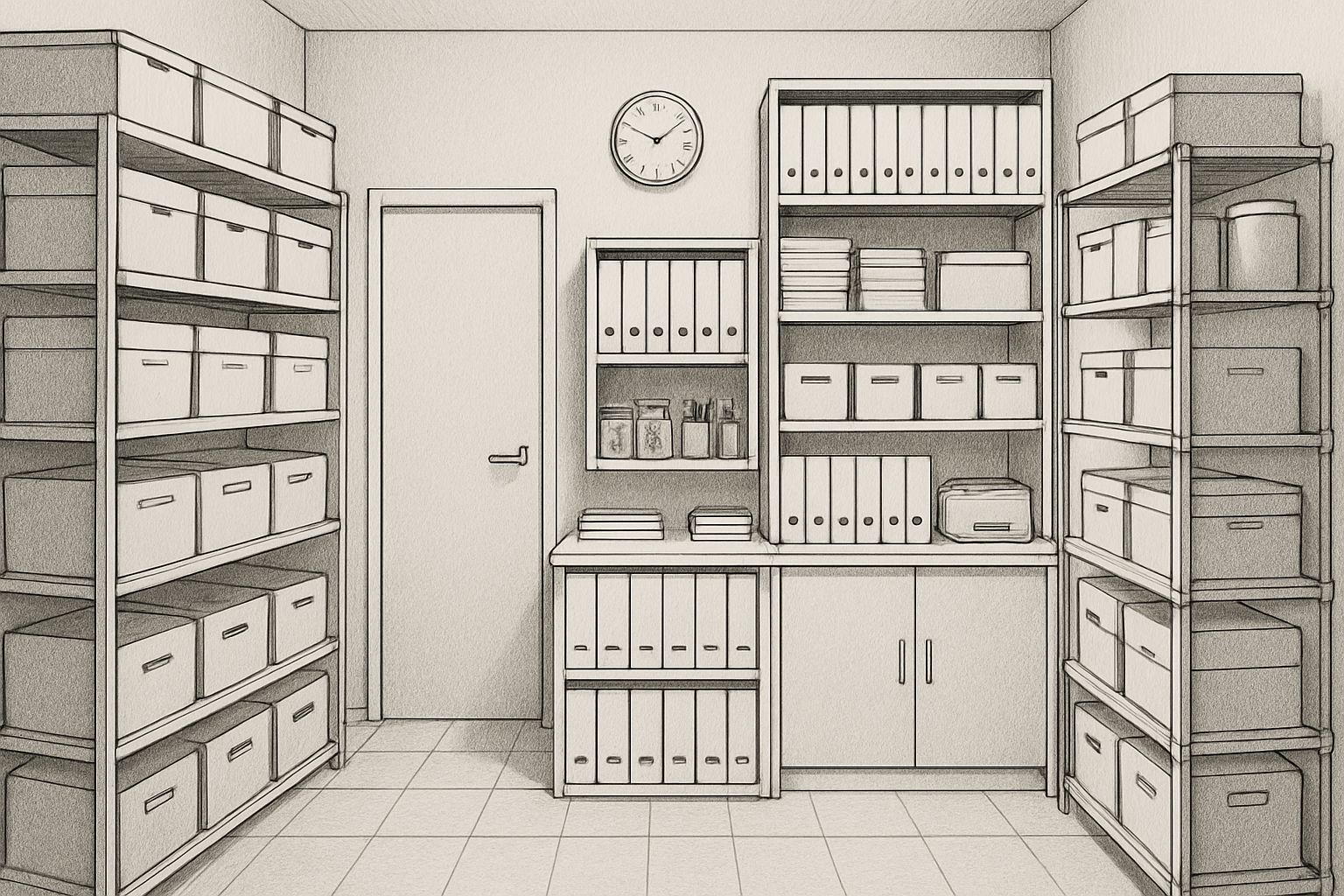
When a crisis hits, the last thing you want is to dig through a cluttered closet looking for a flashlight while adrenaline is already spiking your heart rate. Ultra Prepared explores this connection between a clear environment and a clear mind — and why minimalism isn’t just a lifestyle trend but a genuine survival strategy.
Clutter Kills Clarity When It Matters Most
Most people think preparedness means accumulating as much as possible — water, food, gear, tools, and backups for the backups. But that instinct, left unchecked, turns preparation into paralysis. When your emergency supplies are buried under layers of disorganized items, your brain has to work harder just to locate what you need, burning precious mental energy at exactly the wrong moment.
Why a Cluttered Space Creates a Cluttered Mind in a Crisis
Your brain is constantly processing everything in your visual field, whether you’re aware of it or not. In a normal day, a messy room might just feel mildly irritating. But during an emergency — a fire, a blackout, a medical incident — that same visual noise becomes a direct obstacle to action. Your eyes scan the room and your brain tries to filter signal from chaos, and that filtering takes time you don’t have.
People who live in cluttered spaces consistently report higher levels of cortisol, the body’s primary stress hormone. That elevated baseline stress means you’re already starting from a disadvantaged mental position before the emergency even begins. A minimalist environment removes that deficit entirely.
The Link Between Visual Overload and Slow Decision-Making
Decision-making under pressure is a finite resource. Cognitive scientists call it decision fatigue — the more choices and inputs your brain has to process, the slower and less accurate each subsequent decision becomes. A cluttered emergency kit or disorganized storage space forces micro-decisions: Is that the right bag? Is this the first-aid kit or the tool bag? Where did I put the emergency contacts? Each one of those small hesitations stacks up fast.
How Minimalism Gives You a Mental Edge in Emergencies
When your space is intentionally organized and lean, your brain doesn’t have to work to locate what matters. You’ve already done that cognitive work in advance, during calm, rational moments. That’s the real power of minimalist preparedness — it front-loads the thinking so that when urgency strikes, your actions are nearly automatic. Grab the bag. Open the kit. Follow the plan. No searching, no second-guessing.
What Minimalist Preparedness Actually Looks Like
Minimalist preparedness isn’t about having less than you need. It’s about having exactly what you need — nothing more, nothing less — and knowing precisely where it is and how to use it. That distinction is everything.
The Difference Between Hoarding Supplies and Strategic Preparedness
Hoarding supplies feels like safety but often creates the opposite effect. When you accumulate items without a clear system, you end up with expired medications buried under duplicates, gear you’ve never tested, and a storage space that takes ten minutes to navigate. That’s not preparedness — that’s anxiety wearing a preparedness costume.
- Strategic preparedness starts with a specific threat assessment for your location and lifestyle
- Every item in your kit has a defined purpose and a defined location
- Supplies are rotated regularly so nothing expires unused
- The entire kit can be accessed, packed, and deployed in under three minutes
- Each family member knows the system — not just the person who built it
The goal is a preparedness setup that reduces anxiety rather than feeding it. When you open your emergency supplies and everything is exactly where it should be, in good condition, ready to use — that feeling is confidence. Real confidence. Not the anxious kind that makes you buy another case of water just to feel better.
Quality Over Quantity: Choosing Gear That Does More With Less
Multi-use tools are the cornerstone of minimalist preparedness. A Leatherman Wave+ multi-tool replaces a dozen single-purpose items. A Lifestraw Go water filter bottle handles both hydration and filtration without carrying two separate pieces of gear. A Baofeng UV-5R radio covers communication across multiple frequencies without needing several different devices. Each item you choose should justify its space by serving more than one function. For those interested in expanding their skills, consider exploring basic navigation skills that complement your gear selection.
Mental Clarity Benefits Backed by Real Research
The connection between physical environment and mental performance isn’t anecdotal — it’s well-documented. And for anyone serious about being prepared when it counts, that research has direct, practical implications.
How Clutter Triggers a Constant Low-Level Stress Response
A landmark study published in the Journal of Neuroscience found that multiple stimuli present in your visual field — essentially, clutter — compete for neural representation. In plain terms, your brain is constantly fighting to prioritize what to pay attention to. That competition doesn’t pause when you’re trying to act quickly or think clearly. It intensifies.
What this means practically is that a cluttered home isn’t just aesthetically unpleasant — it’s physiologically taxing. Your nervous system is quietly working overtime, processing visual input it doesn’t need. Over time, that sustained low-level activation leads to fatigue, irritability, and diminished focus. Strip away the excess, and you strip away that invisible drain on your mental resources.
The Correlation Between Decluttering and Improved Focus
Researchers at Princeton University Neuroscience Institute demonstrated that clearing physical clutter from your environment directly improves your ability to focus and process information. Participants in organized environments consistently outperformed those in cluttered spaces on tasks requiring sustained attention and working memory — two cognitive functions that are absolutely critical during any emergency response.
For preparedness purposes, this finding is a direct argument for keeping your emergency space clean, clearly labeled, and minimal. The calmer your environment, the faster and more accurately your brain can operate when the situation demands it most.
Organization Is the Bridge Between Minimalism and Preparedness
You can own the right gear and still fail in an emergency if you can’t find it fast. Organization is what transforms a minimalist philosophy into actual operational readiness. It’s the system that connects intention to execution when the pressure is on.
Think of your emergency setup the way a surgeon thinks about an operating room. Every instrument has a designated place. Nothing is left to chance or memory. The environment is designed so that the right tool is always within immediate reach, without searching, without hesitation. That level of intentional organization is exactly what minimalist preparedness aims to replicate at home.
The good news is that achieving this doesn’t require a large space or an expensive storage system. It requires deliberate decisions about what belongs where — and the discipline to keep it that way. Small, well-organized spaces consistently outperform large, cluttered ones in emergency scenarios because clarity of layout translates directly into speed of response.
The Minimalist Preparedness Principle: “A place for everything, and everything in its place” isn’t just a tidying motto — in emergency preparedness, it’s a survival standard. The three seconds you spend searching for a flashlight in a cluttered drawer could be the three seconds that define the outcome of a crisis. Organized minimalism eliminates that variable entirely.
Once you accept that organization is a core preparedness skill — not just a personality preference — the way you set up your home storage changes completely. You stop thinking about what fits and start thinking about what functions.
Why Knowing Exactly Where Everything Is Saves Lives
In a genuine emergency, your prefrontal cortex — the part of your brain responsible for rational planning and decision-making — gets partially overridden by your stress response. Your heart rate spikes, tunnel vision sets in, and your working memory narrows. In that state, you cannot reliably remember where you put things. You need a system that works even when your brain is running on instinct.
That’s why the location of every emergency item needs to be so well-established that it’s essentially muscle memory. You shouldn’t have to think about where the emergency kit is — your body should already know. That level of familiarity only comes from consistent organization and regular, deliberate practice.
- Label every container clearly — use large print labels or color-coded bins for instant identification
- Assign zones in your home: one for medical, one for shelter-related gear, one for communication tools
- Keep your most-used emergency items at eye level and within arm’s reach
- Run a monthly 60-second drill where you locate three key items without turning on extra lights
- Never store emergency supplies behind non-emergency clutter
These aren’t just organizational tips — they’re cognitive load reducers. Every one of those habits means one fewer decision your stressed brain has to make in the moment that counts.
How to Set Up Your Emergency Supplies for Instant Access
Start by identifying the three most likely emergency scenarios for your geographic area and lifestyle — whether that’s a power outage, a wildfire evacuation, a severe storm, or a medical event. Then build your storage system around those scenarios specifically, rather than trying to prepare for every possible situation simultaneously. Specificity creates clarity; trying to cover everything creates chaos.
Use a tiered access model: Tier 1 items — the things you’d grab in under 90 seconds — should be in a single, clearly marked go-bag near your exit. Tier 2 items, like extended food and water supplies, can live in a dedicated closet or storage area that’s still organized but not necessarily grab-and-go. This two-tier system keeps your most critical tools instantly accessible without requiring your entire preparedness setup to be at the front door.
The One-Box Rule for Medical and Emergency Gear
One of the most effective simplifications you can make is committing to a single, clearly designated medical and emergency box. Not a shelf with various items scattered across it. Not a cabinet where first-aid supplies live next to holiday decorations. One box — ideally a Pelican 1510 carry-on case or a similar hard-sided, waterproof container — that holds every medical and emergency essential in one place, sealed and ready.
The psychological benefit of this rule is underrated. When you know that everything critical is in that one box, your mental load drops immediately. You stop doing passive background checks — Did I restock the bandages? Where did the emergency contact list go? — because the answer is always the same: it’s in the box. Audit the box seasonally, restock as needed, and trust the system you’ve built.
7 Practical Steps to Build a Minimalist Preparedness Mindset
Minimalist preparedness isn’t built in a weekend purge — it’s developed through small, consistent decisions that compound over time. Each step below is designed to be approachable without being superficial. These aren’t organizational hacks; they’re mindset shifts that change how you relate to your space, your gear, and your own sense of readiness. For instance, understanding financial health through essentialism can be a crucial aspect of preparedness.
The goal isn’t perfection. The goal is a system that works better than the one you have right now — and that you’ll actually maintain because it’s simple enough to sustain. For those looking to improve their preparedness, consider basic navigation skills as a starting point.
1. Start With One Drawer, One Corner, One Surface
Don’t attempt a full home overhaul on day one. Choose one specific area — a junk drawer, a shelf in the garage, the corner of a closet — and apply minimalist preparedness principles there first. Remove everything. Put back only what serves a clear function. Label what stays. That one organized space becomes your proof of concept, and more importantly, it becomes a reference point your brain starts to prefer. Clarity is addictive once you experience it.
2. Apply the One-Year Rule to Every Piece of Gear
If you haven’t used a piece of emergency gear in over a year and can’t articulate a specific scenario where you’d need it, remove it. This isn’t about being reckless with preparedness — it’s about being honest. Gear you don’t know how to use, haven’t tested, or added out of anxiety rather than strategy is dead weight. It takes up space, adds visual noise, and paradoxically makes you feel less prepared, not more.
3. Choose Multi-Use Tools Over Single-Purpose Items
Every item in your preparedness kit should earn its place by serving multiple functions. A SOG PowerAccess Deluxe multi-tool handles cutting, gripping, filing, and fastening in one compact package. A 550 paracord bracelet provides cordage, fire-starting tinder, and a fishing line in a wearable form. A mylar emergency blanket reflects heat, signals rescuers, acts as a rain shelter, and weighs under two ounces. When every item does more, you need fewer items — and your kit stays lean, light, and manageable.
4. Digitally Declutter Your Emergency Plans and Information
Your digital emergency information is just as important as your physical gear — and just as vulnerable to clutter. A chaotic phone full of unorganized screenshots, saved links you’ve never revisited, and apps you downloaded once is not a reliable emergency resource. Create one dedicated folder on your phone labeled “Emergency” containing your evacuation routes, medical information, emergency contacts, and offline maps downloaded through an app like Maps.me. Back it up to a printed card stored in your go-bag. Simple, specific, and accessible even when cell service fails.
5. Audit Your Supplies Seasonally, Not Just Once
A preparedness kit built once and never revisited is a false sense of security. Medications expire. Food supplies degrade. Batteries lose charge. Situations change — a new family member, a move to a different region, a change in health needs. A seasonal audit keeps your kit honest and current.
- Spring: Check all medication and food expiration dates; rotate stock
- Summer: Test battery-powered devices and solar chargers; inspect water storage for contamination
- Fall: Update emergency contact lists; review evacuation routes for seasonal road changes
- Winter: Add cold-weather gear; inspect shelter items like emergency blankets and sleeping bags
Each audit should take no longer than 30 minutes if your system is properly organized. If it’s taking longer than that, the audit itself is telling you something important: the system needs simplification.
Use the audit as an opportunity to remove as much as you add. For every new item you bring in, ask whether something else can come out. This discipline keeps your kit from gradually expanding back into the cluttered, overwhelming state you worked to escape. For more on how minimalism improves mental clarity, explore this article.
Document your audit with a simple checklist — a single laminated card stored inside your main kit works perfectly. Date each inspection and note what was replaced or updated. This record isn’t just useful for accountability; it reduces the passive mental background noise of wondering whether your supplies are still current. You checked. You know. That’s one less thing your brain has to carry.
6. Build Physical Fitness Alongside Mental Clarity
A minimalist preparedness mindset extends beyond your storage closet — it includes your body. Physical fitness is one of the most undervalued preparedness assets because it’s invisible until you need it. The ability to carry a loaded go-bag for two miles, assist an injured family member, or simply stay calm under physical exertion is entirely dependent on baseline fitness. Prioritize functional training — bodyweight movements, cardiovascular endurance, and grip strength — over accumulating more gear you may never carry.
7. Practice Daily Gratitude to Reduce the Urge to Over-Stockpile
Over-stockpiling is rarely about genuine preparedness — it’s almost always about anxiety. The compulsive need to acquire more supplies, more gear, more backups is driven by a feeling of scarcity and fear, not by rational threat assessment. Daily gratitude practice directly interrupts that cycle by training your brain to recognize sufficiency rather than constantly scanning for deficiency. For those interested in maintaining a balanced approach, exploring financial health through essentialism can provide additional insights.
This doesn’t have to be elaborate. A 60-second mental inventory each morning — noting three specific things you already have that contribute to your safety and well-being — rewires your default cognitive setting from “not enough” to “well-positioned.” Over time, that shift makes you a calmer, more rational preparedness decision-maker. You start adding to your kit from a place of strategy rather than fear.
The practical result is a leaner, more intentional preparedness setup. When you no longer feel compelled to buy another water purification tablet just because you saw a sale, or add a fourth flashlight because uncertainty feels uncomfortable, your kit stays exactly as useful and exactly as manageable as you designed it to be. For more insights on essential preparedness, check out the ultimate vehicle emergency kit guide.
Gratitude as a Preparedness Tool: Before any new preparedness purchase, pause and ask: “Do I already have something that serves this function?” If the answer is yes, that’s a moment of gratitude in action — recognizing that what you have is enough. That single habit, practiced consistently, keeps your preparedness system minimal, effective, and rooted in reality rather than anxiety.
Minimalism and Mindfulness Work Together in High-Stress Situations
Minimalism clears your environment. Mindfulness clears your mind. Together, they create a state of readiness that no amount of gear can replicate — a calm, focused awareness that allows you to read a situation accurately, act decisively, and adapt when conditions change. In high-pressure moments, that combination is more valuable than any single piece of equipment in your kit. To explore how minimalism improves mental clarity, you can delve deeper into its psychological impact.
How Mindfulness Sharpens Situational Awareness
Situational awareness — the ability to accurately perceive and interpret your environment in real time — is the foundational skill of emergency response. Military and law enforcement professionals train it deliberately because it degrades quickly under stress when it hasn’t been practiced. Mindfulness is essentially a civilian training method for that exact skill. When you practice being fully present during ordinary moments, you build the neural pathways that allow you to stay present during extraordinary ones. You notice exits. You register changes in sound or light. You sense when something is off before you can articulate why. That heightened perceptual accuracy is what separates effective responders from overwhelmed bystanders in the first critical moments of an emergency.
Asking “Do I Need This?” Before Every Purchase or Addition
The single most powerful habit in minimalist preparedness is also the simplest: pausing before every addition and asking whether you genuinely need it. Not whether it might be useful. Not whether it was on sale. Not whether someone on a preparedness forum recommended it. Whether you — given your specific location, household composition, health needs, and risk profile — actually need it.
This question does two things simultaneously. First, it prevents unnecessary accumulation that leads to cluttered, hard-to-navigate emergency storage. Second, it forces you to think clearly about your actual preparedness gaps, which is far more productive than reactive purchasing. The answer to “Do I need this?” should always be grounded in a specific scenario, not a vague sense of unease. For instance, when considering what supplies to have on hand, you might refer to must-have supplies for every driver to ensure you’re truly prepared.
Over time, this habit transforms how you engage with the entire preparedness space. You stop browsing gear lists and start thinking in terms of systems. You evaluate new information through the filter of your real-world context rather than worst-case-scenario thinking. Your decisions become faster, cleaner, and more confident — which is exactly the mental quality you’re developing for emergencies themselves.
- Identify a specific scenario where the item would be used before purchasing
- Check whether an existing item in your kit already covers that function
- Consider whether the item adds weight or complexity without proportional benefit
- Evaluate whether every member of your household can use it effectively
- Ask whether removing something else would make more sense than adding this
A Simpler Setup Makes You a Faster, Calmer Responder
Everything in minimalist preparedness points toward one outcome: a faster, calmer emergency response. When your environment is clear, your kit is lean and organized, your mind is trained to stay present, and your decisions are made in advance rather than under pressure, you become a fundamentally different kind of responder than someone operating from a cluttered, anxious, reactive position.
Speed matters in emergencies — but calm matters more. Panic is almost always more dangerous than the emergency itself. A person who moves slowly but accurately will consistently outperform a person who moves fast but chaotically. Minimalist preparedness builds the calm first, which naturally produces the appropriate speed. You’re not rushing because you’re afraid — you’re moving efficiently because you’ve already thought this through. For more tips on maintaining composure, check out self-defense techniques in dangerous situations.
The cumulative effect of a simplified environment, an organized kit, a mindful mental state, and a well-rehearsed plan is something researchers describe as automaticity — the ability to perform complex actions without conscious effort. Pilots achieve it through flight simulation. Surgeons develop it through repeated procedure. You can build a version of it at home through consistent organization, seasonal audits, and deliberate drills. When your preparedness actions become automatic, the emotional bandwidth you would have spent on confusion and searching becomes available for actual problem-solving.
That’s the deepest value of the minimalist approach to preparedness. It isn’t just about owning less or living tidier. It’s about engineering your environment and your mindset so that your best thinking is available precisely when it’s needed most — in the moments when everything else is uncertain, loud, and fast-moving. For a financial aspect, consider how essentialism intersects with budgeting to achieve financial health.
The Minimalist Responder Advantage:
Responder Type
Environment
Mental State Under Pressure
Average Response Speed
Cluttered, Reactive
Disorganized storage, unlabeled gear
High anxiety, decision fatigue
Slow — searching and second-guessing
Minimalist, Proactive
Organized, labeled, tiered access
Calm, focused, automatic action
Fast — trained muscle memory
Frequently Asked Questions
These are the questions that come up most often when people start applying minimalist principles to their preparedness planning. Each answer is designed to be direct, practical, and immediately applicable — no filler, no vague reassurances. For instance, creating a vehicle emergency kit can be a part of such preparedness.
Can You Be Fully Prepared for Emergencies With Minimal Supplies?
Yes — and in many cases, a minimal but well-chosen and well-organized kit outperforms a large, cluttered one. Full preparedness isn’t measured by volume of supplies. It’s measured by your ability to access the right item at the right moment, execute a plan under stress, and adapt when conditions change. A person with a streamlined 72-hour go-bag they’ve tested and know intimately is better prepared than someone with a garage full of gear they’ve never inventoried. Quality, organization, and familiarity consistently beat quantity.
How Does Clutter Specifically Affect Decision-Making During a Crisis?
Clutter creates what cognitive scientists call competing neural representations — your brain is simultaneously trying to process multiple visual stimuli while also attempting to make urgent decisions. That dual load slows processing speed and increases error rate. In a crisis, where decisions may need to happen in seconds, that cognitive drag is genuinely dangerous. Understanding minimalism’s psychological impact can help mitigate these effects.
Research from Princeton University Neuroscience Institute specifically demonstrated that visual clutter reduces the brain’s ability to sustain focused attention. In emergency terms, that means you’re more likely to miss critical information, make poor decisions, and take longer to act when your environment is disorganized. Removing that clutter before a crisis occurs is one of the highest-leverage preparedness actions you can take. For those looking to enhance their readiness skills, consider learning basic navigation skills to be better prepared.
What Is the First Thing to Declutter When Starting a Minimalist Preparedness Plan?
Start with your primary emergency kit or go-bag — not your entire home. Empty it completely, lay every item out, and evaluate each one against a specific use case. If you can’t articulate exactly when and how you’d use an item in a realistic emergency scenario, remove it. What remains should be lean, functional, and immediately recognizable. That single focused declutter session will give you a clear model to apply to the rest of your preparedness storage, and it produces an immediate, tangible improvement in your readiness.
Does Physical Fitness Really Connect to a Minimalist Lifestyle?
Directly and practically. Minimalism at its core is about reducing excess and focusing on what’s essential — and that principle applies to how you maintain your body just as much as how you organize your home. A physically capable person needs less gear to accomplish the same outcome. They can travel faster on foot, carry more of their own supplies, assist others, and manage physical stress without a breakdown in cognitive performance.
Beyond the physical capability argument, regular exercise is one of the most evidence-supported interventions for reducing baseline anxiety and cortisol levels — the same stress hormones that clutter elevates. A consistent fitness practice and a minimalist environment work together to keep your nervous system in a state of calm readiness rather than chronic low-level stress. Both are investments in the same outcome: performing well when it matters.
How Many Emergency Supplies Are Actually Enough Without Overdoing It?
FEMA recommends a minimum of 72 hours of self-sufficiency as a baseline — enough water, food, medication, and basic gear to function independently for three days without external support. For most households in most regions, expanding that to two weeks covers a wider range of scenarios, including extended power outages and post-disaster supply chain disruptions, without crossing into excessive accumulation territory.
The more useful framing, however, isn’t a specific number of days — it’s a specific threat assessment. Identify the three most likely emergency scenarios for your area. Build your supplies to handle those scenarios for your household size. Then stop. Adding beyond your realistic threat profile is where preparedness transitions into anxiety-driven hoarding, and the resulting clutter actively undermines the clarity and speed you’re working to develop.
Review that threshold seasonally, because your risk profile changes. A move, a new family member, a health change, or a shift in regional risk factors may mean adjusting up or down. But the key discipline is always returning to the question of sufficiency — not maximum accumulation, but the precise point where you are genuinely, confidently prepared for the scenarios most likely to affect you. That precision is the essence of minimalist preparedness, and it’s what keeps your mind as clear and ready as your kit.



Leave a Reply