
Article At A Glance
- Self-defense is only legally justified when the danger is immediate, and your response is proportional to that danger.
- Being the first person to threaten or use force in a conflict can strip away your right to claim self-defense, even if you end up seriously hurt.
- Deadly force is almost never justified to protect property alone, only to prevent serious bodily harm or death.
- Resources exist to help everyday people understand these laws before they’re ever in a high-stakes situation.
- Learn the five specific mistakes that can cause a legitimate self-defense claim to collapse in court.
What Makes Self-Defense Legal in the Eyes of the Law
Self-defense is a legal justification, not an automatic excuse. It allows a person to use force, sometimes even deadly force, to prevent an attempted injury from another person. But “justified” is doing a lot of heavy lifting in that sentence. Courts don’t just take your word for it; they look at the specific facts of the situation and measure them against a strict set of legal standards.
Those standards exist because self-defense is also used as a defense in both criminal and tort law, covering everything from assault charges to wrongful death lawsuits. That means the stakes aren’t just about staying out of prison. A poorly justified claim can also expose you to civil liability, even if criminal charges never stick.
The Core Legal Definition You Need to Know
At its most basic, self-defense is the use of force to protect yourself from an attempted injury by another person. If that force is found to be justified, it acts as a complete legal defense against charges like murder, assault, and battery. But the word “justified” carries three major requirements that have to all be true at the same time.
- The danger has to be imminent, not something you expect might happen later.
- The force used has to be proportionate to the threat you’re facing.
- You cannot be the person who started the confrontation.
Miss any one of these, and your self-defense claim starts to fall apart, regardless of how scared you genuinely were in the moment. Understanding the psychology of de-escalation can be crucial in preventing confrontations from escalating to the point where self-defense is necessary.
Why “Reasonable Belief” Is the Deciding Factor
The law doesn’t ask whether you were right about the danger. It asks whether your belief that you were in danger was reasonable, given everything you knew and saw in that moment. This is a subtle but critical distinction. Two people can look at the exact same situation and react differently, and both reactions could potentially be legally reasonable depending on context like size, number of attackers, or visible weapons.
This is also where things get subjective fast. A judge or jury will eventually have to decide whether your perception of danger matches what a reasonable person would have believed in your shoes. That’s why documenting the circumstances, witnesses, and your own account as soon as possible after an incident matters so much.
The Imminent Danger Requirement Explained
Imminent means right now, not soon, not probably, not “I had a bad feeling.” The threat has to be immediate rather than speculative or anticipated. If someone threatens to hurt you tomorrow, you can’t legally act in self-defense today. The law draws this line because it wants to prevent people from using force as retaliation or prevention dressed up as self-protection.
That said, imminent doesn’t mean you have to wait until a fist actually connects. If an attacker is close enough that they could strike you at any second, you’re generally not required to wait and absorb the first hit before responding.
The Non-Negotiable Requirements for a Valid Claim
Beyond imminence, two more conditions have to be satisfied before a self-defense claim holds up: proportionality and initial aggression. These aren’t optional extras. They’re baked into how nearly every self-defense statute in the country is written, and ignoring either one is one of the fastest ways to turn a victim into a defendant.
Think of these two requirements as guardrails. They keep the law from being weaponized by people looking to justify excessive violence under the banner of “self-defense,” while still protecting those who genuinely had no other choice. Understanding the psychology of de-escalation can further aid in preventing unnecessary confrontations.
Your Force Must Match the Threat
Proportionality means your response can’t dramatically outweigh the danger you faced. If someone shoves you, pulling a knife generally won’t be seen as reasonable. Deadly force specifically is reserved for situations involving a threat of death or serious bodily harm, nothing less. Use more force than necessary, especially lethal force against a non-lethal threat, and you risk criminal liability even if you were originally the one being attacked.
How Being the Initial Aggressor Destroys Your Defense
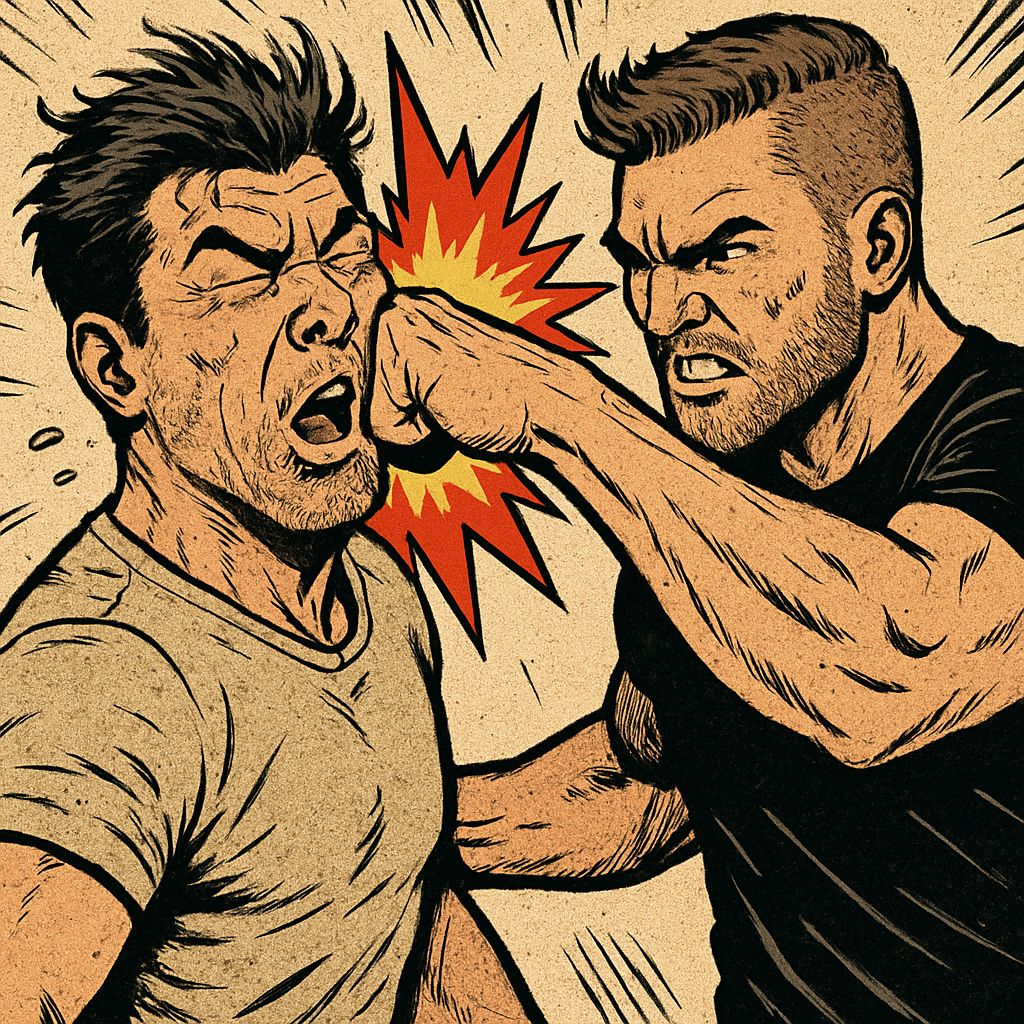
Few legal concepts trip people up as often as this one. Many assume that if they end up more injured than the other person, or if the fight escalates beyond what they intended, they’re automatically protected. That’s not how the law works. The person who throws the first punch, pulls the first weapon, or issues the first threat is, by legal definition, the initial aggressor, and that label follows them through the rest of the encounter.
The Case That Changed Everything: United States v. Peterson
This exact principle played out in the landmark case United States v. Peterson. The defendant used a gun to threaten a man who was attempting to steal windshield wipers off his car. When the man responded by threatening the defendant with a wrench, the defendant shot and killed him.
On its surface, this might look like clear self-defense; after all, he was threatened with a weapon. But the court ruled against him because he was the first to threaten physical force when he pulled the gun. His status as the initial aggressor completely undercut his self-defense claim, regardless of what happened afterward.
How to Properly Withdraw From a Confrontation
If you do end up as the initial aggressor, whether intentionally or by accident, the law gives you exactly one way back: a clear, communicated attempt to disengage. This isn’t about backing away slightly or lowering your voice. It means unmistakably signaling that you want out of the conflict, verbally and physically, before you’re legally allowed to use force again if the other person continues the attack. Understanding the psychology of de-escalation can be crucial in effectively withdrawing from a confrontation.
What Happens in Mutual Combat Situations
Mutual combat creates its own legal gray zone. When two people engage in a sudden quarrel and both become aggressors, the law treats the situation differently than a one-sided attack. If one person ends up killed in that fight, it’s typically treated as manslaughter at minimum, unless the survivor can prove they refused further combat, retreated as far as safely possible, and only used force out of necessity to save their own life.
In other words, mutual combat doesn’t give either party a free pass. Both sides carry a heavier burden to prove their actions were justified, and simply saying “they hit me too” isn’t going to cut it in front of a judge.
When You’re Legally Allowed to Use Deadly Force
“Deadly force is allowed only when necessary to prevent serious bodily harm or death.” — General legal standard applied across most U.S. jurisdictions
Deadly force sits at the top of the force spectrum, and the law treats it that way. You don’t get to use a firearm or any lethal method simply because you’re angry, scared, or startled. There has to be a genuine threat of death or serious bodily injury, and that threat has to be happening right now, not something you anticipate down the road.
This is also where the reasonableness standard becomes critical again. A court will ask whether a reasonable person in your exact position, with your exact knowledge at that moment, would have believed deadly force was necessary. Factors like size disparity, number of attackers, presence of a weapon, and even prior threats from the same person can all shift what counts as reasonable.
It’s worth noting that fear alone isn’t enough. You could be terrified and still not meet the legal bar for deadly force if an objective observer wouldn’t see the same level of danger you felt. That gap between subjective fear and objective reasonableness is exactly where many self-defense cases get complicated in court.
Understanding where that line sits before you’re ever in a dangerous situation is one of the most valuable things you can do to protect yourself legally, not just physically.
Preventing Serious Bodily Harm or Death
Case Example: A homeowner wakes to find an armed intruder standing over their bed. The intruder raises the weapon toward them. In this scenario, the imminent threat of death is clear-cut, and deadly force in response is far more likely to be deemed justified.
This is the clearest, most defensible use of deadly force under the law. When someone’s actions put your life or your physical safety at serious risk, immediate and decisive force becomes legally justifiable. The key word again is “serious.” A shove or a slap, however upsetting, typically doesn’t rise to this level. Understanding why physical capability matters can also play a role in self-defense situations.
Courts look closely at what the attacker was doing in the moments before force was used. Were they reaching for a weapon? Had they already caused injury? Were they physically overpowering you in a way that made serious harm likely? These details matter enormously when building or evaluating a self-defense claim.
It’s also worth remembering that once the threat ends, your legal justification for force ends with it. If the attacker is incapacitated, running away, or no longer a danger, continuing to use force shifts you from defender to aggressor in the eyes of the law.
Stopping a Forcible Felony in Progress
Many states extend the right to use deadly force to situations involving a forcible felony in progress, things like armed robbery, kidnapping, or sexual assault. The logic here is straightforward: these crimes inherently carry a serious risk of death or grave bodily harm, even if the attacker hasn’t explicitly stated an intent to kill. Understanding the psychology of de-escalation can be crucial in such scenarios.
That said, this protection isn’t universal and varies significantly by state. Some jurisdictions have narrow definitions of what qualifies as a forcible felony, while others take a broader view. Knowing your specific state’s statute matters here, because assuming a nationwide standard exists can leave you exposed if you ever need to rely on this defense.
Why Deadly Force to Protect Property Alone Fails in Court
Here’s a hard truth many people don’t want to hear: in most of the country, you cannot legally use deadly force solely to protect property. A television, a car, even a significant amount of cash sitting on your counter doesn’t meet the threshold required for lethal force, no matter how frustrating or violating a theft might feel.
Defending Someone Else or Your Property
Self-defense law doesn’t stop at protecting yourself. It extends, with some conditions, to protecting other people and, in certain jurisdictions, property as well. But just like personal self-defense, these protections come with strict limitations that are easy to misunderstand.
Protecting Family Members and Those in Your Care
The law has long recognized what’s sometimes called the “mutual and reciprocal defense” of people in close relationships, think spouses, parents and children, or employers and employees under their direct care. If you step in to protect one of these individuals from an imminent threat, the same self-defense rules generally apply as if the threat were against you directly. Understanding the psychology of de-escalation can also be crucial in these situations.
The catch is that your belief in the danger still has to be reasonable, and your response still has to be proportionate. You can’t use more force defending someone else than you’d be legally allowed to use defending yourself in the same situation.
Repelling Force Against Burglary, Arson, or Robbery
Some states allow for a higher level of force, occasionally including deadly force, when someone is actively committing burglary, arson, or robbery against your property, particularly your home. This connects closely to Castle Doctrine protections, which we’ll cover shortly. But even here, the force used typically has to correspond with an accompanying threat to personal safety, not simply the loss of property itself.
5 Ways You Can Lose Your Self-Defense Claim
Even a legitimate self-defense situation can collapse under the weight of a single misstep. Prosecutors and opposing attorneys know exactly where to look for cracks in a claim, and these five mistakes show up again and again in real cases.
Knowing them in advance isn’t about memorizing legal jargon. It’s about recognizing, in the heat of a dangerous moment, which of your choices could turn a justified response into a criminal charge. Understanding the importance of physical capability can also play a crucial role in how you handle such situations.
Let’s break down each one.
1. Using Excessive or Disproportionate Force
This is, by far, the most common way a legitimate self defense claim falls apart. Someone starts out as the clear victim, but their response goes beyond what the situation called for, and suddenly they’re the one facing charges.
Proportionality isn’t about matching weapon for weapon or punch for punch exactly. It’s about whether your overall response was reasonable given the threat level you faced.
Example: A person is pushed during an argument and responds by pulling a knife and stabbing the other individual multiple times. Even though they were initially the victim of unwanted physical contact, the severity of their response compared to the original threat would likely be viewed as excessive by a court.
Once force exceeds what’s necessary to neutralize the threat, the law stops protecting you and starts evaluating you as a potential aggressor instead.
This is exactly why training that emphasizes restraint alongside capability matters so much, knowing how to stop rather than just how to fight.
2. Carrying an Illegally Possessed Weapon
If the weapon you used to defend yourself was illegal for you to possess in the first place, whether due to licensing issues, prior convictions, or jurisdictional restrictions, your self-defense claim becomes significantly harder to maintain.
This doesn’t automatically disqualify you from claiming self-defense, but it adds a complicating legal layer that prosecutors will absolutely use against you. Staying current on your state’s weapon laws isn’t just about avoiding a separate charge; it directly protects your ability to claim justified force later.
3. Having a Safe Legal Alternative You Ignored
In states that impose a duty to retreat, failing to take a clearly safe opportunity to leave before using force can undercut your self-defense claim entirely. If evidence shows you could have safely walked away and chose to engage instead, that choice works against you in court. Understanding the psychology of de-escalation can be crucial in these situations.
4. Continuing Force After the Threat Is Neutralized
The moment a threat stops being a threat, whether the attacker is subdued, incapacitated, or fleeing, your legal justification for force ends immediately. Continuing to strike, shoot, or otherwise harm someone who’s no longer dangerous transforms your actions from self-defense into assault or worse.
5. Failing to Prove Your Threat Was Immediate
If you can’t demonstrate that the danger was happening right then, not earlier, not something you suspected might happen, your self-defense claim loses one of its most essential pillars. Courts have consistently rejected claims where the “threat” had already passed or hadn’t yet materialized into something concrete.
This is why details matter so much after an incident. What did the attacker say? What were they doing with their hands? How close were they standing? These small facts are often what separates a solid self-defense claim from one that falls apart under cross-examination.
How Judges and Juries Decide If You Were Justified
Once a self-defense claim reaches a courtroom, it’s no longer just about what you believed in the moment. It becomes a question of evidence, testimony, and how a judge or jury interprets the facts against established legal standards. This is where self-defense stops being instinctual and starts being procedural.
Every detail gets scrutinized: witness statements, physical evidence, prior relationship between the parties, even your own statements to police immediately after the incident. The outcome often hinges less on what actually happened and more on how persuasively that story can be supported with facts.
The Reasonableness Test Explained
A judge or jury typically evaluates the facts and determines whether a person’s perception of danger, along with their use of force, was legally reasonable based on the evidence presented. This isn’t a subjective gut-check; it’s a structured comparison against what an average reasonable person would have done given the same information.
Who Has to Prove What: Burden of Proof Basics
Burden of proof in self-defense cases varies significantly by jurisdiction, and this distinction matters more than most people realize. In many states, once a defendant presents some credible evidence supporting a self-defense claim, the burden shifts to the prosecution, who must then disprove that claim beyond a reasonable doubt. Other jurisdictions place the burden on the defendant instead, requiring them to prove their use of force was justified by a preponderance of the evidence, a notably lower standard than “beyond a reasonable doubt,” but still a real legal hurdle to clear.
Know Your Rights Before You Ever Need Them
Self-defense law rewards preparation and punishes assumption. The people who come out of these situations legally protected aren’t necessarily the toughest or most skilled fighters, they’re the ones who understood the legal framework before they ever had to use it. That knowledge shapes split-second decisions in ways that pure instinct never could.
Frequently Asked Questions
These are some of the most common legal questions people have around self-defense, answered simply and directly.
Can I use a weapon I’m not legally allowed to carry in self-defense?
Technically, you may still raise a self-defense claim, but using an illegally possessed weapon significantly complicates your case and can expose you to separate criminal charges regardless of the outcome of the self-defense claim itself.
Do I have to retreat before defending myself in my own home?
In most states, no. Castle Doctrine laws generally eliminate the duty to retreat when you’re defending yourself against an intruder inside your own home, and some jurisdictions extend this same protection to vehicles or workplaces.
However, this protection isn’t universal, and the specific conditions under which it applies can vary, so it’s worth knowing your state’s exact version of this law rather than assuming blanket protection.
What counts as “reasonable force” under the law?
Reasonable force is whatever level of force a typical person, facing the same threat with the same information, would consider necessary and proportionate. It’s measured against the threat itself, not against how angry or frightened you felt. Understanding these principles can help you avoid hidden hazards in stressful situations.
Can I be charged even if I was defending myself?
Yes. Being legally justified in using self-defense doesn’t automatically prevent charges from being filed. It often becomes a defense you present during legal proceedings rather than an automatic shield against arrest or prosecution in the first place. To understand more about preparedness and self-reliance, you might want to explore why physical capability matters in various situations.
This is one of the most misunderstood aspects of self-defense law, and it’s exactly why having legal guidance and a clear understanding of your rights beforehand can make such a dramatic difference in how a case unfolds. Understanding the psychology of de-escalation can also play a crucial role in preventing conflicts from escalating to legal battles.
Does self-defense law protect me if I defend a stranger?
In most jurisdictions, yes, defense of others extends beyond just family members or those in close relationships with you. If you reasonably believe a stranger is facing imminent serious harm, stepping in can be legally protected.
That said, the same rules apply: your belief in the danger has to be reasonable, and your response has to be proportionate to the threat you’re responding to.
Misjudging a situation, say, stepping into what looks like an assault but is actually a consensual altercation, can still expose you to liability, so situational awareness matters just as much here as it does in personal self-defense.




Leave a Reply