
Article At A Glance
- Long days on your feet drain you not because you are unfit, but because most training programs never build the specific strength, foot capacity, and standing endurance your body actually needs.
- Lower-body strength, calf and foot training, hip control, and loaded walking are the four pillars that separate people who handle long days easily from those who collapse on the couch by dinner.
- Cardio fitness alone does not protect you — someone can run a 5K and still have their feet screaming after six hours at a trade show or theme park.
- Recovery habits like sleep, protein intake, and smart footwear choices are just as important as the training itself when it comes to adapting your body for long upright days.
- There is a specific weekly training framework that builds this capacity without burning you out — and it is simpler than most people expect.
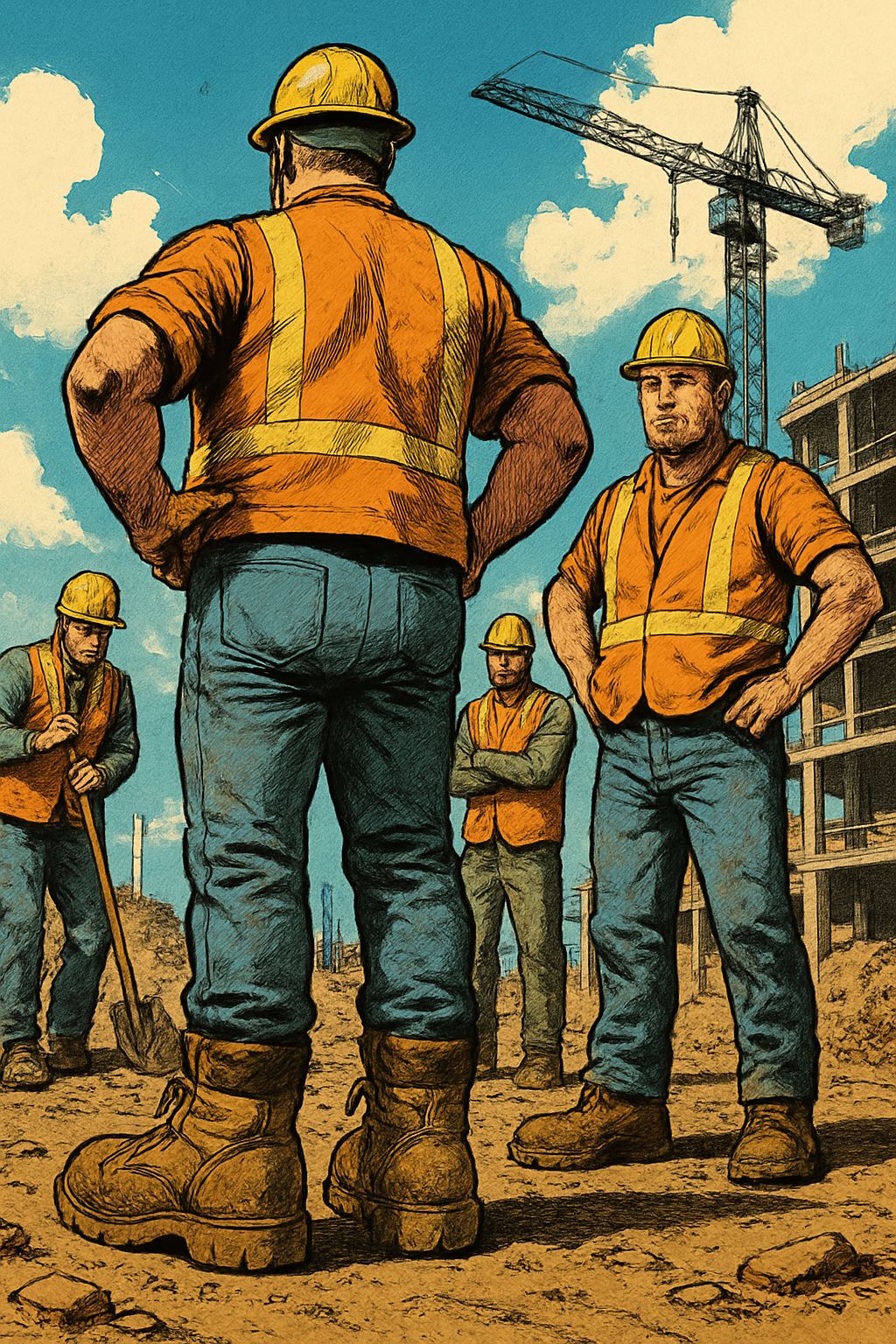
If long days on your feet leave you completely wrecked by dinner, the problem is not your shoes — it is your preparation.
We are trying to help people build bodies and minds that hold up to real life, not just gym metrics. And one of the most common complaints from adults who train regularly is this: they can crush a workout but fall apart after a long day walking a theme park, working a trade show, pulling a long nursing shift, or running a full day of errands. That gap between gym performance and real-life endurance is exactly what this article closes.
Your Body Is Not Built to Suffer Through Long Days
Most fitness programs are built around short, intense efforts — sets, reps, intervals, and rest periods. That kind of training builds impressive strength and cardiovascular fitness, but it rarely builds what your body needs for four to ten hours of continuous upright demand. Standing and walking for hours is a completely different physiological challenge than lifting heavy or running fast.
The solution is not to train harder. It is to train more specifically. When you build lower-body strength, foot and calf capacity, hip control, and walking tolerance together, long days stop feeling like punishment and start feeling manageable. Your body adapts to what you consistently expose it to — and most people never expose it to sustained upright demand until life forces them into it unprepared.
Why Long Days on Your Feet Feel So Brutal
A long day upright asks your body to repeatedly manage pressure, balance, posture, impact, and circulation — all at once, for hours. When you are standing in one place, your calves and small foot muscles work quietly and constantly to keep you stable. When you are walking, your hips, glutes, quads, hamstrings, and trunk all need enough endurance to carry you without breaking down. Most people have enough strength for short bursts, but not enough capacity for the long game.
It Is Not Just About the Feet
Your feet take the blame, but they are often the victim, not the cause. When hips lack strength or control, the feet and lower legs absorb extra stress they were never designed to handle alone. Weak glutes, limited hip mobility, or poor single-leg stability can all show up as tired feet, tight calves, aching arches, or low-back fatigue during long upright days. Training only your feet and ignoring your hips is like patching a leak without fixing the pipe.
Why Cardio Fitness Does Not Protect You
This surprises a lot of people. You can have excellent cardiovascular fitness and still fall apart after hours on your feet. Cardio trains your heart and lungs to handle elevated demand — but it does not specifically build the foot intrinsic muscles, calf endurance, hip stability, or postural strength that long upright days require. Running a 5K and standing for eight hours use overlapping but distinctly different physiological systems. To improve your overall physical preparedness, it’s important to understand why recovery is an overlooked part of training.
- Your calves and feet fatigue first even though your breathing feels fine
- Your lower back stiffens up despite having a strong core in the gym
- Your knees ache even though your leg press numbers are solid
- You feel a deep, bone-tired heaviness in your legs that cardio training never seems to fix
These are classic signs that your training is not matching your life demands. Cardio is valuable, but it is not a substitute for the specific capacity work that long days require.
Why Adults Over 40 Feel It More
After 40, muscle recovery slows, connective tissue becomes less forgiving, and the body loses some of its ability to buffer the repetitive low-grade stress of long upright days. Circulation is slightly less efficient, balance requires more active muscular effort, and the small stabilizing muscles of the feet and ankles tend to weaken if they are not specifically trained. None of this is inevitable — it just means the training needs to be more intentional, not more brutal.
The good news is that the body responds to targeted training at any age. Adults who build this capacity consistently find that long days get dramatically easier within eight to twelve weeks of focused work. The body adapts quickly when you give it the right stimulus.
Build Lower-Body Strength First
If there is one place to anchor your training for long days on your feet, it is lower-body strength. Stronger legs mean less fatigue per step, better shock absorption, and more postural control over hours of standing or walking. The goal here is not to max out your squat — it is to build a strength base that makes everyday demands feel light by comparison.
Think of it this way: if your maximum squat capacity is 100 pounds and you are walking around all day exerting the equivalent of 40 pounds of effort per step cycle, you have plenty of reserve. But if your maximum is only 50 pounds, that same walk is working you at 80 percent capacity — and fatigue comes fast. Building your ceiling makes everything below it easier.
1. Squats and Hinge Patterns
Goblet squats, trap bar deadlifts, Romanian deadlifts, and kettlebell swings build the quads, hamstrings, and glutes that keep you upright and mobile for hours. Aim for two lower-body strength sessions per week with these patterns as your foundation. You do not need to go heavy — moderate loads for clean, controlled reps build the endurance-oriented strength that long days demand. Three sets of eight to twelve reps per movement is a practical target.
2. Step-Ups and Single-Leg Work
Walking is a single-leg sport. Every step you take requires your body to balance, stabilize, and drive forward on one leg at a time — and over thousands of steps, weak single-leg strength becomes a serious problem. Step ups, reverse lunges, and Bulgarian split squats directly train this pattern in a way that bilateral squats simply cannot replicate.
Single-leg work also exposes imbalances between your left and right side that bilateral exercises hide. If one hip or glute is significantly weaker, it will quietly cause the other side to compensate — which accelerates fatigue and increases injury risk over long days. Addressing those imbalances in training pays off immediately in real life.
Exercise
Primary Muscles Trained
Why It Matters for Long Days
Goblet Squat
Quads, glutes, core
Builds upright leg strength and postural endurance
Romanian Deadlift
Hamstrings, glutes, lower back
Strengthens the posterior chain that supports standing posture
Step-Up
Quads, glutes, hip stabilizers
Trains single-leg strength for walking and stair demands
Reverse Lunge
Quads, glutes, hip flexors
Builds balance and stability for uneven terrain
Kettlebell Carry
Core, traps, grip, hips
Trains sustained posture and trunk stability under load
Use this table as your movement menu. You do not need every exercise every session — rotate through them and prioritize the ones that expose your weakest links first. For more insights on improving your physical capabilities, consider how to train your nervous system effectively.
3. Loaded Carries
Farmer carries, suitcase carries, and overhead carries are some of the most underused tools for building real-life standing and walking endurance. They train your trunk, hips, grip, shoulders, and feet simultaneously — exactly the combination that long upright days demand. Start with a weight you can carry for thirty to forty meters without losing posture, and build from there.
Train Your Feet and Calves Directly
Most people never train their feet. They squat, deadlift, and lunge — and assume the feet are getting enough work as a byproduct. They are not. The foot contains 26 bones, 33 joints, and over 100 muscles, tendons, and ligaments. That architecture absorbs every step you take, and if the muscles supporting it are weak, the structure breaks down under hours of standing and walking. Direct foot and calf training is not optional if your goal is to make it through long days without pain.
Why Calf Strength Is Non-Negotiable
- Your calves act as the primary pump that returns blood from your lower legs back toward your heart — when they fatigue, circulation slows and that heavy, swollen feeling sets in fast
- Every heel raise, step, and push-off during walking is powered by your gastrocnemius and soleus — two muscles that can handle enormous volume when trained, but fail quickly when neglected
- Weak calves force your plantar fascia and Achilles tendon to absorb more stress than they are designed for, which is why prolonged standing so often leads to heel pain and arch ache
- Calf endurance — not just calf strength — is what matters for long days, meaning you need to train them with higher rep ranges and sustained time under tension
The single-leg calf raise is the most important exercise most people skip. Stand on one foot at the edge of a step, lower your heel below the step level, then drive all the way up onto your toes with full control. This full range of motion trains both the gastrocnemius and the soleus while also loading your Achilles tendon and foot arch in a way that flat-ground raises simply cannot match. Start with three sets of fifteen to twenty reps per leg, three times per week.
Your soleus deserves special attention here. Unlike the gastrocnemius, the soleus is a slow-twitch dominant muscle built for endurance — it is the muscle that keeps working quietly for hours when you are standing or walking at a moderate pace. Training it specifically with bent-knee calf raises, where you perform the same heel raise motion but with your knee bent to about 45 degrees, isolates the soleus and builds the kind of low-level sustained strength that long days demand.
Progress your calf training gradually. If you jump from minimal calf work to high-volume training, your Achilles tendon and plantar fascia need time to adapt alongside the muscle. Add no more than ten percent more volume per week, and if you feel soreness deep in the heel or along the bottom of the foot, back off for a few days before progressing again. Remember, recovery is an overlooked part of physical preparedness, so ensure you allow adequate time for your body to heal.
Foot Strengthening Exercises That Actually Work
Toe spreads, short foot exercises, towel scrunches, and single-leg balance work are the most practical tools for building foot strength. The short foot exercise — where you actively try to shorten the distance between your heel and the ball of your foot by doming the arch without curling your toes — directly trains the intrinsic foot muscles that support your arch all day long. Practice this standing, then progress to holding it during single-leg balance drills for five to ten seconds at a time. Barefoot training on varied surfaces, even just walking on grass or sand for ten to fifteen minutes a few times a week, adds meaningful foot muscle stimulus that shoes cannot replicate.
Fix Your Hips So Your Feet Stop Compensating
Your hips are the command center of your lower body. When they are strong, mobile, and stable, your knees track properly, your feet land efficiently, and your lower back stays supported. When they are weak or stiff, every structure below — and above — ends up working harder than it should. For anyone who wants to handle long days on their feet without breaking down, hip training is not optional. It is the multiplier that makes everything else work better.
Signs Your Hips Are the Real Problem
The frustrating thing about hip weakness is that it rarely shows up as hip pain first. Instead, it disguises itself as foot fatigue, knee aching, tight calves, or a nagging lower back by the end of a long day. If your feet are always the first thing to give out but your footwear is solid and your calf training is consistent, look upstream to your hips before assuming the problem is local.
A few specific patterns signal that your hips are the weak link. If your knee collapses inward when you step down from a curb or step-up, your glute medius is not doing its job. If your lower back starts aching within two hours of standing or walking, your hip flexors may be pulling your pelvis into an anterior tilt that loads the lumbar spine. If one foot turns out noticeably more than the other while walking, hip external rotation tightness on that side is likely altering your gait mechanics and creating uneven stress all the way down to the foot.
Hip Exercises That Transfer to Real Life
Glute bridges and hip thrusts build raw glute max strength that transfers directly to walking power and postural endurance. Clamshells and lateral band walks target the glute medius — the hip abductor that stabilizes your pelvis every time you take a step. Single-leg Romanian deadlifts combine hip strength with balance demand in a way that closely mirrors the real biomechanical challenge of walking on varied terrain for extended periods.
Do not skip hip flexor work either. Most adults who sit for significant portions of their day arrive at long upright events with shortened, underactive hip flexors that immediately create anterior pelvic tilt under fatigue. Standing hip flexor stretches, kneeling hip flexor stretches with a posterior pelvic tilt, and deadbug progressions that teach your pelvis to stay neutral under moving load all help resolve this pattern before it becomes a pain problem on your next long day.
Ankle and Hip Mobility Matter More Than Stretching
Mobility and stretching are not the same thing. Stretching temporarily increases muscle length. Mobility is your ability to actively control movement through a full range — and it is mobility, not passive flexibility, that protects you during hours of walking, stepping, and postural adjustment. Ankle dorsiflexion is the most commonly restricted joint movement in adults, and it has an outsized effect on how your entire lower body moves. When your ankle cannot flex adequately, your knee collapses inward, your arch flattens, your hip compensates, and your lower back takes extra load — all from one stiff ankle.
To improve ankle mobility, perform ankle dorsiflexion drills daily: kneel on one knee, place your other foot flat on the floor, and drive your knee forward over your toes while keeping your heel grounded. Aim for five sets of ten repetitions per ankle. For hip mobility, the 90/90 hip stretch — sitting on the floor with both knees bent at 90 degrees in opposite directions and rotating between internal and external rotation — is one of the most effective tools for restoring hip range and control simultaneously. Three to five minutes of daily hip mobility work compounds quickly and pays off significantly on long upright days.
A Simple Weekly Training Framework
You do not need to overhaul your entire training schedule to build this capacity. Four to five sessions per week — structured with intention — is enough to create meaningful adaptation within six to eight weeks. The key is balancing strength work, foot and calf training, mobility, and graduated walking exposure without accumulating so much fatigue that recovery becomes the bottleneck.
How to Structure Your Week
A practical weekly structure for building long-day endurance looks like this: two lower-body strength sessions anchored by squats, hinges, step-ups, and loaded carries; one upper-body and core-focused session that includes rows, overhead pressing, and deadbug or plank variations for postural endurance; and two moderate-pace walks of thirty to sixty minutes that build consistent foot and calf exposure without taxing your recovery. Calf and foot strengthening work can be added as a ten-minute block at the end of any session — it does not need its own dedicated day. It’s important to remember that recovery is an overlooked part of physical preparedness.
The walks matter more than most people expect. Consistent, moderate walking — not intense cardio, not sprints — is the specific stimulus that builds the foot, calf, and hip endurance that long days demand. Treat your two weekly walks as training sessions, not afterthoughts. Progress their duration by five to ten minutes every one to two weeks, and occasionally include a longer walk on a weekend to build your peak tolerance gradually.
How to Adjust Based on Your Fitness Level
If you are new to structured training or returning after a long break, start with one strength session per week and two short walks of fifteen to twenty minutes, then add volume every two weeks as your body adapts. If you are already training consistently, add the specific calf, foot, and hip work as a supplement to what you are already doing rather than replacing it. The goal is progressive overload applied to the specific systems that long days tax — and that principle applies regardless of your starting point.
Recovery Habits That Accelerate Adaptation
Training creates the stimulus for adaptation, but recovery is where the adaptation actually happens. If your sleep, nutrition, and daily habits are not supporting your training, your body will stay in a state of low-grade fatigue that makes both your workouts and your long days harder than they need to be. Recovery for long-day endurance is not complicated — but it does require consistency in a few non-negotiable areas.
Sleep and Protein Are Non-Negotiable
Seven to nine hours of sleep per night is not a lifestyle luxury — it is when your muscles, tendons, and connective tissue actually repair the micro-damage accumulated from training and long upright days. Cutting sleep short consistently keeps your body in a state of incomplete recovery, which means fatigue compounds instead of clearing. If you are training for long-day endurance and sleeping six hours or less, you are working against yourself more than any training program can compensate for.
- Aim for 0.7 to 1 gram of protein per pound of bodyweight daily to support muscle repair and adaptation
- Prioritize protein in your first meal after a long training day or an unexpectedly demanding upright day
- Total calorie intake matters too — chronic undereating slows tissue repair and amplifies fatigue
- Hydration directly affects how your muscles and connective tissues feel during long days — even mild dehydration increases perceived fatigue and muscle cramping risk
- Magnesium-rich foods like dark leafy greens, pumpkin seeds, and legumes support muscle relaxation and sleep quality simultaneously
Protein timing does not need to be complicated. Getting enough total protein across the day — spread across three to four meals — is far more important than obsessing over exact post-workout windows. If your feet and calves are regularly sore and slow to recover, look at your daily protein intake before assuming your training is too hard. Underfeeding is one of the most common and most overlooked reasons adults feel perpetually run down despite consistent effort.
Stress management belongs in this category too. Chronic psychological stress elevates cortisol, impairs sleep quality, delays tissue repair, and makes your body more sensitive to physical discomfort — all of which make long upright days feel harder than they should. Training is itself a stress, and when life stress is already high, your total recovery load increases. On high-stress weeks, protect your sleep and nutrition even more carefully, and consider reducing training intensity rather than pushing through accumulated fatigue.
Footwear Strategy During and After Long Days
Your shoes influence how much stress your feet, calves, and knees absorb with every step — but the goal of good footwear is to support your training, not replace it. The best shoe for long days is one that provides enough cushioning and structure to reduce unnecessary fatigue without creating so much artificial support that your foot muscles stop working entirely. Over-supporting the foot long-term actually weakens the intrinsic foot muscles that protect you when the shoes come off.
- Look for a wide toe box that allows your toes to splay naturally — this activates the foot’s natural shock-absorption mechanism
- Avoid sudden changes in heel drop, especially going from high-heeled shoes to minimal footwear — transition gradually over four to eight weeks
- Rotate between two pairs of shoes on long upright days when possible — different cushioning profiles load your foot tissues differently and reduce repetitive stress
- Anti-fatigue mats on hard floors make a measurable difference for people who stand in one place for extended periods
- After long days, transition into supportive recovery footwear like structured sandals rather than immediately walking barefoot on hard floors
Compression socks are worth considering for anyone who regularly experiences heavy, swollen legs after long days. Graduated compression — tighter at the ankle, looser at the calf — assists venous return and reduces the fluid buildup that makes legs feel thick and tired by late afternoon. Research supports their use for people who stand or walk for prolonged periods, particularly those with physically demanding jobs like nursing, food service, or retail.
Insoles can help in the short term, particularly for people with flat arches or significant overpronation. However, insoles work best as a bridge strategy while your foot strength is being built — not as a permanent crutch. As your intrinsic foot muscles get stronger through direct training, you will likely find you need less artificial arch support over time, not more.
After especially long days, elevating your legs above heart level for ten to fifteen minutes accelerates fluid drainage from your lower legs, reduces that heavy swollen sensation, and speeds up how quickly you feel recovered. It costs nothing, requires no equipment, and makes a noticeable difference — especially if the next day involves another long stretch on your feet.
Signs Your Training Is Not Matching Your Life Demands
You can tell your training has a mismatch with your real-life demands when any of these patterns show up consistently: your calves or feet are always the first to fatigue regardless of how much you train your legs; you can work out hard but a long day of errands still wipes you out completely; you avoid stairs at the end of a heavy training week because your legs are too sore; or you only train machines and controlled movements but struggle with the balance, carrying, and postural demands of real-world standing and walking. These are not signs of weakness — they are diagnostic signals pointing to exactly which gaps in your training need to close first. It’s important to recognize that recovery is an overlooked part of physical preparedness, which can help address these gaps effectively.
Frequently Asked Questions
Here are the most common questions people ask when they start training specifically for long days on their feet — answered directly so you can apply the information immediately.
How long does it take to train your body to handle long days on your feet?
Most people notice meaningful improvement within six to eight weeks of consistent, targeted training. That includes reduced end-of-day foot and calf fatigue, better postural endurance, and faster recovery after long upright days. Significant structural adaptation in tendons and connective tissue takes longer — typically twelve to sixteen weeks — which is why consistency matters more than intensity in this type of training.
The key variable is how specifically your training matches the demands you are preparing for. General gym training produces general fitness. When you add direct foot strengthening, calf endurance work, single-leg strength, and graduated walking exposure, the adaptation becomes targeted — and the results show up much faster in real-world performance than in gym metrics alone.
Is walking enough to prepare for a long shift on your feet?
Walking is an important and often undervalued training tool for building foot, calf, and hip endurance — but it is not sufficient on its own for most people preparing for genuinely long or demanding upright days. Walking at a moderate pace does not load the calves or glutes heavily enough to build the strength reserve that makes long days feel easy rather than survivable. It also does not address the balance, single-leg stability, or postural endurance that accumulated hours of standing and walking demand.
Think of walking as a complement to strength training, not a replacement for it. Two to three moderate walks per week — thirty to sixty minutes each — combined with two lower-body strength sessions and direct calf and foot work creates a far more complete preparation than walking alone. If you only have capacity for one type of training right now, prioritize strength work and use your daily life walking as your endurance stimulus until you can add more structure.
What muscles should I focus on most for standing endurance?
The highest-priority muscles for standing endurance are the calves — specifically the soleus for sustained low-level standing and the gastrocnemius for walking and push-off power — followed closely by the glute max and glute medius for single-leg stability and walking drive. The intrinsic foot muscles that support the arch come next, then the hip flexors and deep core muscles that maintain postural alignment over hours of upright demand. Most people are significantly undertrained in all of these areas relative to how much they ask of them in real life.
If you can only train three things, train your soleus with bent-knee calf raises, your glute medius with lateral band walks and single-leg work, and your foot intrinsics with short foot exercises and barefoot balance drills. Those three targets address the most common failure points in long-day endurance and will produce the most noticeable improvement in the shortest timeframe.
Can better shoes replace strength training for foot fatigue?
Approach
What It Does
What It Cannot Do
Better shoes / insoles
Reduces impact, supports arch, improves comfort short-term
Does not strengthen foot muscles, calves, hips, or build endurance capacity
Strength training
Builds the muscles, tendons, and joints that absorb stress over hours
Does not immediately reduce discomfort the way cushioning does
Both combined
Short-term comfort support while long-term capacity is being built
Still requires consistent progressive training to produce lasting results
Better shoes reduce the immediate discomfort of long days — and that matters, especially if you are on your feet every day for work. But shoes address the symptom, not the cause. If your foot muscles are weak, your calves fatigue easily, and your hips lack stability, no amount of cushioning or arch support will fix the underlying capacity problem. The shoe compensates; the training solves.
In practice, the best approach is to use supportive footwear as a short-term comfort strategy while simultaneously building the strength and endurance your feet and legs actually need. Over time, as your foot strength improves, you will likely find that you can tolerate a wider range of footwear without discomfort — because the muscles doing the work are finally strong enough to do it.
One important caution: maximum-cushion shoes with high arch support can actually reduce the proprioceptive feedback your feet receive from the ground, which over time can slow the development of foot intrinsic strength. This does not mean you need to go barefoot or wear minimal footwear immediately — but it does mean the long-term goal should be building a foot strong enough to need less external support, not more of it. For more insights on how your body adapts, consider learning about training your nervous system.
How do I recover faster after an unexpectedly long day on my feet?
Start with elevation. Lying on your back and propping your legs up against a wall or on a stack of pillows for ten to fifteen minutes immediately after a long day accelerates venous return, reduces lower leg swelling, and noticeably decreases that heavy, aching sensation that builds up over hours of standing and walking. This single habit costs nothing and works faster than most people expect.
Hydration and protein are your two most important nutritional recovery tools. Long upright days — especially in warm environments or when carrying loads — deplete fluid and electrolytes faster than most people realize. Drink water consistently throughout the day rather than trying to catch up in the evening. Get a protein-rich meal within two hours of finishing your long day to give your muscles the raw material for overnight repair.
Gentle movement the following morning — a ten-minute walk, light mobility work, or a brief calf and hip routine — accelerates recovery more effectively than complete rest. Complete inactivity after a long day tends to stiffen tissues and extend soreness. Light, non-taxing movement promotes circulation, reduces stiffness, and helps your body clear the metabolic byproducts of sustained muscular effort. Keep it easy — the goal is circulation, not training stimulus.




Leave a Reply