
Article At A Glance
- Signaling early, maintaining proper following distance, and respecting speed limits form the foundation of courteous driving
- Distracted driving—even for a few seconds—dramatically increases your crash risk
- Yielding to pedestrians and cyclists isn’t just polite, it’s often legally required
- Left Lane etiquette – slower drivers should stay to the right and let others pass safely
- Small adjustments in how you drive can significantly reduce accidents and road rage incidents
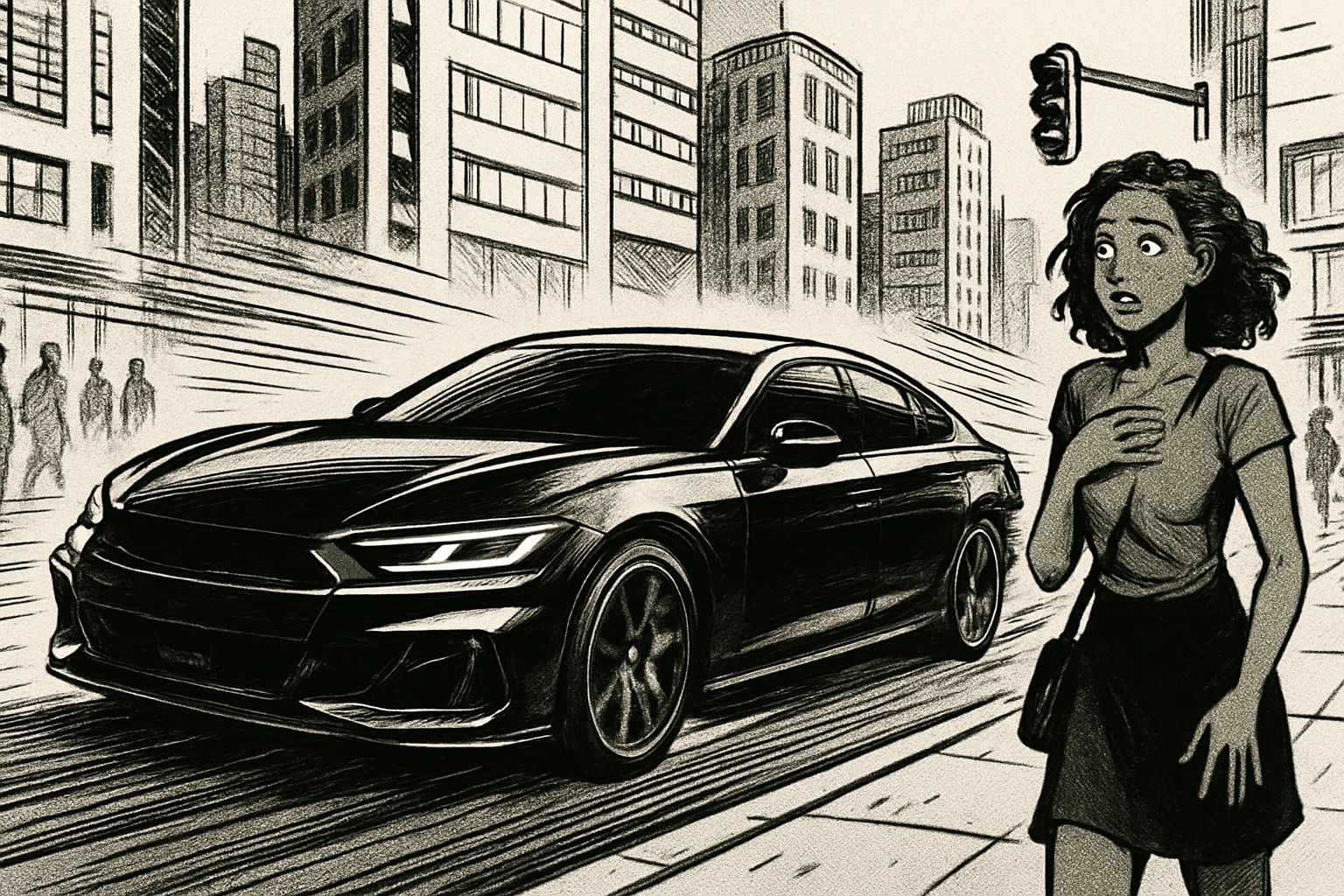
One split-second decision—signaling a lane change, easing off the gas, or simply waiting your turn—can be the difference between a close call and a collision.
Safe and courteous driving isn’t about being perfect behind the wheel. It’s about building habits that protect you, your passengers, and everyone else sharing the road with you. Experts have spent years breaking down exactly which habits matter most, and the good news is they’re simpler than most people think.
Why Courteous Driving Saves Lives Every Day
Courtesy on the road isn’t just good manners—it’s a safety mechanism. When drivers communicate clearly and anticipate each other’s moves, accidents drop.
Think about the last time someone cut you off without signaling, or tailgated you so closely you could read their bumper sticker in your rearview mirror. Frustrating, right? Now think about the opposite: a driver who waves you into their lane with a friendly nod, or slows down to let a pedestrian cross without hesitation. That’s the kind of driving that keeps roads safer for everyone.
Signal Your Every Move Before You Make It
Your turn signal is one of the simplest tools you have, yet it’s also one of the most underused. Every time you change lanes, turn, or pull over, that blinking light tells the drivers around you exactly what to expect. Skip it, and you’re essentially asking other drivers to read your mind.
When to Use Turn Signals for Lane Changes
Signal at least three to five seconds before changing lanes. This gives drivers behind and beside you enough time to adjust their speed or position. Flicking your signal on half a second before swerving over doesn’t count—it’s more of an afterthought than a warning.
Signaling Before Turns and Pulling Over
The same rule applies when you’re turning at an intersection or pulling over to the curb. Signal early enough that the car behind you has time to react, especially in heavier traffic where sudden stops can trigger a chain reaction.
A few scenarios where early signaling matters most:
- Merging onto a highway where speeds are higher and reaction time is shorter
- Turning into a driveway or parking lot where pedestrians might not expect you to stop
- Pulling over for an emergency vehicle, where clear communication prevents confusion
In each case, the goal is the same: give others enough warning to adjust safely.
How Early Signaling Prevents Rear-End Crashes
Rear-end collisions often happen because the driver in front made an unexpected move. When you signal early, you give the driver behind you time to slow down gradually instead of slamming on the brakes. This small habit alone prevents a significant number of fender-benders every year.
Respect the Speed Limit at All Times
Speed limits aren’t arbitrary numbers picked out of thin air. They’re calculated based on road design, visibility, traffic patterns, and the likelihood of pedestrians or cyclists being present. Ignoring them doesn’t just risk a ticket—it increases your stopping distance and reduces your reaction time.
Here’s the math that matters: a car traveling at 40 mph needs significantly more distance to stop than one traveling at 25 mph, even with identical brakes and road conditions. That extra distance is often the gap between stopping safely and causing a collision.
Speeding also makes you less predictable to other drivers, which undermines the very courtesy we talked about earlier. When you match the flow of traffic and respect posted limits, you become part of a smoother, safer system instead of a wildcard everyone else has to account for.
- Reduced reaction time when sudden obstacles appear
- Increased severity of crashes due to higher impact speeds
- Greater difficulty merging smoothly with traffic flow
How Speeding Puts Everyone at Risk
It’s not just your own safety on the line. Pedestrians, cyclists, and other drivers are all affected by how fast you’re moving. Higher speeds mean less time to react to a child darting into the street or a car braking suddenly ahead of you. Learn more about the dangers of road rage and aggressive driving to understand how speeding can escalate situations on the road.
Adjusting Speed for Weather and Traffic Conditions
Speed limits represent maximum speeds under ideal conditions—not a target you must hit regardless of rain, fog, or heavy traffic. Slowing down below the posted limit during poor visibility or slick roads isn’t overly cautious; it’s smart driving that accounts for real-world variables the speed limit sign can’t.
Rules of the “Fast Lane” or Left Lane (USA)
Keep Right – Slower Traffic Yields: “All 50 U.S. states enforce some form of “keep right” or “slowpoke” law. If you are driving slower than the normal flow of traffic, you must stay in the right lanes. Many states issue fines for drivers who “hog” the left lane.” Many people are unfamiliar with this concept. Depending on the location, drivers may not be exposed to high speed driving with multiple lanes of traffic and a “fast lane.” Please stay to the right and let other drivers pass safely.
Keep Your Distance: The Tailgating Problem
Few driving habits spark more frustration than tailgating. Riding someone’s bumper doesn’t make traffic move faster—it just raises everyone’s stress levels and increases the odds of a rear-end collision if the car ahead brakes suddenly.
Following too closely eliminates your margin for error entirely. If the driver in front of you hits their brakes unexpectedly, even a split-second delay in your reaction can result in a crash. And at higher speeds, that margin matters even more.
Why Tailgating Is Dangerous and Disrespectful
Beyond the safety risk, tailgating is just plain rude. It pressures the driver ahead, often causing them to speed up unnecessarily or make hasty lane changes to get out of your way. Neither outcome makes the road safer. It’s important to rely on observation versus assumption to maintain safe driving practices.
How Much Following Distance You Actually Need
The widely recommended guideline is the three-second rule: pick a fixed point on the road, like a sign or overpass, and make sure at least three seconds pass between when the car ahead of you passes it and when you do. In poor weather or heavy traffic, extend that to four or five seconds for extra cushion.
Extra Space Requirements at Higher Speeds
Highway driving changes the math entirely. At 65 mph, your car covers nearly 100 feet per second, which means a three-second gap translates into a much longer physical distance than it would in city traffic. Add in longer stopping distances at highway speeds, and that extra space becomes essential rather than optional.
Headlight Etiquette Every Driver Should Know
Headlights do more than light up the road ahead of you—they communicate your presence to everyone else on it. Using them correctly, especially during dusk, dawn, fog, or heavy rain, helps other drivers spot you before visibility becomes a problem. Skipping this step, even for a short drive, puts you at a disadvantage you might not notice until it’s too late.
Proper headlight use also means paying attention to how your lights affect other drivers. Bright, improperly aimed, or high-beam headlights can temporarily blind oncoming traffic, creating a dangerous few seconds where the other driver can’t see the road at all.
When to Dim Your High Beams
Switch to low beams as soon as you spot an oncoming vehicle, typically when it’s within 500 feet. The same courtesy applies when you’re following another car closely at night—keep your beams low so you’re not blinding the driver through their rearview mirror. It only takes a second to dim your lights, but it can prevent the driver ahead from losing their sense of the road entirely.
Yielding to Pedestrians and Cyclists
Cars might dominate the road, but pedestrians and cyclists have just as much right to be there. Yielding to them isn’t just a courtesy; in most places, it’s the law. Drivers who treat crosswalks and bike lanes as suggestions rather than rules create dangerous situations for the most vulnerable people on the road.
This becomes especially important near schools, parks, and residential neighborhoods where foot and bike traffic tend to be heaviest. Slowing down and staying alert in these areas isn’t about following rules for the sake of it—it’s about recognizing that a pedestrian or cyclist has far less protection than you do inside a vehicle.
Crosswalk Rules You Cannot Ignore
When a pedestrian is in a crosswalk, whether marked or unmarked at an intersection, you’re required to stop and let them cross. This applies even if they haven’t fully stepped into the street yet but are clearly waiting to cross. Rolling through a crosswalk because you’re in a hurry isn’t just inconsiderate—it’s one of the leading causes of pedestrian injuries in urban areas. Learn more about overcoming urban challenges that affect pedestrian safety.
Patience here matters more than most drivers realize. A few extra seconds spent waiting for someone to finish crossing costs you almost nothing, but the alternative—a pedestrian collision—carries consequences that last far longer than any delay.
Safe Passing Distance for Cyclists
Most states require drivers to leave at least three feet of space when passing a cyclist. This buffer accounts for sudden wobbles, potholes, or debris that might cause a cyclist to shift position unexpectedly. Squeezing by too closely, especially at higher speeds, leaves no room for error on either side.
Put the Phone Down: Distracted Driving Dangers
Distracted driving remains one of the most preventable causes of crashes on the road today. Texting, scrolling, or even glancing at a notification takes your eyes off the road for several seconds—and at highway speeds, that’s enough time to travel the length of a football field without actually watching where you’re going.
Why Even a Few Seconds of Distraction Matters
Your brain can’t fully multitask while driving, no matter how confident you feel behind the wheel. Glancing at a phone screen pulls your attention away from traffic patterns, pedestrians, and sudden hazards, all of which require split-second reactions. Even hands-free systems can create a mental distraction that slows your response time.
The safest approach is simple: keep your phone out of reach while driving, whether that means placing it in the glovebox, using Do Not Disturb mode, or relying on a passenger to handle calls and texts. If a call or message truly can’t wait, pull over to a safe location first.
Patience Behind the Wheel: Merging and Intersections
Merging lanes and busy intersections tend to bring out the worst in impatient drivers. Rushing to beat another car into a gap or refusing to let someone merge ahead of you doesn’t save meaningful time—it just increases the odds of a collision and raises stress levels for everyone involved. For a deeper understanding of this behavior, take a closer look at road rage and its impact on driving safety.
Courteous merging works best when drivers follow the “zipper method,” alternating turns between lanes as they funnel into one. This approach keeps traffic moving smoothly instead of creating the stop-and-go bottleneck that happens when drivers refuse to yield.
Intersections present a similar challenge, especially four-way stops where it’s not always obvious who arrived first. Clear communication, like a quick wave or eye contact, often resolves confusion faster than waiting for someone to inch forward. Understanding the difference between observation and assumption can also help in navigating these situations more effectively.
- Use the zipper method when merging into congested traffic
- Make eye contact or gesture clearly at four-way stops to avoid confusion
- Avoid blocking intersections even when your light is green, if traffic ahead isn’t moving
Letting Vehicles Merge Without Honking
When you see a car signaling to merge into your lane, easing off the gas slightly to create space costs you almost nothing in travel time. Honking or speeding up to close the gap, on the other hand, creates unnecessary tension and increases the risk of a collision.
A driver who lets just one car merge smoothly often sets off a chain reaction of courtesy, with other drivers following suit down the line.
This small act of patience ripples outward more than most people realize. Traffic engineers have long noted that aggressive merging behavior tends to create stop-and-go patterns that slow everyone down, while cooperative merging keeps traffic flowing at a more consistent pace.
Next time you’re tempted to close the gap and block a merging car, remember that letting them in usually costs you three to five seconds at most—a small price for smoother, safer traffic overall.
Understanding Right-of-Way at Crossroads
At a four-way stop, the general rule is that the first car to arrive has the right of way, and if two cars arrive at the same time, the vehicle on the right typically goes first. Confusion at these intersections usually comes from drivers being unsure of the rule or hesitant to assert their turn, which can lead to awkward standoffs or, worse, both cars proceeding at once.
Avoiding Aggressive Driving Habits
Aggressive driving rarely saves time, yet it remains one of the most common triggers for road rage incidents. Tailgating, weaving between lanes, or laying on the horn the instant a light turns green all contribute to a hostile driving environment that puts everyone at higher risk.
The irony is that aggressive maneuvers often backfire. Cutting someone off to gain a car length ahead typically results in both drivers braking harder than necessary, which slows traffic down rather than speeding it up. Patience, on the other hand, keeps traffic flowing steadily and reduces the chance of a minor frustration escalating into a dangerous confrontation.
If you notice yourself gripping the wheel tighter or feeling your frustration rise, that’s usually a sign to ease off rather than push forward. Taking a breath, lowering your speed slightly, and reminding yourself that arriving two minutes later rarely matters can defuse the tension before it turns into a risky decision.
The Real Benefits of Driving Courteously
Here’s a quick breakdown of how courteous habits translate into measurable benefits:
|
Courteous Habit |
Direct Benefit |
|---|---|
|
Early signaling |
Reduces rear-end collisions and confusion |
|
Maintaining following distance |
Provides reaction time to avoid crashes |
|
Yielding to pedestrians |
Prevents pedestrian injuries and legal violations |
|
Letting vehicles merge |
Keeps traffic flowing smoothly, reduces road rage |
How Good Etiquette Reduces Accidents
Most accidents stem from predictability failures—one driver doing something the other didn’t expect. When courteous habits like signaling, yielding, and maintaining safe distances become second nature, the entire system of traffic becomes more predictable, and predictable traffic is safer traffic.
This is why defensive driving courses emphasize etiquette alongside technical skills. Knowing how to brake properly matters, but so does knowing how to communicate your intentions clearly to the drivers around you.
Why Patience Lowers Stress for Everyone on the Road
Stress behind the wheel compounds quickly. One frustrated driver can trigger a chain reaction of honking, tailgating, and erratic lane changes that spreads to everyone nearby. Choosing patience instead breaks that cycle before it starts.
Over time, drivers who consistently practice patience report feeling less exhausted after their commutes. Reacting to aggression with calm, measured responses takes far less mental energy than engaging in a tit-for-tat battle with another frustrated driver.
Safe and Courteous Driving Starts With You
Every habit covered here, from signaling early to yielding patiently, comes down to one simple choice: deciding to drive with awareness and respect for everyone else on the road. Programs like DriveSafe Academy exist to help reinforce these habits, but ultimately, the change starts with the decisions you make every time you get behind the wheel.
Frequently Asked Questions
Here are a few common questions drivers ask about staying safe and courteous on the road. For those concerned about aggressive behavior, understanding road rage can be crucial to maintaining safety.
What Is the Most Important Rule of Courteous Driving?
Signaling your intentions early is often considered the single most important habit, since it allows every other driver around you to anticipate your next move and react safely.
How Far Should I Stay Behind the Car in Front of Me?
A minimum of three seconds of following distance is recommended in normal conditions, with four to five seconds suggested during poor weather or heavy traffic.
Why Should I Yield to Pedestrians Even When I Have the Right of Way?
Pedestrians have far less protection than someone inside a vehicle, so yielding even when technically not required reduces the risk of serious injury and reflects basic road courtesy. For more insights on driving behavior, take a closer look at road rage.
Is It Ever Okay to Use My Phone While Stopped at a Red Light?
Most traffic laws classify phone use at a stoplight as distracted driving, since lights can change unexpectedly and attention needs to return to the road immediately. It’s best to wait until you’ve parked safely before checking your phone.
How Do I Know When to Dim My High Beams?
Switch to low beams as soon as you see an oncoming vehicle, typically within about 500 feet, and do the same when following closely behind another car at night to avoid blinding the driver ahead.



Leave a Reply