
Article At A Glance
- DIY soap and detergent kits let you control every ingredient, cutting out synthetic chemicals that can irritate skin and harm the environment.
- A simple powdered laundry detergent can be made with just three ingredients: grated bar soap, borax, and washing soda — all of which are inexpensive and widely available.
- Whether you choose powder or liquid, homemade detergents work in both standard and HE washing machines when made correctly.
- There’s a surprisingly easy salt-based detergent variation that requires zero soap grating — keep reading to find out how it works.
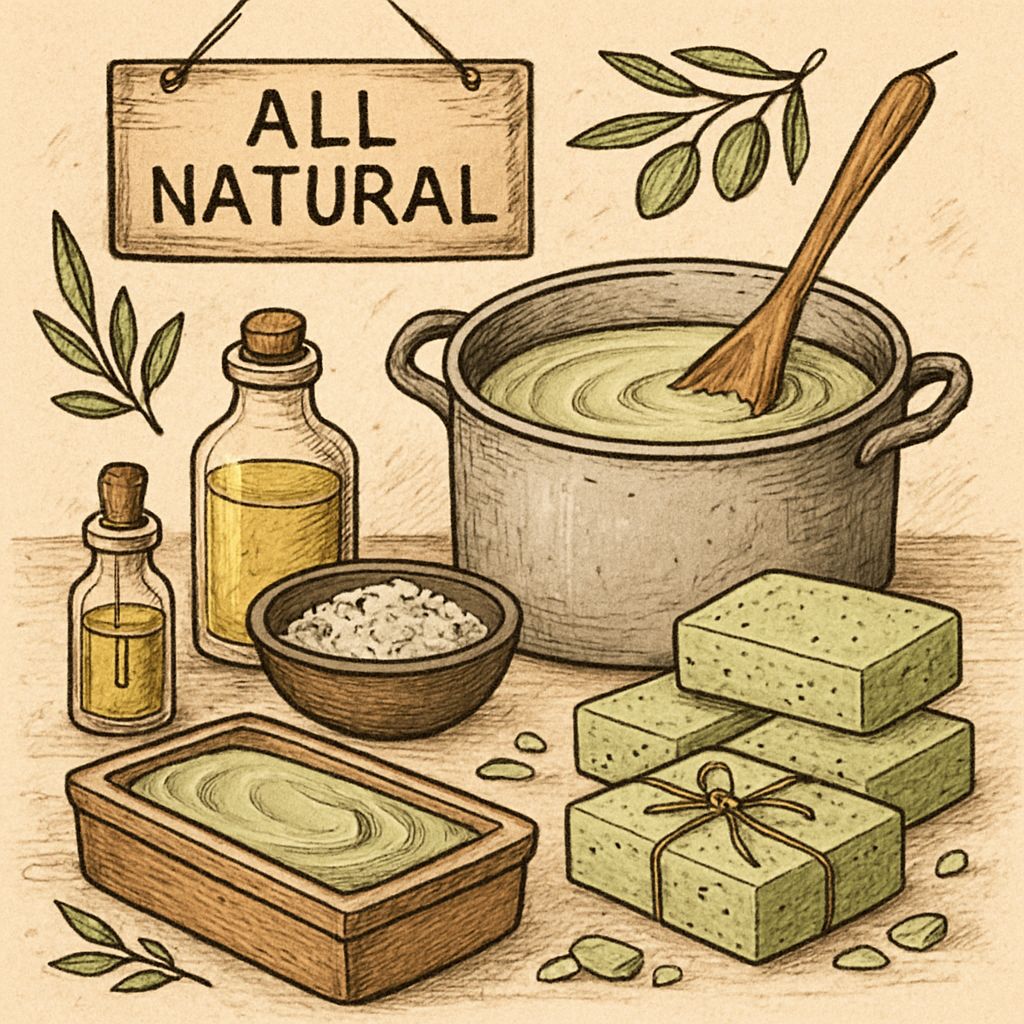
Making your own soap and detergent is one of those rare skills that saves money, reduces chemical exposure, and feels genuinely satisfying every single time you do laundry.
Most commercial detergents contain synthetic fragrances, optical brighteners, and surfactants that aren’t always fully disclosed on the label. When you switch to a DIY soap and detergent kit, you decide exactly what goes in — and more importantly, what stays out. For those who want to go deeper into natural soap-making beyond laundry, DIY Natural is a well-established resource covering everything from homemade bar soap to liquid castile formulas.
DIY Soap and Detergent Kits Cut Costs and Chemicals at Once
The financial case for going DIY is hard to ignore. Writing for the North Carolina State University Sustainability Office, Carla Davis highlights that homemade detergents cost significantly less per load than their commercial counterparts. When you factor in the ingredient overlap — borax, washing soda, and bar soap all pull double duty across multiple recipes — the savings compound quickly. You’re essentially buying a small ingredient kit once and stretching it across dozens of batches.
Beyond the wallet, there’s a real health argument here too. Many conventional detergents include substances not fully listed on the label, making it nearly impossible to know what’s actually touching your clothes — and your skin. DIY formulas give you complete transparency, which matters especially if you or someone in your household has sensitive skin or allergies.
Core Ingredients in Every Natural Soap and Detergent Kit
Every effective DIY detergent kit is built on a short list of hardworking, mostly natural ingredients. Once you understand what each one does, you can mix and match recipes with confidence rather than just following instructions blindly.
Borax, Washing Soda, and Baking Soda: What Each One Does
Borax is a naturally occurring mineral salt that boosts cleaning power by softening water and helping to remove stains. It works by raising the pH of your wash water, which makes it harder for dirt and grease to cling to fabric fibers. It’s not the same as boric acid, and when used as directed in laundry recipes, it’s considered safe for general household use.
Washing soda (sodium carbonate) is a stronger alkaline agent than baking soda and is the real muscle in most DIY powder recipes. It cuts through grease and neutralizes odors at the molecular level. You’ll find it in almost every homemade laundry formula for good reason — it does heavy lifting that gentler ingredients simply can’t match.
Baking soda (aluminum-free versions are preferred in natural recipes) is milder and works well as a deodorizer and water softener. Some recipes use it in place of or alongside washing soda for a gentler formula that’s easier on delicate fabrics. It also adds a light texture to powder detergents that makes them easier to measure and pour. For more ideas, check out these homemade all-natural cleaning recipes.
Castile Soap vs. Bar Soaps Like Fels-Naptha, Zote, and Dr. Bronner’s
Your choice of soap base makes a meaningful difference in how your DIY detergent performs. Castile soap, traditionally made from olive oil, is the gentlest option and works beautifully for those with sensitive or reactive skin. Dr. Bronner’s Pure-Castile Bar Soap is one of the most popular choices because it lathers well, rinses clean, and comes in unscented varieties perfect for natural recipes.
Fels-Naptha and Zote are heavier-duty bar soaps engineered specifically for laundry. Fels-Naptha is particularly effective on protein-based stains like grass and blood, while Zote — a Mexican laundry soap made with coconut oil and citronella — has a cult following among DIY detergent makers for its cleaning consistency and mild scent. Both grate easily and dissolve well in hot water.
Optional Additives That Boost Cleaning Power Naturally
Once you have your base formula dialed in, a few optional add-ins can take your homemade detergent to the next level. White vinegar acts as a natural fabric softener when added to the rinse cycle — it breaks down detergent residue and leaves fabric feeling softer without synthetic chemicals. OxiClean (sodium percarbonate-based) can be blended into powder recipes for an extra burst of stain-fighting oxygen power. And essential oils — lavender, tea tree, lemon, or eucalyptus — are a popular swap for synthetic fragrance, with some like tea tree oil offering mild antibacterial properties on top of a pleasant scent.
Tools You Need to Get Started
The good news is that you don’t need a lab or specialty equipment to start making your own soap and detergent. Most tools are already in your kitchen. If you’re interested in sustainable practices, you might also find these clever DIY hacks for countertop compost collectors useful.
Basic Equipment: Graters, Measuring Tools, and Storage Containers
A standard box grater or a food processor with a grating attachment is your most important tool — it’s what turns a solid bar of Fels-Naptha or Zote into the fine flakes needed for powder and liquid recipes. Finer grating means faster dissolving, so use the smallest grating surface you have. Beyond that, you’ll need accurate measuring cups and spoons, a large mixing bowl, and a long-handled spoon or whisk for blending dry ingredients evenly.
For storage, airtight containers are non-negotiable. Moisture is the enemy of powdered detergent — even small amounts of humidity can cause clumping that makes your formula hard to measure. Glass mason jars, BPA-free plastic containers with tight-fitting lids, or repurposed laundry powder tubs all work well. Consider keeping a dedicated set of measuring cups and a grater specifically for detergent-making to avoid cross-contamination with food prep tools.
How to Make Natural Laundry Detergent Powder
Powdered detergent is the easiest format to start with — it stores longer, measures easily, and requires no heat or cooking. There are a few proven recipes worth knowing, each with slightly different strengths depending on your priorities. For more ideas, you can explore homemade all-natural cleaning recipes that might suit your needs.
The Utah State Cooperative Extension Powder Recipe
Utah State Cooperative Extension’s tried-and-tested powdered laundry detergent recipe keeps things refreshingly simple. You’ll need 2 cups of grated bar soap (Fels-Naptha or Zote work best here), 1 cup of borax, and 1 cup of washing soda. Grate the bar soap as finely as possible, combine all three ingredients in a large bowl, and mix thoroughly until evenly blended. Store in an airtight container and use 2 tablespoons per load.
The Boots and Hooves Homestead Salt-Based Variation
If grating soap sounds like more effort than you want to put in, the salt-based all-natural powder variation is for you. This formula skips bar soap entirely and instead combines washing soda, aluminum-free baking soda, Epsom salt, and sea salt into a single dry mix. A few drops of your preferred essential oil can be blended in for fragrance, and the result is a surprisingly effective, genuinely minimal-ingredient detergent. For more eco-friendly home solutions, check out these clever DIY hacks.
The salt components in this recipe aren’t just filler — they actively soften water and help suspend dirt particles so they rinse away cleanly. Epsom salt in particular adds a gentle abrasive quality that helps work stains loose from fabric fibers during the wash cycle. It’s an excellent starting point for anyone who wants to ease into DIY detergent-making without the extra steps.
How Much Powder to Use Per Load
For most standard washing machines, 2 tablespoons of homemade powder detergent per load is the right amount. This is considerably less than what commercial detergents recommend, largely because DIY formulas don’t contain the fillers and bulking agents that pad out store-bought products. Using too much can actually leave residue on your clothes, so resist the urge to over-measure.
For heavily soiled loads or hard water conditions, you can increase to 3 tablespoons, but start with the standard amount and adjust based on your results. Hard water reduces cleaning efficiency across the board, so if you’re in a hard water area, bumping up the borax content in your base recipe by half a cup can make a noticeable difference in your wash results.
How to Make Liquid Laundry Detergent at Home
Liquid detergent is a favorite for those who pre-treat stains directly or prefer a format that dissolves instantly even in cold water washes. The process takes a bit more time than powder but results in a concentrated formula that lasts for weeks per batch.
The basic liquid approach involves dissolving grated bar soap in hot water first, then blending in your borax and washing soda. What you end up with is a concentrated liquid base that gets diluted further before storage. The North Carolina State University Sustainability Office recipe, shared by Carla Davis, is one of the most widely referenced starting points for DIY liquid detergent. For those interested in eco-friendly practices, you might also explore clever DIY hacks for countertop compost collectors.
Step-by-Step Liquid Recipe Using Castile Soap and Borax
Here’s the complete liquid laundry detergent recipe based on the North Carolina State University formula:
- Grate one full 4.5-oz bar of castile soap into fine flakes.
- Bring 1 quart of water to a boil, then reduce to low heat.
- Add the grated soap flakes and stir continuously until fully dissolved.
- Pour the soap mixture into a clean bucket or large container.
- Add 1 cup of borax and 1 cup of washing soda, stirring until both are completely dissolved.
- Pour in an additional 2 gallons of water and stir the entire mixture thoroughly.
- Allow to cool completely before transferring to airtight storage containers.
- Use approximately ½ cup per standard load.
For fragrance, add 10 to 15 drops of essential oil — lavender for a clean scent, lemon for a fresh boost, or tea tree for mild antibacterial properties — after the mixture has cooled. Adding essential oils while the liquid is still hot causes them to evaporate before they can do anything useful.
How to Fix Clumping and Gel Texture in Stored Liquid Detergent
Homemade liquid detergents almost always gel up or turn thick and gloppy during storage — this is completely normal and not a sign that something went wrong. The natural starches and proteins in castile soap interact with the alkaline washing soda over time, creating a thicker consistency. Simply stir or shake the container vigorously before each use and the texture will loosen up immediately.
If your batch becomes too thick to pour easily, add a small amount of warm water and stir until it reaches a workable consistency. Storing your liquid detergent in a container with a wide mouth makes stirring significantly easier. A dedicated long-handled spoon kept right next to the container is a simple habit that solves this problem every time.
How to Make Basic Homemade Hand and Body Soap
Moving beyond laundry, making your own hand and body soap opens up a whole new level of control over what touches your skin every single day. The process is more involved than detergent-making but deeply rewarding — and once you understand the basics, the creative possibilities are almost endless.
Cold-process soap-making is the most common DIY method, and it involves combining a lye solution with oils to trigger a chemical reaction called saponification. The result, after a curing period, is a firm, long-lasting bar of soap with none of the synthetic detergents found in most commercial body washes and bar soaps.
Key Ingredients for a Simple Natural Bar Soap
A foundational natural bar soap recipe typically centers on a combination of coconut oil for lather and hardness, olive oil for moisturizing properties, and sodium hydroxide (lye) as the saponifying agent. Lye is a required component — there is no way to make true soap without it. However, once saponification is complete, no active lye remains in the finished bar. For those concerned about handling lye safely, DIY Natural’s detailed guide on sodium hydroxide covers the full safety process step by step.
Optional additions like shea butter add a luxurious creaminess, while castor oil in small amounts (around 5% of total oils) dramatically boosts lather. Clays such as kaolin can be mixed in for a gentle exfoliating effect, and botanicals like dried lavender or chamomile flowers add visual appeal and mild skin-soothing properties to finished bars.
Why Low Suds Does Not Mean Low Cleaning Power
One of the biggest surprises for first-time homemade soap users is the reduced lather compared to commercial products. Natural bar soaps simply don’t foam as aggressively as store-bought options — and that’s actually a good thing. Commercial soaps and body washes are loaded with synthetic foaming agents like sodium lauryl sulfate (SLS) that create big bubbles but strip your skin’s natural moisture barrier in the process.
Cleaning power has nothing to do with foam volume. Natural soap works through the same fundamental chemistry — surfactant molecules with oil-attracting and water-attracting ends that lift dirt and bacteria away from skin. The lather you do get from a well-made castile or olive oil bar is gentler, more skin-friendly, and leaves your skin’s natural oils far more intact than the heavily foaming commercial alternatives ever could.
Store-Bought Natural Detergents Are Still an Option
Not everyone has the time or inclination to make their own detergent from scratch every few weeks, and that’s completely fine. The natural cleaning products market has grown substantially, and there are genuinely good commercial options that use transparent ingredient lists and plant-based formulas. Brands like Seventh Generation, Molly’s Suds, and Branch Basics offer formulas free from synthetic fragrances, optical brighteners, and phosphates — making them solid middle-ground choices for natural living enthusiasts who want clean ingredients without the DIY commitment.
The real value in learning DIY detergent-making isn’t necessarily that you’ll make every single batch yourself forever. It’s that you develop a deep understanding of what actually cleans clothes effectively, which makes you a far smarter consumer when evaluating commercial products. Once you know that borax, washing soda, and a simple soap base are all you truly need, ingredient lists on store shelves start to look very different.
DIY Detergent as a Disaster Preparedness Skill
There’s a quietly practical reason to learn DIY soap and detergent-making that goes beyond everyday savings and ingredient control — it’s a genuinely valuable preparedness skill. In extended emergency situations where supply chains are disrupted, access to basic cleaning products can become surprisingly limited. Knowing how to mix an effective laundry detergent from shelf-stable pantry staples like borax, washing soda, and bar soap means you’re never fully dependent on store availability for basic hygiene and sanitation.
Borax, washing soda, and baking soda all store exceptionally well in sealed containers for years without degrading. A small stockpile of these three ingredients plus a few bars of Fels-Naptha or Zote — which also have long shelf lives — gives you the capacity to produce months’ worth of laundry detergent from a very compact and inexpensive emergency kit. It’s the kind of low-effort preparedness move that pays dividends in scenarios most people don’t think about until they’re already in them.
Frequently Asked Questions
Here are honest, straightforward answers to the questions that come up most often when people start exploring DIY soap and detergent kits for the first time.
Is Homemade Laundry Detergent Safe for Sensitive Skin?
Homemade laundry detergent is generally safer for sensitive skin than most commercial detergents because it eliminates synthetic fragrances, dyes, and optical brighteners — all common skin irritants. For the most skin-friendly formula, choose an unscented castile soap base like Dr. Bronner’s Pure-Castile Bar Soap (unscented), skip the essential oils, and rely on washing soda and baking soda as your primary cleaning and deodorizing agents. If you’re making bar soap for the body, a high-olive-oil formula with a full cure time of four to six weeks produces an exceptionally mild, skin-nourishing bar that works well even for eczema-prone skin.
Can DIY Detergent Be Used in High-Efficiency (HE) Washing Machines?
Yes, but with one important condition: your homemade detergent must be low-sudsing. High-efficiency machines use significantly less water than traditional top-loaders, which means excess suds don’t rinse away properly and can actually interfere with the machine’s sensors and cleaning cycle. The good news is that most DIY laundry detergent recipes naturally produce very low suds compared to commercial products, making them generally compatible with HE machines. Use the standard 2-tablespoon measurement for powder or ½ cup for liquid, and avoid adding extra soap to compensate for perceived low-lather — the cleaning chemistry works regardless of foam levels.
How Long Does Homemade Laundry Detergent Last in Storage?
Powdered homemade detergent has an impressive shelf life of up to one year or longer when stored in an airtight container away from moisture and direct sunlight. The dry ingredients — borax, washing soda, baking soda, and grated soap — are all highly stable and don’t degrade quickly. The only real enemy is humidity, which can cause clumping. If your powder clumps, simply break it up and it will still work perfectly.
Liquid homemade detergent has a shorter shelf life, typically two to four weeks for formulas without preservatives. Because liquid formulas contain water, they’re more susceptible to microbial growth over time. Making smaller batches more frequently is a smarter approach than mixing a large batch and letting it sit. Some makers add a small amount of tea tree essential oil (roughly 10 drops per gallon) for its natural antimicrobial properties, which can modestly extend freshness.
Is Borax Safe to Use in Natural Detergent Recipes?
Borax (sodium tetraborate) is a naturally occurring mineral salt that has been used as a household cleaning agent for well over a century. When used as directed in laundry recipes — diluted in a full wash cycle — it is considered safe for general household use. It is, however, important to handle borax powder carefully during the mixing process: avoid inhaling the dust and keep it away from children and pets in its raw form. The finished detergent, once diluted in your wash water, poses no meaningful risk under normal laundry conditions. For more insights on creating your own cleaning solutions, explore these homemade all-natural cleaning recipes.
Quick Reference: Common DIY Detergent Ingredients and Safety Notes
Ingredient
Natural Source
Handling Note
Skin Safety
Borax
Mineral salt
Avoid inhaling powder
Safe when diluted
Washing Soda
Sodium carbonate
Can irritate eyes; wear gloves
Safe when diluted
Baking Soda
Sodium bicarbonate
Minimal precautions needed
Very gentle
Castile Soap
Olive/coconut oil
None required
Excellent for sensitive skin
Fels-Naptha
Manufactured bar soap
None required
Generally well-tolerated
Essential Oils
Plant-derived
Use sparingly; some are irritants undiluted
Skin-safe when diluted
Borax is distinct from boric acid — a common misconception that causes unnecessary alarm. Boric acid is a processed derivative, while borax in its natural mineral form is considerably milder. That said, if you prefer to avoid it entirely, a formula built on washing soda, baking soda, and castile soap alone is still highly effective for everyday laundry loads.
The most sensible approach is to treat borax the same way you’d treat any concentrated cleaning ingredient — use it intentionally, store it safely out of reach, and measure it accurately. The Utah State Cooperative Extension recipe uses just 1 cup of borax across an entire batch that produces dozens of loads, putting the actual per-load exposure in clear perspective.
Can I Use DIY Detergent for Hand-Washing Clothes?
Absolutely — DIY detergent works beautifully for hand-washing, and in some ways it’s even better suited to it than commercial formulas. The low-suds nature of homemade detergent means less rinsing effort to get clothes fully clean, which saves both time and water. For hand-washing, dissolve 1 tablespoon of powder detergent (or 2 tablespoons of liquid) in a basin of warm water before adding your garments. For more information on creating your own cleaning solutions, check out these homemade all-natural cleaning recipes.
For delicate fabrics like wool, silk, or fine knits, a castile-soap-only formula without borax or washing soda is the gentlest option. Both borax and washing soda are strongly alkaline, and prolonged direct contact with delicate natural fibers can cause weakening over time with repeated washing. A simple solution of Dr. Bronner’s Castile Soap diluted in water — roughly 1 teaspoon per basin — is sufficient for gentle hand-washing of delicates.
One practical tip: always dissolve your DIY detergent fully in the water before adding clothes. Undissolved powder or concentrated liquid sitting directly on fabric can leave white residue or, in the case of washing soda, potentially affect fabric dye over time. A quick 30-second stir before loading your garments eliminates this risk entirely.
Making the shift to DIY soap and detergent — even just one recipe at a time — is one of the most tangible steps you can take toward a cleaner, more intentional home. DIY Natural offers an extensive library of natural recipes, from laundry formulas to full cold-process bar soap tutorials, making it an ideal next stop for anyone ready to take their natural living practice further.




Leave a Reply