
Article-At-A-Glance:
- Most drivers overestimate their own ability behind the wheel — and that blind spot is exactly what makes roads more dangerous for everyone.
- Defensive driving is not a beginner’s skill. It applies to every driver at every experience level, and refreshing these skills can literally save your life.
- Completing a certified defensive driving course can lower your insurance premium — something most drivers have no idea about.
- According to the National Highway Traffic Safety Administration (NHTSA), 94% of serious crashes are tied to human error, not road conditions or vehicle failure.
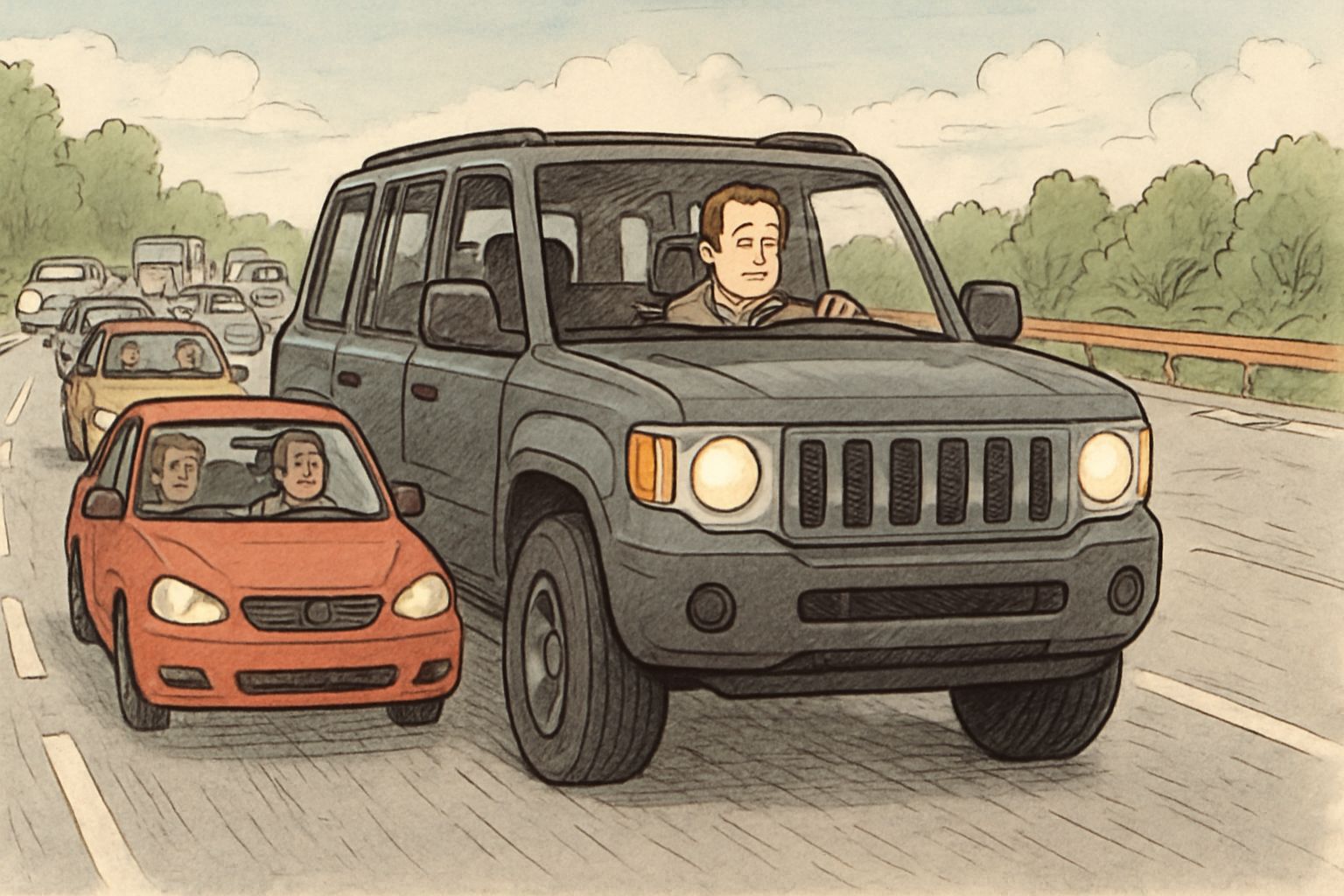
Most of what drivers believe about defensive driving is flat-out wrong — and those beliefs are quietly putting lives at risk every single day.
The problem isn’t reckless driving. It’s the confident, experienced driver cruising at highway speed who genuinely believes they have nothing left to learn. Defensive driving myths are everywhere, and they’ve been passed around for so long that most people accept them as fact. Art of Driving, a driver education resource focused on road safety, points out that these misconceptions create a false sense of security — which is one of the most dangerous states you can be in behind the wheel.
Most Drivers Are Operating on Dangerous Assumptions
Think about the last time you drove somewhere familiar — your commute, the grocery store, a route you’ve taken hundreds of times. Chances are, your brain was on autopilot for at least part of it. That’s not confidence. That’s complacency. And complacency is where accidents begin.
Why Defensive Driving Myths Are More Dangerous Than Bad Weather
Bad weather is visible. You can see rain, feel ice under your tires, and adjust accordingly. But a myth? A myth lives in your assumptions. It shapes how you follow another vehicle, how you judge your own reaction time, and whether you even consider taking a safety course. Myths are invisible hazards — and they travel with you in every vehicle you drive.
The most dangerous driving conditions aren’t always on the road. Sometimes they’re in your head. A driver who believes they are already skilled enough has no reason to improve, no motivation to change their habits, and no filter for recognizing when those habits have quietly become dangerous. Learn more about common defensive driving myths that can lead to unsafe driving practices.
The Real Definition of Defensive Driving
Defensive driving is not timid driving. It is not driving slowly in the fast lane or refusing to merge onto highways. At its core, defensive driving means anticipating hazards before they happen — accounting not just for your own behavior, but for the unpredictable behavior of every other driver, pedestrian, cyclist, and variable on the road around you.
The goal is simple: give yourself time and space to react. Whether that means maintaining a three-second following distance, scanning intersections before entering them, or adjusting speed in response to road conditions rather than posted speed limits alone, every defensive driving principle is built around one idea — proactive awareness over reactive panic.
Defensive Driving Defined: A set of driving skills and habits that allow you to defend yourself against potential collisions caused by bad drivers, poor weather, and unexpected road hazards — regardless of your experience level.
Myth 1: Good Drivers Do Not Need Defensive Driving Skills
This is the myth that sounds the most reasonable — which is exactly why it’s the most dangerous. “I’ve been driving for 20 years without an accident” feels like evidence. It isn’t. Accident-free years reflect a combination of skill, habit, and significant luck. They do not make you immune to the next distracted driver who runs a red light at 60 km/h. For more insights, consider exploring defensive driving myths debunked.
94% of Crashes Are Caused by Human Error
The NHTSA has attributed approximately 94% of serious motor vehicle crashes to human error. Not weather. Not mechanical failure. Human decisions, human reactions, and human misjudgments. What this means in practice is that no matter how good a driver you believe you are, you are surrounded daily by the other factor in that statistic — other people making mistakes.
Defensive driving skills are not about correcting your errors. They are about surviving everyone else’s. And that is a skill set that never expires, never becomes unnecessary, and never gets replaced by years of experience alone. To enhance your safety, consider learning some self-defense techniques for dangerous situations.
Experience Behind the Wheel Builds Habits, Not Immunity
Years of driving do build genuine skill — pattern recognition, smoother control inputs, better spatial awareness. But they also build habits. And habits, by definition, are things you do without thinking. Over time, even strong drivers develop behaviors like rolling through stop signs at familiar intersections, underestimating following distance at highway speeds, or glancing at a phone “just for a second” because they’ve done it a hundred times without consequence. To stay prepared for unexpected situations, every driver should consider having a vehicle emergency kit on hand.
Professional defensive driving training targets exactly these ingrained habits. It surfaces the automatic behaviors you don’t know you’ve developed and replaces them with deliberate, safety-focused alternatives.
What Overconfidence Actually Looks Like on the Road
Overconfidence behind the wheel doesn’t look dramatic. It looks like accelerating through a yellow light because you’ve “made that timing a hundred times.” It looks like skipping a shoulder check because you glanced at your mirror. It looks like tailgating a transport truck because the driver in front of you feels too slow. Each of these is a small, reasonable-feeling decision that dramatically increases crash risk. That’s the insidious nature of this myth — it doesn’t feel like overconfidence. It feels like experience.
Myth 2: Defensive Driving Is Only for New Drivers
Driver’s education is where most people first hear the term “defensive driving,” which is probably why the association stuck. But connecting defensive driving exclusively to new drivers is like saying physical fitness is only for people who just joined a gym. The principles don’t stop being useful once you’ve been doing it for a while. If anything, they become more important.
Traffic patterns evolve. Vehicle technology changes. Road infrastructure shifts. A driver who learned defensive techniques 15 years ago and hasn’t revisited them is operating on an outdated map. The fundamentals remain the same, but the landscape they apply to has changed significantly.
The 4 Core Skills That Every Driver Needs at Any Age
|
Skill |
What It Involves |
Why It Matters at Every Level |
|---|---|---|
|
Hazard Anticipation |
Scanning ahead and identifying risks before they develop |
Reduces reaction time pressure and increases decision space |
|
Space Management |
Maintaining safe following distance and buffer zones |
Creates physical room to respond to sudden stops or swerves |
|
Speed Awareness |
Adjusting speed to conditions, not just posted limits |
Prevents loss of control in wet, icy, or congested conditions |
|
Distraction Control |
Actively managing in-cabin and external attention pulls |
Keeps cognitive focus on the driving task at all critical moments |
None of these four skills are beginner concepts. In fact, experienced drivers often struggle more with distraction control and space management than new drivers — because familiarity breeds a subconscious permission to multitask. New drivers are acutely aware of everything because it is all unfamiliar. Experienced drivers switch to autopilot, and that is precisely when the gaps in their defensive skills become exposure points.
How Experienced Drivers Develop Blind Spots Over Time
The technical term for what happens to experienced drivers is skill-based error — mistakes made not from ignorance, but from over-learned automaticity. When a behavior becomes completely automatic, it also becomes invisible to self-reflection. You stop questioning whether your following distance is safe because you’ve never needed to question it before.
Returning to structured defensive driving training, even briefly, forces that self-reflection back into the process. It’s not about starting from scratch. It’s about stress-testing the habits you’ve already formed to find the ones that no longer serve you.
Myth 3: You Are a Better Than Average Driver
This is the ultimate myth that nearly every driver carries with them — and statistically, it cannot be true for most of them. “I’m a good driver” is one of the most universal human beliefs, sitting right alongside “I’m a good judge of character” and “I’m a better-than-average communicator.” The problem is that roads don’t care about self-perception. Physics doesn’t grade on confidence.
Why 70-90% of Drivers Believe They Are Above Average
Studies on driver self-assessment consistently find that between 70% and 90% of drivers rate themselves as above average. That number is mathematically impossible. It’s a textbook example of what psychologists call the Dunning-Kruger effect — the less aware you are of your gaps, the more competent you feel. And behind the wheel, that gap between perceived skill and actual skill is measured in meters and milliseconds.
This isn’t about intelligence. Highly educated, professionally accomplished people are just as susceptible to this bias as anyone else. In fact, drivers with long clean records are often the most overconfident, because their history feels like proof. It isn’t proof. It’s a sample size that doesn’t account for the near-misses they didn’t register, the risks that resolved themselves, or the luck that quietly filled in the gaps.
What the Crash Statistics Actually Reveal
The NHTSA data is worth sitting with for a moment. When 94% of serious crashes trace back to human error, and most of those humans believed they were skilled, careful drivers — the math tells a clear story. Self-rated skill does not correlate reliably with actual safe driving behavior. What does correlate? Structured habits, trained responses, and the willingness to continuously evaluate your own performance. For more insights, check out this article on safe driving myths debunked.
Breaking down the human error category further paints an even clearer picture of where confident drivers go wrong:
- Recognition errors — failing to notice a hazard due to distraction or inattention
- Decision errors — misjudging speed, gap distance, or weather impact on stopping distance
- Performance errors — oversteering, late braking, or incorrect evasive action
- Non-performance errors — falling asleep or experiencing a medical event while driving
The first two categories — recognition and decision errors — are almost entirely preventable with proper defensive driving training. These aren’t freak accident causes. They are predictable, patterned mistakes that trained drivers learn to avoid before they become emergencies.
How Self-Assessment Bias Puts You at Greater Risk
When you believe you’re already a great driver, you stop looking for ways to improve. You dismiss close calls as the other driver’s fault. You skip the following distance rule because you trust your own reflexes. You answer a quick text because you’re confident in your ability to multitask. Each of these micro-decisions is powered by an inaccurate self-image — and each one silently increases your crash risk. The most dangerous driver on the road isn’t always the reckless one. Sometimes it’s the one who has convinced themselves they have nothing left to learn. In dangerous situations, staying calm with self-defense techniques can be crucial.
Myth 4: Defensive Driving Courses Are Boring and Outdated
The mental image many drivers have of a defensive driving course involves a flickering projector, a monotone instructor, and an outdated video with crash footage from the 1980s. That version of the course existed. It doesn’t anymore — at least not in any program worth taking.
The reputation stuck, but the reality has moved on significantly. Today’s defensive driving programs are built around interactive content, real-world simulation, and practical skill application that bears almost no resemblance to the classroom-and-quiz model that gave the category its boring reputation.
How Modern Defensive Driving Courses Have Changed
Modern courses — both online and in-person — use scenario-based learning, video simulation, and hazard perception testing to build genuine skill rather than just theoretical knowledge. Platforms like iDriveSafely offer fully online courses that drivers can complete on their own schedule, with content that reflects current road conditions, modern vehicle technology, and up-to-date traffic law. Some advanced programs incorporate driving simulators that put learners into high-risk scenarios in a controlled environment — the kind of experience that builds real muscle memory without real-world consequences.
Practical Skills Taught in Today’s Courses vs. Old Classroom Lectures
The shift from passive instruction to active skill-building is the biggest change in modern defensive driving education. Old-format courses told you what to do. New-format courses show you why, put you through the scenario, and measure whether you can actually apply it under pressure. The content itself has also expanded significantly beyond basic traffic rules.
Today’s courses cover critical topics like:
- Hazard perception and scanning techniques for high-speed environments
- Space cushion management in urban, highway, and adverse weather conditions
- Distracted and impaired driving recognition — including your own cognitive state
- Skid recovery and emergency braking procedures for modern vehicle systems
- Roundabout navigation, merging strategy, and blind spot management
- How ADAS (Advanced Driver Assistance Systems) features interact with driver behavior
That last point is one most drivers don’t expect: understanding how your car’s own technology — lane assist, automatic braking, adaptive cruise control — can create new blind spots if you over-rely on it. That’s genuinely current, genuinely useful content that has nothing to do with flickering projectors.
Myth 5: Defensive Driving Does Not Affect Your Insurance Rate
The Reality: In many provinces and U.S. states, completing an approved defensive driving course qualifies you for a direct discount on your auto insurance premium — sometimes ranging from 5% to 15% depending on your insurer and jurisdiction. That discount can apply for up to three years before a renewal course is required.
Most drivers are completely unaware that their insurance company actively rewards defensive driving education. It’s not a loophole or a promotional gimmick — it reflects something insurers have tracked through actuarial data for decades: trained drivers file fewer claims.
The connection is direct. Fewer accidents mean fewer payouts. Fewer payouts mean lower risk classification for that driver. Lower risk classification means lower premiums. The math is straightforward, and insurers are willing to share the savings because the data supports it.
The discount doesn’t apply automatically, though. You typically need to complete a course that is specifically approved by your insurance provider or recognized under your provincial or state traffic authority. In Canada, programs approved under provincial road safety frameworks are most commonly accepted. In the U.S., courses approved by the National Safety Council or state DMV programs qualify in most cases.
What surprises most drivers is that this benefit isn’t just available when you’re a new driver or following a traffic violation. Many insurers offer the premium reduction to any qualifying driver — including experienced drivers with clean records — simply for completing an approved course voluntarily.
How Completing a Course Can Lower Your Premium
The process is simpler than most drivers expect. Complete an approved defensive driving course, obtain your certificate of completion, and submit it to your insurance provider. The reduction is then applied at your next renewal period. Some insurers will apply it immediately mid-term. The actual savings depend on your base premium, your insurer’s specific discount rate, and your location — but even a 5% reduction on a $1,800 annual premium adds up to $90 per year, or $270 over a three-year discount window.
For drivers with recent minor infractions on their record, the calculus becomes even more compelling. In some jurisdictions, completing a defensive driving course can offset demerit points or demonstrate rehabilitation to an insurer, potentially preventing a premium increase that would otherwise apply at renewal.
What Insurers Actually Look for in Driver Behaviour
Beyond the course discount, insurers assess ongoing driver behavior through claims history, traffic violation records, and increasingly through telematics programs — apps or devices that monitor actual driving behavior like hard braking, rapid acceleration, and late-night driving patterns. Drivers who demonstrate defensive habits consistently, not just in a classroom but in real daily driving, build a risk profile that translates directly into lower premiums over time. The course is the starting point. The daily habits are what sustain the benefit. For those looking to be prepared, having the ultimate vehicle emergency kit is also a crucial aspect of responsible driving.
Real Defensive Driving Habits That Keep You Safe
Debunking myths is only useful if it changes behavior. The five myths above all point to the same underlying problem: drivers treating safety as a fixed achievement rather than an ongoing practice. The antidote to that is equally straightforward — build the habits that defensive driving training is designed to produce, and apply them consistently, not just when conditions feel dangerous.
The good news is that the core habits are not complicated. They don’t require special equipment, advanced training, or significant time. They require attention and consistency — two things every driver already has access to.
1. Anticipate Other Drivers’ Mistakes Before They Happen
The single biggest shift in mindset that defensive driving produces is moving from reactive to predictive. Instead of responding to what just happened, you start reading what is about to happen. A car drifting slowly toward the lane line probably has a distracted driver. A vehicle sitting too long at a green light will likely make an abrupt decision once they notice. A pedestrian standing at the curb glancing at their phone may step out without looking. None of this requires psychic ability — it requires scanning ahead with intention and asking “what could this person do next?”
This habit is called hazard perception, and it is one of the most measurable skills in defensive driving research. Trained drivers consistently identify developing hazards earlier than untrained drivers, which gives them more time and more options to respond. The practical technique is simple: keep your eyes moving, scan at least 12 seconds ahead of your vehicle, and periodically check your mirrors every 5 to 8 seconds. That scanning rhythm keeps your awareness current rather than fixed on the car directly in front of you. For more tips on staying safe, consider learning about self-defense techniques in dangerous situations.
2. Maintain a Safe Following Distance at All Times
The three-second rule is one of the most widely taught defensive driving principles — and one of the most widely ignored. Pick a fixed point on the road ahead. When the vehicle in front of you passes it, count three full seconds before your vehicle reaches the same point. If you get there faster, you are following too closely. In wet or icy conditions, that gap should double to six seconds minimum. At highway speeds, even more.
Tailgating is not an aggressive driving habit reserved for frustrated commuters. It happens gradually, unconsciously, as traffic compresses and gaps feel normal simply because everyone around you is doing the same thing. The problem is that at 100 km/h, the average driver needs approximately 2.5 seconds just to perceive a hazard and begin braking — before the brakes even make contact. A three-second following distance is not generous. It is the minimum margin between your reaction time and a collision.
3. Stay Alert and Eliminate In-Car Distractions
Distraction is not just about phones. Eating, adjusting climate controls, reaching into the back seat, loud conversations, emotional stress, and cognitive fatigue all pull attention away from the driving task. Research from the National Safety Council identifies cognitive distraction — where your mind is elsewhere even if your eyes are forward — as one of the most underestimated impairments on the road. The rule is straightforward: if it is not driving, it can wait until you are stopped. Set your GPS before you pull out of the driveway. Make the call after you park. Eat before you leave. These aren’t inconveniences. They’re decisions that keep you and everyone around you alive.
4. Adjust Speed for Road and Weather Conditions
Posted speed limits reflect ideal conditions — dry pavement, good visibility, normal traffic density. They are not recommendations for wet roads, morning fog, heavy rain, or gravel shoulders. True defensive driving means treating the posted limit as a ceiling, not a target, and actively adjusting downward whenever conditions demand it. A road that feels familiar in July can become genuinely treacherous in November with the same speed and the same habits.
Speed management also applies in heavy traffic, construction zones, and school areas — not because the signs say so, but because reduced space means reduced reaction time. Every 10 km/h reduction in speed meaningfully increases your stopping distance margin and the severity of impact in a collision scenario. Slowing down is not timid driving. It is the most direct application of defensive thinking available to you at any moment.
Stop Driving on Myths and Start Driving on Facts
Every myth covered in this article shares the same root cause: the belief that safety is something you achieve once and then carry with you permanently. It isn’t. Road safety is an active, ongoing practice built on honest self-assessment, continuous skill development, and the willingness to trade comfortable assumptions for accurate ones. The five myths debunked here — that good drivers don’t need training, that courses are only for beginners, that you’re above average, that courses are outdated, and that none of it affects your insurance — are all versions of the same dangerous idea: that you’re already done learning. For more insights, explore this article on safe driving myths debunked.
You are not done. Neither is any other driver on the road. And that’s not a criticism — it’s an opportunity. The drivers who actively engage with defensive driving principles are not the fearful ones. They’re the prepared ones. The ones who arrive safely, consistently, year after year — not because they were lucky, but because they made a deliberate choice to stay sharp.
Frequently Asked Questions
Here are answers to the most common questions drivers ask when they start taking defensive driving seriously — covering everything from course eligibility to daily habits.
Is defensive driving only useful in bad weather or dangerous road conditions?
Defensive driving is not a bad-weather tool. It is a full-time approach that applies on clear sunny days just as much as it does in a snowstorm. In fact, many serious collisions happen in ideal conditions precisely because drivers let their guard down. Good weather creates overconfidence. Clear roads encourage speeding. Light traffic makes distraction feel consequence-free.
The habits that defensive driving builds — hazard scanning, following distance management, speed calibration — are designed for everyday driving, not just emergencies. Emergencies are simply where the gaps in those habits become visible. The training is meant to close those gaps before the emergency arrives, regardless of what the weather app says.
Can a defensive driving course actually remove points from my licence?
This depends heavily on your jurisdiction, the type of course, and the nature of the infraction. Here is what is generally true across most Canadian provinces and U.S. states: taking a defensive driving course can sometimes help reduce points on your license.
- Many jurisdictions allow approved defensive driving courses to offset a set number of demerit points on your licence
- The course must typically be completed within a specific timeframe following the infraction
- Point reduction is usually limited to once every 12 to 24 months, depending on local legislation
- Some jurisdictions offer point masking rather than true removal — the points remain on your driving record but are not counted against your licence standing
- Court-ordered defensive driving (following a moving violation) often results in dismissal of the associated fine in addition to point benefits
The most reliable way to confirm eligibility is to contact your provincial Ministry of Transportation or state DMV directly and ask whether a specific approved course qualifies for point reduction under your current circumstances. Additionally, you might consider preparing for emergencies by having must-have supplies for every driver in your vehicle.
It is also worth noting that even in jurisdictions where point removal is not available, completing the course still often results in an insurance premium reduction — which has a direct financial benefit regardless of what happens to your driving record.
Do not assume that a course marketed as “defensive driving” automatically qualifies for point reduction. The course must be specifically approved by the relevant authority in your area. When in doubt, verify before you enroll.
How often should an experienced driver refresh their defensive driving skills?
Most road safety organizations recommend that drivers refresh their defensive driving training every three to five years. That timeframe aligns with the window over which traffic patterns, vehicle technology, and road infrastructure can change enough to create meaningful gaps between what you learned and what the road now requires. Drivers who have experienced a significant life change — a move to a new city, a new vehicle type, a return to driving after a long break, or any health event that may affect cognition or reaction time — should consider refreshing their skills sooner, regardless of how recently they last completed training.
Does defensive driving apply differently in urban versus rural areas?
Yes — the principles are the same, but the hazards look very different. Urban defensive driving prioritizes intersection awareness, pedestrian and cyclist interaction, short following distances in stop-and-go traffic, and managing high-density distraction environments. Rural defensive driving shifts focus toward wildlife crossing risks, longer stopping distances at higher speeds, reduced road lighting, single-lane road sharing, and the absence of immediate emergency response. A driver who is highly skilled in one environment and suddenly operating in the other should treat the transition as a genuine learning curve rather than a simple adjustment. The fundamentals transfer. The specific threat profile does not. For more insights, consider these self-defense techniques in dangerous situations.
What is the single most important defensive driving habit to develop?
If there is one habit that safety professionals consistently place above all others, it is maintaining space — specifically, the consistent practice of managing a buffer zone around your vehicle in all directions, at all times. Following distance is the most visible form of this, but it extends to lateral spacing when passing cyclists, leaving room for a merging vehicle, and positioning yourself within a lane to maximize your visibility and escape routes. For more on preparedness, consider assembling the ultimate vehicle emergency kit.
Space is time. Every meter of buffer between your vehicle and the next hazard is additional milliseconds to perceive, decide, and act. No other single habit gives you more options in an emergency than the space you have already created before the emergency begins. You cannot manufacture space in the moment a hazard appears. You can only use what you already have.
This is why following distance rules are not suggestions. They are the physical expression of the most important truth in defensive driving: the best way to survive a dangerous situation is to give yourself enough room that it never fully develops into one.
Defensive driving is often misunderstood, with many myths surrounding its practice. Some believe that simply following traffic laws is enough, while others think that defensive driving is only necessary in high-risk areas. However, the reality is that defensive driving is a proactive approach to safety, requiring awareness and anticipation of potential hazards on the road.




Leave a Reply