
Article At A Glance
- Dehydrating removes 70-90% of moisture using heat, while freeze drying removes 98-99% using a freezing and vacuum process
- Freeze-dried food preserves around 95% of nutritional value compared to just 60% for dehydrated food
- Freeze-dried food can last 15 to 25 years on a shelf, while dehydrated food typically lasts around 1 to 2 years
- Certain foods like milk, eggs, and cheese can only be preserved through freeze drying, not dehydration
- Choosing the right method depends on your storage goals, budget, and what you plan to do with the food later
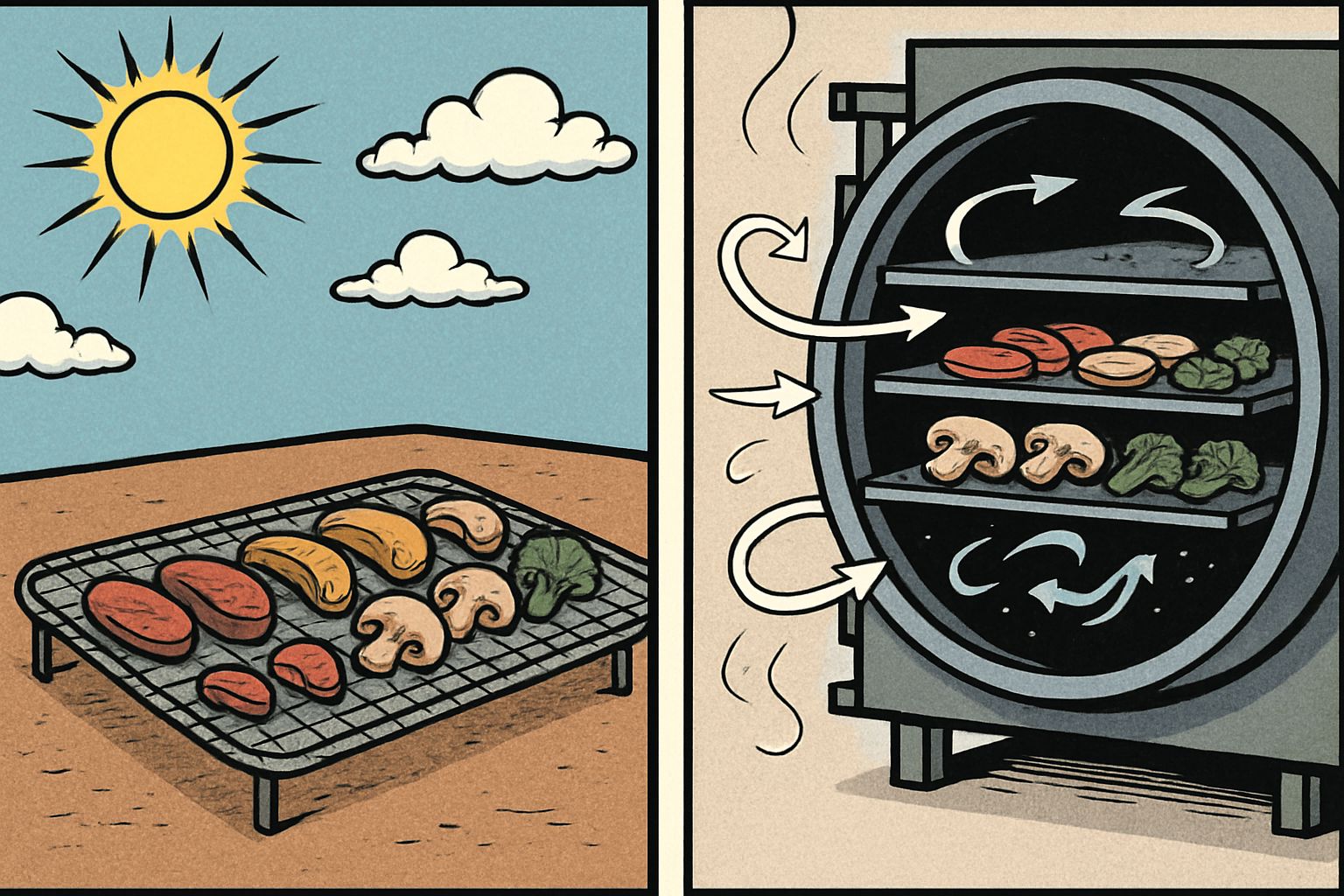
Your kitchen counter holds the power to turn fresh strawberries into a snack that lasts 25 years, and the method you choose makes all the difference.
Food preservation has come a long way from salting meat and hanging herbs in the attic. Today, two methods dominate the conversation: dehydrating and freeze drying. Both pull moisture out of food to stop spoilage, but they do it in completely different ways, with completely different results. If you’ve ever wondered why your homemade beef jerky tastes nothing like the freeze-dried strawberries in your trail mix, you’re about to find out.
What Really Happens When You Dry Food
Drying food is one of humanity’s oldest survival tricks, practiced across cultures long before refrigerators existed. The basic idea hasn’t changed much: remove water, and you remove the environment bacteria and mold need to thrive. What has changed is the technology behind it, and that technology creates two very different end products.
The Science Behind Freeze-Drying: Sublimation Explained
Freeze drying relies on a process called sublimation, where frozen water turns directly into gas without ever becoming liquid. The food first gets frozen to around -40°C, locking its structure in place. Then it sits in a vacuum chamber where the extreme low pressure allows the ice crystals to evaporate straight into vapor, bypassing the liquid stage entirely.
This is why freeze-dried food keeps its original shape and size so well. Nothing collapses or shrinks because the water simply vanishes from a solid state, leaving the food’s cellular structure largely intact. For more tips on preserving food, learn about the right way to store and dispose of trash in a crisis.
The Science Behind Dehydration: Heat-Based Water Removal
Dehydration takes a simpler approach. It raises the temperature of food to evaporate water, whether through sun exposure, air circulation, or an electric dehydrator. As the water leaves, the food shrinks, toughens, and often darkens in color.
Unlike freeze drying, dehydration doesn’t require specialized vacuum equipment. A warm, sunny day or a low-temperature oven can technically get the job done, though a dedicated dehydrator gives you more consistent results.
A Brief History of Freeze-Drying From 1906 to Today
Freeze drying isn’t a modern invention, though it might feel that way given its association with space food and emergency supplies. Frenchmen Arsène d’Arsonval and Frédéric Bordas developed the technique back in 1906. It later found its real calling in extreme situations, producing survival rations for mountain climbers, sailors, and eventually astronauts.
Today, you’ll find freeze-dried strawberries in your kid’s lunchbox and freeze-dried herbs in gourmet kitchens, a long way from its origins in scientific labs and space programs.
Freeze-Drying vs Dehydrating: The Key Differences
People often lump these two methods together because the end result looks similar: dry, shelf-stable food. But the differences run deep, affecting everything from texture to nutrition to how long your food stays edible.
Moisture Removal Rates Compared
Dehydration pulls out roughly 70-90% of a food’s moisture. Freeze drying goes further, removing 98-99%. That gap might seem small on paper, but it has a massive impact on shelf life and texture, which we’ll get into shortly.
Temperature Requirements for Each Method
Dehydrators typically run warm, cooking food slowly at low heat over several hours. Freeze dryers do the opposite, plunging food to roughly -40°F before cycling through controlled heating and cooling phases to coax out moisture without ever letting the food fully thaw.
Equipment Needed at Home
Getting started with dehydrating is budget-friendly. You can use a basic food dehydrator, your oven set to its lowest temperature, or even just the sun on a dry day. Freeze drying is a different story. Home freeze-drying units exist, but they come with a much higher price tag, making them a bigger commitment for anyone serious about long-term food storage.
Which Method Keeps More Nutrients?
If nutrition is your priority, the method you choose matters more than you might think. Heat is the enemy of vitamins, and dehydration relies on heat far more heavily than freeze drying does.
|
Method |
Nutritional Value Retained |
Moisture Removed |
|---|---|---|
|
Dehydrating |
About 60% |
70-90% |
|
Freeze Drying |
About 95% |
98-99% |
That difference comes down to how each process treats heat-sensitive compounds. Freeze drying’s low-temperature approach protects nutrients that dehydration simply cooks away.
Why Vitamin C Breaks Down Under Heat
Vitamin C is particularly fragile. It starts breaking down at temperatures as low as 30°C, which is well within the range most dehydrators operate at. Since freeze drying never exposes food to that kind of sustained heat, it protects vitamin C and other heat-sensitive nutrients far more effectively.
Nutritional Retention Rates for Each Process
Dehydrated food retains about 60% of its original nutritional value. Freeze-dried food holds onto roughly 95%. If you’re preserving food specifically to maintain its nutritional punch, freeze drying has a clear edge, though dehydration still beats letting food spoil on the shelf.
Shelf Life: How Long Will Your Food Actually Last?
Shelf life is often the deciding factor for people choosing between these two methods, and the numbers aren’t even close. Dehydrated foods generally last around 1 to 2 years when stored properly. Freeze-dried foods can last anywhere from 15 to 25 years, making them a serious contender for long-term emergency storage or stocking a pantry you don’t plan to touch for years.
That said, shelf life isn’t just about the drying method itself. How you store the food afterward plays a massive role in whether it reaches its full potential lifespan, which we’ll cover next.
Freeze-Dried Food Storage Timeline
Freeze-dried food earns its reputation as the gold standard for long-term storage. Properly packaged freeze-dried strawberries, vegetables, or even meats can sit on a shelf for 15 to 25 years and still be safe to eat well after that window closes. That kind of longevity explains why freeze-dried meals dominate survival kits, space missions, and emergency pantries.
The secret lies in how little moisture remains after processing. With 98-99% of water removed, there’s almost nothing left for bacteria or mold to latch onto, which is why freeze-dried food can outlast nearly every other preservation method on the market.
Dehydrated Food Storage Timeline
Dehydrated food doesn’t come close to matching that timeline, but it still offers solid shelf stability for everyday use. Most dehydrated foods last around 1 to 2 years when stored correctly, which works well if you’re rotating through your pantry regularly rather than stockpiling for decades.
The shorter lifespan comes down to residual moisture. Since dehydration only removes 70-90% of water, there’s slightly more opportunity for spoilage over time compared to freeze-dried alternatives.
The Enemies of Long-Term Storage: Oxygen, Moisture, Light, and Heat
No matter which method you choose, four factors determine whether your dried food actually reaches its potential shelf life: oxygen, moisture, light, and heat. Oxygen encourages bacterial growth and degrades both appearance and nutritional value. Moisture reintroduces the exact problem you worked to eliminate in the first place, significantly shortening shelf life in humid environments. Light and heat break down vitamins and nutrients over time, leading to discoloration and off-flavors that make your carefully preserved food far less appealing. For more on proper storage, check out the right way to store and dispose of trash in a crisis.
How to Package Freeze-Dried Food Correctly
Getting the packaging right is just as important as the drying process itself. Freeze-dried food needs an airtight seal to block out oxygen and moisture, both of which will quietly undo months of preservation work if given the chance. Many people store freeze-dried food in airtight containers paired with oxygen absorbers, since freeze-dried items tend to pull moisture from their surroundings almost like a sponge. Skipping this step is one of the fastest ways to shorten a 25-year shelf life down to a matter of months.
Texture and Taste: Side-by-Side Food Comparisons
Think of dehydration as cooking food down to a concentrated, chewy version of itself, while freeze drying is more like pressing pause on the food’s original state.
Texture tells the real story of what’s happening inside each food during preservation. Dehydrated foods tend to shrink, toughen, and darken because heat physically alters their structure as water evaporates. Freeze-dried foods, by contrast, often look nearly identical to their fresh counterparts, just lighter and more brittle.
Taste follows a similar pattern. Dehydration can concentrate flavors in some foods while muting them in others, especially delicate herbs. Freeze drying tends to preserve the original flavor profile much more faithfully, since the food never experiences the same level of heat exposure.
These differences matter most when you start comparing specific foods side by side, because the gap between methods becomes obvious fast. Understanding these methods can also be a crucial skill, similar to learning skills that can help protect your income into the future.
Apples: Crispy Leather vs Styrofoam Crunch
Dehydrated apple slices turn crispy yet leathery, often browning and shrinking down into thin, chewy pieces. They’re tasty, but they bear little resemblance to a fresh apple slice once you bite into one. If you want to ensure your dehydrated apples are stored properly, consider learning the right way to store them to maintain their quality.
Freeze-dried apples tell a completely different story. They retain their original shape and size but turn incredibly light and crispy, almost like biting into a piece of styrofoam. The real magic happens when you rehydrate them: freeze-dried apples bounce back to something remarkably close to fresh fruit, while dehydrated apples never quite get there.
That rehydration difference comes down to how much structural damage occurred during processing. Freeze drying preserves cellular walls far better than heat-based dehydration does.
Shelf life adds another layer to the comparison. Freeze-dried apples can outlast dehydrated apples by roughly 24 years, a gap that becomes significant if you’re planning for true long-term storage rather than short-term snacking.
|
Trait |
Dehydrated Apples |
Freeze-Dried Apples |
|---|---|---|
|
Texture |
Crispy, leathery, chewy |
Light, crispy, styrofoam-like |
|
Color |
Browned |
Original color retained |
|
Rehydrated Result |
Not similar to fresh |
Very similar to fresh |
Meat: Jerky vs Raw Rehydratable Slices
Dehydrating meat cooks it in the process, turning it into the chewy, shelf-stable snack most people know as jerky. Freeze drying meat works entirely differently, keeping it completely raw throughout the process. When you rehydrate freeze-dried meat, it returns to something close to fresh, thinly sliced meat rather than staying in a jerky-like state.
Herbs: Color and Flavor Changes
Freeze-dried parsley keeps its bright green color, looking almost as vibrant as the day it was picked. Dehydrated parsley, on the other hand, turns dull and withered, losing much of its visual appeal along with some of its original flavor. Understanding these changes can help you master home utilities without the risk of losing quality.
Flavorful herbs like basil, mint, and rosemary tend to change character significantly when dehydrated, since heat alters their essential oils. For herbs where flavor matters most, freeze-drying is generally the better choice, though it’s worth storing freeze-dried herbs in an airtight container and only pulling out about a week’s worth at a time to avoid moisture absorption and mold.
Smoothies: Fruit Leather vs Crumbly Powder
Pour a smoothie into a dehydrator, and you’ll end up with fruit leather, a sweet, chewy snack that bears little resemblance to its liquid origins. Run that same smoothie through a freeze dryer, and the result is a light, crumbly product that goes right back to its original smoothie form with nothing more than a splash of water.
This difference makes freeze-drying particularly appealing for anyone wanting to preserve smoothies or purees for quick, convenient meals down the road, rather than turning them into an entirely different snack altogether. For those interested in emergency preparedness, understanding the right way to store and dispose of food can be crucial.
Bread: Comparing Crunch Levels
- Dehydrated bread turns crumbly and works well for making breadcrumbs or croutons
- Freeze-dried bread ends up even crunchier than its dehydrated counterpart
- Neither method produces bread that rehydrates back into something resembling a fresh slice
Bread is one of the few foods where neither method delivers a true “fresh” result after rehydration. If you’re preserving bread specifically for cooking purposes like croutons or breadcrumbs, dehydrating gets the job done without the added cost of freeze drying.
That said, if crunch is what you’re after for snacking purposes, freeze-dried bread takes the lead, offering a texture that holds up particularly well over time.
Ultimately, the right choice for bread comes down to what you plan to do with it later, since both methods sacrifice that soft, fresh-baked quality everyone loves.
Best Uses for Each Preservation Method
Neither method wins across the board, and that’s actually good news. Each one shines in specific situations, which means the smartest approach often involves using both depending on what you’re preserving and why.
Foods Only a Freeze Dryer Can Handle
Some foods simply can’t survive the dehydration process in a usable form. Milk, eggs, and cheese fall into this category, since their composition doesn’t hold up well to heat-based drying but responds beautifully to freeze drying’s gentler approach.
If your food storage goals include dairy products or complete meals rather than just fruits and vegetables, a freeze dryer opens up possibilities that a standard dehydrator simply can’t match.
Everyday Jobs a Dehydrator Does Best
Dehydrators earn their keep in the kitchen for more than just drying fruit. Many models double as proofing boxes for bread dough or incubators for homemade yogurt, making them surprisingly versatile for everyday cooking tasks beyond long-term food storage.
For snacks, jerky, and herbs you plan to use within a year or two, a dehydrator offers an affordable, practical solution without the upfront investment required for freeze-drying equipment.
Why Freeze-Dried Food Was Built for Space and Survival
Freeze drying earned its reputation in extreme environments where traditional food simply couldn’t survive the journey. NASA turned to freeze-dried meals for space missions because astronauts needed food that weighed almost nothing, took up minimal storage space, and stayed nutritionally intact for years without refrigeration. Mountain climbers and sailors adopted the same technology for similar reasons, since carrying lightweight, long-lasting food can mean the difference between a successful expedition and a dangerous situation.
That survival-focused origin still shapes how freeze-dried food gets used today. Emergency preparedness kits, long-term food storage plans, and backcountry hiking meals all lean heavily on freeze-dried ingredients because they deliver the one thing dehydrated food can’t match at the same level: decades of reliable shelf life without sacrificing nutrition. For those looking to enhance their preparedness, mastering home utilities without risk can be a crucial step.
How Chefs and Home Cooks Use Freeze-Dried Ingredients
Freeze-dried food has moved well beyond survival kits and space missions into everyday kitchens and high-end restaurants alike. Home cooks and professional chefs both appreciate what the process offers, even if they’re using it for very different reasons.
- Freeze-dried fruit like strawberries, pumpkin, and tomatoes now show up regularly as mid-morning snacks or cereal toppers
- Chefs use freeze-drying to create powders and crumbles that add intense, concentrated flavor without excess moisture
- Freeze-dried herbs retain their color and potency far better than dried alternatives, making them popular for garnishing
- Backpackers and campers rely on freeze-dried meals that rehydrate quickly with just hot water
These applications highlight just how versatile freeze-dried food has become. What started as a solution for astronauts and mountaineers now sits comfortably in school lunchboxes and five-star restaurant kitchens.
The common thread across all these uses is convenience paired with quality. Freeze-dried ingredients let people access flavors and textures that would otherwise require fresh produce, all while keeping a long shelf life in the background as a safety net.
Quick Meals You Can Make Anywhere
Freeze-dried meals have become a staple for anyone needing food that’s lightweight, fast to prepare, and reliable in unpredictable conditions. Hikers, campers, and emergency responders often turn to these meals specifically because rehydration takes minutes rather than hours, and the end result tastes remarkably close to the original dish.
Freeze-Drying in Fine Dining Kitchens
High-end chefs have embraced freeze-drying as a creative tool rather than just a preservation method. The process allows them to develop textures and flavor concentrations that simply aren’t achievable through traditional cooking, turning freeze dried components into unexpected elements on a plate, from crunchy fruit powders to delicate vegetable crisps that add visual contrast and bursts of flavor.
Choosing the Right Method for Your Kitchen
Deciding between dehydrating and freeze-drying really comes down to your goals, budget, and how long you need your food to last. Neither method is objectively better than the other, they’re simply built for different purposes.
Think about what you’re trying to accomplish before investing in equipment. Someone looking to make quick snacks for the week ahead has very different needs than someone building a 20-year emergency food supply.
When Dehydrating Makes More Sense
Dehydrating is the clear winner if you’re working with a tighter budget or only need food to last a year or two. It’s also the better choice for snacks like jerky, where that chewy, concentrated texture is exactly what you want rather than something to avoid.
When Freeze-Drying Is Worth the Investment
Freeze-drying justifies its higher upfront cost when long-term storage and nutritional preservation matter most. If you’re building an emergency food supply, preserving dairy products, or want food that rehydrates almost like it was never dried in the first place, freeze-drying delivers results dehydration simply can’t match.
The investment pays off most for people planning years ahead rather than weeks. For short-term food prep, a dehydrator gets the job done at a fraction of the cost.
Frequently Asked Questions
These questions come up constantly for anyone exploring food preservation for the first time, so let’s clear up the most common points of confusion.
Is Freeze-Dried Food Healthier Than Dehydrated Food?
Freeze-dried food generally retains more nutrients than dehydrated food. Freeze drying preserves around 95% of a food’s original nutritional value, while dehydration only preserves about 60%. The gap comes down to heat exposure, since dehydration relies on warmth that breaks down heat-sensitive vitamins like vitamin C.
That said, both methods still provide nutritional value compared to letting food spoil. Freeze-dried food simply has an edge for anyone prioritizing nutrient retention above all else.
Can You Rehydrate Freeze-Dried Food Instantly?
Yes, freeze-dried food rehydrates almost immediately when exposed to water, often within minutes. This happens because freeze drying removes water without collapsing the food’s original cell structure, allowing it to reabsorb moisture quickly and bounce back to something very close to its fresh state.
Dehydrated food doesn’t rehydrate nearly as fast or as completely, since heat during the drying process alters the food’s structure in ways that can’t be fully reversed. When considering food preservation methods, it’s important to also think about what happens when sanitation fails, as this can impact food safety and quality.
Does Freeze-Drying Kill Bacteria in Food?
Freeze-drying doesn’t kill bacteria outright, but it removes the moisture bacteria need to grow and multiply. This makes food significantly safer for long-term storage, though proper handling before freezing still matters since any bacteria present beforehand can become active again once the food is rehydrated.
Packaging also plays a role here. An airtight seal keeps oxygen and moisture out, both of which bacteria rely on to thrive, helping freeze-dried food stay safe for its full shelf life.
Is a Home Freeze Dryer Worth the Cost?
It depends on how committed you are to long-term food storage. Home freeze-drying units cost significantly more than dehydrators upfront, but for anyone serious about building a decades-long food supply or preserving foods like dairy that dehydrators can’t handle, the investment often pays for itself over time.
Can You Freeze-Dry Dairy Products Like Milk and Cheese?
Yes, and this is actually one of freeze-drying’s biggest advantages over dehydration. Dairy products like milk, eggs, and cheese hold up well to the freeze-drying process, something dehydration simply can’t achieve due to the fat and protein structures involved. This makes freeze-drying particularly valuable for anyone wanting a complete, shelf-stable food supply rather than one limited to fruits, vegetables, and meat.
Whether you choose dehydrating, freeze-drying, or a mix of both, the real win is building a food storage system that fits your lifestyle and goals.




Leave a Reply