
- Self-sufficiency doesn’t start with 50 acres or a full homestead — it starts with one small decision made today.
- The old all-or-nothing definition of self-sufficiency has been setting people up to fail before they even begin.
- Small daily decisions compound over time, building real capability, confidence, and security in ways that big dramatic changes rarely do.
- Growing one plant, fixing one thing, learning one skill — these micro-actions are the actual building blocks of a self-sufficient life.
- Later in this article, you’ll discover a week-by-week first month plan that makes starting almost impossibly easy.
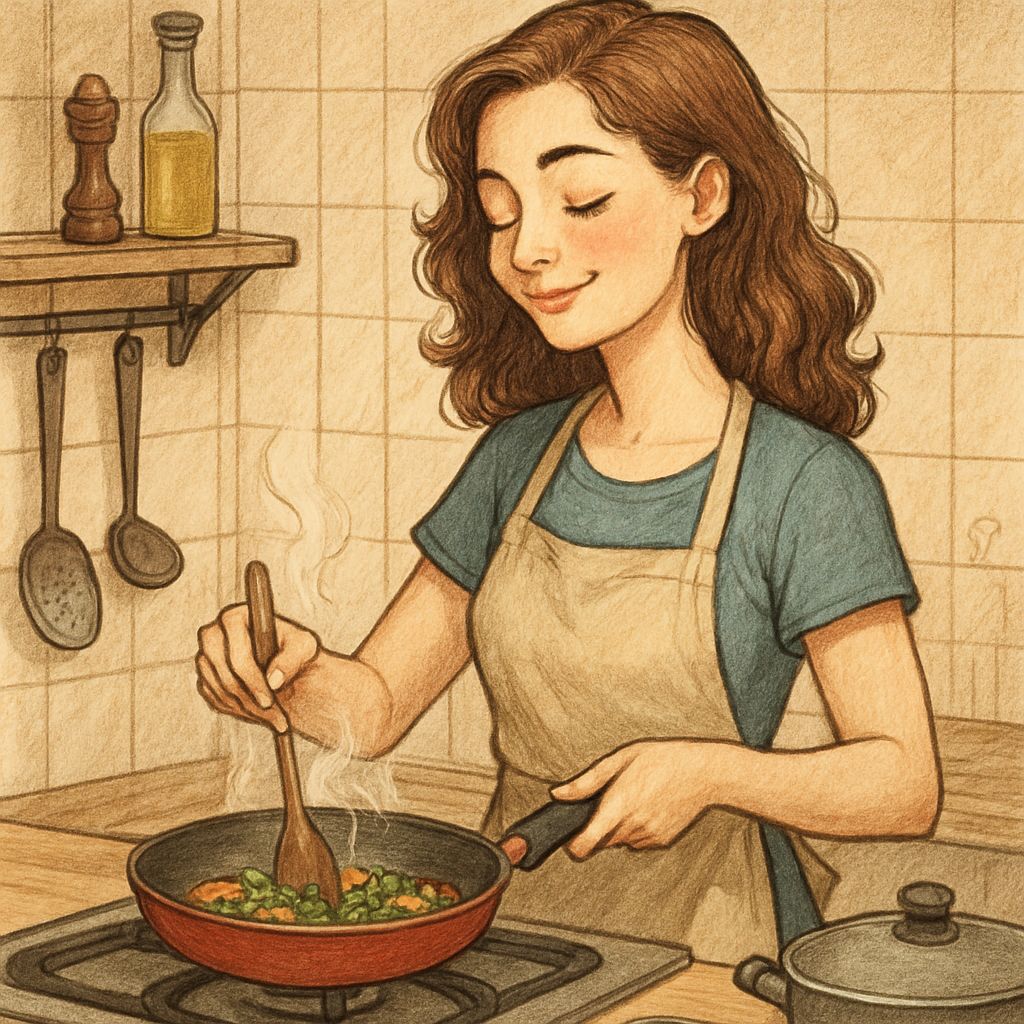
One Decision Today Can Change How You Live Tomorrow
Most people never start because they’re waiting for the right moment, the right property, or the right amount of time — but self-sufficiency actually begins the second you make one deliberate choice.
The gap between where you are and where you want to be isn’t filled with one giant leap. It’s filled with thousands of small, consistent decisions that quietly stack on top of each other. That’s not a motivational idea. That’s exactly how practical skills are built, how pantries are stocked, and how real resilience is grown — one action at a time.
What Self-Sufficiency Actually Means
Self-sufficiency is meeting more of your own needs through your own capabilities — not living in complete isolation from the rest of the world.
The word gets misused constantly. People hear “self-sufficiency” and picture someone completely off-grid, growing every single calorie they consume, generating their own electricity, and never stepping foot in a grocery store again. That image is both unrealistic for most people and, honestly, not even the point.
At its core, self-sufficiency is about shifting the balance. It’s about moving from being a passive consumer — completely dependent on systems outside your control — to becoming an active participant in meeting your own needs. Food, water, skills, problem-solving, and even financial stability all fall under that umbrella. To explore further, you might want to learn about medicinal plants and herbs as part of your journey towards self-sufficiency.
It Is About Capability, Not Isolation
The most self-sufficient people aren’t the ones who need nobody. They’re the ones who have built enough practical capability that they could manage if outside systems failed or became too expensive to rely on. Think about it this way. If the grocery store ran out of vegetables for two weeks, would you have something growing in your garden? If an appliance broke, could you diagnose it before calling a repair service? If your income dropped, do you have preserved food, reduced expenses, and a skill set that has real-world value?
Those questions aren’t about fear. They’re about measuring capability. And capability is built through small, deliberate decisions made consistently over time — not through one dramatic overhaul of your entire life. For more insights, explore the psychology of preparedness.
The Real Self-Sufficiency Equation:
Capability + Consistency + Community = Genuine ResilienceYou don’t need to do everything alone. You need to do more yourself, support others doing the same, and together build something more stable than any of you could alone.
The Three Layers of Food Resilience
A useful way to think about self-sufficiency is through three connected layers: self-sufficiency (what you grow and produce yourself), shared-sufficiency (local growers, seed swaps, buying from people you know), and systemic-sufficiency (the broader food and supply infrastructure that quietly fills the gaps). Most people live entirely in the third layer. Moving even partially into the first two creates a meaningful shift in your security and confidence.
Why the Old Definition of Self-Sufficiency Was Setting You Up to Fail
The all-or-nothing version of self-sufficiency — grow everything, need nothing, depend on no one — is a recipe for burnout and disappointment. It sets an impossible standard that guarantees most people never start, or start hard and quit fast. Embracing a more balanced approach, such as learning container gardening, can help you take small steps towards self-sufficiency without overwhelming yourself.
The better question isn’t “can I produce everything I need?” It’s “what can I realistically take responsibility for right now?” That shift in framing changes everything. Suddenly, a single raised bed isn’t a failure compared to a 5-acre homestead. It’s a genuine, meaningful step in the right direction.
Why Small Daily Decisions Are the Real Foundation
- They don’t require large amounts of time, money, or land to get started
- They build practical skills through repetition rather than theory
- They create visible, tangible results that fuel motivation
- They compound — each skill learned makes the next one easier
- They shift your identity gradually from consumer to producer
The reason small decisions matter so much is that they are actually executable. A decision to “become fully self-sufficient” is paralyzing. A decision to plant one herb pot on your windowsill this weekend is not. One of those gets done. The other gets added to a list that never moves.
What’s particularly powerful about the small-decision approach is what happens over 12 months of consistency. Someone who plants a small garden, learns basic food preservation, starts a compost pile, and practices one repair skill per month hasn’t just saved some money. They’ve fundamentally changed their relationship with resources, consumption, and their own capabilities.
Self-Sufficiency Works Like Building a Muscle
You don’t walk into a gym on day one and lift the heaviest weight in the room. You start with what you can manage, do it consistently, and your capacity grows. Self-sufficiency works exactly the same way. The first time you try to preserve tomatoes, it’ll take twice as long as it should. By the fifth time, it’s second nature.
Skills deepen through repetition. Confidence grows through results. And both create the foundation for taking on the next layer of capability — whether that’s expanding your garden, learning to make bread, or adding a small productive income stream from what you already grow.
The Compounding Effect of Small Consistent Actions
Here’s what the compounding effect looks like in practice. In month one, you plant a few herbs and some salad leaves. By month three, you’re harvesting regularly and composting kitchen scraps. By month six, you’ve preserved your first batch of homemade jam and built a pantry buffer that could carry your household through two weeks without a grocery run. By month twelve, you’ve reduced your grocery spend, built real practical skills, and — perhaps most importantly — you think differently about problems.
That last part is what most beginners don’t expect. The mental shift is just as significant as the practical one. You stop seeing a broken fence as an inconvenience to call someone about, and start seeing it as a 20-minute fix you’re capable of handling. That mindset — active and capable rather than passive and dependent — is the real product of small daily decisions made consistently.
It doesn’t happen overnight. But it does happen. And it starts with whatever small decision you make next.
The Most Impactful Small Decisions You Can Start Making
Not all small decisions are created equal. Some build skills. Some build stockpiles. Some build income. The ones worth starting with are the ones that do all three — or at least two of those things at once.
These five decisions are the highest-leverage starting points for anyone serious about building genuine self-sufficiency. None of them require a large property, a big budget, or a dramatic lifestyle change. For instance, starting a container garden can be a simple yet effective step towards self-sufficiency. Learn more about the essentials for starting a container garden and how it can fit into your journey.
1. Grow Something Edible, Even Just One Plant
A single tomato plant on an apartment balcony counts. A pot of basil on a kitchen windowsill counts. A raised bed with five types of salad greens absolutely counts. The goal isn’t yield — it’s the relationship you build with the process of growing food.
When you grow something edible, even something small, you start learning how plants respond to water, light, soil, and care. You develop an instinct for it. That instinct is the foundation everything else builds on, which is why this is always the first recommendation for beginners regardless of their living situation.
Start with what’s easy and fast. Radishes germinate in as little as 5 days and are ready to harvest in 25. Lettuce can be cut-and-come-again for months. Cherry tomatoes like the Tumbling Tom variety are specifically bred for containers. You don’t need a garden — you need a container, some quality potting mix, and one decision to start.
2. Fix Something Before You Replace It
Fix vs. Replace — The Real Cost Comparison:
Item
Replacement Cost
Repair Cost
Skill Gained
Dripping tap washer
$150+ plumber call-out
$2 washer + 20 mins
Basic plumbing
Loose door hinge
$200+ handyman fee
$0 + 10 mins
Basic carpentry
Worn boot sole
$80–$200 new boots
$12 repair kit
Leather/shoe repair
Torn clothing seam
$30–$80 replacement
$0 + needle and thread
Basic sewing
The repair-first mindset is one of the most financially and practically powerful shifts you can make. Modern consumer culture is built on replacement, not repair. Self-sufficiency culture is the opposite — if something breaks, the first question is always “can I fix this?”
You don’t need to be a skilled tradesperson. Start with the simplest repairs in your home right now. A loose hinge, a squeaky floorboard, a leaking garden hose connector. YouTube has tutorials for virtually every household repair, and the first time you successfully fix something you would have previously paid someone else to handle, the confidence boost is immediate and real. For more insights on boosting your confidence through self-reliance, explore the psychology of preparedness.
Over time, repair skills compound just like growing skills do. Each fix teaches you something about how things are built, which makes the next repair faster and more intuitive. Families that adopt a repair-first approach consistently report significant reductions in annual household spending.
3. Learn One Preservation Skill
Food preservation is where growing and storing intersect, and it’s one of the highest-impact skills in the self-sufficiency toolkit. Start with just one method — water bath canning for high-acid foods like jams and tomatoes, basic dehydration using a food dehydrator or even a low oven, or fermentation starting with something simple like sauerkraut. Each method you learn extends your food security and reduces dependence on buying preserved goods at a premium.
4. Build a Pantry That Works as a Buffer
A well-stocked pantry isn’t about hoarding — it’s about building a buffer between your household and external disruptions. The goal is a rolling two to four week supply of staple ingredients your family actually uses: dried legumes, whole grains, canned goods, cooking oils, salt, and fermented or preserved foods you’ve made yourself. Buy a little extra each shop, rotate stock so nothing expires, and within two to three months you’ll have a genuine food buffer that dramatically reduces both financial stress and supply chain vulnerability.
5. Add a Small Income Stream From What You Already Produce
This one surprises most beginners, but it’s worth thinking about early. A dozen surplus eggs sold to a neighbor. Seedlings started from saved seed sold at a local market. A jar of homemade jam exchanged for something you need. These micro-transactions aren’t just about money — they reinforce the value of what you’re producing, build community connections, and create a feedback loop that motivates you to produce more. Many full homesteads started with exactly this kind of small-scale exchange long before they became serious operations.
Common Mistakes That Slow Most Beginners Down
The path toward self-sufficiency is well-worn enough that the mistakes most beginners make are entirely predictable — and entirely avoidable once you know what to look for.
Starting Too Big and Burning Out Fast
The most common mistake is trying to do everything at once. Someone gets inspired, tears up their entire backyard, plants 12 different vegetables, orders a pressure canner, a dehydrator, and a seed saving kit, and then collapses under the weight of it all by week three. Self-sufficiency built on burnout doesn’t stick. Pick one thing, do it consistently until it becomes second nature, and then add the next thing. The tortoise really does beat the hare here — someone who plants one raised bed and tends it well for a full season will have more genuine skill and confidence than someone who attempted a full homestead and gave up.
Waiting Until Conditions Feel Perfect
There will never be a perfect time to start. Not enough space, not enough money, not the right season, not the right living situation — these are all delay tactics dressed up as practical concerns. The truth is that some version of every self-sufficiency skill is available to you right now, in your current situation. Herb pots work in apartments. Fermentation needs only a jar and a kitchen. Repair skills require nothing more than a basic toolkit and the willingness to try. The conditions don’t need to be perfect. They just need to be good enough to begin.
Going It Alone Instead of Building Community
Self-sufficiency is not a solo sport, despite how it’s often portrayed. The most resilient, capable homesteaders and self-sufficient households aren’t islands — they’re nodes in a network. They swap seeds with neighbors, share surplus harvests, trade skills, and learn from people who are a few steps ahead of them. Trying to figure everything out alone is slower, more frustrating, and far less enjoyable than learning alongside others who share the same goals. Find your people — whether that’s a local gardening group, an online community, or just one neighbor who grows tomatoes — and your progress will accelerate dramatically.
Your First Month Plan, Week by Week
The biggest barrier to starting is not knowing where to start. So here it is — a concrete, actionable first month that costs very little, requires no special equipment, and works whether you’re in an apartment, a suburban home, or a rural property.
This plan isn’t about doing everything. It’s about doing enough to build real momentum. Each week adds one new element while the previous week’s action becomes part of your routine. By the end of the month, you’ll have four genuine self-sufficiency habits running simultaneously — and you’ll have done it without burning out.
Don’t skip ahead. The sequencing matters. Week one builds the foundation that makes week four feel manageable rather than overwhelming.
Week
Primary Action
Supporting Task
What You’re Building
Week 1
Plan a small growing space and buy seeds or seedlings
Clean out and organize your pantry — know what you actually have
Growing mindset + pantry awareness
Week 2
Start a compost system — even a simple bin or bucket
Research one food preservation method that interests you
Waste reduction + skill planning
Week 3
Plant your first edible crop — start small and simple
Fix one broken or neglected item in your home
Food growing + repair confidence
Week 4
Attempt your first preservation project — jam, ferment, or dehydrate
Buy a little extra of two pantry staples to begin your buffer stock
Food security + practical preservation skill
Self-Sufficiency Is a Direction, Not a Destination
Nobody arrives at self-sufficiency. There is no finish line, no certificate, no moment where you finally have it all figured out. What there is, instead, is a direction — and the further you travel in that direction, the more capable, confident, and secure your life becomes.
- You don’t need to grow all your own food — growing some of it matters
- You don’t need to fix everything yourself — fixing more things yourself matters
- You don’t need a fully stocked homestead — having a meaningful buffer matters
- You don’t need to be completely off-grid — reducing dependence on fragile systems matters
- You don’t need to do it alone — building a capable community around you matters
Progress looks different for everyone. Someone in a studio apartment building a windowsill herb garden, fermenting their first jar of sauerkraut, and learning to repair their own clothes is genuinely more self-sufficient than they were six months ago. That matters. Don’t let the perfect version of self-sufficiency become the enemy of the real, meaningful version you’re already building.
The skills you’re developing right now — however small they seem — are compounding quietly in the background. Your growing instincts are sharpening. Your repair confidence is building. Your pantry is deepening. Your dependence on systems outside your control is shrinking, one small decision at a time.
Plant something. Fix something. Learn something. That’s the whole framework. Everything else is just detail.
Frequently Asked Questions
Self-sufficiency raises a lot of practical questions, especially for people just starting out. The answers are almost always more encouraging than beginners expect.
The most common concerns tend to center around space, time, cost, and motivation — all of which are far more manageable than they appear at first glance. Here are honest, direct answers to the questions that come up most often, such as why it is important to learn self-sufficiency skills in a modern world.
Do I Need Land or a Large Garden to Start Living More Self-Sufficiently?
No. Land helps, but it is not a prerequisite. Container gardening works extremely well for herbs, salad greens, cherry tomatoes, and even root vegetables like radishes and small carrots. Fermentation, food preservation, basic repair skills, pantry building, and community participation require no outdoor space at all. The entry point to self-sufficiency is wherever you are right now, not wherever you wish you were.
How Long Does It Take to See Real Results From Small Daily Decisions?
Faster than most people expect. Radishes are harvestable in 25 days. A well-organized pantry buffer takes about 6 to 8 weeks of buying a little extra each shop. A basic sauerkraut ferment is ready in 7 to 14 days. The visible, tangible results come quickly when you start small and focus. The deeper shifts — in confidence, capability, and mindset — build steadily over 3 to 6 months of consistent practice.
What Is the Single Most Impactful First Step Toward Self-Sufficiency?
Grow something edible. Even one plant. The act of growing food connects you to a process that underpins every other aspect of self-sufficiency — it teaches patience, observation, problem-solving, and the satisfaction of producing something real. It also tends to pull people deeper into the lifestyle naturally, because growing one thing almost always leads to wanting to grow another.
Can Self-Sufficiency Actually Save Money, and If So How Much?
Yes, meaningfully so — though the exact amount depends heavily on what you implement and how consistently. Growing your own vegetables, reducing food waste through preservation and composting, repairing items instead of replacing them, and building a pantry buffer that lets you buy staples in bulk when prices are low all contribute to real savings. Families who adopt a repair-first mindset and grow even a modest garden consistently report reductions in grocery and household maintenance spending. The financial benefits are real, but they’re a byproduct of capability-building — not the primary goal. For those interested in starting their own garden, exploring container gardening essentials can be a great first step.
How Do I Stay Motivated When Progress Feels Slow?
Track what you’ve done, not just what’s left to do. Self-sufficiency progress is easy to underestimate because it accumulates gradually. A journal, a simple spreadsheet, or even a few photos of your growing space month by month will show you just how far you’ve come — and that visibility is genuinely motivating.
Connect with others on the same path. Motivation in isolation is fragile. Motivation inside a community — where you can share wins, ask questions, and be reminded of why this matters — is durable. Find one person, one group, or one online space where this conversation is happening and show up there regularly.
Finally, return to your reason. Why does self-sufficiency matter to you? Security for your family? Financial freedom? A more grounded way of living? Reconnecting with food and nature? Whatever your reason is, write it down somewhere visible. On slow days, that reason is what keeps the next small decision moving forward — and the next small decision is always all you need.




Leave a Reply