
- Several A-list celebrities have used real, trained skills to save lives — not just lucky instincts or movie-style heroics.
- Military backgrounds, stunt training, and combat experience translate directly into calm, effective action when real emergencies strike.
- Jamie Foxx, Kate Winslet, and John Krasinski are among the celebrities who acted decisively in genuine life-or-death situations — and their stories hold real lessons for the rest of us.
- The gap between a bystander who freezes and one who acts often comes down to one thing: preparation — something anyone can build.
- You’ll find specific, actionable survival skills later in this article that mirror what these celebrities already knew how to do when it counted most.
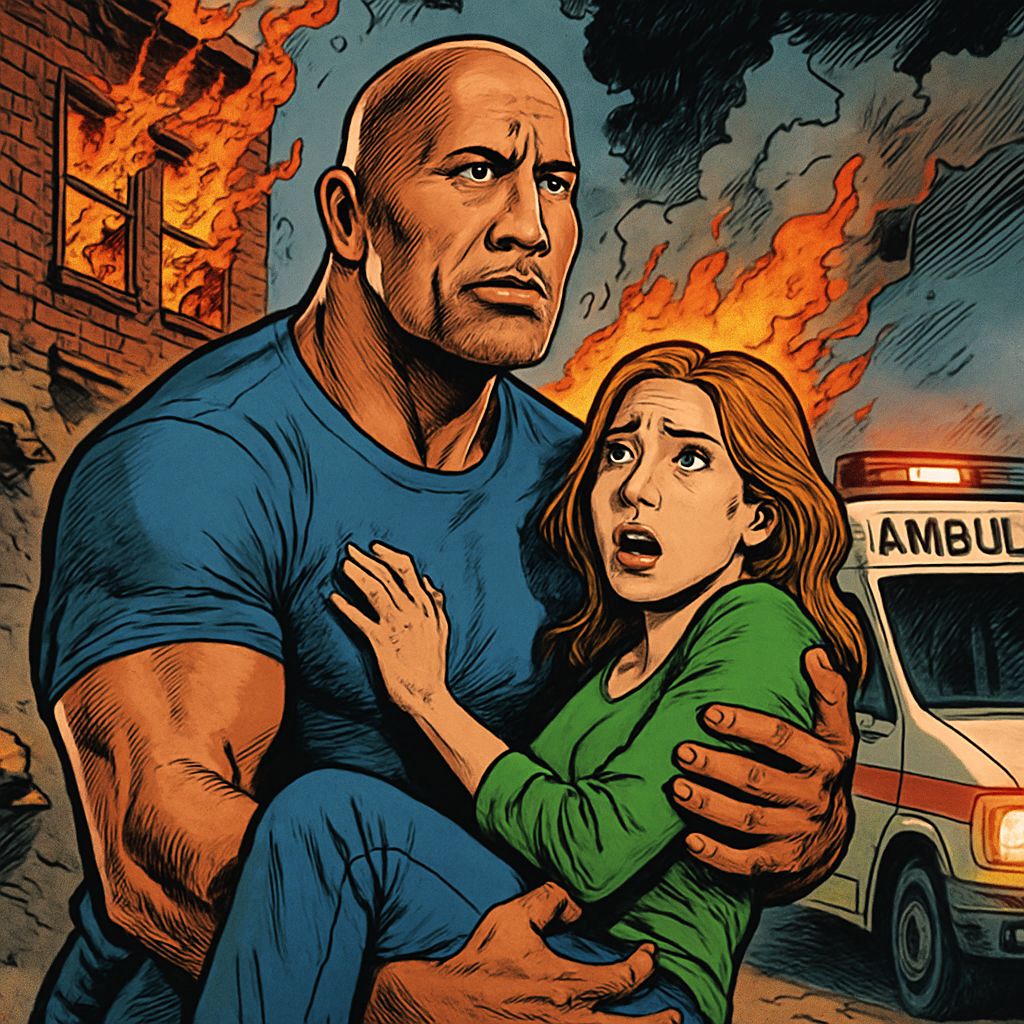
Fame doesn’t make you ready for a real emergency — but training does, and some celebrities have more of it than you’d expect.
Whether it’s a background in the military, years of intense stunt preparation, or simply the physical and mental conditioning that comes with elite-level roles, a number of well-known names have proven they can handle genuine crises. Sites like those focused on real-world preparedness often highlight that readiness isn’t about resources — it’s about mindset and skills. These celebrity stories drive that point home in a way that’s hard to ignore.
These Celebrities Are More Ready for Disaster Than Most of Us
Most people assume celebrities are insulated from danger by bodyguards, private transport, and carefully managed environments. The reality is more interesting. Some of the most recognizable names in entertainment have backgrounds steeped in real-world survival skills, and when emergencies came without warning, they didn’t freeze — they moved.
What separates these individuals isn’t wealth or status. It’s a combination of physical conditioning, practiced decision-making under stress, and the willingness to act before someone else does. These are learnable, transferable skills — and the celebrity examples below make that clear.
Real Skills, Not Movie Magic: Celebrity Training That Transfers to Real Life
Hollywood requires a lot of physical preparation, but not all of it stays on screen. Martial arts training, combat choreography, tactical driving, water survival, and weapons handling all leave real marks on the body and mind. When practiced at a high level over years, these skills don’t switch off when the cameras stop rolling.
Tom Hardy’s Combat and Chase Instincts That Caught a Real Thief
In 2009, a moped thief snatched a bag and fled through the streets of Richmond, London. Tom Hardy — who was nearby filming — gave chase on foot, covering several blocks before catching the suspect and physically detaining him. Witnesses described him as switching into a focused, purposeful mode almost instantly.
This wasn’t luck. Hardy has trained extensively in Brazilian Jiu-Jitsu, boxing, and wrestling for numerous film roles, including The Dark Knight Rises and Warrior. That kind of conditioning doesn’t just build muscle — it trains the nervous system to respond rather than hesitate. As one witness told The Sun: “It was mental — like he’d switched to superhero mode in an action movie.”
The real takeaway here isn’t that Hardy is extraordinary. It’s that his training gave him an automatic response that bypassed the panic most people feel. Preparedness does exactly that — it replaces hesitation with action.
Tom Cruise’s On-Set Awareness That Saved a Life From Helicopter Blades
While filming Cocktail in 1988, Tom Cruise spotted his co-star Elisabeth Shue walking directly toward the spinning tail rotor of a helicopter on set. He pulled her back before she made contact. The incident was never dramatized for publicity — it simply happened, and those present confirmed it. This highlights the importance of being prepared for emergencies, whether on a film set or in everyday life.
Cruise is known for performing the majority of his own stunts across the Mission: Impossible franchise, requiring him to maintain an exceptionally high level of situational awareness. That awareness — constantly scanning environments for hazards and understanding mechanical and physical danger — is exactly the kind of mental habit that emergency preparedness training develops in regular people.
How Military and Stunt Training Builds Genuine Survival Instincts
The common thread across these examples is trained automaticity — the ability to act correctly under pressure without having to consciously think through each step. Combat veterans describe the same phenomenon. First responders train for it deliberately. And preparedness-minded civilians can develop it too, through consistent practice with skills like first aid, fire response, and water rescue.
Stunt training in particular demands a working knowledge of physics, body mechanics, controlled falls, and environmental hazards. Celebrities who commit to this training for years are, functionally, building the same muscle memory a search-and-rescue volunteer builds through field drills.
Celebrities Who Responded to Real Emergencies Without Hesitation
Beyond training, what these stories share is speed. There was no committee meeting, no waiting for someone more qualified. These individuals assessed the situation and acted. That behavioral pattern — observe, decide, move — is the core of effective emergency response at any level. For those looking to enhance their own preparedness, consider combining physical and psychological preparedness to improve response times.
Jamie Foxx Pulled a Man From a Burning Car in 2016
On January 20, 2016, a truck driver lost control of his vehicle near Jamie Foxx’s property in Hidden Valley, California. The truck rolled and caught fire with the driver still inside and buckled into his seatbelt. Foxx ran to the scene, used a seatbelt cutter to free the man, and pulled him clear of the burning vehicle minutes before it was fully engulfed in flames. This act of heroism highlights the importance of being prepared for emergencies, as detailed in your ultimate emergency fund preparation guide.
Foxx described the moment simply: he saw someone in danger and ran toward it. He had a seatbelt cutter — a basic, inexpensive tool that most preparedness-minded individuals carry in their vehicles. That single tool, combined with the willingness to act, saved a life. The driver, Brett Kyle, later credited Foxx directly with his survival.
John Krasinski Saved a Woman From Drowning in Costa Rica
Before his career took off, John Krasinski spent time teaching English in Costa Rica after high school. On a visit to Manuel Antonio beach, a woman was caught in a riptide and swept out to sea. Krasinski entered the water and pulled her to safety, later recounting the story to Playboy.
Riptides are among the most dangerous and misunderstood beach hazards. Most drowning victims panic and fight the current directly, exhausting themselves. Effective water rescue — even at a basic level — requires knowing how to move at an angle to the current rather than against it. Key water safety awareness points include:
- Never swim directly against a riptide — swim parallel to shore first
- If caught in a current, conserve energy by floating rather than thrashing
- Signal for help by waving one arm while staying calm
- Designate a water-watcher in any group near open water
- Learn to identify riptide signs: discolored choppy water moving away from shore
Krasinski’s willingness to enter the water quickly and assist was the decisive factor. Basic swimming ability and situational awareness at the beach — things anyone can develop — made the difference between a tragedy and a rescue.
Kate Winslet Carried Richard Branson’s Elderly Mother to Safety During a Fire
In August 2011, a lightning strike ignited a fire at Richard Branson’s Necker Island estate in the British Virgin Islands. Kate Winslet, who was a guest at the property, didn’t wait for direction. She carried Branson’s 90-year-old mother, Eve Branson, down the stairs and out of the burning building to safety.
Richard Branson later spoke publicly about Winslet’s actions, describing her as calm and focused during the evacuation. The fire destroyed the main house entirely. For those interested in being prepared for emergencies, consider checking out this essential bug-out bag items guide.
What Winslet demonstrated was textbook fire evacuation behavior: stay low, move quickly, assist those who cannot move independently, and get out without stopping to gather belongings. These are the exact principles taught in residential fire safety courses — and they work whether you’re on a private island or in a third-floor apartment.
The fact that a celebrity had to demonstrate these basics is a reminder that most people are never taught them. Fire drills are treated as formalities. Evacuation plans for homes are almost never made. Yet when smoke fills a room, the person who has mentally rehearsed the steps moves — everyone else stands still.
Dev Patel Physically Intervened to Stop a Knife Fight in Australia
In April 2022, Dev Patel witnessed a violent altercation outside a convenience store in Adelaide, Australia. Two individuals were involved in a knife fight, and rather than pulling out his phone to record or waiting for police, Patel physically stepped between them in an attempt to de-escalate the situation. His companions had to physically pull him back from the confrontation.
Whether or not intervening in a knife fight is tactically advisable — and in most preparedness training, it isn’t recommended unless there are no other options — what Patel demonstrated was a complete absence of the bystander effect. He didn’t assume someone else would handle it. He moved toward the danger. That instinct, combined with proper training in de-escalation techniques, is exactly the kind of response emergency preparedness develops in people who take it seriously.
What Makes a Celebrity Actually Prepared vs. Just Famous
Not every celebrity who has stumbled into an emergency deserves to be called prepared. Some acted on adrenaline and got lucky. But the individuals highlighted here share specific, identifiable traits that go beyond fame or fortune — traits that translate directly into effective emergency response.
The difference between a celebrity who performs heroics on screen and one who delivers them in real life comes down to a short list of concrete attributes. Physical capability matters. Mental composure under stress matters even more. And behind both of those is something quieter: a genuine orientation toward the safety of others rather than self-preservation at all costs. For those interested in building these attributes, exploring physical and psychological preparedness can be beneficial.
These aren’t personality traits you’re born with. They’re developed. The celebrities who show up in these stories consistently have training histories, physical disciplines, or life experiences that built these capacities over time. That’s the most important point — because it means anyone can build them too.
Physical Fitness That Goes Beyond Looking Good on Screen
Harrison Ford maintained an active career as a licensed helicopter and fixed-wing aircraft pilot well into his seventies, volunteering his aircraft and time for search-and-rescue missions in Wyoming. He has personally located missing hikers on multiple occasions. That level of sustained physical and technical engagement requires ongoing training, currency requirements, and mental sharpness — none of which happen by accident.
Physical preparedness isn’t about being an athlete. It’s about maintaining enough strength, endurance, and mobility to act when action is required. Carrying someone down a staircase, swimming against a current, chasing a threat on foot, or pulling a person through a car window all require a base level of physical capability that deliberate fitness maintains.
Calm Decision-Making Under Pressure
Every single celebrity example in this article shares one behavioral signature: they slowed down internally while the situation escalated externally. That cognitive composure — sometimes called stress inoculation in tactical training — is what separates effective responders from panicked bystanders. It can be trained through repeated exposure to high-pressure simulations, which is exactly what first aid courses, fire drills, and self-defense training provide.
Survival Skills Fans Can Learn From Celebrity Examples
The point of these stories isn’t to admire famous people from a distance. It’s to recognize that every skill demonstrated in these real-life rescues is learnable, practicable, and available to anyone willing to put in a modest amount of time. None of these celebrities had access to emergency tools or knowledge that you can’t also acquire.
Here are the five most directly transferable skills drawn from the examples above — ranked by how quickly the average person can develop basic competency in each one.
1. Know How to Pull Someone From a Vehicle Safely
Jamie Foxx’s rescue is the clearest example of this. He had a seatbelt cutter — a tool that costs under $15 and fits on a keychain — and he used it. Beyond the tool, knowing how to support a person’s head and neck during extraction, and understanding when to move someone versus when to wait for emergency services, can be the difference between saving a life and causing additional injury.
Carry a seatbelt cutter and window breaker in every vehicle you own. Practice mentally running through a vehicle extraction scenario so the steps aren’t new when the situation is already stressful. Many local fire departments offer free community demos on vehicle rescue basics.
2. Learn Basic Water Rescue Techniques
John Krasinski’s beach rescue required swimming ability, comfort in open water, and the physical confidence to assist a panicking person without being pulled under himself — a real danger in water rescues that trained lifeguards specifically train to avoid. Panicking victims will climb over a rescuer instinctively, which can drown both people.
The safest water rescue approach follows a clear priority order, which can be crucial when preparing kids for emergencies.
- Reach — extend an arm, towel, or pole from shore without entering the water
- Throw — toss a flotation device, rope, or anything buoyant
- Row — use a boat or paddleboard to get close without physical contact
- Go — enter the water only as a last resort, and approach from behind the victim
Taking a Red Cross water safety course or a lifeguard certification class provides hands-on practice with all four steps. Even one afternoon of training dramatically improves your ability to respond at a beach, pool, or lake without putting yourself at equal risk. For comprehensive preparedness, consider exploring physical and psychological preparedness techniques that can enhance your readiness in emergencies.
3. Practice Situational Awareness in Public Spaces
Tom Cruise’s instinctive identification of a mechanical hazard on a film set is a direct product of trained environmental scanning. In everyday life, situational awareness means knowing where the exits are when you enter a building, noticing behavioral anomalies in crowds, identifying potential hazards before they activate, and maintaining enough mental presence to respond rather than freeze. It costs nothing and requires only the habit of paying attention — but most people spend public time absorbed in their phones instead.
4. Take a Basic First Aid and CPR Course
Clint Eastwood used the Heimlich maneuver to save a choking man at a golf event in Carmel, California. Steve Buscemi — a former New York City firefighter before his acting career — returned to active duty volunteering in the rubble of Ground Zero after September 11, 2001, working shifts alongside his former FDNY colleagues. These are individuals who had formal emergency response training long before fame arrived.
A standard American Red Cross First Aid and CPR/AED certification takes roughly four to six hours to complete and covers choking response, CPR for adults and children, bleeding control, shock management, and automated defibrillator use. Many employers offer this training free. Community centers, fire stations, and hospitals run regular public courses. The skills learned in a single Saturday course remain useful for a lifetime.
Specifically, the Heimlich maneuver — the technique Eastwood used — involves:
- Standing behind the choking person and wrapping your arms around their waist
- Making a fist just above the navel and below the breastbone
- Grasping the fist with your other hand and delivering firm inward-and-upward thrusts
- Repeating until the obstruction is cleared or the person loses consciousness
- Calling 911 immediately in all cases, even if the obstruction clears
5. Build the Confidence to Act When Others Freeze
The bystander effect is real and well-documented — the more people present during an emergency, the less likely any single individual is to act, because everyone assumes someone else will handle it. Dev Patel didn’t wait. Jamie Foxx didn’t scan the crowd for a more qualified volunteer. Kate Winslet didn’t hesitate at the top of a smoke-filled staircase. Confidence to act first is itself a trainable skill, and it’s built through repeated mental rehearsal, scenario-based practice, and a conscious decision made in advance: if something happens near me, I will be the one who moves.
Start small. Run through fire evacuation scenarios in your home. Practice what you’d say to a choking victim before touching them. Walk through your nearest hospital’s emergency entrance and note where the AED is mounted on the wall. Each small act of preparation rewires the default response from freeze to act — and that rewiring is what every celebrity in this article had already done, in one form or another, long before the emergency arrived. For more on readiness, check out helpful tips for families to prepare for emergencies.
Sean Penn’s Frontline Preparedness Sets a Different Standard
Most of the stories in this article involve celebrities who happened to be near an emergency and responded. Sean Penn represents something different — a deliberate, sustained commitment to being useful in disaster zones that goes far beyond a single incident. In 2005, following Hurricane Katrina, Penn traveled to New Orleans with a small team and a boat to assist with water rescues in flooded neighborhoods. When his boat’s motor failed, he paddled by hand. In 2010, following the catastrophic earthquake in Haiti, Penn established and ran a refugee camp housing tens of thousands of displaced people through his organization J/P Haitian Relief Organization, later renamed CORE Response. He remained operationally involved in Haiti for over a decade, and CORE Response went on to become a major partner in COVID-19 testing and vaccination distribution efforts across the United States.
Penn’s approach is the clearest example in this article of what genuine long-term preparedness looks like when scaled beyond personal response. He didn’t show up for a photo opportunity. He built organizational capacity, trained teams, and stayed through the unglamorous operational work that follows the initial disaster. That level of commitment is exceptional — but the underlying principle is one any prepared individual can apply at their own scale: build skills before you need them, and make yourself useful to your community when crisis arrives.
You Don’t Need Fame to Be This Ready
Every skill demonstrated in these real-life stories is accessible. Seatbelt cutters, CPR certification, water safety awareness, fire evacuation planning, and situational awareness habits cost almost nothing and take minimal time to develop. What the celebrities in these examples had that most bystanders didn’t was simply this: they had already decided, before the emergency happened, that they were the kind of person who acts. For those looking to prepare their families, here are some helpful tips for families on how to be ready for emergencies. That decision is available to everyone right now.
Preparedness isn’t about stockpiling gear or training for worst-case catastrophes. It starts with the simple, consistent development of skills that make you more useful when something goes wrong near you — whether that’s a car fire, a drowning, a choking incident, or a building evacuation. The gap between the person who stands and watches and the person who moves toward the problem is almost never physical capability. It’s preparation, mindset, and the prior decision to be ready.
Frequently Asked Questions
These are the most common questions people have after reading real-life celebrity emergency response stories — answered directly, with actionable information you can use today.
Which celebrity is most known for real-life heroic acts?
While multiple celebrities have acted heroically in isolated incidents, Sean Penn stands out for the sustained scale of his real-world emergency response. His work through CORE Response following both Hurricane Katrina and the 2010 Haiti earthquake represents years of operational involvement in disaster relief — not a single adrenaline-fueled moment. Among single-incident responses, Jamie Foxx’s vehicle extraction rescue in 2016 is among the most clear-cut examples of preparedness and decisive action directly saving a documented life.
Do celebrities receive special emergency response training for their roles?
Some do, and the training is often more rigorous than most people realize. Action and military film roles frequently require certifications in combat, weapons handling, tactical driving, water survival, and wilderness first aid. Tom Cruise, for example, has completed extensive HALO jump training, combat diving, and motorcycle and vehicle pursuit courses for the Mission: Impossible franchise — all of which require real proficiency, not just the appearance of it on camera.
That said, not all celebrity emergency response comes from film preparation. Steve Buscemi was a working New York City firefighter before his acting career began, and his response to September 11 drew on training that predated Hollywood entirely. Harrison Ford holds FAA certifications for multiple aircraft types and maintains active flying hours, which is what enabled his search-and-rescue volunteer work. The skill set is real regardless of where it originated.
What basic preparedness skills should everyone learn first?
If you’re starting from zero, the highest-return investment of time is a combined First Aid and CPR/AED certification through the American Red Cross or American Heart Association. A single four-to-six hour course covers the skills relevant to the most common life-threatening emergencies — cardiac arrest, choking, severe bleeding, and shock — and the certification is valid for two years before renewal. To complement these skills, consider exploring self-defense psychology for mobility issues to boost your confidence in emergency situations.
After that, the next priorities are practical and low-cost, as demonstrated by celebrities saving lives through simple preparedness.
- Keep a seatbelt cutter and window breaker in every vehicle
- Create and practice a home fire evacuation plan with all household members
- Learn to identify and respond to riptides if you spend time near open water
- Locate the nearest AED to your workplace and home
- Take a basic situational awareness course or read The Gift of Fear by Gavin de Becker
Can regular people develop the same calm-under-pressure response celebrities show?
Yes — and this is one of the most well-supported findings in emergency response research. The calm, effective behavior seen in trained responders is not a personality trait. It is a product of a neurological process called stress inoculation, in which repeated exposure to simulated high-pressure scenarios gradually reduces the acute stress response, allowing clearer thinking and faster action under real conditions. You can learn more about celebrities saving lives and their responses in high-pressure situations.
This is why military and first responder training is repetitive and physically demanding even when the scenarios are artificial. The repetition builds neural pathways that activate automatically under stress, bypassing the freeze response. Civilians can access this same mechanism through consistent practice in first aid courses, self-defense training, fire drills, and scenario-based mental rehearsal.
Training Type
Time to Basic Competency
Cost
Real-World Skill Developed
CPR/First Aid Certification
4–6 hours
$20–$80
Cardiac arrest, choking, bleeding response
Water Safety Course
1 day
$40–$100
Riptide response, water rescue technique
Basic Self-Defense Class
6–8 weeks
$50–$200
Stress response control, physical confidence
Home Fire Drill
30 minutes
Free
Evacuation speed, household coordination
Vehicle Emergency Kit Setup
1 hour
$15–$40
Seatbelt cutting, window breaking, triage
Every person in this article who acted effectively in a real emergency had completed at least one category of training from this list. None of them were born ready — they became ready through deliberate preparation. That path is open to anyone willing to take the first step, such as building an emergency kit.
What is the single most important thing I can do today to become more prepared?
Make one physical change to your environment: put a seatbelt cutter and window breaker in your car. The Resqme Original Keychain Car Escape Tool is a widely available, tested option that attaches to your existing keychain and covers both functions for under $15. These two steps — certification and one tool — immediately move you from unprepared bystander to equipped responder for the most statistically common emergencies you’re likely to encounter.



Leave a Reply