
Article At A Glance:
- Solar power paired with battery storage gives families a reliable backup when the grid goes down — no fuel, no fumes, no noise.
- Power outages are becoming longer and more frequent across the U.S., making emergency energy planning a necessity, not a luxury.
- The right solar system size depends on your family’s specific critical power needs — and getting this wrong is one of the most common mistakes homeowners make.
- A solar-powered emergency setup can keep refrigerators, medical devices, lighting, and communication tools running during extended outages.
- Further in this article, you’ll find a step-by-step breakdown of how to build a complete family emergency plan around your solar energy system.
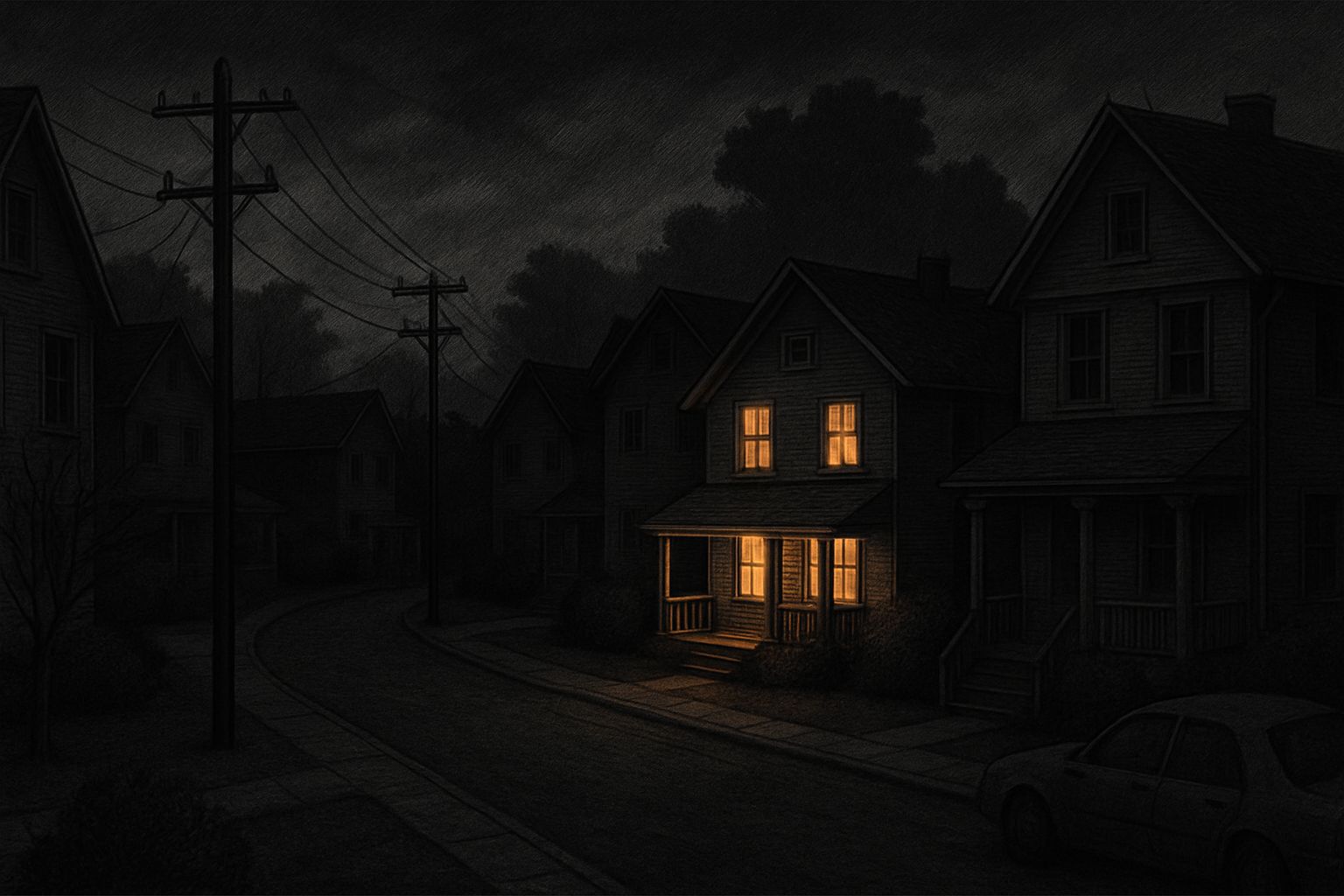
When the grid fails, your family’s safety shouldn’t depend on whether the gas station has fuel — solar power changes that equation entirely.
Across the United States, grid outages are lasting longer and hitting harder. According to the U.S. Energy Information Administration, the average American experienced over eight hours of power interruptions in recent years, with weather-related events driving the majority of those outages. Winter storms, hurricanes, and extreme heat events are all intensifying, and the grid isn’t keeping up. Families who depend entirely on utility power are one bad storm away from losing heat, refrigerated medicine, and communication.
Solar energy — especially when paired with a battery storage system — gives families a genuine alternative. For those looking to explore what a solar backup system could look like for their specific home and region, resources from providers focused on residential solar solutions can help families understand their options clearly and make informed decisions.
Solar Power Keeps Your Family Safe When the Grid Fails
Most people think of solar panels as a way to lower electricity bills. That’s true — but it’s only half the story. The real value during an emergency isn’t the panels themselves. It’s the combination of panels, battery storage, and a system designed to operate independently of the utility grid when it goes down.
The Core Difference: A standard grid-tied solar system without battery backup will shut off automatically during a grid outage — this is a safety feature to protect utility workers. Only systems with battery storage or specific off-grid configurations can keep your home powered when the grid fails.
Why Power Outages Are Becoming More Frequent
The U.S. power grid was largely built in the mid-20th century and was never designed to handle the climate extremes we face today. Aging infrastructure combined with more intense weather events means outages are not just more frequent — they’re lasting longer. The ripple effects touch everything from food safety to home heating to life-sustaining medical equipment.
Winter storms are particularly dangerous. When temperatures drop and a storm knocks out power, families can face life-threatening cold within hours. Summer heat waves create the opposite problem — without air conditioning, vulnerable family members, including the elderly and young children, can experience heat-related illness rapidly. Both scenarios make backup power not a comfort feature, but a safety-critical one.
What Solar Power Actually Does During an Outage
During a grid outage, a solar system with battery backup operates in what’s called island mode — it disconnects from the utility grid and runs your home independently using stored solar energy. Your panels continue generating power during daylight hours, feeding that energy into your battery bank while simultaneously powering your essential loads. At night or during heavy cloud cover, the battery carries the load until generation resumes.
The key word here is essential. A properly planned solar backup system isn’t designed to run your whole home at full capacity indefinitely — it’s designed to keep your family safe by prioritizing critical systems: refrigeration, heating, lighting, communication, and medical devices.
How Solar Battery Storage Works as Emergency Backup
Battery storage is the engine behind any effective solar emergency system. Without it, your solar panels are essentially useless the moment the grid goes down. With it, your home becomes a self-sustaining energy island capable of weathering days-long outages without missing a beat.
Storing Surplus Energy for When You Need It Most
During normal sunny operation, solar panels frequently produce more electricity than a household consumes in real time. In a grid-tied-only system, that surplus flows back to the utility. In a system with battery storage — such as the Tesla Powerwall 3 or the Enphase IQ Battery 5P — that surplus is captured and stored at home. When the grid fails or when the sun goes down, the battery discharges that stored energy to power your home seamlessly, often without you even noticing the transition. For more on preparedness, explore how minimalism and mental clarity play a role in ensuring your readiness.
Which Essential Appliances a Solar Battery Can Power
A single Tesla Powerwall 3, which holds 13.5 kWh of usable energy, can realistically power the following critical appliances through an overnight outage when consumption is managed:
- Refrigerator: ~1–2 kWh per day
- LED lighting (10 bulbs): ~0.5 kWh over 8 hours
- Phone and laptop charging: ~0.3 kWh
- CPAP machine (medical): ~0.5 kWh overnight
- Wi-Fi router: ~0.2 kWh per day
- Portable fans (2 units): ~0.5 kWh over 8 hours
High-draw appliances like central air conditioning, electric water heaters, and electric stoves are significantly more demanding and will deplete a single battery much faster. These typically require multiple battery units or deliberate load management during an outage.
Off-Grid Capability vs. Grid-Tied Systems
A grid-tied system without storage feeds power to the grid and draws from it as needed — it offers no emergency backup. A grid-tied system with battery backup does both: it participates in the grid normally but switches to island mode during outages. A fully off-grid system operates with no utility connection at all, relying entirely on solar generation and battery storage. For most families, a grid-tied system with battery storage offers the best balance of cost, reliability, and everyday utility savings. To learn more about solar-powered solutions for emergencies, check out this solar-powered generator guide.
How to Size Your Solar System for Emergency Use
Sizing a solar emergency system incorrectly is the single most common and costly mistake homeowners make. Too small, and you’ll run out of power mid-outage. Too large, and you’ve overspent on capacity you’ll rarely use. The right system starts with understanding exactly how much power your family actually needs to stay safe.
Conduct a Home Energy Audit First
Before you can size anything, you need a clear picture of your household’s energy consumption. Start by pulling the last 12 months of electricity bills and identifying your average monthly kWh usage. Most utility bills display this directly. This gives you a baseline — but for emergency planning, you don’t need to power your full average usage. You need to power your critical load only.
Walk through your home and make a list of every device your family genuinely cannot go without during an outage. Medical equipment, refrigeration, heating or cooling systems, lighting, and communication devices are the usual priorities. Note each device’s wattage (found on the device label or in the manual) and estimate how many hours per day it would run during an emergency. This becomes your critical load profile.
Calculate Your Critical Power Needs
Once you have your critical load profile, the math is straightforward. Multiply each device’s wattage by the hours per day it will run to get its daily watt-hours (Wh). Add up all device totals to get your total daily critical load in watt-hours, then convert to kilowatt-hours by dividing by 1,000. This number tells you exactly how much battery storage you need to cover one full day without solar generation — such as during a heavy storm with no usable sunlight.
Match Battery Capacity to Outage Duration
Once you know your daily critical load in kWh, match that number against battery capacity with outage duration in mind. A single Tesla Powerwall 3 at 13.5 kWh covers a day of critical loads for a modest household. For a family expecting multi-day outages — common in rural areas or regions with severe winters — two or three units stacked together provide the buffer needed to ride out 48 to 72 hours without meaningful solar generation.
Solar generation during the outage itself changes this equation significantly. If your panels can produce even 4 to 6 kWh of usable energy on a partly cloudy day, that offsets a large portion of your critical load and extends your battery’s effective range considerably. The goal is to design a system where panels replenish the battery faster than your family depletes it under emergency conditions.
As a general rule of thumb, plan your battery capacity for at least 1.5 times your single-day critical load. This buffer accounts for cloudy days with reduced generation, battery efficiency losses (most lithium batteries operate at 90–95% round-trip efficiency), and unexpected spikes in consumption. It’s the difference between a system that barely survives an outage and one that handles it comfortably. For more insights, check out the role of solar energy in emergency preparedness.
5 Key Benefits of Solar Power for Emergency Preparedness
Understanding the mechanics of solar backup is one thing — but it helps to see the full picture of why families who invest in these systems consistently report feeling more confident, more prepared, and more financially secure than those relying solely on the grid or traditional fuel generators.
These five benefits aren’t theoretical. They’re the real, day-to-day and emergency-day advantages that solar-powered families experience firsthand.
1. Energy Independence From an Unreliable Grid
Grid-tied families are entirely at the mercy of their utility provider. When a transformer blows three neighborhoods away, your power goes with it — regardless of how well you’ve maintained your own home. Solar with battery storage breaks that dependency in a meaningful way. Your home generates and stores its own electricity, making utility outages an inconvenience rather than a crisis.
Real-World Example: During Winter Storm Uri in February 2021, Texas families who had solar-plus-storage systems maintained power while millions of their neighbors went without electricity for days in freezing temperatures. While grid-tied-only solar systems also shut down (due to anti-islanding safety requirements), those with battery backup were the exception — warm, powered, and safe.
Energy independence also means freedom from the rate volatility that utility customers face every year. Electricity prices have risen consistently over the past two decades, and that trend shows no sign of reversing. A family that generates and stores its own power is insulated from those increases in a way that purely grid-dependent households simply are not. For those seeking ways to maintain preparedness during emergencies, solar power solutions offer a reliable option.
The psychological benefit is real too. Families with solar backup systems consistently report lower anxiety around severe weather forecasts. Instead of rushing to buy ice and candles before a storm, they check their battery charge level and go about their evening. That peace of mind is genuinely valuable — particularly for households with young children, elderly members, or anyone relying on powered medical equipment. For additional ways to maintain calm, consider learning self-defense techniques to stay composed in emergencies.
2. No Fuel Dependency Like Traditional Generators
Traditional gas-powered generators seem like a practical backup solution until you actually need them during a regional emergency. Gas stations lose power too, fuel runs out quickly when an entire community is simultaneously trying to stock up, and propane delivery timelines stretch to days or weeks. A solar-powered backup system requires none of that. As long as the sun rises — even partially through clouds — your system is replenishing its own fuel supply automatically.
Beyond supply chain concerns, fuel generators carry serious safety risks. Carbon monoxide poisoning from improperly ventilated generators kills dozens of Americans every year during power outages. Solar battery systems produce zero emissions, operate silently, and can be installed entirely indoors or in garages without any ventilation requirements. For families with children or pets, that difference alone is significant.
3. Reduced Energy Costs Before and During Emergencies
Solar panels don’t just activate during emergencies — they’re working every single day, reducing the electricity your family draws from the grid and cutting monthly utility bills. The Federal Solar Investment Tax Credit (ITC) currently allows homeowners to deduct 30% of their total solar installation costs from federal taxes, making the upfront investment considerably more accessible. Many states stack additional incentives on top of that, shortening the payback period further.
4. Silent and Safe Indoor-Compatible Operation
A solar battery system like the Enphase IQ Battery 5P or Tesla Powerwall 3 operates completely silently and produces no exhaust. This means it can be installed in a garage, utility room, or even a living space without disrupting your household. During an emergency, you won’t be dealing with generator noise that prevents sleep, masks important alerts, or disturbs a baby or an elderly family member trying to rest.
5. Long-Term Reliability With Minimal Maintenance
Solar panels have no moving parts. Modern lithium iron phosphate (LFP) battery systems — used in units like the Franklin Electric apower — are rated for thousands of charge cycles with minimal degradation. Most reputable solar installations come with 25-year panel performance warranties and 10-year battery warranties. Compare that to a fuel generator, which requires regular oil changes, carburetor maintenance, fuel stabilizer treatment, and annual test runs just to remain functional when needed.
The maintenance reality for solar is straightforward: rinse panels a few times a year to remove dust and debris, schedule a professional inspection every two to three years, and monitor system performance through the manufacturer’s app. That’s essentially it. The system works quietly in the background every day, requiring almost none of the ongoing attention that traditional backup systems demand.
Keeping Solar Panels Effective During Winter Storms
Winter is precisely when your solar backup system matters most — and it’s also when panels face their greatest environmental challenges. Snow accumulation, ice buildup, and reduced daylight hours can all reduce generation capacity at the exact moment your family needs it. A few proactive steps before and during winter keep your system performing reliably when conditions get serious. For more on preparedness, consider having must-have supplies for every driver to ensure safety in winter conditions.
Clear Snow and Debris After Every Storm
Snow sitting on solar panels blocks sunlight completely — even a thin layer of snow can reduce output by 80% or more. After a storm passes, clearing panels promptly restores generation capacity and allows your battery to begin recharging. Use a soft-bristled roof rake with a non-abrasive head designed for solar panels — standard metal rakes can scratch anti-reflective coatings and void warranties. Never use hot water to melt ice, as the thermal shock can crack tempered glass panels.
The good news is that snow often slides off panels naturally. Most residential solar panels are installed at an angle, and the smooth glass surface combined with even modest heat from sunlight causes snow to shed on its own within hours of a storm ending. South-facing panel arrays at steeper tilt angles (30 to 45 degrees) shed snow most efficiently, which is worth considering during system design if you live in a high-snowfall region.
Schedule Routine Inspections Before Winter Hits
A professional solar inspection in early fall — before the first hard freeze — gives you the opportunity to identify and address any issues before they become outage-season problems. Inspectors check for micro-cracks in panels, loose wiring connections, inverter performance, battery health, and mounting hardware integrity. Catching a failing component in October is infinitely better than discovering it during a December blizzard when your family is depending on the system to keep the heat running.
How to Build a Family Emergency Plan Around Solar Energy
Having a solar battery system installed is step one. Actually integrating it into a household emergency plan that every family member understands is what transforms that equipment from a passive investment into an active safety net. The most effective solar emergency plans are specific, practiced, and simple enough that a teenager or older child can execute them independently if needed.
Identify Critical Devices Your Family Cannot Go Without
Start by making a physical list — not a mental one. Walk through your home room by room and write down every device that would create a genuine safety or health problem if it stopped working. Refrigerated insulin, a home oxygen concentrator, a CPAP machine, or a sump pump preventing basement flooding are non-negotiable. Lighting in key areas, a router for emergency communication, and a phone charging source are close behind. This list becomes the foundation of your entire emergency energy plan.
Once you have that list, cross-reference it with your battery system’s capacity. If your critical devices collectively draw 8 kWh per day and your Tesla Powerwall 3 holds 13.5 kWh, you have roughly 1.5 days of buffer without any solar generation — knowing that number in advance prevents panic decisions during an actual outage. Post the list somewhere visible in your home, such as inside a kitchen cabinet or near your electrical panel, so it’s accessible without needing a powered device to find it. For more tips on preparedness, consider exploring minimalism and mental clarity in emergency situations.
Teach Every Family Member How to Operate the System
Your solar battery system is only as useful as the people who can operate it. Most modern systems — including the Tesla Powerwall 3 and Enphase IQ Battery 5P — come with companion smartphone apps that display real-time battery charge level, solar generation rate, and home energy consumption. Walk every adult and older teenager in your household through the app so they can monitor system status independently. They should know how to read the current charge percentage, identify which loads are drawing the most power, and switch the system into backup mode manually if needed. For more on preparedness, explore the connection between minimalism and mental clarity.
Beyond the app, ensure every family member knows the physical location of the battery unit and the home’s main electrical panel. In some scenarios — particularly if an inverter trips a breaker — a manual reset is required before the backup system can resume normal operation. This is a 30-second fix if you know where to look, and a genuinely confusing problem if you don’t. Running a brief family walkthrough twice a year, similar to a fire drill, keeps everyone confident and capable when it matters most.
Practice Energy Conservation to Extend Battery Life
Conservation isn’t about deprivation — it’s about intelligent prioritization. During an outage, shifting your household into a lower-consumption mode can dramatically extend how long your battery lasts. Simple actions add up quickly: switching off lights in unoccupied rooms, unplugging devices that draw standby power, avoiding opening the refrigerator unnecessarily, and postponing high-draw activities like laundry or cooking on electric ranges until solar generation can support them during daylight hours.
Creating a simple household outage protocol makes conservation automatic rather than reactive. Designate one room in the house as the primary gathering space during extended outages — concentrating lighting, heating, and activity in a single area dramatically reduces your overall energy draw compared to running multiple rooms simultaneously. A single 60-watt equivalent LED bulb uses roughly 8 watts; lighting five rooms uses five times that. Small decisions compound over a 48-hour outage into meaningful battery savings.
Teach children that emergency mode isn’t a punishment — it’s a game your family wins together by making the battery last as long as possible. Assign age-appropriate roles: younger children can be in charge of turning off lights when leaving a room, while older kids can monitor the battery app and report charge levels to parents. This keeps everyone engaged, reduces the anxiety that often accompanies emergencies, and ensures conservation happens consistently without constant adult reminders.
Your Family’s Energy Security Starts With One Decision
Every family that has sat in a cold, dark house during a multi-day winter outage will tell you the same thing: they wished they had acted sooner. Solar power paired with battery storage isn’t a luxury upgrade — it’s a practical, increasingly affordable safety infrastructure for the home. The grid will fail again. The only question is whether your family will be prepared when it does.
Frequently Asked Questions
These are the questions families ask most often when exploring solar backup systems — answered clearly so you can make informed decisions without wading through industry jargon.
Can solar panels power a home during a complete grid outage?
Yes — but only if your system includes battery storage and is configured for backup operation. A standard grid-tied solar system without batteries will automatically shut off during a grid outage due to anti-islanding safety protocols designed to protect utility line workers. A solar-plus-storage system, by contrast, detects the grid failure and switches into island mode within milliseconds, continuing to power your home using stored energy and ongoing solar generation without interruption. For more information on preparedness, consider reading about must-have supplies for emergencies.
How long can a solar battery storage system power essential appliances?
Runtime depends on three variables: your battery’s usable capacity, how much power your critical devices consume, and how much solar generation is available during the outage. Here’s a practical reference based on a single Tesla Powerwall 3 (13.5 kWh usable) powering a conservative critical load:
- Refrigerator + lighting + phone charging + Wi-Fi: 2 to 3 days without any solar generation
- Adding a CPAP machine: reduces runtime by approximately 8 to 12 hours
- Adding a window AC unit (750W): reduces runtime to roughly 12 to 18 hours
- With 6 kWh of daily solar input: indefinite runtime on essential loads in most scenarios
- Two Powerwall 3 units stacked: doubles all of the above estimates
The most important thing to understand is that solar generation during the outage itself is your greatest asset. Even on a heavily overcast winter day, a 6 kW panel array can produce 1 to 3 kWh — enough to meaningfully offset your consumption and extend battery life significantly beyond the figures above.
Medical devices deserve special attention in this calculation. If anyone in your home depends on powered medical equipment, contact the device manufacturer directly to confirm its exact wattage and daily energy consumption. Build that number into your critical load first, before accounting for anything else, and size your battery capacity around it as a non-negotiable baseline.
For most families running a realistic emergency load of 8 to 10 kWh per day, two Tesla Powerwall 3 units or an equivalent capacity from an Enphase IQ Battery 5P configuration provides a comfortable 2.5 to 3-day reserve before solar replenishment is factored in — which is sufficient to outlast the vast majority of residential grid outages in the United States.
Do solar panels still generate power during cloudy winter days?
Yes, though at reduced output. Solar panels generate electricity from daylight, not direct sunlight — diffuse light on a cloudy day still produces meaningful energy. A high-quality monocrystalline panel system, such as those using SunPower Maxeon cells, typically produces 10 to 25% of its rated capacity on heavily overcast days and 25 to 50% on partly cloudy days. That’s not full generation, but it’s far from zero, and it makes a significant difference in how long your battery lasts through a multi-day winter storm.
Snow coverage is a more significant concern than cloud cover. A panel buried under three inches of snow produces essentially nothing until the snow clears. This is why clearing panels promptly after a storm — using the safe methods described earlier in this article — is one of the highest-impact actions you can take to keep your system generating through a winter emergency. Panel orientation and tilt angle also play a role: south-facing arrays at 30 to 45 degrees maximize both winter sun exposure and natural snow shedding.
What is the difference between a solar powered generator and a traditional fuel generator?
A solar-powered generator — or solar battery backup system — stores electricity generated by solar panels in a lithium battery and discharges it silently, cleanly, and automatically with no fuel required. A traditional fuel generator burns gasoline or propane to produce electricity on demand, requires manual startup, produces carbon monoxide exhaust that makes indoor or enclosed use dangerous, and depends entirely on fuel availability during the exact moments when fuel supply chains are most strained. For short, predictable outages, a fuel generator can work. For extended emergencies, regional disasters, or households with medical needs, a solar battery system is categorically more reliable and significantly safer.
How much maintenance does a solar backup system require?
Considerably less than most homeowners expect. Solar panels are solid-state devices with no moving parts, and their primary maintenance need is keeping the surface clean. In most climates, rainfall handles the majority of routine cleaning. In dry or dusty regions, a gentle rinse with a garden hose two to four times per year maintains optimal output. Avoid abrasive cleaners, high-pressure washers, and any contact with panel surfaces during freezing temperatures.
Battery systems like the Tesla Powerwall 3 and Enphase IQ Battery 5P are essentially maintenance-free from the homeowner’s perspective. Their internal management systems handle charge balancing, thermal regulation, and performance optimization automatically. Both systems provide real-time diagnostics through their companion apps, so any developing issue is flagged proactively rather than discovered during an emergency. Professional inspection every two to three years — covering wiring integrity, inverter performance, battery health, and mounting hardware — is the primary scheduled maintenance task. For those interested in broader preparedness strategies, exploring minimalism and mental clarity can be beneficial.
The inverter is the component most likely to require attention over a system’s lifetime. String inverters typically carry 10 to 12-year warranties and may need replacement once over a 25-year system lifespan. Microinverters, used in Enphase systems, carry 25-year warranties that match the panels themselves, eliminating that replacement concern entirely. Factor inverter type into your initial system decision if long-term, low-maintenance operation is a priority — for most families, it absolutely should be. For more information on solar energy’s role in emergencies, check out this guide.




Leave a Reply