
Article At A Glance:
- Self-reliance is not about fear or isolation — it’s a deliberate, empowering choice to thrive independently of fragile systems.
- The most prepared people are also the most valuable to their families and communities when things go wrong.
- Five core skills form the foundation of self-reliance: food production, water sourcing, home repair, first aid, and financial independence.
- You don’t need to spend a fortune to start — knowledge is the most valuable prep tool you own.
- Self-reliance compounds over time — every skill you learn and every resource you secure builds a deeper layer of real, lasting freedom.
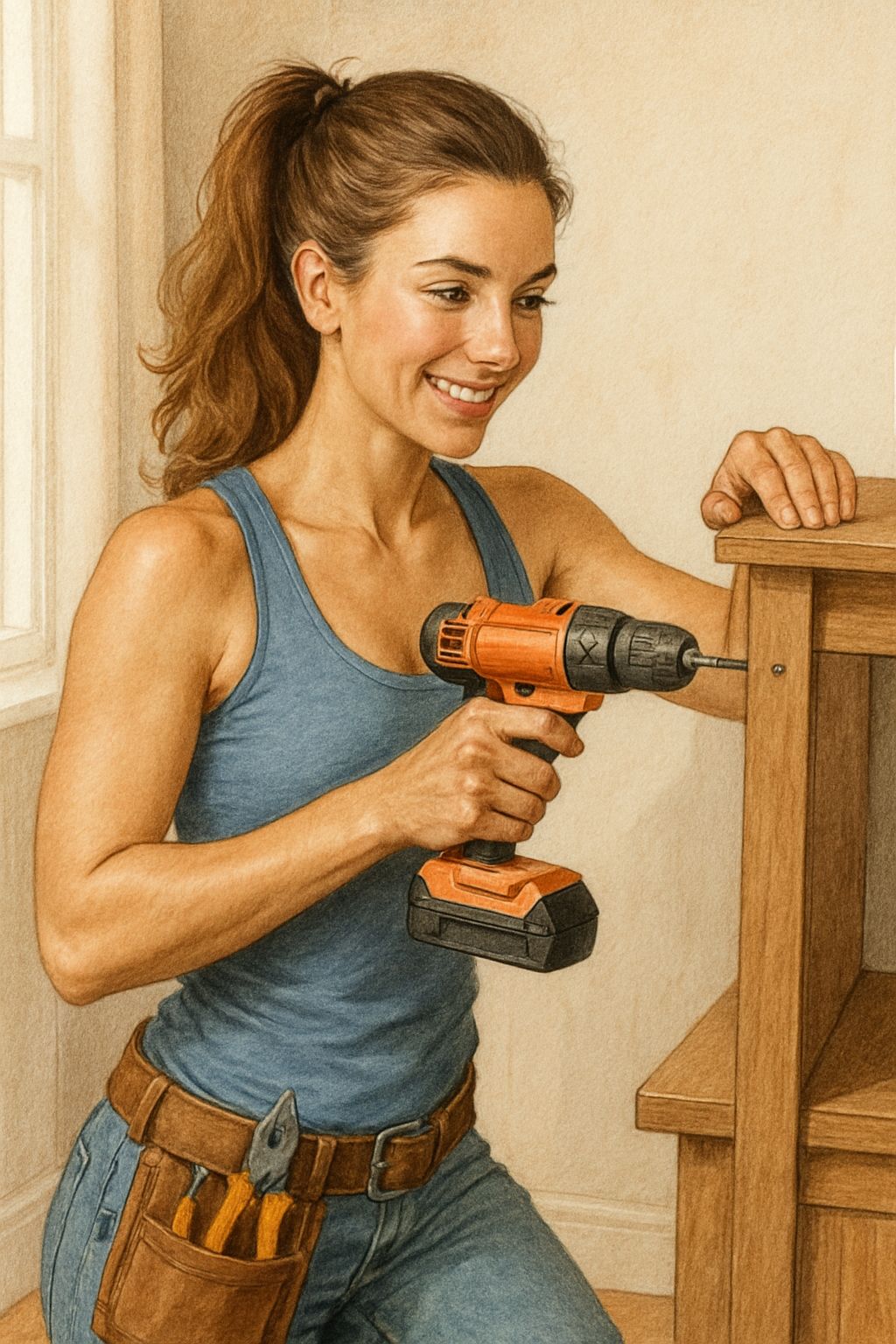
Most people don’t realize how dependent they are on systems outside their control — until those systems fail.
From grocery store supply chains to government emergency response, modern life is built on layers of convenience that can collapse faster than anyone expects. The COVID-19 pandemic exposed empty shelves and overwhelmed hospitals. Hurricane Katrina showed the world what government aid looks like when it arrives too late. These weren’t anomalies — they were previews.
Key Takeaways: What Self-Reliance Really Means for Your Freedom
Self-reliance isn’t a personality type or a political statement. It’s a practical philosophy — one that puts your survival, comfort, and freedom back in your own hands where it belongs.
Dependency Is a Trap — And Most People Don’t See It
Think about your average week. You buy food from a store stocked by trucks you don’t drive, powered by fuel you don’t refine. Your lights stay on because of a grid you don’t control. Your water comes from pipes maintained by systems that can fail, be contaminated, or get shut off. None of this is inherently wrong — but relying on all of it without a backup plan is a serious vulnerability.
The hard truth is that most households are roughly 72 hours away from a crisis if any one of those systems fails. Three days of food. A few gallons of water. And after that? Most people have no plan. Self-reliance isn’t about rejecting modern convenience — it’s about not being helpless without it.
Self-Reliance Is Not About Surviving — It’s About Thriving
There’s a common misconception that prepping and self-reliance are purely about doomsday scenarios. In reality, the mindset of self-reliance improves your daily life long before any emergency arrives. It builds discipline, sharpens problem-solving, and gives you a quiet, unshakeable confidence that most people spend their entire lives chasing.
The Difference Between Surviving and Thriving
Surviving means getting through. Thriving means being equipped, calm, and capable no matter what’s happening around you. A person who knows how to grow food isn’t just prepared for a crisis — they eat better, save money, and have a deeper connection to what sustains them. Someone with first aid knowledge doesn’t just help in emergencies — they become the person others turn to when it matters most.
That shift — from passive participant to active provider — is what self-reliance actually delivers. It’s not about stockpiling fear. It’s about stacking capability.
Why True Freedom Starts With Preparation
Freedom isn’t just political or financial. Real freedom is the ability to act without being forced into someone else’s timeline or dependent on their resources. When you have water stored, food preserved, and a plan in place, you make decisions from a position of strength rather than desperation. That changes everything — how you think, how you lead your family, and how you show up in your community.
Preparation is the foundation that freedom is built on. Without it, freedom is just a word.
How Self-Reliance Builds Confidence That Compounds Over Time
Every skill you learn and every supply you secure adds a layer to your personal resilience. The first time you successfully purify water from a natural source, preserve a harvest, or administer proper wound care, something shifts in you. You stop asking “what would I do if…” and start knowing the answer. That confidence doesn’t stay contained — it bleeds into every area of your life.
And it compounds. One skill leads to another. One preparation leads to the next. Over time, you become someone who is genuinely difficult to destabilize — and that is one of the most valuable things a person can be.
The Core Skills Every Self-Reliant Person Should Have
Self-reliance isn’t a single skill — it’s a stack of capabilities that work together. While the list could go on indefinitely, there are five foundational areas that every self-reliant person should develop. These aren’t optional add-ons. They are the bedrock.
1. Food Production and Preservation
Knowing how to grow, harvest, and preserve food is arguably the most fundamental self-reliance skill there is. Whether it’s a backyard garden, container farming on an apartment balcony, or a full homestead, the ability to produce calories independently of a grocery store is irreplaceable. Pair that with food preservation techniques — canning, dehydrating, fermenting, and vacuum sealing — and you create a system that feeds your family regardless of what’s happening at the store.
2. Water Sourcing and Purification
Water is more urgent than food. The human body can survive weeks without eating but only days without clean water. Every self-reliant household should have a stored water supply, a reliable filtration method such as the Berkey Water Filter System, and the knowledge to identify and purify water from natural sources using boiling, chemical treatment, or UV purification tools like the SteriPen Adventurer Opti.
3. Basic Home and Tool Repair
Dependency on contractors and tradespeople for every home repair is expensive in normal times and catastrophic in a crisis. Learning to fix a leaking pipe, rewire a basic electrical circuit, patch a roof, and maintain essential tools keeps your shelter functional and your resources intact. These skills also make you an asset to neighbors and community members who need help.
4. First Aid and Basic Medical Knowledge
When emergency services are overwhelmed or unavailable, your ability to provide basic — and even advanced — first aid can be the difference between life and death. At minimum, every self-reliant person should be certified in CPR, know how to treat wounds, manage shock, splint fractures, and recognize the signs of serious medical emergencies. A well-stocked kit like the MyMedic MyFAK Medical Kit paired with genuine training is a non-negotiable baseline.
5. Financial Independence and Debt Avoidance
Debt is a leash. When you owe money to banks, creditors, or anyone else, your ability to make free decisions is compromised. Financial self-reliance means building an emergency fund, reducing and eliminating high-interest debt, and developing multiple income streams that don’t depend on a single employer or platform. It also means understanding basic investing, budgeting, and the value of holding tangible assets like land, tools, and storable resources alongside any financial portfolio.
How Prepping Reduces Your Dependence on Broken Systems
Modern systems — supply chains, utilities, government services, financial institutions — are more fragile than most people want to admit. They work beautifully in normal conditions. But normal conditions are not guaranteed. Prepping isn’t pessimism. It’s the rational acknowledgment that complex systems fail, and that you’d rather be the person with a plan than the person waiting for help that may not come.
Government Aid Has Limits — History Proves It
Hurricane Katrina in 2005 left thousands of people stranded for days without food, water, or medical care despite the full resources of the federal government being available. FEMA’s response was widely criticized as too slow, too disorganized, and fundamentally unprepared for the scale of the disaster. The lesson wasn’t that government is useless — it’s that government aid has a response time, and that response time can cost lives.
The same pattern emerged during the COVID-19 pandemic, when supply chains buckled, hospitals were overwhelmed, and critical supplies like masks, medications, and ventilators ran critically short. People who had stored supplies, knew how to source food locally, and had basic medical knowledge at home were measurably better off. The evidence is consistent: those who prepared fared better than those who waited.
Supply Chains Are Fragile
The global supply chain is a marvel of efficiency — right up until it isn’t. A single disruption, whether it’s a port blockage, a cyberattack, a fuel shortage, or a pandemic, can ripple through the entire system in ways that empty shelves thousands of miles from the original problem. The 2021 Suez Canal blockage caused by the Ever Given container ship delayed billions of dollars in goods worldwide — and that was a single incident lasting six days.
Most grocery stores operate on a just-in-time inventory model, meaning they carry roughly three to five days of stock at any given time. There is no massive warehouse of backup food waiting behind the scenes. What you see on the shelf is largely what exists locally. When demand spikes or supply drops, those shelves empty fast — as millions of people witnessed firsthand in early 2020.
Building your own supply of food, water, medicine, fuel, and essential goods doesn’t just prepare you for catastrophe. It insulates you from everyday disruptions — price spikes, regional shortages, and local emergencies that never make national headlines but absolutely affect your household.
The 72-Hour Reality Check
FEMA and the American Red Cross both recommend that households maintain a minimum of 72 hours’ worth of emergency supplies. However, most preparedness experts consider this the bare minimum — not the goal. A 30-day supply of water, food, and essential medications is a far more realistic buffer for serious disruptions. For context:
- Water: Store at least one gallon per person per day — more in hot climates or for households with medical needs.
- Food: Focus on calorie-dense, shelf-stable options: rice, beans, canned proteins, freeze-dried meals.
- Medications: Maintain at least a 30-day supply of any prescription medication your household depends on.
- Power: A hand-crank or solar-powered radio, backup lighting, and a portable power station like the Jackery Explorer 1000 cover most short-term needs.
The goal isn’t to hoard — it’s to create a reasonable buffer between your family and the instability of systems you don’t control.
Self-Reliance Strengthens More Than Just You
One of the most persistent myths about self-reliance is that it’s selfish or isolationist. The opposite is true. A prepared person is a community asset. When you can take care of yourself and your family, you stop being part of the problem during a crisis and start being part of the solution.
How Prepared Individuals Build Stronger Communities
Think about what happens in any neighborhood during a power outage, a flood, or a severe storm. The people who have supplies, tools, and skills immediately become the people others turn to. They share what they have, they help coordinate responses, and they reduce the burden on emergency services that are already stretched thin. Self-reliance doesn’t create walls between people — it creates the capacity to genuinely help.
Communities built around preparedness-minded individuals are measurably more resilient. They recover faster, suffer less, and maintain social cohesion under pressure. When your neighbor has a generator, a first aid kit, and three weeks of food, the whole block is safer — not just that one household.
Teaching the Next Generation to Be Self-Sufficient
Self-reliance is most powerful when it’s passed down. Children who learn to grow food, cook from scratch, fix things with their hands, navigate without GPS, and manage money wisely carry those skills for life. They grow into adults who are harder to exploit, less prone to panic, and more capable of leading others when it matters.
This doesn’t require a homestead or a survival course. It starts with small, consistent lessons — letting kids help in the garden, teaching them to read a map, showing them how to change a tire or patch a hole. The compound effect of these small skills builds a generation that knows how to handle the world rather than just consume it.
How to Start Your Self-Reliance Journey Today
The biggest mistake people make is waiting until they feel “ready” — or until a crisis forces their hand. The best time to start building self-reliance was yesterday. The second best time is right now, starting with exactly what you have.
1. Start With an Honest Assessment of Your Current Dependencies
Before you buy a single piece of gear or plant a single seed, get brutally honest about where you’re vulnerable. Most people have never stopped to map out just how dependent their daily life is on systems outside their control. This exercise alone is eye-opening — and it tells you exactly where to focus first.
Ask yourself: What would happen if the power went out for two weeks? What if the grocery stores were closed for five days? What if your income stopped tomorrow? These aren’t paranoid questions — they’re diagnostic ones. Every gap you identify is a gap you can close with the right preparation.
A simple dependency audit covers five areas:
- Food: How many days of food do you currently have at home without restocking?
- Water: Do you have a stored supply and a method to purify more if needed?
- Shelter: Could you heat or cool your home without the grid for an extended period?
- Medical: Does your household have a first aid kit, training, and a supply of critical medications?
- Financial: Do you have liquid emergency savings covering at least three months of expenses?
2. Build Your Knowledge Base Before You Buy Gear
Gear without knowledge is just expensive clutter. A water filter you don’t know how to use, a first aid kit you’ve never opened, or a bag of seeds with no gardening experience won’t save you in a crisis. Knowledge, on the other hand, cannot be lost, stolen, or broken. It travels with you everywhere, costs relatively little to acquire, and multiplies in value every time you use it.
Start with free and low-cost resources — community first aid courses, local permaculture workshops, YouTube channels dedicated to homesteading and bushcraft, and books like The Encyclopedia of Country Living by Carla Emery or Bushcraft 101 by Dave Canterbury. Build a foundation of genuine understanding before spending money on equipment, and every dollar you eventually spend on gear will go much further.
3. Create a Simple Emergency Plan for Your Household
An emergency plan doesn’t need to be a 40-page binder. It needs to answer three questions clearly: Where will your family go if you have to leave home fast? How will you communicate if phones and internet are down? And what will you do in the first 72 hours of a serious disruption? Once those three questions have clear answers, you have the foundation of a real plan.
Map out two evacuation routes from your home, designate a physical meeting point your entire family knows, and establish an out-of-area contact person everyone can check in with. Store physical copies of critical documents — identification, insurance policies, medical records, and emergency contacts — in a waterproof container. Practice the plan at least twice a year so it becomes muscle memory, not a panic-driven scramble when the moment actually arrives. For more on building resilience, explore The Pillars of Self-Reliance.
4. Invest in the Right Tools and Supplies Gradually
Self-reliance doesn’t require a massive one-time investment. In fact, trying to buy everything at once is one of the fastest ways to burn out, go into debt, and end up with a garage full of gear you don’t know how to use. A far smarter approach is building your supply incrementally — adding one or two items per week or month based on your most critical gaps first.
Prioritize water storage and filtration, then food supply, then light and power, then first aid, then tools and communication. A quality hand-pump water filter like the MSR MiniWorks EX, a month’s supply of freeze-dried food from a brand like Mountain House, a Goal Zero Yeti 500X portable power station, and a well-stocked MyMedic RECON Medical Kit cover the majority of short-term emergency needs. Buy quality over quantity — one tool you trust and know how to use is worth more than ten you’ve never touched.
5. Connect With Like-Minded Communities
Self-reliance doesn’t mean going it alone — in fact, isolation is one of the biggest vulnerabilities a prepared person can have. Connecting with others who share this mindset multiplies your resources, your knowledge, and your capabilities exponentially. Local preparedness groups, homesteading communities, CERT (Community Emergency Response Team) programs, and online networks offer both practical skills and the kind of trust-based relationships that become invaluable when systems fail. No single person can master every skill — but a well-connected community of prepared individuals covers nearly every gap.
Self-Reliance Is the Most Radical Act of Freedom Left
In a world engineered for dependency — where subscriptions replace ownership, convenience replaces capability, and most people can’t name three ways to get clean water without turning on a tap — choosing self-reliance is genuinely countercultural. It’s a declaration that your life, your family’s safety, and your future are not outsourced to systems you didn’t build and can’t control. Every skill you develop, every supply you store, and every plan you put in place is a vote for your own freedom. That freedom doesn’t make noise. It doesn’t need an audience. But when the moment comes — and for most people, that moment arrives at least once — it is the only thing that truly matters.
Frequently Asked Questions
What is the difference between self-reliance and prepping?
Self-reliance is the broader philosophy — a commitment to developing the skills, mindset, and resources needed to live independently of fragile external systems. Prepping is one practical expression of that philosophy, focused specifically on preparing supplies and plans for emergencies and disruptions. Think of self-reliance as the mindset and prepping as one of its most tangible applications.
Someone who is self-reliant grows their own food, manages their finances independently, knows basic medical care, and can maintain their own home — regardless of whether a crisis is coming. A prepper specifically stockpiles supplies and plans for worst-case scenarios. The two overlap significantly, and the most capable people practice both. The distinction matters mainly because self-reliance is a daily practice, not just a response to potential disasters.
How much does it cost to start becoming self-reliant?
Far less than most people think — and knowledge costs almost nothing. A library card, a YouTube account, and a notebook give you access to more practical self-reliance information than previous generations could find in a lifetime. The foundational skills — gardening, food preservation, basic first aid, financial discipline — require mostly time and attention, not large purchases.
When it does come time to invest in gear and supplies, start with high-impact, low-cost priorities: a quality water filter, a 30-day food supply built gradually from bulk staples like rice and beans, a basic first aid kit, and a hand-crank emergency radio. Many preppers spend between $20 and $50 per month building their supplies incrementally, which adds up to a genuinely robust preparedness foundation within a year without financial strain.
Can someone be self-reliant while living in a city?
Absolutely — and urban self-reliance is more achievable than most city dwellers realize. Container gardening on a balcony, window herb gardens, community garden plots, rooftop growing spaces, and indoor hydroponic systems all make food production possible without land. Water storage in a small apartment, a quality countertop filter like the Berkey Travel Water Filter, a well-stocked first aid kit, a 30-day food supply, and strong neighborhood relationships create a meaningful layer of resilience in any urban environment. The principles of self-reliance scale to your actual living situation — the goal is reducing vulnerability, not achieving rural perfection.
What is the first skill I should learn to become more self-reliant?
Start with water. It is your most urgent need and the most overlooked gap in most households. Learn how to store water safely, understand how long stored water remains viable, and practice using at least two different purification methods — a quality filter and either boiling or chemical treatment. Once water is handled, move to food storage and basic first aid. These three areas — water, food, and medical — form a triangle of immediate survival capability that no amount of gear can replace without the knowledge to back it up.
How does self-reliance help during natural disasters or economic downturns?
During a natural disaster, the difference between a prepared and unprepared household is measured in days — sometimes in lives. A family with stored water, food, first aid supplies, and a clear emergency plan doesn’t need to compete for resources at a store that may already be empty. They don’t need to wait in a shelter line or depend on emergency services that are overwhelmed. They have options, and options are everything when systems collapse around you.
During economic downturns, self-reliance acts as a financial buffer. A household that produces some of its own food, carries minimal debt, has liquid emergency savings, and owns practical skills is far less vulnerable to job loss, inflation, or financial disruption than one that depends entirely on a single income and a full grocery run every week. The skills themselves have tangible monetary value — every meal grown at home, every repair done without a contractor, and every purchase avoided because you have what you need already represents real financial resilience. Learn more about self-reliance and its importance in modern times.



Leave a Reply