
Article-At-A-Glance:
- Most preppers focus on gear, but if you can’t physically carry it when it matters most, your prep plan has a serious gap.
- The one-mile carry test is the single most revealing fitness benchmark for preppers — and most people fail it the first time they try.
- Real survival fitness isn’t about looking athletic — it’s about being able to lift a 55-pound water container, drag a 150-pound person, and keep moving under load for hours.
- Your bug out bag is already a piece of training equipment — rucking with it regularly is one of the most practical things you can do to close the fitness gap.
- There are specific minimum benchmarks every prepper should hit — keep reading to find out exactly what they are and how to get there.
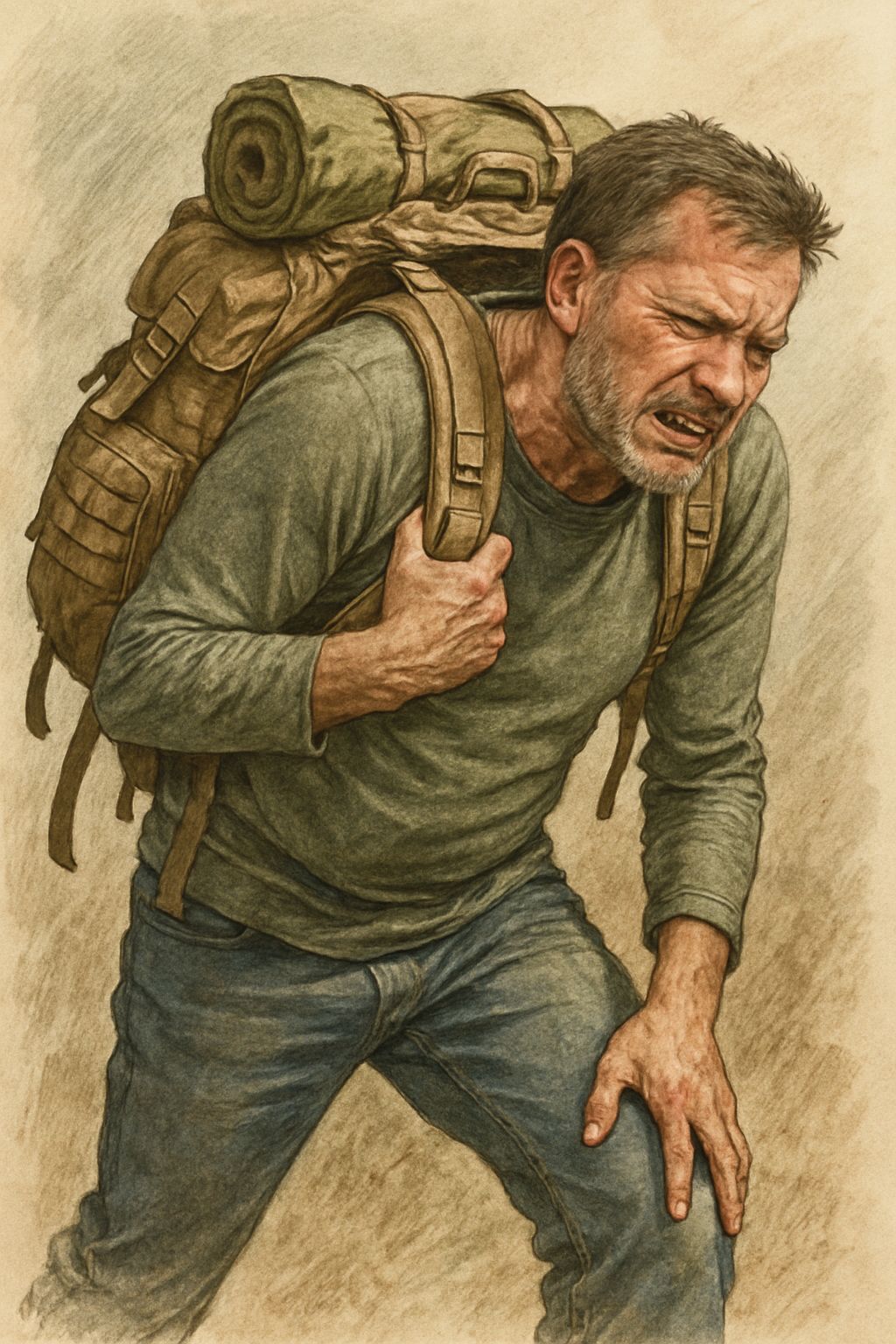
The One-Mile Carry Test Every Prepper Needs to Pass
Your bug out bag is packed, your supplies are stocked, and your plan is solid — but can you actually carry it all when it counts?
Most preppers pour serious time and money into their gear. They research the best water filters, the most reliable fire starters, the highest-rated emergency food rations. What they rarely do is pick up that fully loaded bag and walk a mile with it. That single gap between gear collected and gear you can actually use under physical stress is one of the most overlooked vulnerabilities in preparedness planning. Experts have been calling this out for years — the physical side of prepping is just as critical as the supply side, and it deserves the same attention.
This isn’t about becoming a military operator or a competitive athlete. It’s about building the kind of practical, functional fitness that lets you execute your plan when everything goes wrong.
Most Preppers Can’t Actually Carry Their Own Bug Out Bag
“One drawback to many people’s preparedness plans is that they create a bug out bag that they are not capable of carrying any significant distance.”
— TruePrepperTo ensure you’re not caught unprepared, it’s crucial to build everyday functional strength that can help you carry your bug out bag over long distances.
That’s a hard truth, but it’s an accurate one. A standard bug out bag loaded with water, food, shelter gear, and medical supplies can easily hit 30 to 50 pounds. Carrying that weight over uneven terrain, in stress conditions, without stopping — that’s a completely different physical demand than walking to your car or climbing a flight of stairs.
The problem isn’t that people are lazy. It’s that gear prep and fitness prep feel like separate categories, and most preppers focus almost entirely on the gear side. You can spend a weekend organizing your storage room and feel highly productive. Fitness progress is slower, less tangible, and less immediately satisfying — so it gets pushed to the back burner.
But here’s the reality: a $500 bug out bag sitting in your closet that you physically cannot carry more than half a mile is not preparedness. It’s a very expensive false sense of security.
The Gap Between Gear Collected and Gear You Can Actually Use
Think about what “using your gear” actually means in a real scenario. You’re not lifting it off a shelf and setting it on a table. You’re shouldering a 35-pound pack after a night of broken sleep, walking across terrain that isn’t a treadmill, maybe in weather that isn’t cooperating. Your body is the vehicle that makes every other prep item functional — and if that vehicle isn’t maintained, nothing else in the system works. To ensure you’re ready, consider the five fundamentals of personal preparedness.
Why One Mile Is the Minimum Distance That Matters
One mile isn’t the goal — it’s the floor. If you genuinely cannot carry your loaded bug out bag for one continuous mile over mixed terrain, your current fitness level is a liability to your prep plan. Here’s why that specific distance matters: building everyday functional strength is crucial for preparedness.
- It’s far enough to expose real weaknesses in your load-bearing capacity and footwear choices.
- It takes long enough (typically 20–35 minutes under load) to reveal cardiovascular limitations.
- It mimics the minimum realistic distance between a vehicle breakdown and a safe shelter point.
- It’s achievable for most people with consistent training — making it a practical starting benchmark, not an elite standard.
- Failing it is immediately actionable information — you know exactly what to work on.
Most real bug-out scenarios don’t end at one mile. Research from preparedness communities references scenarios requiring movement of 100 miles or more on foot when vehicle travel becomes impossible. One mile is just where you prove to yourself the plan can actually begin.
What Failing the One-Mile Carry Tells You About Your Prep Plan
If you strap on your bug out bag today and genuinely struggle to walk one mile without stopping, that’s not a judgment — it’s data. It tells you your pack may be overloaded for your current fitness level, your cardiovascular base needs work, or both. The answer isn’t to lighten the bag indefinitely. The answer is to build the body that can carry the bag the plan actually requires.
What You Need to Be Able to Do (Not Just Carry)
Carrying your bag is only one piece of the physical picture. Real preparedness scenarios demand a much broader range of physical capability — things that rarely show up in standard gym programming but matter enormously in the field.
Here are the core physical tasks a prepared person should be capable of completing. These aren’t hypothetical — they’re drawn from realistic survival and emergency scenarios:
1. Carry a 30-Pound Backpack for 10 Hours on Foot
This is the gold standard for bug-out fitness. Ten hours of movement under a 30-pound load — covering real terrain, not a treadmill — requires both muscular endurance and cardiovascular capacity working together. At a moderate 2.5 mph pace over mixed terrain, 10 hours puts you around 20–25 miles out. That’s meaningful distance in a real emergency. If 10 hours feels impossible right now, start with 1 hour and build from there over 8 to 12 weeks of consistent rucking.
2. Lift a 55-Pound Water Container and Walk 100 Feet
A 7-gallon water container weighs approximately 55 pounds when full. This isn’t a gym exercise — this is moving your water supply from a source to your camp, or loading a vehicle under pressure. The lift itself demands lower back strength, grip, and hip mechanics. The 100-foot carry tests whether you can sustain that load without dropping it or injuring yourself.
Practice this with actual water containers, not barbells. The irregular load distribution of a full water jug is harder to manage than a balanced weight and trains stabilizer muscles that conventional lifting often misses. For more on building strength that truly matters, explore functional strength techniques.
3. Drag or Carry a 150-Pound Person for 100 Feet
If someone in your group goes down — injured, unconscious, or unable to move — you may be the one who has to get them out. A 150-pound drag over 100 feet is significantly harder than it sounds. It requires grip strength, core stability, leg drive, and the mental determination to keep moving under extreme physical strain. This is a task that very few gym-goers train for but every prepper should be capable of.
You can train this with a weighted duffel bag, a sled, or even a willing training partner. The firefighter’s carry and the drag are two different skill sets — both worth practicing.
4. Run or Jog One Mile Over Unpaved Ground
Flat pavement running doesn’t fully prepare you for trail movement. Roots, rocks, uneven grades, and loose soil all demand more from your ankles, knees, and stabilizing muscles. The ability to jog — not sprint, just jog — one mile over unpaved ground without injury is a realistic baseline. It covers scenarios from evading a threat to reaching a resource before others do. Trail running even once a week is enough to start building this specific capability.
5. Climb Over a Car or Large Obstacle
In a grid-down or disaster scenario, the roads and paths you normally use may be blocked. Abandoned vehicles, fallen debris, collapsed fencing — these aren’t rare edge cases, they’re exactly what post-disaster environments look like. The ability to climb over a car-height obstacle (roughly 4.5 to 5 feet) requires upper body pulling strength, core control, and enough hip flexor mobility to get a leg up and over. If you can do 10 solid pull-ups, you can likely clear most obstacles. If you struggle with even one, that’s a gap worth addressing now.
Practice box step-ups, wall climbs, and pull-up progressions. If you have access to a playground or outdoor fitness station, even better — those environments replicate real obstacle geometry far more accurately than a standard gym machine ever will.
The Minimum Fitness Benchmarks Every Prepper Should Hit
Fitness goals are personal, but preparedness fitness goals have a floor. The benchmarks below aren’t about aesthetics or athletic achievement — they’re about functional capability under real-world demands. Think of them as a pass/fail test for your prep plan, not a competition leaderboard.
35 Push-Ups, 45 Sit-Ups, 2-Mile Run in 18 Minutes
These three numbers — 35 consecutive push-ups, 45 sit-ups, and a 2-mile run completed in 18 minutes or under — represent a practical minimum for prepper fitness readiness. They’re not arbitrary. They map directly to the upper body pushing strength needed for obstacle clearance and load management, the core endurance needed for extended carrying, and the cardiovascular base needed for sustained movement under stress. These figures are modeled after entry-level military fitness standards, which were themselves designed around the physical demands of real operational scenarios.
Why These Numbers Were Chosen and What They Prove
These benchmarks matter because they test systems, not isolated muscles. Push-ups reveal whether your chest, shoulders, triceps, and core can work together under fatigue. Sit-ups test whether your midsection can stabilize your spine during repeated loading — which is exactly what happens every step you take with a heavy pack. The 18-minute 2-mile run (a 9-minute mile pace) proves you have the aerobic base to sustain movement for extended periods without your cardiovascular system becoming the limiting factor. If you can hit all three, you have a solid physical foundation to build from.
How to Build the Fitness Your Bug Out Plan Actually Demands
You don’t need a gym membership, a personal trainer, or a complex periodization program. What you need is consistent, practical training that mirrors the physical demands of your actual prep plan. Here’s how to build that from the ground up.
Start With Daily Walks and Rucking With Your Actual Gear
The single most effective thing most preppers can do immediately is start walking with weight on their back — specifically, their actual bug out bag. This isn’t just fitness training, it’s also gear testing. You’ll quickly discover which straps cause hot spots, which items shift and throw off your balance, and how your feet respond to extended movement in your chosen footwear. Start with 20 to 30 minutes at a moderate pace, three to four times per week, and add distance or weight incrementally every two weeks.
Rucking — the practice of walking with a weighted pack — builds cardiovascular endurance, strengthens the posterior chain (glutes, hamstrings, lower back), and conditions the shoulders and traps for load-bearing in a way that casual walking simply cannot replicate. Former military personnel and Special Operations fitness programs consistently cite rucking as one of the highest-value training activities for functional endurance. It requires no equipment beyond what you already own, and it translates directly to your bug out scenario.
Bodyweight Exercises That Build Real Functional Strength
You don’t need iron to build strength that matters in the field. A well-structured bodyweight program can get you to and well beyond the minimum benchmarks. Focus on movements that train full-body coordination and load transfer:
- Push-ups — standard, decline, and pike variations to build pressing strength and shoulder stability
- Pull-ups or inverted rows — critical for climbing, dragging, and any pulling task
- Goblet squats with a water jug — trains the exact mechanics used when lifting heavy containers
- Farmer carries — grip strength, core bracing, and load-bearing endurance in one movement
- Burpees — full-body conditioning that also trains your ability to get up from the ground quickly
- Plank variations — spinal stability under fatigue is what protects your back during long carries
Three sessions per week of 20 to 30 minutes each is enough to drive real progress if you’re consistent. Consistency over intensity is the rule here — a moderate workout done four times a week beats an intense session done once.
Flexibility and Mobility Work to Stay Injury-Free in the Field
An injury in a grid-down situation isn’t just painful — it can be catastrophic. A rolled ankle, a pulled hamstring, or a locked-up lower back can instantly transform you from an asset to a liability in your group. Five to ten minutes of daily mobility work — hip flexor stretches, thoracic rotation, calf stretches, and shoulder circles — dramatically reduces injury risk during sustained physical activity.
Pay particular attention to hip flexors and hamstrings if you spend most of your day sitting. Tight hip flexors shorten your stride, reduce your power output, and increase lower back strain under load — exactly the combination you don’t want when you’re two hours into a ruck with 30 pounds on your back. Simple yoga flows, dynamic warm-ups before rucking sessions, and a dedicated 10-minute stretch routine before bed are all effective and require zero equipment.
Your Gear Is Already a Gym
One of the most practical shifts a prepper can make is to stop thinking about fitness and preparedness as separate activities. Your stockpile, your tools, and your everyday prepper tasks are all training opportunities in disguise — and using them intentionally builds both your physical capability and your familiarity with your own equipment. To explore more about integrating preparedness into your daily life, check out capability-based preparedness.
How to Train With Food Storage Buckets, Gas Masks, and Backpacks
A standard 5-gallon food storage bucket filled with wheat or rice weighs approximately 33 pounds. That’s a loaded implement that can serve as a goblet squat weight, a farmer carry load, a deadlift training tool, and a pressing object — all without buying a single piece of gym equipment. Rotate your actual food storage as part of your training. Carry buckets from your storage area to a staging point and back. Lift and restack them. Do it with intention and it becomes a legitimate strength session while simultaneously keeping your storage organized and rotated.
Why Practical Projects Like Gardening Count as Fitness Training
Gardening doesn’t look like exercise, but spend a full day digging rows, hauling compost, pulling weeds, and carrying harvest baskets and your body will tell a different story the next morning. One of the prepper fitness benchmarks worth targeting is the ability to spend a full day gardening without destroying your joints or back — and that’s a higher bar than most people expect. It requires hip hinge mechanics, knee stability, grip endurance, and core bracing across hours of varied movement. Done consistently, serious gardening builds a kind of durable, functional fitness that translates directly to field tasks.
Hobbies That Double as Survival Fitness Training
The best fitness program for a prepper is one that doesn’t feel like a fitness program. When your training is embedded in activities you actually enjoy, consistency stops being a willpower problem and becomes a natural part of your lifestyle. Several hobbies align almost perfectly with the physical demands of survival scenarios:
- Backpacking — the closest simulation of a real bug-out scenario available. Multi-day trips with a loaded pack build all the right systems: cardiovascular endurance, load-bearing strength, foot toughness, and navigation skills simultaneously.
- Rock climbing — develops grip strength, upper body pulling power, balance, and the ability to assess and execute obstacle clearance. Indoor climbing gyms make this accessible year-round.
- Orienteering — combines map reading, navigation, and sustained hiking over varied terrain. It’s a direct skill transfer to any scenario where GPS is unavailable.
- Trail running — builds the ankle stability, terrain awareness, and cardiovascular capacity that road running simply doesn’t develop.
- Paintball or airsoft — develops situational awareness, movement under stress, communication, and sustained physical exertion in an unpredictable environment. It also keeps the competitive edge sharp without the seriousness of formal tactical training.
- Swimming — critical for any scenario involving water crossings. The ability to swim across an average river is a legitimate survival benchmark, and swimming builds cardiovascular fitness with minimal joint impact.
Pick one or two of these and pursue them seriously. The fitness gains will come as a byproduct of genuine engagement, and you’ll build skills alongside the physical capacity — which is exactly the kind of double-return investment that makes prepping so effective when done right.
The Real Test: Ruck Your Bug Out Bag One Mile This Weekend
Everything in this article comes down to one practical action: put your actual bug out bag on your back, walk out your front door, and cover one mile. Not someday. This weekend. The information gap between “I should work on my fitness” and “I know exactly where I stand” closes the moment you complete that test.
The One-Mile Carry Test — What to Track:
Metric
What It Reveals
Red Flag
Time to complete 1 mile
Overall pace and endurance under load
Over 25 minutes or requiring stops
Heart rate at finish
Cardiovascular stress level
Unable to hold a conversation
Shoulder/hip discomfort
Pack fit and load distribution
Pain before the half-mile mark
Foot hotspots or blisters
Footwear readiness for extended carry
Any hotspot within first mile
Mental willingness to continue
Psychological readiness under physical stress
Strong desire to quit before mile ends
What you learn from this single test is worth more than weeks of reading about prepper fitness. You’ll know if your pack weight is realistic, if your footwear is up to the task, if your cardiovascular base is where it needs to be, and critically — you’ll have a real baseline number to improve from. That’s how fitness training works: you measure, you train, you retest.
If you completed the mile without stopping and felt reasonably comfortable, that’s a genuine win — and it tells you your foundation is solid enough to start building toward the 10-hour carry standard. If you struggled, that’s equally valuable information. You now know your prep plan has a physical gap, you know approximately how large that gap is, and you can build a simple, progressive training plan to close it over the next 8 to 12 weeks.
The goal isn’t perfection on the first attempt. The goal is honesty about where you stand, and commitment to improving from there. Every prepper who has done this test and failed it initially has one thing in common: they were glad they found out before it mattered.
Frequently Asked Questions
Here are the most common questions preppers ask when they start taking the physical side of preparedness seriously.
How Heavy Should a Bug Out Bag Be for the Average Person?
A bug out bag should generally weigh no more than 25 to 30 percent of your bodyweight for sustained carry. For a 170-pound person, that puts the ceiling at roughly 42 to 51 pounds — though most fitness and preparedness experts recommend targeting the lower end of that range, especially for people newer to load-bearing exercise. A well-optimized bug out bag for the average adult typically lands between 25 and 35 pounds when fully loaded with water, food, shelter, and medical supplies.
The key variable that most people ignore is the difference between static and dynamic weight tolerance. You might be able to pick up a 40-pound bag and feel fine standing still. Walking three miles with it on uneven terrain after two hours of sleep is an entirely different demand. Build toward the weight your plan actually requires rather than defaulting to the heaviest load you think you can handle.
Can Older Preppers Still Meet the One-Mile Carry Standard?
Absolutely — age affects training timelines, not ultimate capability. Older preppers may need longer recovery periods between rucking sessions and should place more emphasis on mobility and joint health to prevent overuse injuries. The same progressive approach applies: start lighter, build slower, and prioritize consistency over intensity. The one-mile carry standard is achievable at virtually any age with appropriate training, and the fitness gains from rucking and functional strength work benefit long-term health regardless of preparedness goals.
How Long Does It Take to Build Up to Carrying a 30-Pound Pack?
For someone starting from a baseline of moderate general fitness, 8 to 12 weeks of consistent rucking — three sessions per week, adding distance or weight every two weeks — is typically enough to reach comfortable one-hour carries with a 30-pound pack. For someone starting from a lower fitness baseline, allow 16 to 20 weeks and prioritize building the cardiovascular base before adding significant load.
The progression that works best is distance before weight. Get comfortable carrying 15 pounds for 3 to 4 miles before adding more weight. Once you can cover distance comfortably at a given load, increase the weight by 5 pounds and reduce your distance temporarily. This pattern prevents the overuse injuries — particularly shin splints, knee pain, and lower back strain — that sideline beginners who try to increase both variables at the same time. For more on building resilience, check out these five fundamentals of personal preparedness.
Is Rucking Better Than Running for Prepper Fitness?
For most preppers, rucking delivers a better return on investment than running — but the honest answer is that both have a place in a well-rounded prep fitness plan. Rucking directly simulates the physical demand of bugging out, builds load-bearing strength alongside cardiovascular endurance, and is significantly lower impact than running, making it more sustainable for older preppers or those with joint issues. A 4 mph ruck with a 30-pound pack burns approximately the same calories as running at 5 mph while putting far less stress on the knees and ankles.
Running, however, builds raw cardiovascular capacity faster and develops the ability to move quickly over ground — which matters in certain emergency scenarios. If you can only do one, ruck. If you can do both, ruck two to three times per week and run once. That combination covers the full range of physical demands a real bug-out scenario might place on you.
What Is the Best Beginner Workout Routine for Preppers Starting From Zero?
Starting from zero doesn’t mean starting from nothing — it means starting from where you are. The most effective beginner routine for prepper fitness is built around three pillars: daily movement, twice-weekly strength work, and one weekly ruck. It doesn’t require a gym and it doesn’t require more than 45 minutes on any given day.
Here’s a simple structure that works for most beginners over the first 8 weeks: start with building everyday functional strength that actually matters.
- Monday: 20-minute walk (no pack) + 3 sets of 10 push-ups, 15 squats, and 20-second plank holds
- Wednesday: 30-minute ruck with 10 to 15 pounds + 3 sets of bodyweight rows (using a table or low bar) and 10 goblet squats with a water jug
- Friday: 20-minute walk + repeat Monday strength circuit
- Saturday or Sunday: 40 to 60-minute ruck with 10 to 15 pounds over varied terrain
Every two weeks, add 5 minutes to your ruck duration or 5 pounds to your pack. By week 8, most beginners following this structure are comfortably rucking 4 to 5 miles with 20 to 25 pounds — which puts the one-mile carry test well within reach.
8-Week Beginner Prepper Fitness Progression:
Week
Ruck Weight
Ruck Distance
Strength Target
1–2
10 lbs
1–1.5 miles
10 push-ups, 15 squats
3–4
15 lbs
1.5–2 miles
15 push-ups, 20 squats
5–6
20 lbs
2–3 miles
20 push-ups, 25 squats, 5 pull-up attempts
7–8
25 lbs
3–4 miles
25 push-ups, 30 squats, 3 full pull-ups
The routine above is a starting framework, not a rigid prescription. Listen to your body, rest when you need to, and prioritize consistency over heroics. Missing one session is not a setback — missing three in a row is a habit forming. The single most important thing you can do for peace of mind is to start today and keep showing up.




Leave a Reply