
- Capability-based preparedness prioritizes skills, knowledge, and mental resilience over gear and stockpiles — because supplies run out, but skills don’t.
- Your mindset is your most critical survival tool — staying calm, thinking creatively, and leading others are skills that money simply cannot buy.
- Skills like food preservation, water purification, and first aid are the true non-negotiables of any solid preparedness plan.
- In a crisis, tradeable skills become a form of currency — something deeper in this article will change how you think about bartering forever.
- Building a prepared community around you multiplies every skill you have — self-reliance and community reliance are not opposites.
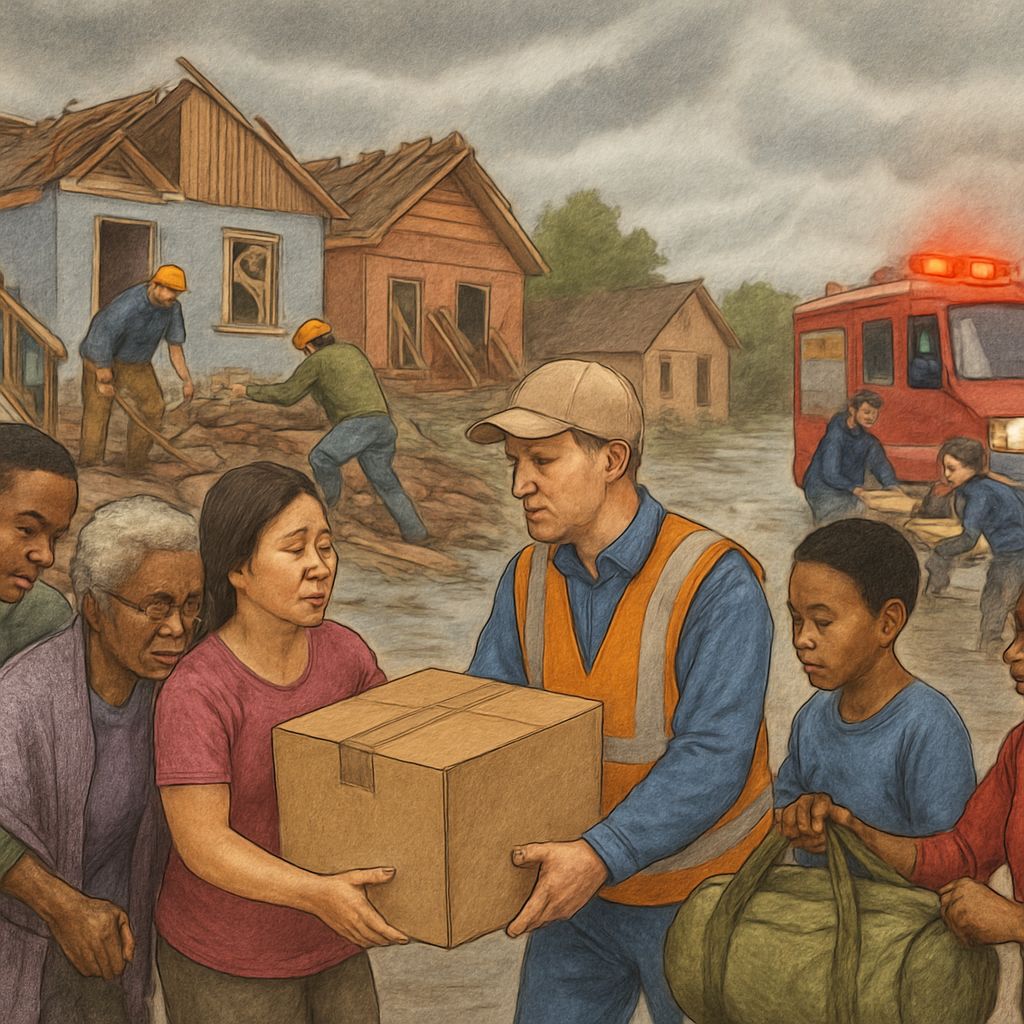
Most people preparing for emergencies are focused on the wrong thing entirely.
The preparedness world has long been dominated by checklists — how many gallons of water, how many days of food, which flashlight, which generator. But a quiet shift is happening. More and more people are realizing that what you know and what you can do will outlast anything you can buy. Capability-based preparedness is built on exactly that idea.
Skills Beat Stockpiles Every Time
A three-month food supply is valuable. There is no argument there. But what happens at month four? What happens if it is stolen, destroyed in a flood, or simply not enough for the situation you are facing? The answer to that question is not a bigger pantry — it is a broader skill set.
Why Capability-Based Preparedness Is Replacing Gear-First Thinking
The gear-first mindset made sense when preparedness was mostly about short-term disruptions — a week without power, a minor supply chain hiccup. But as people have begun preparing for longer, more complex disruptions, the limits of a gear-only approach have become impossible to ignore. Skills scale. Gear does not.
Physical Goods Run Out — Skills Don’t
Every physical resource has a ceiling. Batteries die, fuel gets consumed, medications expire, and canned food eventually runs out. A person who knows how to purify water from a river, grow food from seed, and treat a wound without a pharmacy is not subject to those same limitations. The knowledge lives in them — weightless, theft-proof, and infinitely renewable. As one preparedness community member put it bluntly: “Skills are something that money can’t buy. Only time and experience can provide you with this incredibly valuable resource.”
Skills as a Bartering Currency in a Crisis
When conventional economic systems are strained or broken, the person with a useful skill becomes immediately valuable to those around them. Someone who can sharpen tools, perform basic medical care, repair a small engine, or preserve meat has something tangible to offer — and to trade. This is not theoretical. Historical disruptions from economic collapse to natural disasters consistently show that skilled individuals navigate recovery faster than those who simply had more stuff.
Self-Reliance Reduces Dependence on Broken Systems
One of the core promises of capability-based preparedness is freedom from dependence. When you can produce your own food, generate your own energy, treat your own injuries, and communicate without infrastructure, you are no longer at the mercy of systems that may fail exactly when you need them most. To start preparing on any budget, consider these money moves that can help enhance your self-reliance.
Here is what that self-reliance actually looks like in practice:
- Growing and preserving your own food supply year-round
- Purifying water from natural sources without commercial filters
- Heating your home safely without grid electricity
- Providing basic medical care for your household
- Communicating via ham radio when cell networks are down
- Repairing tools, equipment, and structures without hired help
None of those capabilities require an expensive kit. They require learning, practice, and the decision to start.
The Most Critical Skill: Your Mental Game
Before we get into the practical, hands-on skills — and there are many worth building — there is one area that separates people who survive difficult situations from those who do not, and it has nothing to do with gear or even physical ability. Developing situational awareness can be crucial in honing your mental game for survival.
It is mindset. And it is the most underrated preparedness skill in existence.
Why Mindset Is the First Survival Skill to Build
Maintaining a positive, can-do attitude is consistently cited by survival experts as the single most critical factor in outcomes during crisis events. Not food. Not water. Not weapons. Attitude. The people who make it through difficult circumstances are almost always those who refused to stop problem-solving, refused to give in to panic, and found ways to keep moving forward.
1. Staying Calm Under Pressure
Panic is a physiological response, but it is also a trainable one. Regular exposure to controlled stress — through camping, backpacking, physical training, or even deliberate discomfort — builds the mental pathways that allow you to stay functional when things go wrong. The goal is not to feel no fear. The goal is to act effectively despite it.
This is a skill that compounds. Every time you push through a difficult situation calmly, you are training your nervous system to do it again under harder conditions. For more insights on enhancing your preparedness, consider avoiding common preparedness mistakes that most beginners make.
2. Creative Problem-Solving When Resources Are Scarce
In a disruption, the tools and materials available to you will almost never match the tools and materials you wish you had. Creative problem-solving — the ability to look at what you have and engineer a workable solution — is not an innate talent. It is a practiced skill. People who regularly repair things, build things, cook from scratch, and work with their hands develop this muscle naturally.
3. Decision-Making in High-Stakes Situations
Bad decisions compound quickly in a crisis. Choosing the wrong shelter location, misjudging a person’s intentions, or mismanaging your food supply early can cascade into serious consequences. Good decision-making under pressure is built through experience, but it can also be accelerated through deliberate study of crisis scenarios, tabletop exercises, and honest after-action reviews of past decisions.
Learning to read the room — situational awareness and threat identification — is one of the skills consistently named by experienced preppers as essential. It is not paranoia. It is practiced attention.
One framework that helps: before any significant decision in a stressful moment, ask three questions. What is actually happening right now? What are my real options? What matters most in the next 24 hours? That structure alone prevents most reactive, panic-driven mistakes.
4. Willingness to Cooperate and Lead
No individual survives long-term disruptions alone. The willingness to work within a group — to lead when necessary and follow when appropriate — is a skill set in itself. Knowing when to assert direction and when to defer to someone with greater expertise in a specific area is a nuanced social skill that becomes critically valuable when stress is high and stakes are real. Community resilience begins with individuals who have mastered this balance.
Medical Skills Every Prepared Person Needs
When professional medical help is unavailable — whether due to a natural disaster, grid failure, or a prolonged crisis — your ability to treat injuries and illness becomes the difference between life and death. This is not an exaggeration. Most emergency-related deaths in the first 72 hours of a disaster are preventable with basic medical knowledge and the right response. Additionally, understanding the importance of situational awareness can further enhance your preparedness in such emergencies.
First Aid, CPR, and Stop-the-Bleed Basics
CPR and basic first aid are skills every single member of your household should know — not just the “prepared” person in the family. Cardiac events, choking, and severe bleeding do not wait for the right person to be in the room. The American Red Cross offers both in-person and online CPR certification courses that take as little as a few hours to complete. For more on preparedness, consider avoiding common preparedness mistakes that beginners often make.
The Stop-the-Bleed program, originally developed for military combat scenarios and later adapted for civilian use, teaches three core techniques: applying direct pressure, wound packing, and tourniquet application. Uncontrolled bleeding is one of the leading causes of preventable death in trauma situations. Knowing how to pack a wound with gauze and apply a CAT (Combat Application Tourniquet) correctly — and practicing it until it becomes muscle memory — is one of the highest-value medical skills you can build.
Beyond the basics, start learning how to safely use and dose common over-the-counter medications, recognize signs of infection, and manage wounds over multiple days without clinical support. These are not advanced medical skills — they are the floor of what every prepared person should know.
Treating Environmental Emergencies: Hypothermia, Hyperthermia, and Bites
Environmental emergencies are among the most common threats in a real survival scenario, and they are frequently underestimated. Hypothermia — dangerously low body temperature — can set in at temperatures well above freezing, especially when a person is wet, wind-exposed, or exhausted. Hyperthermia, including heat exhaustion and heat stroke, can escalate to a fatal condition within hours. Knowing the early warning signs of both, and the correct field response for each, is a foundational survival medical skill. Animal and insect bites, snake encounters, and allergic reactions round out the core environmental medical knowledge every prepared person should carry.
Food and Water: The Non-Negotiable Skill Set
If you do not know how to ensure a consistent, safe supply of food and water, everything else in your preparedness plan is secondary. These two capabilities form the irreducible core of survival — and they are both deeply skill-dependent, not just supply-dependent. For more guidance, check out cooking without electricity to enhance your preparedness skills.
1. Food Preservation Methods That Actually Work Long-Term
Knowing what foods to store is only the beginning. The real skill is in preserving them correctly so they actually last. Canning — both water bath and pressure canning — is one of the most valuable long-term food preservation techniques available to a home prepper. Water bath canning works for high-acid foods like fruits and tomatoes, while pressure canning is required for low-acid foods like meats, beans, and vegetables. Done correctly, home-canned foods can last two or more years. Beyond canning, skills like dehydrating, fermenting, salt-curing, smoking meat, and making jerky dramatically expand your preservation toolkit and give you options regardless of what equipment is available.
2. Water Purification Without Modern Infrastructure
The average person can survive roughly three days without water. In a disruption where municipal water systems are compromised, knowing how to collect and purify water from natural sources is not optional — it is survival-critical. Boiling remains the most reliable purification method and requires no special equipment beyond a heat source. Beyond boiling, understanding chemical purification using unscented household bleach (8 drops per gallon of clear water), iodine tablets, and portable filtration systems like the Sawyer Squeeze or LifeStraw gives you layered options. Gravity-fed ceramic filter systems like the Berkey Water Filter are excellent for home use during extended disruptions.
3. Gardening, Animal Husbandry, and Fishing for Sustained Food Supply
Growing your own food is one of the most powerful long-term food security skills available. Gardening goes well beyond planting seeds — it includes understanding your soil, composting to build fertility, crop rotation to prevent disease, and seed saving to maintain a renewable supply year after year. A person who can save viable seeds from an open-pollinated tomato plant has essentially created a food supply that self-perpetuates indefinitely.
Animal husbandry adds critical fat and protein to a survival diet. Chickens are consistently the top recommendation for beginning homesteaders — they are relatively low-maintenance, produce both eggs and meat, and reproduce quickly. Rabbits are another high-value choice due to their fast reproduction rate and efficient feed-to-meat conversion. Learning to properly butcher and process both is a skill that requires hands-on practice and should not be left until it is needed. Avoid common pitfalls by understanding the preparedness mistakes most beginners make.
Fishing and trapping round out the wild food procurement skill set. Unlike hunting, which is active and energy-intensive, trapping is a passive calorie-gathering strategy that can work continuously while you focus on other tasks. Learning to set snares for small game and basic fishing techniques — including reading water and identifying fish habitat — provides a reliable supplemental protein source in almost any geographic region.
- Gardening skills: soil prep, composting, crop rotation, and seed saving
- Animal husbandry: raising, feeding, and processing chickens, rabbits, and livestock
- Fishing: reading water, bait selection, and basic line and hook techniques
- Trapping: legal small game snares and passive protein collection strategies
- Foraging: identifying edible wild plants specific to your region
4. Food Storage Acquisition and Rotation Management
Building a food supply is a skill in itself — and most people get it wrong by buying random quantities of random items with no system behind them. Effective food storage is built around meals your household actually eats, extended with long-shelf-life staples like white rice, hard red wheat, dry beans, rolled oats, and honey. It is rotated consistently using a first-in, first-out system so nothing expires unused.
Managing your inventory — knowing what you have, what you are running low on, and when items need to be used or rotated — requires the same discipline as managing a small business’s supply chain. A simple spreadsheet or even a handwritten log tracking quantities and expiration dates is enough to keep a family’s food storage functioning efficiently over years, not just weeks.
Practical Skills That Keep You Operational
Once your medical and food fundamentals are in place, the next layer of capability-based preparedness focuses on keeping yourself, your home, and your community functional under stress. These practical skills often overlap with traditional trades and homesteading knowledge — and they are some of the most transferable and tradeable skills you can develop.
Home Security Without Looking Like a Fortress
Security in a crisis does not mean turning your home into a bunker. It means understanding how most break-ins and opportunistic threats actually happen — and closing those gaps quietly and effectively. The vast majority of home intrusions exploit unlocked doors, weak door frames, and poor lighting. Reinforcing door frames with longer screws into the structural studs, adding a door bar or security pin to sliding doors, and installing motion-activated lighting are low-cost, high-impact measures that do not draw attention. For more insights on preparedness, explore the five fundamentals of personal preparedness.
Situational awareness is the foundational security skill — knowing who belongs in your environment, recognizing when something feels off, and trusting that instinct. This is a learnable skill developed through deliberate practice. Start by making a habit of consciously noting exits, individuals, and anything unusual every time you enter a new space. Over weeks, this becomes automatic.
Community-level security is equally important. In extended disruptions, neighborhood watch structures, communication networks, and agreed-upon protocols for unknown visitors are more effective deterrents than any individual household’s defensive measures. Your neighbors are a security asset — or a security liability — depending on how prepared and organized your immediate community is.
- Reinforce door frames with 3-inch structural screws into wall studs
- Install motion-activated exterior lighting at all entry points
- Add door security bars or pins to all sliding glass doors
- Establish a neighborhood communication and alert system
- Practice deliberate situational awareness daily until it becomes automatic
- Learn basic lock-picking awareness so you understand your own vulnerabilities
Transportation Skills Beyond Just Driving a Car
Most people consider themselves capable drivers and leave it there. But capability-based transportation preparedness goes considerably further. It includes knowing how to perform basic vehicle maintenance — changing a tire, checking and topping fluids, jump-starting a battery, and recognizing when an engine is overheating — so that mechanical issues in a crisis do not strand you. Beyond the vehicle itself, navigation skills using a physical map and compass are essential when GPS is unavailable or unreliable. Knowing alternate routes out of your area, on foot if necessary, and having practiced them at least once, is the kind of preparation that most people never do — and desperately need.
Renewable Energy: Solar and Wind Basics for Self-Sufficiency
Understanding how to generate and manage your own electricity removes one of the most debilitating dependencies in a modern crisis. A basic off-grid solar setup — solar panels, a charge controller, a battery bank, and an inverter — can power essential devices like lighting, communication equipment, a small refrigerator, and medical devices indefinitely. Entry-level portable systems like the Jackery Explorer 1000 paired with the Jackery SolarSaga 100W panels offer a manageable starting point for households new to solar. The skill is not just in buying the equipment — it is in understanding your household’s wattage demands, calculating the battery capacity you need, and knowing how to troubleshoot the system when it underperforms. For those looking to further reduce their reliance on traditional power sources, consider learning how to reduce your dependence on fragile systems.
Community and Leadership Skills Are Survival Skills Too
No matter how skilled you are individually, a prepared community will always outperform a prepared individual. The people around you — neighbors, friends, family members — are either an asset or a liability in a crisis, and which one they become depends largely on whether anyone took the time to build those relationships and structures before things went wrong.
1. Communication and Negotiation in Crisis Situations
Clear, calm communication under stress is a skill that most people dramatically overestimate in themselves. When emotions are high and stakes are real, the ability to convey information accurately, listen actively, and resolve conflict without escalation becomes extraordinarily valuable. Practice this now — in low-stakes disagreements, in team environments, in difficult conversations you have been avoiding. The neural pathways you build in calm situations are the ones available to you in chaotic ones. For more on building resilience, explore how to build everyday functional strength that actually matters.
Negotiation is the other side of this coin. In a prolonged crisis, you will encounter situations where you need something someone else has, or someone needs something you have. Knowing how to find mutual benefit, build trust quickly with strangers, and reach agreements without coercion is a life-preserving social skill. Study basic negotiation frameworks — even a single book like Never Split the Difference by Chris Voss will fundamentally change how you approach high-pressure exchanges. For more tips on preparedness, explore the five fundamentals of personal preparedness.
2. Building a Prepared Community Around You
The most resilient preparedness unit is not a lone individual with a bunker full of supplies. It is a connected group of people with complementary skills who trust each other. Start building that network now, before you need it. Host neighborhood meetings, share gardening knowledge, offer to teach a skill, and find out quietly who around you has medical training, mechanical skills, or food production experience. A neighborhood where three households have deep food reserves, one person has medical training, one can operate a ham radio, and two know how to garden is exponentially more resilient than any single household with all the gear in the world.
3. Teaching Skills to Others Multiplies Their Value
When you teach a skill to someone else, two things happen: their capability increases, and yours deepens. Teaching forces you to understand something at a level beyond simple execution — you have to understand the why, the common mistakes, and the edge cases. A skill shared within your community is a skill that will come back to support you when your own knowledge or capacity falls short.
Think about the skills you have right now that others around you do not. Food preservation, basic first aid, car maintenance, gardening — any one of these, taught to even two or three people in your immediate circle, creates a web of mutual capability that is worth more than any individual stockpile. The most prepared communities are not collections of self-sufficient individuals — they are networks of people who have deliberately built shared capability over time.
Knowledge Is the One Resource You Can Never Lose
Everything physical that you prepare — your food, your water, your tools, your fuel — exists on a spectrum of vulnerability. It can be lost to fire, flood, theft, spoilage, or simply exhausted through use. Knowledge exists on an entirely different plane. Once genuinely learned and practiced, it cannot be taken from you. It travels with you. It weighs nothing. It does not expire. For those starting their journey, avoiding preparedness mistakes is crucial.
This is the core philosophical shift that capability-based preparedness asks you to make. Stop measuring your readiness exclusively in terms of what you own, and start measuring it in terms of what you can do. The two are not mutually exclusive — having supplies and having skills is obviously better than having only one — but when forced to choose where to invest your next hour of preparation effort, the answer is almost always: learn something new, or practice something you already know.
The preparedness community has a phrase that captures this well: “The most valuable preparedness tool is knowledge. The skills and knowledge you attain will never spoil, require no storage space, weigh nothing at all, are not at risk of being stolen or destroyed, and are completely portable.” That is not motivation-poster wisdom. That is a practical, operational truth that should shape how you spend your preparedness time and money.
- Water: Purification, collection, storage management, and testing
- Food: Preservation, production, storage rotation, and wild foraging
- Medical: First aid, CPR, wound care, and environmental emergency response
- Security: Situational awareness, home hardening, and community coordination
- Energy: Solar basics, fuel conservation, and alternative heating methods
- Communication: Ham radio operation, signal protocols, and map navigation
- Trade skills: Carpentry, small engine repair, plumbing, and electrical basics
- Mindset: Stress management, decision-making, leadership, and cooperation
Start with one category. Pick the area where your knowledge gap is largest — or where a failure would hit hardest — and begin there. Take a course, read a book, watch a demonstration, then practice until the skill is real. Then move to the next one. There is no finish line in capability-based preparedness, but every skill you genuinely build moves you meaningfully closer to the kind of resilience that holds when everything else fails.
Frequently Asked Questions
Quick Reference: Capability-Based Preparedness Skills by Priority
Skill Category
Priority Level
Starting Point
Water Purification
★★★★★ Critical
Learn boiling + bleach ratios first
Food Preservation
★★★★★ Critical
Start with water bath canning
First Aid & CPR
★★★★★ Critical
Red Cross certification course
Mindset & Decision-Making
★★★★★ Critical
Controlled stress exposure + practice
Gardening & Food Production
★★★★ High
Grow one food crop this season
Home Security
★★★★ High
Door frame reinforcement + lighting
Communication Skills
★★★★ High
Ham radio Technician license
Renewable Energy Basics
★★★ Moderate
Entry-level portable solar system
Trade Skills (repair, build)
★★★ Moderate
Basic carpentry or small engine course
Community Leadership
★★★ Moderate
Neighborhood preparedness meeting
The table above is designed to help you cut through the noise and identify where to focus first. Most people who are new to preparedness try to address everything at once — and end up making meaningful progress on nothing. Use this as a sequencing guide, not a checklist to complete in a weekend.
Notice that mindset sits at the same critical priority level as water and food. That is intentional. The most technically skilled person in a crisis will fail if their mental game collapses under pressure. The most stocked pantry in the neighborhood is useless if the person managing it cannot make clear decisions when it matters most. Capability-based preparedness treats the whole person — mind, body, and skill set — as the unit of resilience.
Whatever stage of preparedness you are currently at, the next move is simple: identify your biggest skill gap, find a credible resource to close it, and schedule time this week to start. Not next month. This week. Resilience is built in small, consistent increments — and the best time to start building it is always right now.
What Is Capability-Based Preparedness?
Capability-based preparedness is the practice of building resilience through skills, knowledge, and mental readiness rather than focusing primarily on stockpiling physical supplies. It operates on the principle that what you can do is more durable and valuable than what you own — because skills cannot be destroyed, stolen, or exhausted the way physical goods can. A capability-based approach still values having supplies, but it treats knowledge and practical ability as the foundation that everything else rests on.
Which Skills Should a Beginner Prepper Learn First?
The three non-negotiable starting points for any beginner are water purification, basic first aid including Stop-the-Bleed techniques, and food preservation. These three skill areas address the most immediate threats to life in any crisis scenario and provide the highest return on time invested. Mindset and stress management should be developed in parallel — not treated as optional extras.
Once those foundations are in place, expand into food production through gardening, basic home security practices, and communication skills including map reading and, eventually, ham radio operation. Build sequentially rather than trying to develop every skill simultaneously. One genuinely mastered skill is worth far more than a dozen half-learned ones. For more insights, check out these five fundamentals of personal preparedness.
Are Preparedness Skills More Valuable Than Stockpiling Supplies?
In most real-world scenarios, yes — skills provide more durable value than supplies alone. Supplies are finite. They run out, degrade, get destroyed, or simply prove insufficient for a situation you did not anticipate. Skills, once genuinely acquired and practiced, are available to you in any situation with any available materials. That said, the most resilient preparedness approach combines both: a working supply of essential goods supported by deep skill in producing, preserving, and managing those goods independently.
The practical way to think about it: your supplies buy you time. Your skills determine what you do with that time — and whether you can sustain yourself once the supplies are gone. Invest in both, but if you only have one hour this week to dedicate to preparedness, spend it learning something rather than buying something.
How Do Skills Help During Economic Collapse or Natural Disasters?
During both economic disruptions and natural disasters, the people who fare best are consistently those who can produce or provide something of value — either for themselves or for others. A person who can preserve food, purify water, perform basic medical care, repair equipment, or operate off-grid communication tools is immediately more valuable and more secure than someone who simply had more money or more stuff before the disruption hit. Skills also enable bartering, which becomes one of the primary economic mechanisms when conventional currency and supply chains are disrupted.
How Do I Start Building a Preparedness Skill Set From Scratch?
Start by identifying the three scenarios most likely to affect your specific geographic area and lifestyle — whether that is extended power outages, natural disasters, supply chain disruptions, or economic instability. Then map the skills that would matter most in each of those scenarios and identify where your current knowledge is weakest.
Take one concrete step in the next seven days. Sign up for a CPR and first aid course through the American Red Cross. Start a container garden with one or two food-producing plants. Buy a package of canning jars and watch a tutorial on water bath canning. Download a topographic map of your area and learn how to read it. Every single one of these actions takes less than a day and produces a real, lasting capability. Avoid preparedness mistakes that most beginners make by taking these small steps.
Build a personal skill development calendar — not a vague intention, but an actual scheduled commitment. Dedicate one focused learning session per week to preparedness skill development. Over the course of a single year, that is 52 sessions — enough to build genuine proficiency in a dozen or more critical areas. Progress in capability-based preparedness is not about dramatic overhauls. It is about consistent, deliberate accumulation of skills that compound over time.



Leave a Reply