
- Functional strength training focuses on compound, multi-joint movements that directly improve how you move in daily life — not just how you look in the mirror.
- The top everyday functional strength exercises include squats, hip hinges, lunges, push-ups, rows, carries, and core rotation patterns.
- Training movement patterns instead of isolated muscles builds better balance, joint stability, and injury resistance over time.
- Most people can build real functional strength at home with minimal equipment — bodyweight alone is enough to start.
- There’s a specific weekly structure that makes functional training stick — and most people are overcomplicating their routines without knowing it.
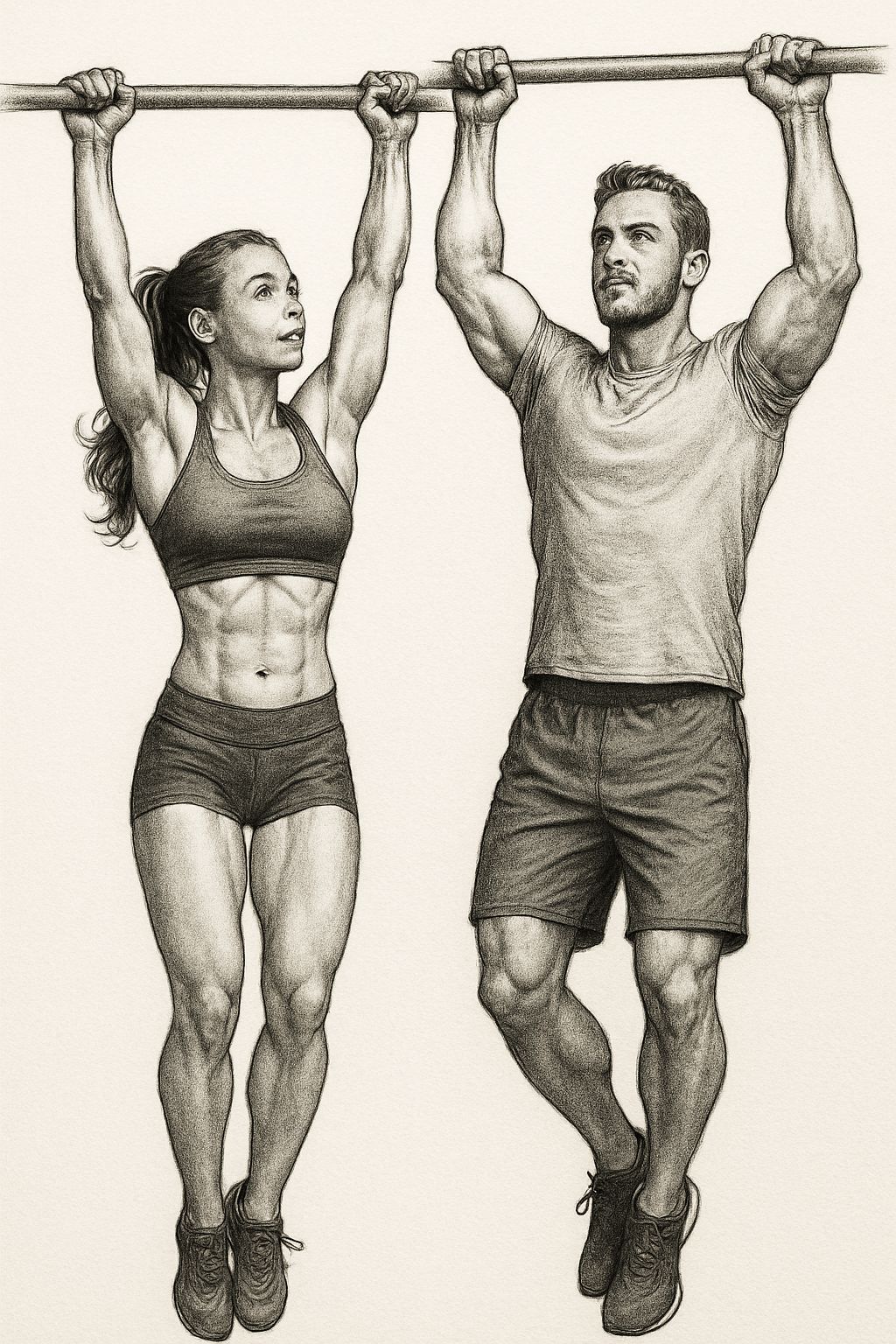
Most people can bench press their body weight but struggle to pick up a heavy box without tweaking their back — that gap is exactly what functional strength training is designed to close.
Functional strength isn’t about aesthetics or hitting a one-rep max. It’s about building a body that moves well under real-world conditions — the kind of strength that shows up when you’re hauling luggage through an airport, catching yourself from a stumble, or just getting up off the floor without using your hands. This style of training bridges the gap between gym performance and real-life capability in a way that traditional programs rarely address.
What Functional Strength Actually Is
Functional strength training focuses on movements that mirror what your body already does every day — lifting, reaching, bending, carrying, and twisting — but performed with intention and progressive resistance. The goal isn’t to isolate a single muscle. It’s to train your entire neuromuscular system to coordinate movement efficiently and safely.
Functional Strength vs. Gym Strength: What’s the Difference
Traditional gym training often isolates one muscle group at a time. Think leg extensions, bicep curls, or cable flyes — movements performed on fixed machines that guide your range of motion and remove the stabilization challenge entirely. You can build impressive size this way, but your body never learns how to integrate those muscles into real movement.
Functional strength training flips that model. Instead of training muscles individually, it trains movement patterns — pushing, pulling, hinging, squatting, carrying, and rotating. These patterns require multiple muscle groups to fire together, in sequence, the way your body actually works outside the gym. To maintain long-term independence, incorporating functional strength training into your routine is essential.
Why Isolating Muscles Misses the Point
Isolation exercises have their place, especially in rehabilitation and bodybuilding. But relying on them exclusively creates a fitness gap. When you only train muscles in isolation, you’re essentially rehearsing movements that don’t exist in real life. No daily task requires you to extend your knee against resistance while sitting perfectly still.
What daily life actually demands is coordinated, loaded movement across multiple joints simultaneously. Picking up a child requires a hip hinge plus a grip plus core bracing. Carrying groceries up stairs involves single-leg stability, spinal rigidity, and grip endurance — all at once. Isolation training doesn’t prepare you for any of that.
- Squatting down to pick something up off the floor
- Carrying heavy bags across a parking lot
- Pushing open a heavy door or moving furniture
- Twisting to reach something behind you while seated
- Catching yourself from a slip or stumble without falling
- Climbing stairs with weight in your hands
Each of those scenarios calls on multiple muscle groups working in coordination. Functional training rehearses exactly those demands.
The Movement Patterns Your Body Actually Uses Every Day
Every human movement can be broken down into a handful of foundational patterns: squat, hinge, lunge, push, pull, carry, and rotate. Train these seven patterns consistently and you’ve covered virtually everything your body needs to handle daily life with confidence and control.
Why Functional Strength Matters More Than You Realize
Beyond feeling capable and strong, functional training has measurable physical benefits. It builds strength in the ranges of motion you actually use — not just the comfortable mid-range positions that machines favor. Over time, that translates to better posture, more resilient joints, and a significantly lower risk of the kind of everyday injuries that sideline people for weeks.
Research consistently shows that training movement patterns improves not just strength but also proprioception — your body’s awareness of where it is in space. That quality is directly linked to balance, coordination, and fall prevention, especially as you age.
How It Reduces Injury Risk in Daily Life
One of the most underappreciated benefits of functional training is how it targets the smaller stabilizing muscles that surround your major joints. These muscles — the rotator cuff, hip external rotators, deep spinal erectors, and intrinsic foot muscles — don’t get trained on machines. But they’re the first line of defense against sprains, strains, and overuse injuries. When they’re weak, your larger muscles compensate, and that’s when things go wrong.
The Link Between Core Stability and Full-Body Control
Core stability isn’t about doing crunches. It’s about your ability to resist movement — to keep your spine rigid and protected while your arms and legs do work around it. Every carry, every lunge, every overhead press demands that your core engage as an anchor. Functional training builds this anti-rotation and anti-extension strength constantly, not as a separate “core day” but as an embedded quality in every session.
10 Functional Exercises for Everyday Strength
These ten exercises cover every foundational movement pattern. They can be done with bodyweight, dumbbells, kettlebells, or resistance bands — and they scale from beginner to advanced with simple load or tempo adjustments. Prioritize quality of movement over how much weight you’re using, especially when starting out.
Work through this list and you’ll have a complete functional training toolkit that requires nothing more than a small open space and a pair of adjustable dumbbells.
1. Squat (Bodyweight or Goblet)
The squat is the most fundamental human movement pattern. Every time you sit down and stand up, you’re performing a squat. Training it deliberately builds quad strength, glute activation, hip mobility, and core stability simultaneously. Start with a bodyweight squat to own the pattern, then progress to a goblet squat holding a dumbbell or kettlebell at chest height to add load and reinforce an upright torso.
Key coaching cue: Drive your knees out over your toes, keep your chest tall, and push the floor away on the way up — don’t think about pulling yourself up with your quads alone.
2. Hip Hinge (Deadlift or Kettlebell Swing)
The hip hinge is arguably the most important movement pattern to master, and the most neglected. It’s the mechanics behind picking anything up off the floor safely. A Romanian deadlift with dumbbells or a kettlebell deadlift teaches you to load your hamstrings and glutes while keeping a neutral spine — exactly what you need when you’re loading luggage into an overhead compartment or lifting a heavy bag of mulch.
Once the hinge pattern is solid, the kettlebell swing adds a power component — training your posterior chain to generate force explosively. That hip-drive power is what helps you sprint for a train, jump over a puddle, or simply move with more athleticism through your day.
3. Lunge Variations
Lunges train single-leg strength, hip stability, and coordination all at once — making them one of the most transfer-rich exercises you can do. Forward lunges, reverse lunges, and walking lunges each challenge your balance and hip flexor length in slightly different ways. Reverse lunges are the most knee-friendly starting point, while walking lunges add a gait component that closely mirrors real movement.
4. Push-Up
The push-up is a complete upper-body and core exercise disguised as a simple movement. It trains your chest, shoulders, and triceps while simultaneously demanding that your core maintain a rigid plank position throughout every rep. That full-body tension requirement is what separates a push-up from a chest press machine — and what makes it so functionally valuable.
Progress the push-up by elevating your feet, adding a pause at the bottom, or loading a weight plate on your upper back. Regress it by elevating your hands on a bench or wall. There’s no reason to ever outgrow this exercise — just find the variation that challenges you without compromising form.
5. Bent-Over Row
Pulling strength is chronically underdeveloped in most people, largely because daily life involves far more pushing and reaching forward than pulling back. The bent-over row corrects that imbalance by training your upper back, rear deltoids, and biceps through a horizontal pulling pattern. Performed with dumbbells or a barbell, it also requires your lower back and core to isometrically brace — turning it into a full posterior chain exercise, not just a back movement.
6. Overhead Press
Any time you put something on a high shelf, load an overhead bin, or lift a child above your head, you’re performing an overhead press. Training this pattern with dumbbells or a barbell builds shoulder strength, scapular stability, and overhead mobility. Standing overhead presses demand significantly more core engagement than seated variations — keep them standing whenever your shoulder health allows it.
7. Farmer’s Carry
The farmer’s carry might be the most underrated functional exercise that exists. It’s brutally simple — pick up something heavy in each hand and walk with it — but the physical demands are enormous. Here’s what a single set of farmer’s carries actually trains:
- Grip strength — your hands and forearms under sustained load
- Core anti-lateral flexion — resisting the urge to lean to one side
- Postural endurance — keeping your shoulders back and spine tall while fatigued
- Hip stability — single-leg loading with every step under load
- Cardiovascular conditioning — sustained effort raises your heart rate quickly
Use two kettlebells or dumbbells of equal weight and walk for distance or time. A good starting target is 30 to 40 meters per set. If your grip fails before anything else, that’s telling you something important about a weak link worth addressing. For more on maintaining your health, check out the importance of mobility for long-term independence.
For a unilateral variation, try a suitcase carry — one weight in a single hand. This dramatically increases the anti-lateral flexion demand on your core and more closely mimics carrying a heavy bag on one side, which is something most people do daily without any preparation for it.
8. Single-Leg Balance Work
Every step you take is a single-leg balance moment. Every stair you climb. Every time you put on your shoes standing up. Single-leg exercises like the single-leg Romanian deadlift, Bulgarian split squat, or even a simple single-leg stand with eyes closed train the stabilizing muscles of the ankle, knee, and hip simultaneously. This is the kind of training that prevents rolled ankles, knee injuries, and falls — and it’s almost entirely absent from traditional gym programs.
9. Core Rotation (Pallof Press or Woodchop)
Rotational strength is the most overlooked movement pattern in most routines. Every time you swing a bag, twist to reverse a car, or throw something, your body requires powerful, controlled rotation through the hips and thoracic spine. The Pallof press trains anti-rotation — resisting a lateral pull from a cable or resistance band — while the cable woodchop or band woodchop trains loaded rotation through a full range. Both build the rotational stability and power your spine needs to stay protected during real-world twisting movements. For more insights on personal preparedness, check out these five fundamentals of personal preparedness.
10. Step-Up
The step-up is a practical, low-impact way to build unilateral leg strength, glute activation, and hip stability. Use a sturdy box or bench, step up with full control and drive through your heel, and resist using the trailing leg to push off. Holding dumbbells adds a carry component and increases the core demand. This exercise directly mimics climbing stairs, stepping onto a curb, or hiking uphill — all movements that expose weakness in people who only train bilaterally.
How to Build a Functional Training Routine That Sticks
Having ten great exercises means nothing without a structure that brings them together consistently. The most effective functional training programs aren’t the most complex — they’re the most repeatable. Building a routine around movement patterns rather than muscle groups means you never have to wonder if you’re covering the right bases.
Aim for two to four sessions per week, each lasting 30 to 50 minutes. Every session should include at least one exercise from the squat, hinge, push, and pull categories. Carries and rotation work can be added as finishers or programmed into their own dedicated slots. For more on optimizing your workout routine, consider exploring spending more time on the floor to enhance mobility and strength.
The Weekly Movement Pattern Checklist
Instead of planning workouts around body parts — “leg day” or “chest day” — plan them around movement patterns. This approach ensures no fundamental pattern gets neglected and naturally creates balance between opposing muscle groups.
|
Movement Pattern |
Example Exercise |
Weekly Minimum |
|---|---|---|
|
Squat |
Goblet Squat, Bodyweight Squat |
2x per week |
|
Hinge |
Romanian Deadlift, Kettlebell Swing |
2x per week |
|
Lunge / Single-Leg |
Reverse Lunge, Step-Up |
2x per week |
|
Push |
Push-Up, Overhead Press |
2x per week |
|
Pull |
Bent-Over Row, Band Pull-Apart |
2x per week |
|
Carry |
Farmer’s Carry, Suitcase Carry |
1x per week |
|
Rotate |
Pallof Press, Woodchop |
1x per week |
If you only have two sessions per week, split pushing and pulling movements across both days and alternate squat-dominant with hinge-dominant lower body work. That’s enough to make meaningful progress when done consistently over months.
How to Fit Sessions Into a Busy Schedule
The biggest obstacle to consistency isn’t motivation — it’s time. The good news is that functional training is highly efficient. A 30-minute session covering a squat, a hinge, a push, and a pull with three sets each hits every major pattern your body needs. That’s entirely achievable on a lunch break or before the rest of your household wakes up.
If 30 minutes feels impossible on certain days, even a single 10-minute movement practice — bodyweight squats, push-ups, and a plank — maintains the neural patterns you’ve built and keeps the habit alive. Consistency across months matters far more than perfection within any single week.
Equipment You Actually Need (It’s Less Than You Think)
A full functional training program requires surprisingly little. A pair of adjustable dumbbells — something like the Bowflex SelectTech 552s or PowerBlock Elite EXP — covers the majority of loading needs for squats, hinges, rows, presses, and carries. Add a resistance band set for Pallof presses, pull-aparts, and mobility work, and you have a complete home gym setup for under $300.
A kettlebell adds value for swings and goblet squats, but it isn’t essential at the start. If you train at a gym, avoid the temptation to default to machines. The free weight and open floor space sections have everything you need to run a complete functional program — no cables or specialty equipment required.
When to Push and When to Recover
Progressive overload matters, but so does knowing when your body needs to back off. Functional training places real demands on your joints, connective tissue, and nervous system — and those structures adapt more slowly than your muscles do. Pushing hard every single session without planned recovery is one of the fastest routes to overuse injury and burnout.
- Push harder when movements feel controlled, you slept well, and energy is high
- Maintain effort when you’re slightly fatigued but movement quality is still solid
- Pull back when form starts to break down, joints feel aggravated, or fatigue is carrying over from previous days
- Take a deload week every four to six weeks — reduce volume by 40% while keeping movement patterns consistent
Recovery isn’t the absence of training. Active recovery sessions — a 20-minute walk, light mobility work, or gentle bodyweight movement — keep blood flowing to tissues and reinforce movement patterns without adding load to an already taxed system. These sessions often accelerate progress more than an extra hard workout would.
Sleep is the most underutilized recovery tool available. Strength adaptations happen during rest, not during the workout itself. Consistently getting seven to nine hours of sleep per night will do more for your functional strength progress than any supplement or training hack on the market.
The Principles That Make Functional Training Work Long-Term
Anyone can follow a program for two weeks. What separates people who build lasting functional strength from those who cycle through routines endlessly is a handful of non-negotiable principles that govern how they train — not just what they train. These principles apply regardless of your fitness level, age, or the equipment available to you.
They aren’t complicated. But they are easy to skip when you’re chasing faster results or when a harder workout feels more productive than a smarter one. Stick to these principles and your training will compound over time in ways that short-term intensity never will.
Form Comes Before Load, Every Time
Adding weight to a broken movement pattern doesn’t build strength — it builds a more efficient way to get injured. Before you load any exercise, you need to own the pattern with bodyweight or minimal resistance. That means your squat hits depth with a neutral spine, your hinge loads the hamstrings without rounding your lower back, and your overhead press moves through a full range without flaring your ribs or arching excessively through your lumbar spine.
A useful standard: if you can’t perform a movement cleanly for all prescribed reps at a given load, that load is too heavy. Drop the weight, fix the pattern, and build from there. Progress will come faster from moving well at moderate loads than from grinding through sloppy reps under maximum resistance.
Why Unilateral Training Deserves More Attention
Bilateral exercises — squats, deadlifts, bench press — are foundational, but unilateral training is where real-world strength actually lives. Almost every movement you make outside the gym is single-sided: one leg stepping forward, one arm reaching overhead, one hand carrying a bag. Single-leg and single-arm exercises expose and correct the strength imbalances that bilateral training hides. They also demand significantly more core and hip stabilizer engagement per rep, making them incredibly efficient for building functional capacity. If you’re currently skipping single-leg work because it feels awkward or humbling, that awkwardness is telling you exactly where your weak links are.
Mobility and Strength Are Not Separate Goals
Training mobility separately from strength misses the point of functional fitness. The goal isn’t to be flexible at rest — it’s to be strong through a full range of motion under load. A deep goblet squat builds hip and ankle mobility. A full-range Romanian deadlift lengthens your hamstrings while loading them. An overhead press with proper thoracic extension improves shoulder mobility while building pressing strength. Every exercise in your functional program should be treated as a mobility drill performed with load, not a strength exercise done despite your limited range of motion.
When mobility limitations prevent full range on an exercise, address the restriction directly before the session, not as a separate “flexibility day.” Two to three minutes of targeted hip flexor, ankle, or thoracic spine work immediately before training has a measurable effect on range of motion during the session — and compounds over weeks into lasting structural change.
Start Small, Move Well, Build Real Strength
The most important thing you can do today is start with one session, one pattern, one movement done well. Functional strength isn’t built in a single week of hard training — it’s built through months of consistent, intentional movement that gradually asks more of your body than it did before. The ten exercises in this guide cover every pattern you need. The routine structure gives you a repeatable framework. The principles give you the filter to make smart decisions when things get hard or complicated.
Stop waiting for the perfect program, the perfect gym, or the perfect schedule. Your body responds to movement — and it responds faster than most people expect when that movement is purposeful, progressive, and consistent. Start where you are, with what you have, and build from there.
Frequently Asked Questions
These are the most common questions people have when starting out with functional strength training.
What is the difference between functional strength and regular strength training?
Functional strength training focuses on compound, multi-joint movements that replicate real-life patterns — squatting, hinging, pushing, pulling, carrying, and rotating. Regular strength training, particularly machine-based gym work, often isolates individual muscles through fixed ranges of motion that don’t require stabilization or coordination between muscle groups.
The practical difference shows up outside the gym. Functional training makes you better at the physical demands of everyday life — lifting, carrying, balancing, and moving under load. Traditional isolation training improves muscle size and isolated strength but may not transfer to those same real-world demands without additional movement pattern training layered on top. To maintain long-term independence, it is crucial to understand the importance of mobility in your fitness regimen.
How often should I do functional strength training each week?
Two to four sessions per week is the effective range for most people. Two sessions per week is enough to build and maintain functional strength when programmed to cover all major movement patterns across both sessions. Three sessions per week is the sweet spot for steady progress without excessive recovery demands, especially for those new to this style of training.
Four sessions per week allows for more training volume and faster progression, but only if recovery — sleep, nutrition, and stress management — is properly supported. More than four sessions per week offers diminishing returns for general functional fitness and increases the risk of overuse injury over time.
Can I build functional strength at home without equipment?
Yes, completely. Bodyweight squats, reverse lunges, push-ups, single-leg deadlifts, step-ups onto a chair, and plank variations cover every foundational movement pattern without a single piece of equipment. Adding a resistance band set expands your pulling and rotation options significantly. Once bodyweight becomes easy on core exercises, load can be added through a backpack filled with books, water jugs, or a single adjustable dumbbell — the principles apply regardless of what’s providing resistance.
Is functional training suitable for beginners?
Functional training is ideal for beginners precisely because it teaches movement quality from the start, rather than allowing bad habits to develop on isolation machines. Starting with bodyweight versions of squats, hinges, and push-ups builds a movement foundation that makes every subsequent training progression safer and more effective. Beginners should prioritize learning the patterns over adding load — even two to three months of quality bodyweight training produces significant strength and coordination gains before external resistance becomes necessary.
How long before I notice results from functional strength training?
Most people notice improved coordination, balance, and body awareness within two to three weeks — these are neural adaptations that happen quickly as your nervous system learns new movement patterns. Strength gains become measurable within four to six weeks of consistent training, with visible changes in muscle tone and posture typically appearing between six and twelve weeks.
The more meaningful results — the ones that show up in daily life — often appear earlier than people expect. Carrying groceries feels easier. Climbing stairs with a heavy bag stops being an event. Getting up off the floor happens without thinking about it. Those functional improvements are often the first and most motivating signs that the training is working.
Long-term results compound significantly over six to twelve months of consistent training. Joint resilience, postural control, and movement efficiency continue improving well beyond the initial adaptation phase — making functional strength one of the highest-return fitness investments available to anyone at any age.




Leave a Reply